 ProMapRanker
Best Company Mobile Phone Providers in 2026


Field teams that need wide coverage · Pricing starts at: See website
Key takeaways
- The big three carriers suit teams that need wide coverage and in-store support, while smaller carriers suit teams that mainly want a lower monthly bill.
- Business pricing usually depends on line count, autopay, taxes and device financing, so the headline price is rarely the full bill.
- Hotspot allowances matter more than unlimited data claims for field teams, because many plans slow hotspot use after a set amount.
- A second business number through a voice app can be cheaper than a second carrier line for office staff who rarely leave Wi-Fi.
Quick comparison
| Pick | Great for | Pricing starts at | Free tier | |
|---|---|---|---|---|
| Verizon Business | Field teams that need wide coverage | See website | No | Visit |
 T-Mobile for Business | Teams that use a lot of data | See website | No | Visit |
 AT&T Business | Growing teams that want security tools | See website | No | Visit |
 US Mobile | Small businesses that want a lower bill | $25 per month | No | Visit |
 Mint Mobile | Budget unlimited plans for small teams | $30 per month | No | Visit |
 Visible | Simple single-line plans | $25 per month | No | Visit |
 Google Voice | A second business number without a second line | $10 per user per month | No | Visit |
 RingCentral | Teams that want calls, messages and meetings together | $30 per user per month | Free trial | Visit |
 Spectrum Mobile | Businesses already on Spectrum internet | See website | No | Visit |
The best company mobile phone providers
This list covers mobile phone companies and carriers for business use, from national carriers to low-cost providers and voice apps that add a business number. We compared coverage, plan structure, hotspot rules, business support and price, using carrier pages and independent plan comparisons checked in October 2026.
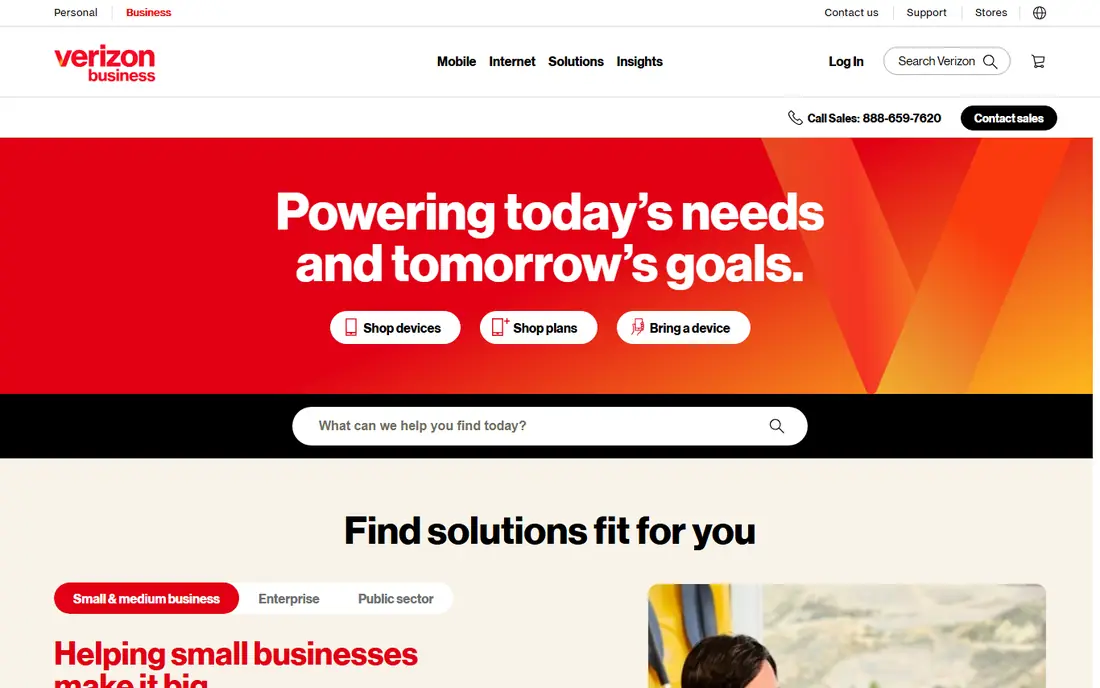
Verizon Business is the pick we would shortlist first for teams that work outside offices, in rural areas, or across many states. Its coverage is the main reason to pay more, because a missed call from a customer or a dead map on a job site costs more than a few dollars saved on a cheaper plan. Business plans also offer hotspot options and device management features that suit teams handing out company phones.
The catch is price clarity. Verizon Business pricing changes with line count, autopay, promotions and add-ons, so two similar teams can see different totals. Ask for a written quote that separates service, device installments, taxes and fees before you sign. If your team mostly works in cities with strong coverage from other carriers, the premium may be hard to justify.
- Wide national coverage
- Strong business support options
- Flexible line-by-line plan choices
- Business pricing is not shown as one simple price
- Taxes and fees add to the bill
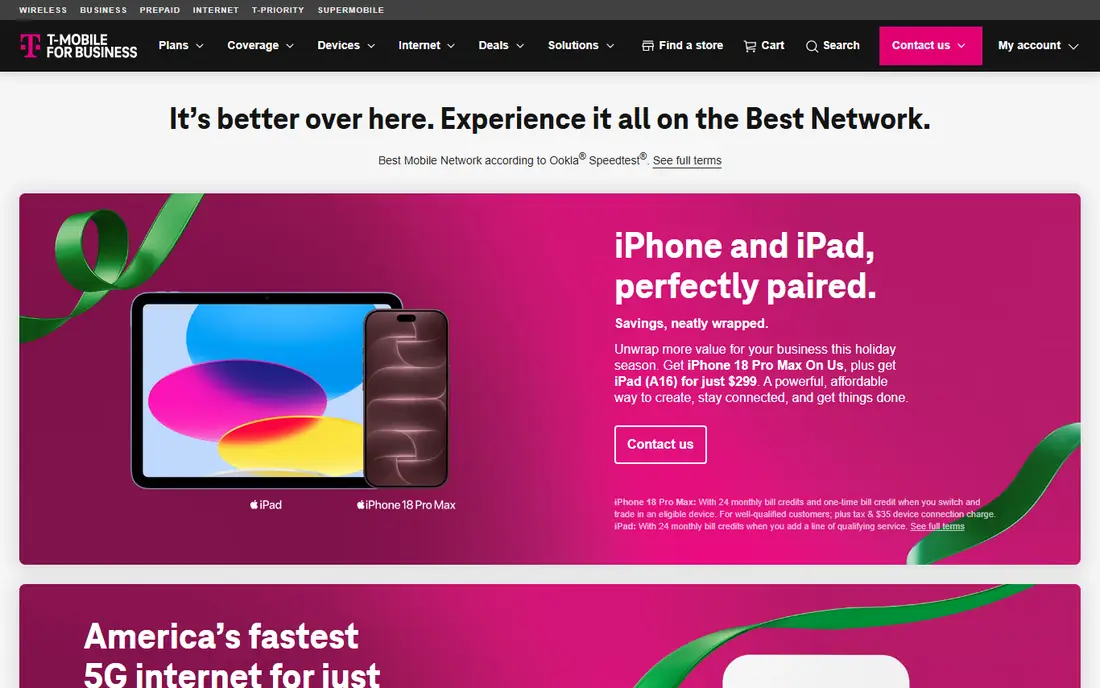
T-Mobile for Business appeals to teams that live on their phones, with video calls, navigation, photo uploads and cloud apps running all day. Its business plans are often priced below the other two national carriers for several lines, and its 5G footprint is a real advantage in many metro areas. For a sales or service team that is always moving, that combination is hard to ignore.
Check coverage where your staff actually work, not just in your head office postcode. T-Mobile has improved rural coverage, but dead spots still exist, and a cheap plan does not help if calls drop on the road. Also read the hotspot allowance on the exact tier you choose, since entry tiers may give only a small amount of high-speed hotspot data.
- Large 5G network
- Competitive multi-line pricing
- Scam protection tools included on many plans
- Coverage can vary in rural areas
- Higher tiers are needed for the largest hotspot allowances
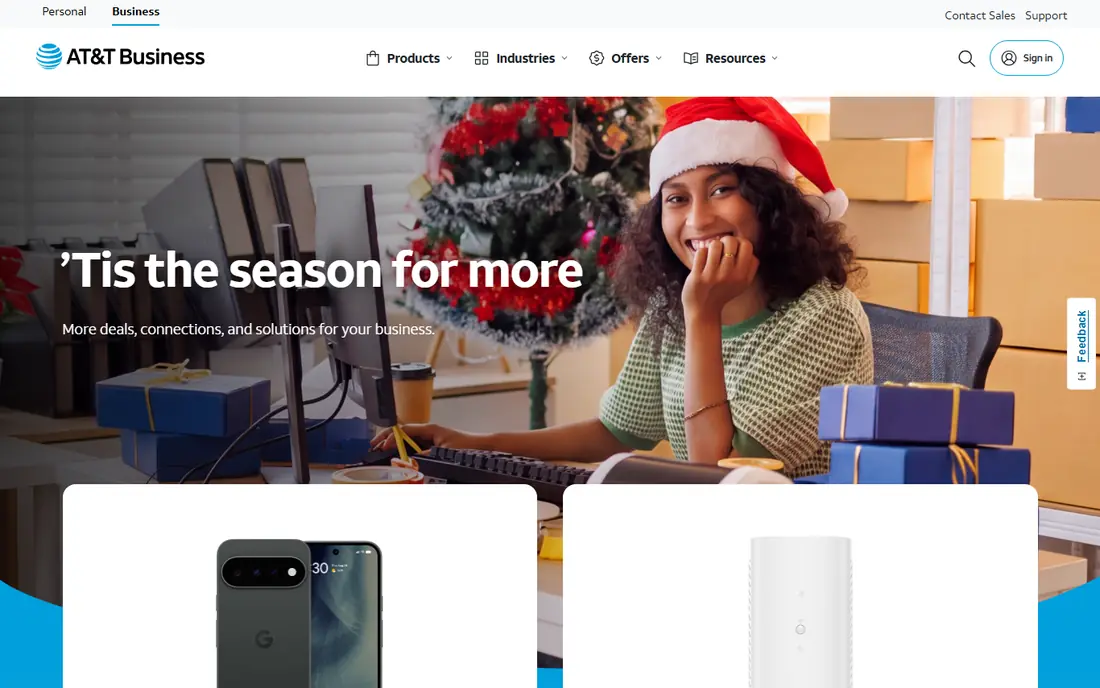
AT&T Business fits companies that want one carrier for phones, tablets and connected devices, with controls that grow as the team grows. Its security tools, spam and fraud blocking, and device management options appeal to owners who do not have a full IT department. If you already use AT&T for business internet, bundling conversations may also simplify billing.
The downside is the same as with the other national carriers: the advertised price is a starting point, not a promise. Multi-line discounts, autopay and contract terms change the total, and device deals often require staying on a plan for the full installment period. Get the per-line cost for your exact line count in writing, and confirm what happens when you add or remove a line mid-term.
- Nationwide coverage
- Security features such as ActiveArmor
- Plans that scale as headcount grows
- Pricing varies by line count and term
- Some security features sit on higher tiers
US Mobile is a strong pick for small businesses that want to cut the phone bill without giving up unlimited data. Its Unlimited Starter plan starts at $25 per month, with taxes and fees included on unlimited plans, and it lets customers choose between networks. Pooled and by-the-gig plans also help teams where usage varies a lot from person to person.
What you give up is the hand-holding of a national carrier store. Activation, device setup and troubleshooting are mostly self-serve or online, which suits a tech-comfortable team but may frustrate staff who expect in-person help. US Mobile also lacks some of the enterprise device management tools that larger carriers sell, so it fits small teams better than companies with strict IT controls.
- Unlimited Starter from $25 per month with taxes and fees included
- Choice of networks
- Pooled and by-the-gig options
- No physical stores in most areas
- Support is mainly online
- Business features are simpler than national carriers
Mint Mobile works well for a very small business, a solo owner, or a team that buys phones outright and wants a predictable low bill. Its unlimited plan is listed from $30 per month, and activation is done online with a SIM or eSIM. For office-based staff who use Wi-Fi for much of the day, Mint can cut hundreds of dollars a year compared with a national carrier plan.
The trade-off is upfront payment. The lowest prices usually require buying three, six or twelve months at once, which ties up cash and makes switching mid-term less attractive. Mint runs on the T-Mobile network, so coverage follows that network, and data priority during congestion can differ from a direct T-Mobile plan. Test one line first before moving a whole team.
- Low unlimited pricing
- No long carrier store visits needed
- Simple online activation
- Best prices require paying for several months upfront
- Priority data rules vary by plan
Visible keeps the decision simple, which is a benefit when you do not want to compare ten tiers. Its base unlimited plan starts at $25 per month with taxes and fees included, and there is no annual contract. That simplicity suits freelancers, contractors and small teams where each person manages their own line and just needs reliable calls, texts and data.
Visible is a consumer-first brand, so it does not offer the same business account management, device fleets or pooled billing as a business carrier. Hotspot use is also limited on the base plan, so field staff who tether a laptop all day should check the higher tier. For a one-person business or a side team, though, the low friction and clear price are genuine strengths.
- Simple unlimited plans from $25 per month
- Taxes and fees included
- No annual contract on base plans
- Fewer business-specific tools
- Support is digital-first
- Hotspot limits apply on the base plan
Google Voice is not a carrier, and that is the point. It gives your business a separate number that rings on a phone you already own, with voicemail transcription, call routing and text messaging from a computer or app. For office staff, remote workers and owners who want to keep personal and business calls apart, it can be far cheaper than adding a carrier line for every person.
Do not buy Google Voice expecting it to replace mobile service. It still needs internet or a carrier plan underneath, and emergency calling and international rules need checking for your use. It also lacks some call centre features that a full business phone system offers. As a low-cost second number, though, it is one of the easiest wins on this list.
- Business number from $10 per user per month
- Works on existing phones and computers
- Call routing and voicemail transcription
- Needs a separate data or carrier connection
- Not a full mobile carrier replacement
- Some advanced calling features need higher tiers
RingCentral suits teams that work from phones, laptops and home offices and want one number that follows the person, not the device. Calls, team messages and video meetings sit in one app, and it integrates with tools many small businesses already use for customers and sales. That matters when staff switch between a desk, a car and a home office during the day.
The cost model is different from a carrier. You pay per user, and you still need mobile data or Wi-Fi for the app to work, so it is an addition to a carrier plan for field staff, not a replacement. Setup also takes longer, with number porting, call routing rules and user training to arrange. For office and hybrid teams, the flexibility is worth it, but pure field teams may prefer a carrier first.
- Business calling plus messaging and video meetings
- Apps for phone and desktop
- Integrations with common business tools
- Per-user pricing adds up for large teams
- Mobile data still needs a carrier plan
- Setup takes more time than a simple carrier line
Spectrum Mobile is worth a look only if your business already buys Spectrum internet, because that is where its value sits. Bundled lines can be cheaper than buying mobile service alone, and unlimited plans suit teams that use phones for customer contact, scheduling and field updates. It runs on a partner national network, so coverage in most populated areas is solid.
Outside a Spectrum bundle, the case weakens. Standalone pricing is less compelling, and business-specific features are thinner than those from the national carriers. Availability and plan details also vary by location, so confirm the exact business offer for your address before counting on it. For a Spectrum household or office already, it is a sensible add-on to price against the carriers above.
- Useful bundle pricing for Spectrum internet customers
- Unlimited options
- Access to a large national network partner
- Requires Spectrum internet for the best value
- Business plan details vary by area
- In-store support is limited in some regions
How we picked these
We compared official carrier and provider pages, business plan descriptions, hotspot and pricing notes, and independent plan comparisons checked in October 2026. We favoured providers that are live in the United States, that publish business or small-team options, and that cover a real business need, from field coverage to a low-cost second number. We left out providers with no clear US business offer, and we marked prices as See website where the vendor quotes by line count, location or contract rather than publishing one fixed price.
What to check before you choose a business phone provider
Start with coverage where work happens. Ask staff to note dead spots on their current network for a week, and check each carrier map for those locations, not just your office. A plan that is cheap in town and useless on a job site will cost you customers, so coverage should outrank a small monthly saving for field teams.
Next, model the full monthly cost for your exact team size. Add taxes and fees, device installments, insurance, hotspot add-ons and any per-line charges, then compare that total, not the headline rate. Pooled plans can help when usage varies, while unlimited plans suit heavy users. If staff use less than a few gigabytes a month, a by-the-gig or low-cost carrier may beat an unlimited national plan.
Finally, think about how phones are managed. Decide who owns the device, how a lost phone is locked, how numbers move when staff leave, and who handles support calls. National carriers offer more account support, low-cost carriers offer lower bills with more self-service, and voice apps offer flexibility without a new carrier line. Pick the mix that matches your team size and how much admin time you can spare.
Frequently asked questions
What is the best company mobile phone provider for a small business?
There is no single winner, because coverage and usage matter more than brand. Verizon Business and AT&T Business suit field teams that need wide coverage, T-Mobile for Business suits heavy data users, and US Mobile, Mint Mobile and Visible suit small teams that want a lower bill. Test coverage in your work areas and model the full bill before you commit.
What is the best mobile phone company for business use?
For most small businesses, the best mobile phone company is the one with strong coverage where staff work, a hotspot allowance that matches field use, and a per-line total you can predict. National carriers offer more support and device options, while smaller carriers offer lower prices with simpler business tools. A short trial on one or two lines is the safest way to compare.
Are business phone plans cheaper than personal plans?
Sometimes, but not always. Business plans can offer multi-line discounts, pooled data and account controls, while personal plans from low-cost carriers can be cheaper for a single line. Compare the total for your line count, including taxes, fees and device costs, rather than assuming a business label means a lower price.
Do I need a business plan for a company phone?
You do not always need one, especially for a solo owner with one line. A business plan helps when you need several lines on one bill, pooled data, device management, or a dedicated business support contact. For a single user, a consumer plan plus Google Voice for a business number can be enough.
What is the best phone company for a small team on a budget?
US Mobile, Mint Mobile and Visible are the budget picks on this list, with unlimited plans from $25 to $30 per month at the prices we found. They suit teams that buy phones outright and do not need enterprise device management. Check network coverage and hotspot limits first, since those are the usual limits on budget plans.
Can I keep my number when I switch business carriers?
In most cases, yes, through number porting, as long as the number is active and you have the account details from your current provider. Do not cancel the old line before the port completes, and allow a few days for business accounts with several lines. Confirm porting steps with the new carrier before you start.
Sources
- https://www.verizon.com/business/
- https://www.t-mobile.com/business
- https://www.att.com/business/
- https://www.usmobile.com
- https://www.mintmobile.com
- https://www.visible.com
- https://voice.google.com
- https://www.ringcentral.com
- https://www.spectrum.com/mobile
- https://www.usmobile.com/blog/best-small-business-phone-plans/
- https://technologyadvice.com/blog/information-technology/best-business-cell-phone-plans/
See where you really rank - block by block
ProMapRanker scans Google Maps across a grid of your service area. Simple monthly plans from $19, white-label on every plan.
Start freeKeep reading
 which software is best for pdf page removal
Which Software Is Best for PDF Page Removal in 2026
Find which software is best for pdf page removal, from free online tools to desktop editors, with page controls, privacy, safety, and pricing compared.
Read → when i work alternatives
Best When I Work Alternatives in 2026
Looking for when i work alternatives? We compare 8 scheduling apps for hourly teams, covering pricing, free plans, time clocks and the best fit for business.
Read → the best tool for keyword analysis
The Best Tool for Keyword Analysis in 2026
Find the best tool for keyword analysis with our 2026 comparison of 10 keyword analysis software tools on data depth, difficulty scores and price today.
Read →