 ProMapRanker
Best Citation Building Services for Electricians in 2026


Citation audit plus listing management · Pricing starts at: See website
Direct answer
BrightLocal is my top pick for electricians because it combines citation auditing, listing management and local rank tracking in one place, which suits a trade business that wants one dashboard instead of five. It has a free trial, so check its pricing page for current terms. Whitespark is the better fit if you want manual, high-quality citation work, and Yext makes sense for electrical contractors running several service areas or branches.
I put this comparison together from vendor documentation and public sources, not from hands-on testing. I looked at what each service actually does for a local trade business, how it handles listing accuracy, and where the limits sit. Electricians have specific needs: service-area pages, emergency call numbers, and sometimes several vans and depots, so I weighted those points.
Key takeaways
- Electricians need consistent name, address and phone data across trade directories, local chambers and general business listings, not just the big data aggregators.
- A citation audit first saves money, because duplicate and outdated listings are common for contractors who have moved premises or changed phone numbers.
- Manual citation services cost more per listing but usually produce better-fitting directories for a service-area trade.
- Multi-location tools help electrical companies with several depots or service areas keep branch details separate.
- Google's own guidelines still apply: no fake reviews, no keyword-stuffed business names, and no review gating.
Quick comparison
| Pick | Great for | Pricing starts at | Free tier | |
|---|---|---|---|---|
| BrightLocal | Citation audit plus listing management | See website | Free trial | Visit |
 Whitespark | Manual, high-quality citation building | See website | Not stated | Visit |
 Yext | Multi-location electrical contractors | See website | No free plan | Visit |
 Moz Local | Keeping core data aggregators in sync | See website | Not stated | Visit |
 Semrush Listing Management | Teams already using Semrush | See website | Not stated | Visit |
 Loganix | Done-for-you citation building | See website | Not stated | Visit |
 Synup | Agencies managing electrical clients | See website | Not stated | Visit |
The best citation building services for electricians compared
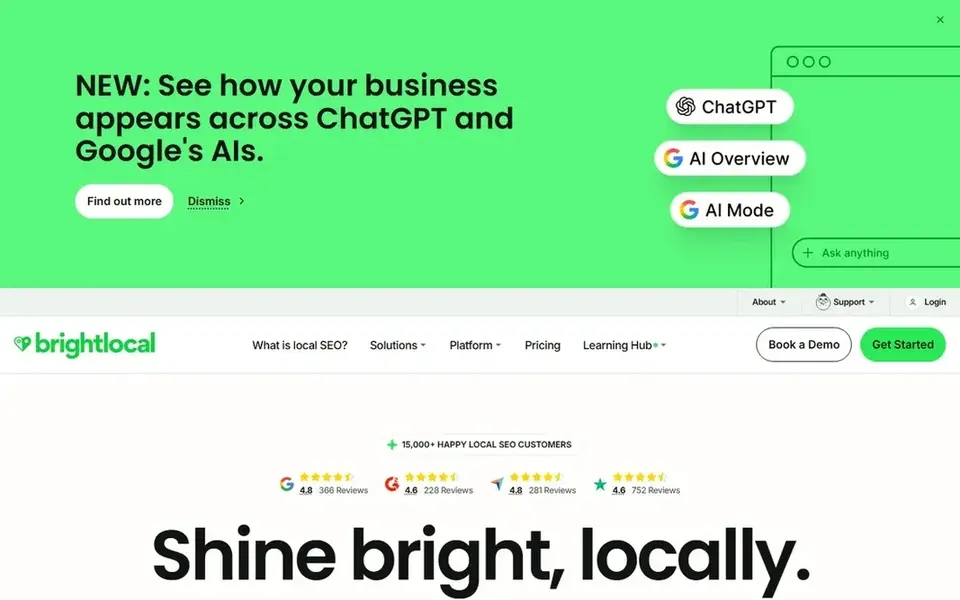
BrightLocal is a local SEO platform built around citation auditing, listing management and local rank tracking. For an electrician, the useful part is the audit: it shows where your business name, address and phone number differ across directories, which happens often after a van number change or a move to a new unit on an industrial estate.
The workflow is straightforward. You run an audit, fix the inconsistent listings, then use the listing management side to push corrected data to the main directories. You can also track local rankings for terms like "emergency electrician" in the towns you cover, so you can see whether citation clean-up lines up with movement in Maps.
The limit is that it is software, not a person doing the submissions for you. If you want someone else to build citations by hand, this is not that. Skip it if you have no time to work through the audit results yourself.
- Citation tracker and audit in one dashboard
- listing management for core directories
- local rank tracking alongside citations
- Some tools are priced as add-ons
- not a full done-for-you service

Whitespark is known for its citation finder and its citation building service. The finder suggests directories that actually matter for a given location and industry, which is useful for electricians because generic lists often miss trade-specific and local options like chamber of commerce pages and local trade associations.
The service side is manual. A person submits your details to each directory rather than pushing data through aggregators. That takes longer, but the listings tend to be the ones that fit an electrician's service area, and you get a record of what was submitted where.
The trade-off is cost and speed. If you need hundreds of listings updated quickly, manual work is not the right tool. Skip it if your main problem is duplicate listings rather than missing ones.
- Citation finder built around real local directories
- manual submission service
- strong focus on relevance over volume
- Manual work costs more per listing
- slower than automated pushes

Yext manages business listing data from a central source. For an electrical contractor with several branches, depots or service areas, that means one place to update opening hours, phone numbers and service categories, rather than editing each branch listing by hand.
For citation work, Yext pushes your data to a large network of directories and maps providers. The value for an electrician is consistency across branches: the Leeds depot and the Manchester depot stay separate, with their own phone numbers and hours, which matters when customers call the nearest one.
The limit is the model. Listings are tied to the subscription, so if you stop paying, the managed data stops updating. A single-van electrician will likely find it more than needed.
- Central control of listing data across many sites
- good fit for branches and service areas
- structured data management
- Listings depend on the subscription
- can be heavy for a single-van business
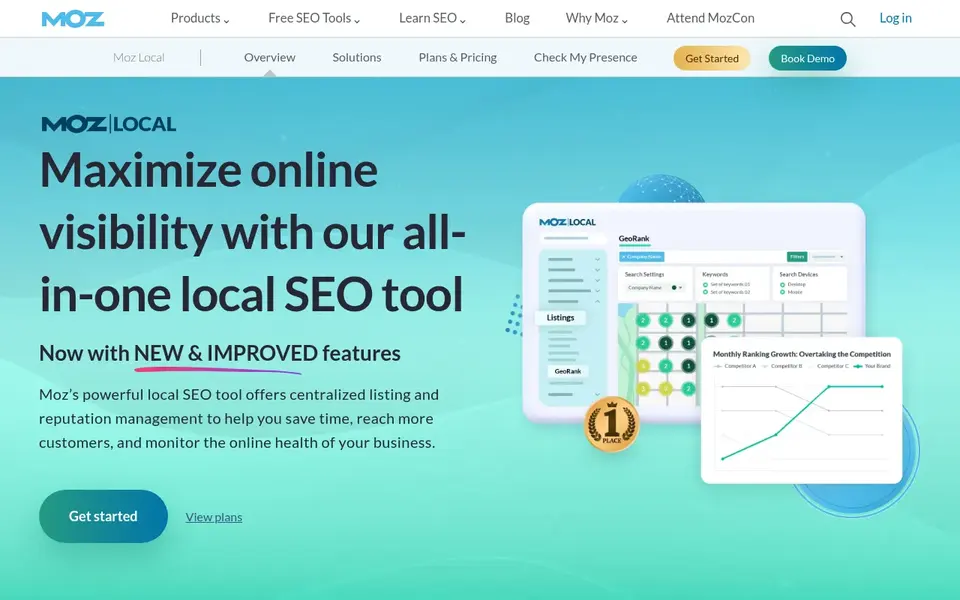
Moz Local focuses on getting your core business data into the main aggregators that feed many smaller directories. For an electrician, that means the name, address and phone number you enter propagate to a wide set of downstream sites without you submitting each one.
The setup is simple: enter your business details, confirm the listing, and let the tool distribute the data. It also flags duplicate listings, which is useful if you have ever had a second Google Business Profile created by a customer or a former marketing company.
The limit is coverage depth. It handles the big pipes well but does not chase the local trade directories and chamber pages that a manual service would. Skip it if you want hand-built citations in your town.
- Pushes data to major aggregators
- simple dashboard
- pairs with Moz's wider SEO tools
- Fewer niche trade directories
- less depth than dedicated citation services

Semrush Listing Management sits inside the wider Semrush platform. If you already use Semrush for keyword tracking and site audits, adding listing management keeps your local data in the same account as your electrician website's SEO data.
For citation work, it distributes your business details to a network of directories and maps providers and lets you correct data from one dashboard. That is handy when your website and your listings need to stay consistent, for example when you add a new service area page for a town you now cover.
The limit is obvious: it is a suite feature, not a specialist citation builder. If you do not use Semrush for anything else, the citation side alone is not a reason to sign up.
- Listing management inside a wider SEO suite
- useful if you already track local keywords there
- central data control
- Only worth it if you use the rest of Semrush
- not a specialist citation service
Loganix offers citation building as a done-for-you service. You provide the business details and the team submits them to a set of directories, then reports back on what was completed. For an electrician who is on the tools all day, that removes the admin burden entirely.
The service is manual rather than an automated push, so the listings are submitted individually. That suits a trade business that wants a clean set of relevant citations without learning a dashboard.
The limit is control. You do not pick every directory yourself, and you cannot easily adjust a single listing mid-campaign. Skip it if you want to manage listings in-house.
- Fully managed citation work
- manual submissions
- reporting on what was built
- Less control over each listing
- you rely on the provider's directory choices
Synup is a location marketing platform built for managing listings across many locations or clients. If you run a small agency with several electrical contractors as clients, or you operate an electrical company with multiple branches, it keeps each location's data separate and consistent.
For citation work, it syncs business details to a wide set of directories and lets you correct data per location. It also handles review monitoring and local landing pages, which fits an electrician with a page per town.
The limit is complexity. Setting up many locations takes planning, and a single-van electrician will not use most of it. Skip it unless you manage multiple locations or clients.
- Multi-location and multi-client management
- listing sync across many directories
- review and local page tools
- Setup takes planning
- overkill for a single electrician
How I chose
I compared these services using vendor documentation and public sources. I read each vendor's own description of what its citation product does, which directories it covers, and how it handles data updates. I did not run hands-on tests, and I have not used every tool in this list on a live electrical business.
My filter was fit for a local trade. An electrician needs accurate name, address and phone data, service-area coverage, and sometimes several branches. I favoured services that either audit existing listings or build relevant ones, and I noted where a tool is really built for agencies or multi-location brands rather than a single van. I also checked that each product is currently operating and linked to its official homepage.
What to check before you buy
- Run a free audit first if the tool offers one, so you know whether your problem is duplicates, missing listings or wrong data.
- Check whether the service covers the directories that matter in your country and region, not just US-centric sites.
- Confirm how service-area businesses are handled, since an electrician may not have a shopfront customers visit.
- Ask whether listings stay live if you cancel, because some models tie data to an ongoing subscription.
- Check that the service follows Google's guidelines: no fake reviews, no review gating and no keyword-stuffed business names.
- Decide whether you want software you run yourself or a done-for-you service, because the time cost differs a lot.
Frequently asked questions
Do electricians really need citation building?
Yes, because customers often find trades through directories, maps and local search rather than a single website. Consistent name, address and phone data across those listings helps search engines and customers trust that the business is the same one. Inconsistent data, such as an old phone number, sends people to the wrong place.
What is the difference between a citation audit and citation building?
An audit checks existing listings for errors, duplicates and missing entries. Citation building creates new listings on directories where you are not yet present. Most electricians should audit first, because fixing wrong data on existing listings is usually more valuable than adding more listings.
Can I build citations myself instead of paying a service?
You can, and many electricians do. The main cost is time: finding relevant directories, submitting details and checking they appear correctly. A service saves that time, and a tool like BrightLocal or Moz Local helps you push data to many sites at once. Start with a free audit to see how much work is needed.
How does citation building help with Google Maps rankings?
Citations are one signal among many. Google uses business information from across the web to confirm details, and consistent listings support that. They are not a shortcut to rankings. Pair citation work with a complete Google Business Profile, real reviews and a website with clear service-area pages.
Should a multi-branch electrical company use a different tool?
Often yes. A centralised platform like Yext or Synup keeps each branch's hours, phone number and service area separate, which is hard to manage by hand. A single-van electrician can usually start with an audit tool and a manual service for the local directories that matter.
Sources
See where you really rank - block by block
ProMapRanker scans Google Maps across a grid of your service area. Simple monthly plans from $19, white-label on every plan.
Start freeBrowse all guides
← Best Citation Building Services for Chiropractors in 2026Best Citation Building Services for Home Services in 2026 →
 best call tracking software for local businesses
Best Call Tracking Software for Local Businesses in 2026
A practical guide to the best call tracking software for local businesses in 2026, compared from vendor documentation and public sources.
Read → best bing places management tools
Best Bing Places Management Tools in 2026
A practical guide to the best Bing Places management tools for local businesses in 2026, compared from vendor documentation and public sources.
Read → best apple business connect tools
Best Apple Business Connect Tools in 2026
A guide to the best Apple Business Connect tools for local businesses in 2026, covering listing management, review tools and local SEO software.
Read → local seo for landscapers
Local SEO for Landscapers: Growing Leads Across Your Service Area
A landscaper's local SEO guide: service-area GBP, photos, reviews, and geo-grid tracking for more leads.
Read → whitespark local citation finder
Whitespark Local Citation Finder: A Complete Guide
Everything you need to know about whitespark local citation finder: what it is, why it matters for local SEO, and exactly how to act on it.
Read → grid rank tracker google maps
Grid Rank Tracker for Google Maps: Setup, Scans, and Reading Results
A complete walkthrough of using a grid rank tracker for Google Maps, from setup to interpreting your heatmap.
Read →More in Local SEO & Google Maps · All guides A to Z by date · Latest guides