 ProMapRanker
Best Cell Phone Service Providers in 2026


Premium coverage and large family plans · Pricing starts at: $75 per month
Key takeaways
- The best cell phone service provider for most people balances network coverage, monthly price, and how much high-speed data you actually use.
- The big three carriers offer wider store support and premium perks, while smaller providers often use the same networks for less money.
- Taxes, autopay discounts, and multi-line pricing can change the real monthly cost by a large amount, so read the checkout total.
- Check coverage at home, at work, and on your usual travel routes before you port a number, because national maps hide local gaps.
Quick comparison
| Pick | Great for | Pricing starts at | Free tier | |
|---|---|---|---|---|
| Verizon | Premium coverage and large family plans | $75 per month | No | Visit |
 AT&T | Families and AT&T home service bundles | $60 per month | No | Visit |
 T-Mobile | Fast 5G and frequent travellers | $55 per month | No | Visit |
 Mint Mobile | Low-cost prepaid plans on the T-Mobile network | $15 per month | No | Visit |
 Visible | Simple unlimited on the Verizon network | $25 per month | Free trial | Visit |
 Google Fi Wireless | International travel and flexible data | $20 per month | No | Visit |
 Cricket Wireless | AT&T network coverage with store support | $35 per month | No | Visit |
 US Mobile | Choosing your network and light data plans | $10 per month | Free trial | Visit |
The best cell phone service providers
We compared current single-line pricing, network ownership, and plan structure from carrier pages and October 2026 plan comparisons. Prices below are entry single-line rates before some autopay or multi-line discounts, unless noted.
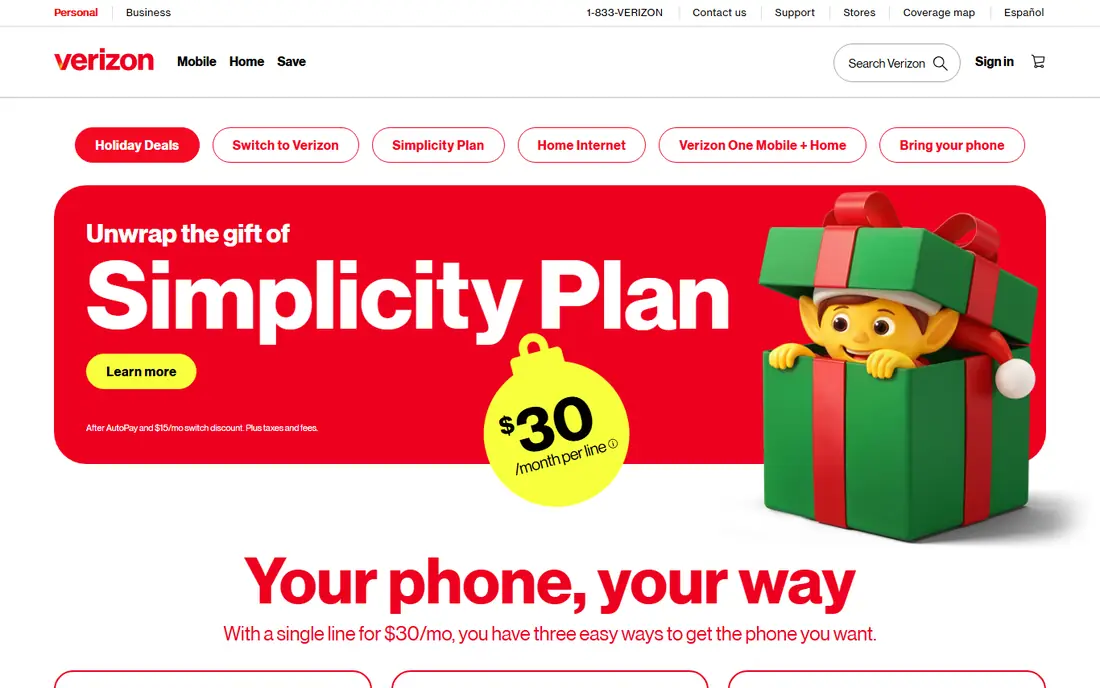
Verizon remains the default choice for buyers who put coverage first and are willing to pay for it. Its Unlimited Welcome plan is the entry unlimited option, while higher plans add more premium data, hotspot allowances, and perks. For a family, the per-line cost falls as lines are added, and the in-store network helps when a phone needs swapping or a plan needs changing in person. If you travel through rural areas or need reliable service in many states, that coverage depth is the main reason to choose Verizon.
The price is the honest trade-off. A single line starts higher than most smaller providers, and taxes and fees can push the bill above the advertised rate on some plans. Verizon also rewards autopay and multi-line accounts, so a single-line buyer without autopay pays the most. If you use little data or live in a city with strong coverage from all carriers, a cheaper provider on the Verizon network may give you a similar day-to-day experience for less.
- Large nationwide network
- Strong premium unlimited options
- Wide store and support network
- Highest entry price among the big three in this list
- Taxes and fees are added on many plans
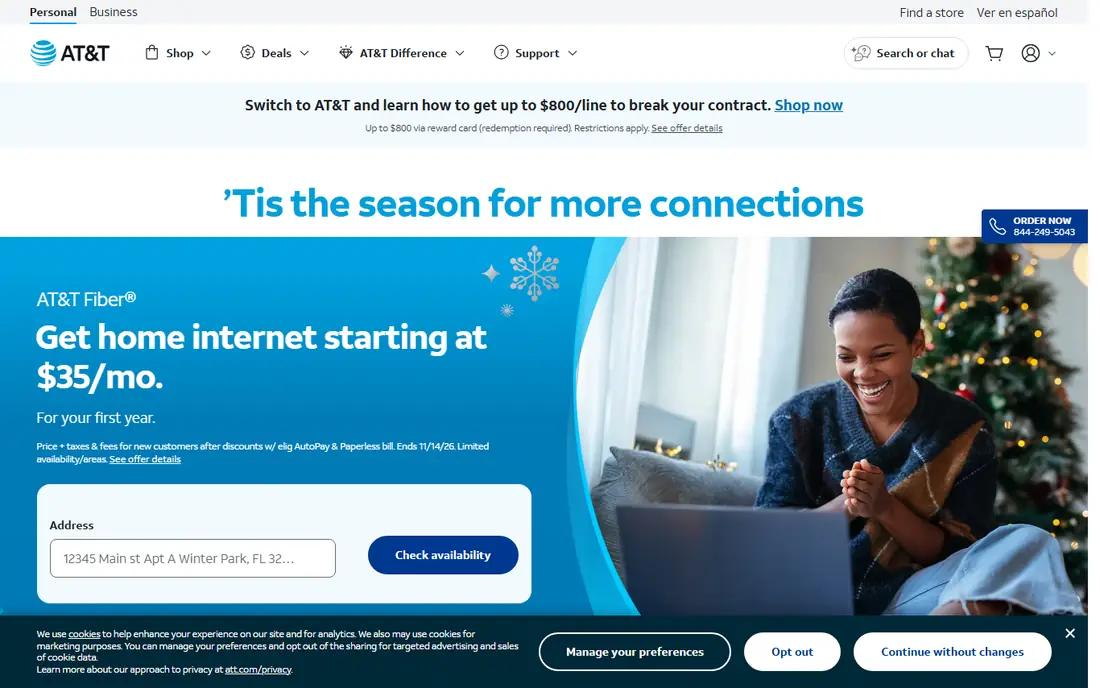
AT&T suits households that already use AT&T for internet or TV, or that want a big carrier with stores in most towns. Its Value plan is the entry point, while higher plans add premium data and hotspot use. Family pricing brings the per-line cost down, and bundling can simplify billing when several services sit on one account. For a buyer who wants one company for phone and home services, AT&T is a practical choice.
The plan range can be confusing, because names, data allowances, and perks change across tiers. A single-line buyer should check the hotspot allowance and premium data amount, not just the word unlimited, since speeds can slow after a set amount on lower plans. AT&T is also not the cheapest single-line option, so light users should compare Cricket, which uses the AT&T network, before paying for the main brand.
- Large network with strong family pricing
- Bundles with home internet and TV in some areas
- Solid premium plans
- Entry unlimited plan is not the cheapest
- Perks vary by plan and can be confusing
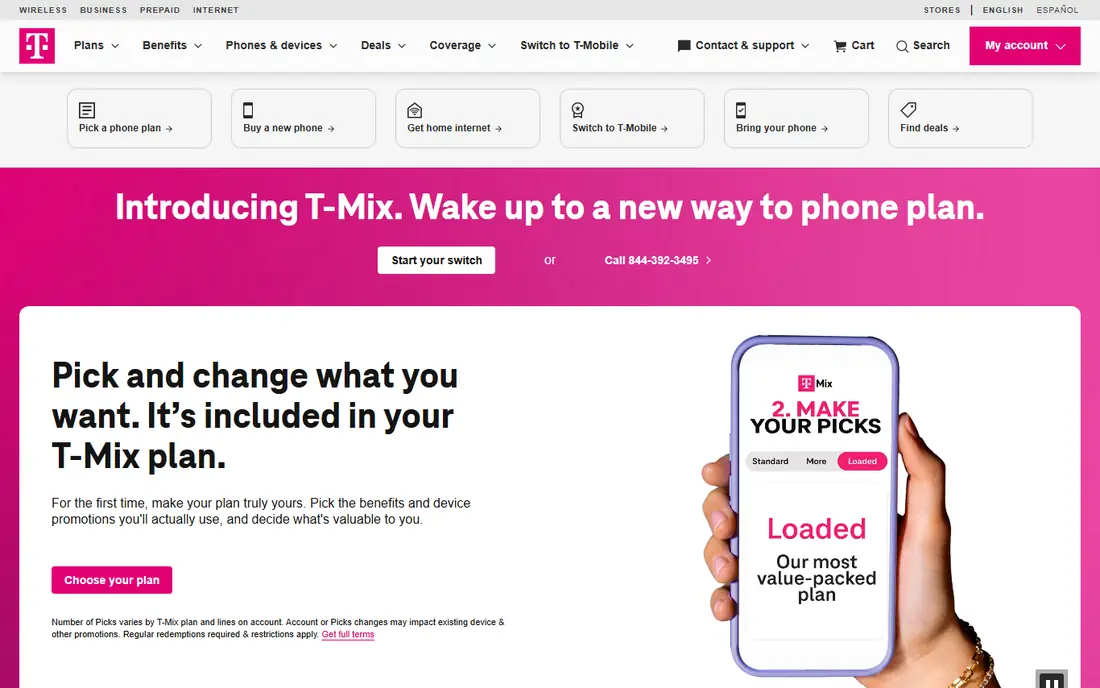
T-Mobile has built its case on 5G speed and perks, and for many city buyers it delivers both. The Essentials plan is the entry point, while Experience plans add premium data, hotspot use, and travel benefits. Families often find T-Mobile competitive, and travellers value the included international features on higher plans. If you stream video, use a hotspot, or travel often, the higher tiers can be worth the extra cost.
Coverage is the check you must do first. T-Mobile is strong in many urban areas, but rural coverage still varies, so test the network on your daily routes if you can. The entry plan also has fewer perks than the top plans, so buyers who choose the cheapest tier should not expect the full travel bundle. For most urban and suburban buyers, though, T-Mobile is a strong middle option between price and premium features.
- Strong 5G coverage in many cities
- Travel and streaming perks on higher plans
- Competitive family pricing
- Rural coverage can vary by area
- Higher plans cost much more than the entry plan
Mint Mobile is the clearest budget pick for a single line, provided you are comfortable prepaying. Its 6GB plan starts at a low monthly equivalent on a 12-month plan, and its unlimited plan is far below big-carrier unlimited prices. The service runs on the T-Mobile network, so coverage in T-Mobile strong areas is similar to a direct T-Mobile plan for most daily use. Online signup and eSIM support also make switching quick for a buyer who does not need a store.
The main catch is prepayment. The lowest prices require paying for several months at once, and the monthly equivalent rises on shorter terms. Mint customers may also see slower speeds than direct T-Mobile customers when a tower is busy, because prepaid traffic can be deprioritised. If you use a lot of data at peak times in a crowded area, test the service first. For a light or moderate user who wants a low bill, Mint is hard to beat.
- Very low price when you prepay for 12 months
- Unlimited plan is cheap by big-carrier standards
- Simple online signup
- Best prices require bulk prepayment
- Data priority can be lower than T-Mobile direct customers at busy times
Visible is the simplest way to get unlimited data on the Verizon network without a big-carrier bill. The base plan costs a flat monthly rate with taxes included, which makes budgeting easy, and there are no annual contracts or store visits. For a buyer who wants one plan, one price, and no add-on confusion, Visible is refreshingly direct. The app-based signup and eSIM support also suit buyers who are comfortable managing a plan on a phone.
The trade-off is priority and perks. The base plan can slow down when the Verizon network is busy, because direct Verizon customers get priority. Hotspot speed and premium data are also limited compared with the higher Visible plan. If you rely on a hotspot for work or stream heavily at peak times, the Visible plan upgrade is worth checking. For everyday phone use, though, the base plan covers most needs at a low, predictable price.
- Flat price with taxes included
- Unlimited data on the Verizon network
- No store visits needed
- Base plan has lower data priority
- Premium features require the higher Visible plan
Google Fi Wireless is built for travellers. Its Flexible plan starts with a low base price plus a charge per gigabyte, which suits a light user who wants to pay only for data used. Its unlimited plans add international data in many destinations, which can save a large roaming bill on a trip abroad. The service runs on the T-Mobile network in the United States, so domestic coverage follows T-Mobile strength in your area.
Heavy domestic users should look at the unlimited plans rather than the Flexible plan, because per-gigabyte charges rise quickly with video streaming and hotspot use. Google Fi also works best for buyers comfortable with online support, since there is no large store network. If you travel abroad at least once a year, or you use very little data at home, Google Fi is one of the most flexible providers in this list.
- Strong international roaming on unlimited plans
- Flexible plan charges for data used
- Runs on the T-Mobile network
- Flexible plan data charges add up for heavy users
- Best value is on unlimited plans
Cricket Wireless gives buyers AT&T network coverage with a simpler price structure and a store to visit. Its Sensible plan is a mid-priced entry point with a set data allowance, while unlimited plans suit heavier users. Four-line family pricing is competitive, which makes Cricket a good fit for a household that wants the AT&T network without AT&T main-brand prices. Taxes are included on many plans, so the bill is easier to predict.
The limit is priority. Cricket traffic can slow when AT&T towers are busy, and hotspot and premium data allowances are smaller than on direct AT&T plans. Buyers who need the fastest possible speeds at peak times should test the service in their area. For a family that wants store support, predictable pricing, and solid coverage, Cricket is a balanced choice.
- Uses the AT&T network
- Physical stores for help
- Taxes included on many plans
- Family pricing is competitive
- Data speeds can slow on busy towers
- Premium features are limited compared with AT&T direct plans
US Mobile stands out because it lets customers pick a network rather than accepting one. Its Light plan is one of the cheapest ways to keep a phone active, while Unlimited Premium suits heavy users who want more priority data. Taxes are included on many plans, which helps the advertised price match the bill. For a buyer who knows which network works best at home, that choice is a real advantage over a single-network provider.
The range of plans can be confusing at first, because network choice, data amount, and add-ons interact. New buyers should start with the network that covers their home and work, then pick data based on last month's actual use, not a guess. US Mobile also relies on online support, so buyers who want in-store help may prefer Cricket or a big carrier. For a price-conscious buyer who likes control, US Mobile is a flexible pick.
- Lets you choose among major networks
- Very cheap light plans
- Taxes included on many plans
- Plan options can feel complex at first
- Premium unlimited costs more than the light plans
How we picked these
We compared carrier pricing pages and October 2026 plan comparisons, focusing on single-line entry prices, network ownership, and plan structure. We kept only providers with live US service in 2026 and a clear published plan range. We mixed the big three carriers with smaller providers that use their networks, because that mix is how most buyers actually save money without losing coverage.
What to check before you switch
Start with your real data use, not the word unlimited. Check your current carrier app for last month's data total, hotspot use, and line count, then match that to a plan rather than buying the largest tier by default. Next, check coverage where you live and work, and ask about data priority, because a cheap unlimited plan can slow down at busy times. Finally, confirm the full monthly total, including taxes, autopay discounts, and any device payments that stay on your old bill.
Single line or family plan
A single line usually costs the most per line, so a solo buyer should lean toward Mint, Visible, or US Mobile unless premium perks matter. A family of three or four often gets better value from a big carrier or Cricket, because per-line prices fall with each added line. Compare the total household bill, not just one line, and check whether each family member needs the same data amount.
Prepaid or postpaid
Prepaid plans such as Mint and Visible suit buyers who want a low, predictable bill and do not need device financing from the carrier. Postpaid plans from Verizon, AT&T, and T-Mobile suit buyers who want premium priority, store support, and device deals tied to a contract. If you buy your phone outright, prepaid usually wins on price. If you need a financed phone and premium perks, postpaid may be worth the higher monthly cost.
Frequently asked questions
Who is the best cell phone service provider overall?
There is no single winner, because the best provider depends on coverage in your area and how much data you use. Verizon and AT&T lead on wide coverage and store support, T-Mobile leads on 5G speed in many cities, and Mint, Visible, and US Mobile lead on price. Check coverage at home first, then pick the cheapest plan on a network that works there.
What is the best cell phone service provider for families?
For families, the best choice is often a big carrier or Cricket, because per-line prices fall as lines are added. A family of four should compare the total bill, hotspot needs, and data priority across Verizon, AT&T, T-Mobile, and Cricket. A family with light users can also save by mixing light plans on US Mobile rather than putting everyone on unlimited.
Is a smaller provider as good as a big carrier?
A smaller provider uses one of the big networks, so coverage maps are often similar, but data priority, perks, and support can differ. Smaller providers may slow down at busy times and offer fewer stores and perks. For everyday calls, texts, and browsing, most buyers will not notice a difference, but heavy hotspot users and peak-time streamers should test first.
How much data do I actually need?
Most light users do fine with 5GB to 10GB per month if they use Wi-Fi at home and work, while heavy video streamers and hotspot users may need unlimited. Check your last three months of use in your carrier app, and add a buffer for travel months. Buying unlimited when you use 8GB a month is a common way to overpay.
Can I keep my number when I switch?
Yes, in most cases you can port your number by giving the new provider your current account number and transfer PIN. Do not cancel the old plan before the port completes, because cancelling early can cause the number to be lost. The port usually completes within a few hours, though some transfers take up to a day.
Sources
See where you really rank - block by block
ProMapRanker scans Google Maps across a grid of your service area. Simple monthly plans from $19, white-label on every plan.
Start freeKeep reading
 free alternatives to grok imagine
Free Alternatives to Grok Imagine in 2026
We compared the best free alternatives to grok imagine for image generation, from fast daily credits to design tools, so you can create without paying.
Read → best tools for instagram content creation
Best Tools for Instagram Content Creation in 2026
Compare the best tools for Instagram content creation, from Canva and CapCut to Later and Buffer, on design, video, planning, scheduling, and price in 2026.
Read → best tool to split pdf files
Best Tool to Split PDF Files in 2026
We compared the best tool to split pdf files on split modes, file limits, privacy and price, so you can split a PDF cleanly and keep every page in one go.
Read →