 ProMapRanker
Best Car Price Comparison Tools Online in 2026

Key takeaways
- Kelley Blue Book and Edmunds are the best starting pair for valuations, because they use different data and value types, and comparing them reveals a realistic range.
- CarGurus, Cars.com and Autotrader are best for live asking prices and local inventory, while TrueCar is best for what buyers recently paid at dealers.
- J.D. Power suits trade in and dealer facing values, while iSeeCars and CARFAX add market context and history that a single valuation misses.
- Prices from these tools are estimates or asking prices, not offers, so get a real dealer or buyer quote before you finalise a price.
- This is general information, not financial advice. Check loan terms, fees, taxes and total cost before you sign any purchase or finance deal.
Quick comparison
| Pick | Great for | Pricing starts at | Free tier | |
|---|---|---|---|---|
 Kelley Blue Book | Baseline valuations | Free | Yes | Visit |
 Edmunds | True Market Value estimates | Free | Yes | Visit |
 CarGurus | Live listings and deal ratings | Free | Yes | Visit |
 TrueCar | Recent transaction prices | Free | Yes | Visit |
 Cars.com | Large listing comparison | Free | Yes | Visit |
 Autotrader | New and used listings | Free | Yes | Visit |
 J.D. Power | Dealer and trade in values | Free | Yes | Visit |
 iSeeCars | Market pricing and analysis | Free | Yes | Visit |
 CARFAX | History linked valuations | Free | Yes | Visit |
The best car price comparison tools online
Online car price tools fall into two groups: valuation guides that estimate what a car is worth, and listing sites that show what sellers are asking today. Use both groups together, because a valuation without live listings can be stale, and a listing price without a valuation can be an outlier.
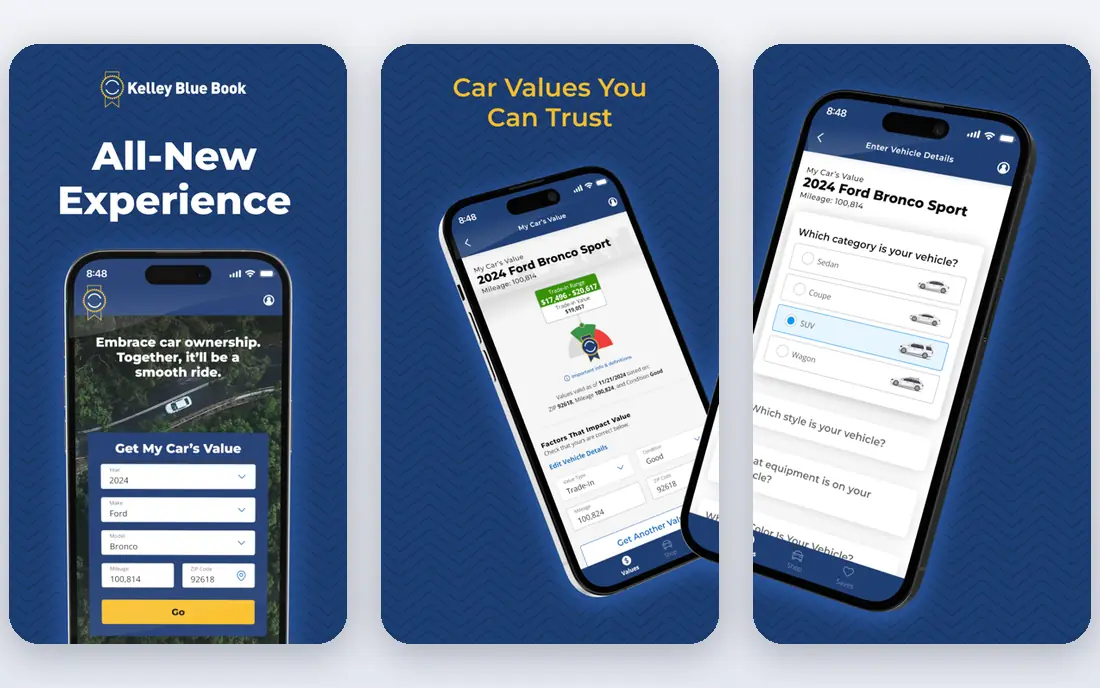
Kelley Blue Book, known as KBB, is the most widely recognised valuation guide in the US. You enter year, make, model, trim, mileage and condition, and it returns trade in, private party and dealer retail ranges, plus typical listing prices. That range is useful because it separates what a dealer might offer, what a private buyer might pay, and what a dealer might ask.
KBB values draw on auction, dealer and private sales data, but they can lag rapid market shifts, and the gap between value types can be large. Use KBB as a baseline, not as a single price. Compare it with Edmunds and live listings, and be honest about condition, mileage and options, since those inputs move the result more than most people expect.
- Widely recognised values
- Trade in, private party and dealer retail values
- Expert reviews and buying guides
- Values can lag fast market moves
- Different value types can confuse first time users
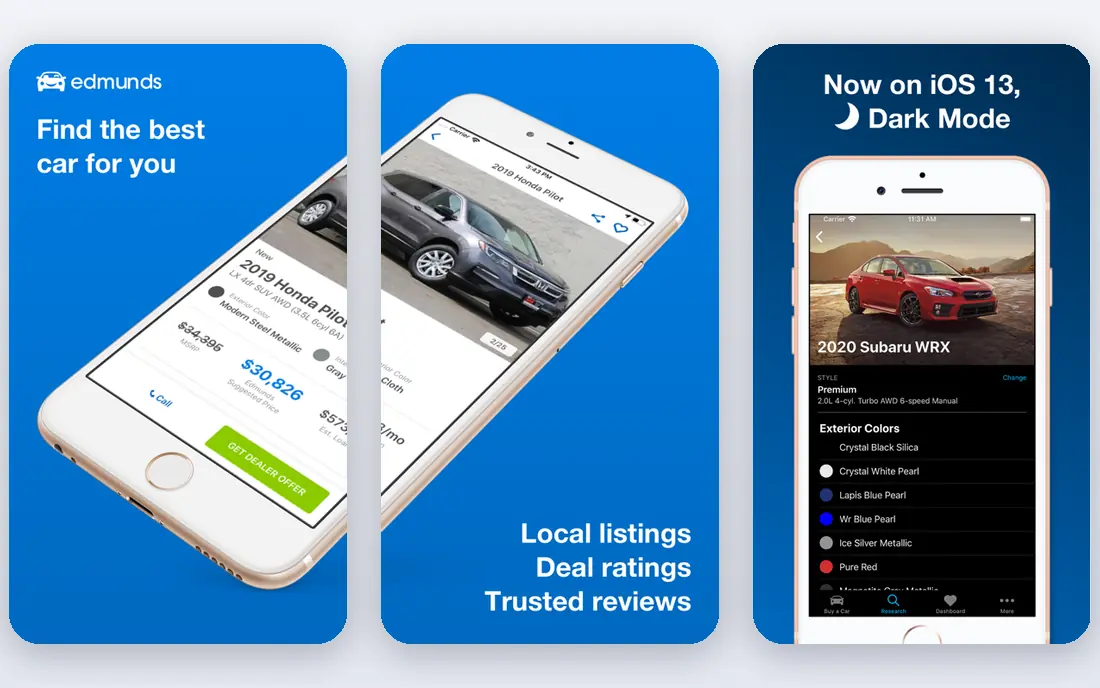
Edmunds True Market Value, known as TMV, estimates what buyers are actually paying for a car, based on sales and inventory data. It sits well beside KBB, because it reflects transaction data in a different way and often lands closer to a realistic purchase price. Edmunds also offers reviews, specs, inventory search and ownership cost tools, which help buyers compare trims and total costs.
TMV is still an average, so a local shortage, a popular colour or a specific trim can push real prices above or below it. Use Edmunds for a transaction based check, then look at live listings in your zip code to see whether local prices match the national or regional estimate. That local check is where many buyers catch a stale valuation.
- True Market Value from sales data
- Detailed reviews and specs
- Inventory and pricing tools
- TMV is an average, so local deals can differ
- Some features push toward dealer listings
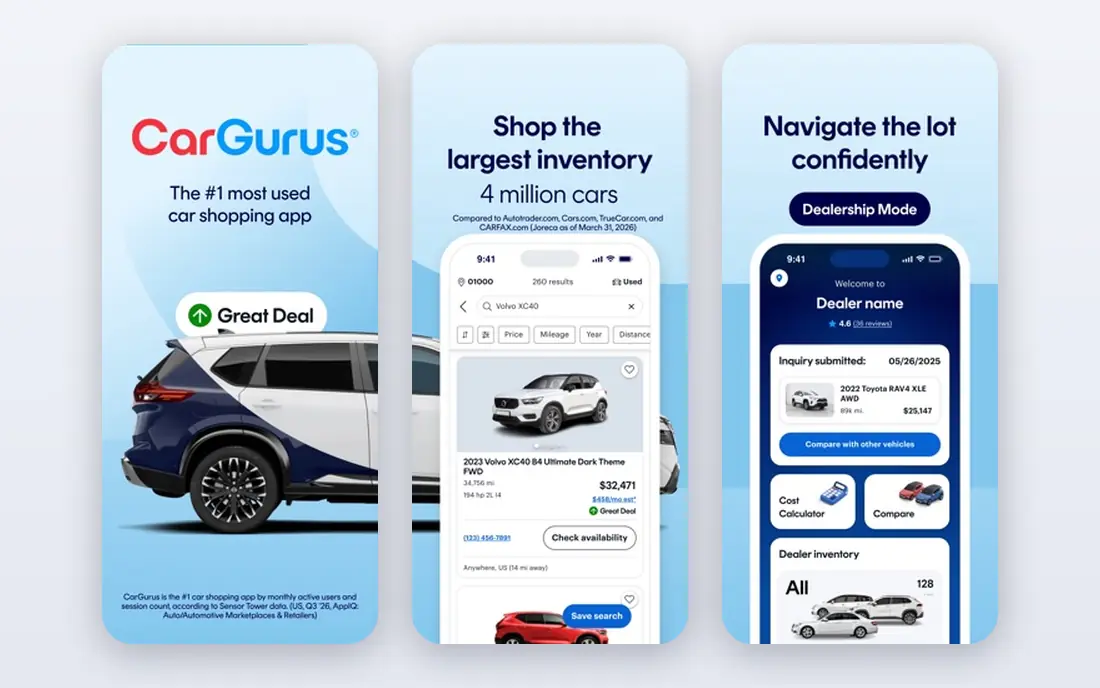
CarGurus combines live new and used listings with a deal rating that compares each asking price with its market model. You can filter by make, model, price, mileage and distance, set alerts, and see how long a car has been listed and whether its price has changed. That combination helps buyers spot overpriced listings fast and focus on cars that look fairly priced.
Deal ratings are a guide, not a guarantee. They are based on asking prices and modelled market values, not on the final price a buyer paid. Use CarGurus to find cars and to sense local asking prices, then compare the shortlist with KBB, Edmunds and TrueCar before you negotiate. A car rated as a good deal still needs a history check and an inspection.
- Large live inventory
- Deal ratings against market price
- Price history and alerts
- Ratings are based on asking prices and models, not final sale prices
- Dealer sponsored listings need care
TrueCar focuses on what buyers recently paid, rather than only on asking prices. Its price curve shows MSRP, average price and a great price range for a car in your area, based on transaction data from its dealer network. That view helps new car buyers set a realistic target before they visit a showroom, and it helps used buyers check whether a dealer price sits above recent deals.
TrueCar prices reflect its network, not the whole market, and a skilled negotiator may still beat a TrueCar price elsewhere. Treat it as a strong fairness check, not as a fixed price. Compare it with Edmunds TMV and live listings, and confirm fees, add ons and finance terms, since those can change the total cost even when the headline price looks fair.
- Price curve with average and great price ranges
- Dealer network pricing
- New and used price data
- Prices reflect its dealer network, not every dealer
- Best price may still be negotiable elsewhere
Cars.com is one of the largest US car listing sites, with new and used inventory from thousands of dealers, plus private listings, reviews and research tools. Its side by side comparison helps buyers weigh trims, features, fuel economy and prices, while market comparison tools show how a listing price sits against similar cars. That breadth makes it a good place to build a shortlist.
Cars.com mainly shows asking prices, not final sale prices, so a low listing price does not prove a good deal until fees and condition are checked. Use its comparison and research tools to narrow choices, then validate prices with KBB, Edmunds and TrueCar, and check vehicle history before you commit to a purchase.
- Very large dealer inventory
- Side by side comparisons
- Reviews, research and price tools
- Focuses on asking prices
- Sponsored placement can affect listing order
Autotrader is another major listing site for new and used cars, with detailed filters for price, mileage, trim, drivetrain and features. It offers reviews, buying guides, valuation links and vehicle history report options, which help buyers move from browsing to a shortlist. Its scale makes it useful for hard to find trims, colours and configurations.
As with other listing sites, Autotrader shows asking prices, not sale prices, and listing quality varies between dealers and private sellers. Compare shortlisted cars across Autotrader, Cars.com and CarGurus, since the same car can appear at different prices or with different detail. Always confirm the out the door price, including fees, before you judge a deal.
- Large new and used inventory
- Detailed filters
- Reviews, guides and history report links
- Asking prices only
- Private and dealer listings vary in quality and detail
J.D. Power, formerly NADAguides, provides vehicle values used by many dealers, lenders and insurers. Its trade in, private party and retail values draw on dealer sales data, which is why its trade in figure often reads close to a dealer offer. It also publishes reliability, quality and ownership research that helps buyers weigh long term costs, not only purchase price.
J.D. Power values can differ from KBB and Edmunds by a noticeable amount, because each guide uses different data and methods. That difference is useful, not a flaw, as long as you treat the three guides as a range. Use J.D. Power when you are trading in, financing or insuring a car, and compare it with KBB and Edmunds for a fuller picture.
- Dealer facing valuation data
- Trade in and retail values
- Reliability and quality research
- Interface can feel less consumer friendly
- Values can differ from KBB and Edmunds
iSeeCars combines listing search with market analysis, deal ratings and long term studies on depreciation, reliability and best used car values. Its price analysis helps buyers see whether a listing sits above or below market, while its studies help buyers choose models that hold value better over time. That longer view suits buyers who plan to keep a car for several years.
iSeeCars inventory is smaller than Cars.com or Autotrader, so use it as an analysis and shortlist tool alongside a larger listing site. Its ratings and studies are based on market data and models, not on a guaranteed sale price. Pair iSeeCars with a history report and an inspection for any used car you plan to buy.
- Market price analysis and deal ratings
- Long term value and reliability studies
- Listing search
- Smaller inventory than the largest listing sites
- Analysis is a guide, not a sale price
CARFAX is best known for vehicle history reports, and its valuation tools gain value when read beside that history. A car with a clean, well documented service history can justify a higher price than a similar car with gaps, accidents or title issues. CARFAX also offers free value checks and shopping tools that link price to the specific car, not only to its model and trim.
History reports depend on reported data, so a clean report does not prove a car has no hidden damage, and a paid full report may be needed for detail. Use CARFAX to screen used cars, compare values with KBB and Edmunds, and always pair a strong history with an independent inspection for older or higher priced cars.
- Vehicle history reports
- History based value context
- Service and accident records where reported
- Full reports may be paid through dealers or sellers
- History depends on reported data
How we picked these
We compared official valuation and listing sites used by US car buyers in October 2026. We kept tools that provide a valuation, a transaction price check, or a large live inventory with price comparison, rather than single dealer sites or general classifieds with no price analysis. We included a mix of guides, listing platforms and history linked tools, so buyers and sellers can build a price range from several independent sources. Where a tool offers a free value check, we noted it as free, and we did not present estimates as offers.
How to compare car prices like a buyer, not a browser
Build a range from three guides
Check KBB, Edmunds and J.D. Power for the same car, trim, mileage and condition, and write down trade in, private party and retail figures separately. Do not mix value types. The range across guides tells you more than any single number, and it gives you a realistic frame for negotiation for buyers, sellers and trade in customers alike.
Compare live listings in your zip code
National averages hide local supply. Search CarGurus, Cars.com and Autotrader with your real zip code, and note asking prices, days on market and price changes for comparable cars. A car that looks cheap nationally may be fairly priced locally, and a car that looks expensive may be the only local example of a rare trim.
Separate asking price from out the door price
Asking price, sale price and out the door price are different numbers. Ask for the full breakdown, including dealer fees, taxes, title, registration and any add ons, before you compare two deals. A lower asking price with high fees can cost more than a higher asking price with clean fees, especially on financed purchases.
Check history and condition before you trust a price
A low price can reflect accident history, title issues, high mileage, missing service records or needed repairs. Get a CARFAX or similar history check, and arrange an independent inspection for used cars, especially older, high mileage or high value models. Price tools cannot see worn tyres, weak brakes or hidden damage, and those costs belong in your comparison.
Get a real offer before you decide
Valuation guides and listing sites give estimates and asking prices, not commitments. Get a dealer trade in offer, a private buyer offer, or a written dealer sale price before you finalise a decision. That real offer is the only number a buyer has committed to, and it is the figure your negotiation should be measured against.
Frequently asked questions
What are the best online tools for car price comparison?
Kelley Blue Book and Edmunds are the best starting pair for valuations, CarGurus, Cars.com and Autotrader are best for live listings, and TrueCar is best for recent transaction prices. J.D. Power, iSeeCars and CARFAX add trade in, market and history context. Use at least three tools together for a realistic price range.
What is the most accurate car price tool?
No single tool is most accurate for every car, because each guide uses different data and methods. KBB is widely recognised, Edmunds TMV reflects transaction data, and J.D. Power reflects dealer sales data. Compare all three, add live listings and a real offer, and treat the result as a range, not as one exact price.
Is Kelley Blue Book or Edmunds better for car values?
Both are useful, and they work best together. KBB gives clear trade in, private party and retail ranges, while Edmunds TMV focuses on what buyers are paying. When they agree, your range is firmer. When they differ, check live listings and local supply to see which figure matches your market.
How do I compare new car prices online?
Use TrueCar for recent transaction prices, Edmunds for TMV, and Cars.com, Autotrader and CarGurus for live dealer listings and incentives. Compare the same trim, options and zip code, and ask for out the door prices including fees and taxes. That combination shows both the market price and the real total you would pay.
Are free car valuation tools reliable?
Free tools from KBB, Edmunds, J.D. Power, iSeeCars and CARFAX are reliable as estimates, but they are not offers. They work best for mainstream cars with standard mileage and condition. For classics, salvage titles, heavily modified cars or very old cars, get a professional appraisal and a real buyer offer instead of relying on a guide alone.
Should I trust a deal rating on a listing site?
Treat deal ratings as a helpful screen, not as proof of a good deal. Ratings compare asking prices with modelled market values, and they do not account for history, condition, fees or finance terms. Use a good rating to shortlist a car, then check its history, condition and out the door price before you buy.
Sources
See where you really rank - block by block
ProMapRanker scans Google Maps across a grid of your service area. Simple monthly plans from $19, white-label on every plan.
Start freeKeep reading
 wpforms alternatives
Best WPForms Alternatives in 2026
We compare 9 wpforms alternatives for WordPress forms, with free and paid options, current pricing notes, and honest limits for small business sites in 2026.
Read → windows task scheduler alternatives
Best Windows Task Scheduler Alternatives in 2026
Looking for Windows Task Scheduler alternatives? We compare 9 schedulers for Windows and cross-platform work, from free tools to enterprise automation.
Read → which ai video service is best
Which AI Video Service Is Best in 2026
which ai video service is best? We compare 10 legitimate AI video services on price, avatars, editing and output quality to help you pick the right tool.
Read →