 ProMapRanker
Best Calorie Tracking Apps in 2026

Key takeaways
- Cronometer and FatSecret offer the strongest free tiers, with barcode scanning included without a subscription.
- MyFitnessPal and Lose It now keep barcode scanning behind a paid tier for new accounts.
- MacroFactor suits lifters who want adaptive macro targets, but it has no lasting free tier.
- Food database accuracy matters more than app design: check entries against labels for foods you eat often.
Quick comparison
| Pick | Great for | Pricing starts at | Free tier | |
|---|---|---|---|---|
 MyFitnessPal | Largest food database | Free | Yes | Visit |
 Lose It | Simple daily calorie budgets | Free | Yes | Visit |
 Cronometer | Detailed nutrition tracking | Free | Yes | Visit |
 Yazio | Simple tracking with fasting tools | Free | Yes | Visit |
 Lifesum | Diet plans and guided eating | Free | Yes | Visit |
 MacroFactor | Adaptive macros for lifters | See website | Free trial | Visit |
 MyNetDiary | Guided tracking with coaching tips | Free | Yes | Visit |
 FatSecret | Free tracking with barcode scanning | Free | Yes | Visit |
 Carb Manager | Low-carb and keto tracking | Free | Yes | Visit |
The best calorie tracking apps
This article gives general information only. It is not medical advice. Calorie and nutrition needs vary by person, health condition and activity level, so talk to a qualified health professional before starting a restrictive diet or a major change in eating habits.
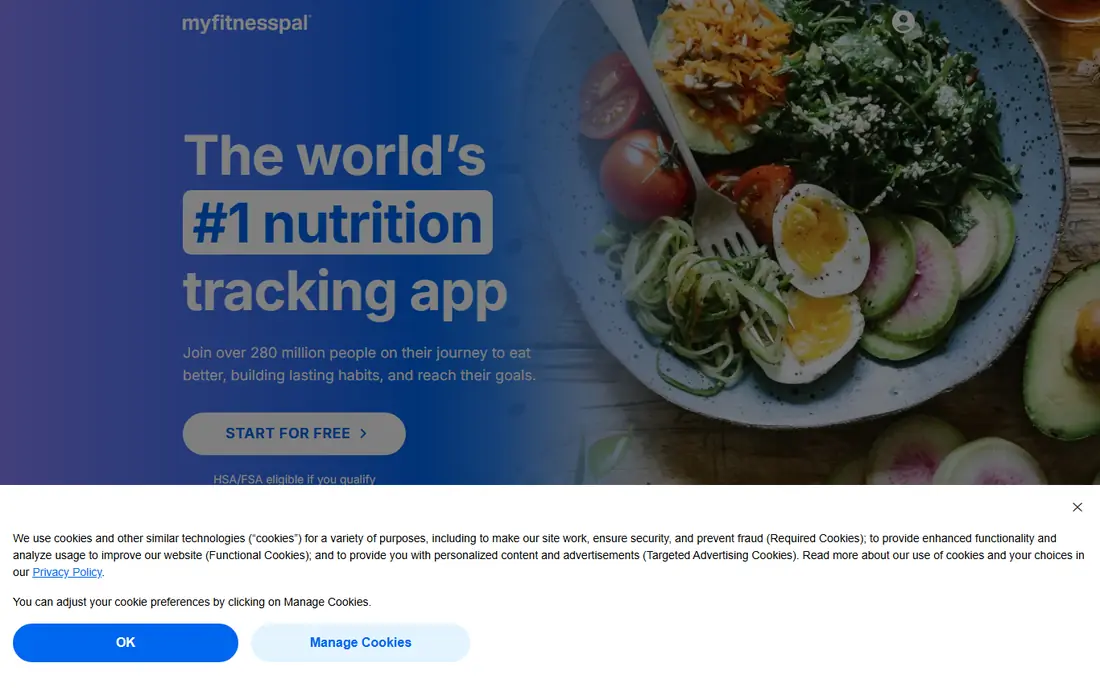
MyFitnessPal remains the easiest app to find a food, because its database is enormous. Search usually returns a match, and integrations with wearables and other fitness apps pull activity in automatically. Meal and recipe tools help people who cook at home and repeat the same dishes.
The free tier has narrowed. Barcode scanning, a feature many users consider basic, now needs Premium for new accounts, and the free version shows ads. If you scan packaged foods daily, the subscription cost matters more than the database size, so test the free tier first.
- Very large food database
- Wearable and app integrations
- Recipe and meal tools
- Barcode scanner needs Premium for new accounts
- Free tier shows ads
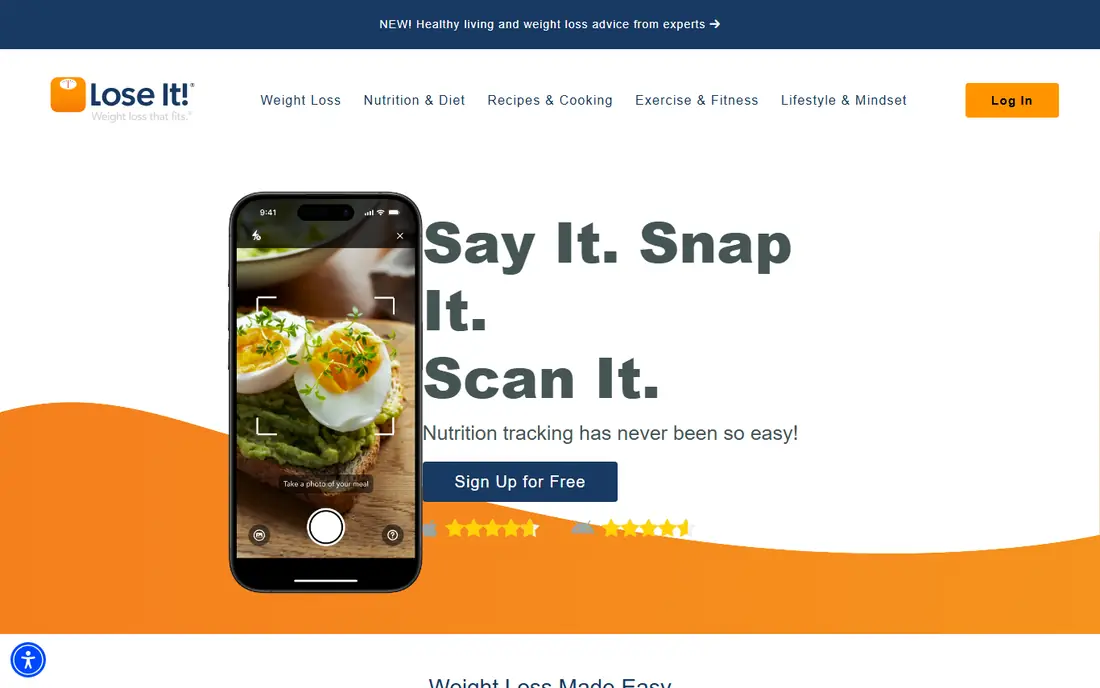
Lose It is the calmest app in this list for people who just want a daily budget. The home screen shows calories remaining in a clear way, logging is quick, and weight tracking sits alongside food without clutter. It suits users who log consistently but do not want nutrition detail beyond calories and macros.
Its paid tier holds features that rival free tiers include. Barcode scanning and Snap It photo logging need Premium, which changes the value calculation. If you mainly type or search foods by hand, the free tier is enough. If you scan everything, budget for Premium.
- Clear calorie budget view
- Photo logging with Snap It
- Weight and goal tracking
- Barcode scanner and photo logging need Premium
- Database smaller than MyFitnessPal
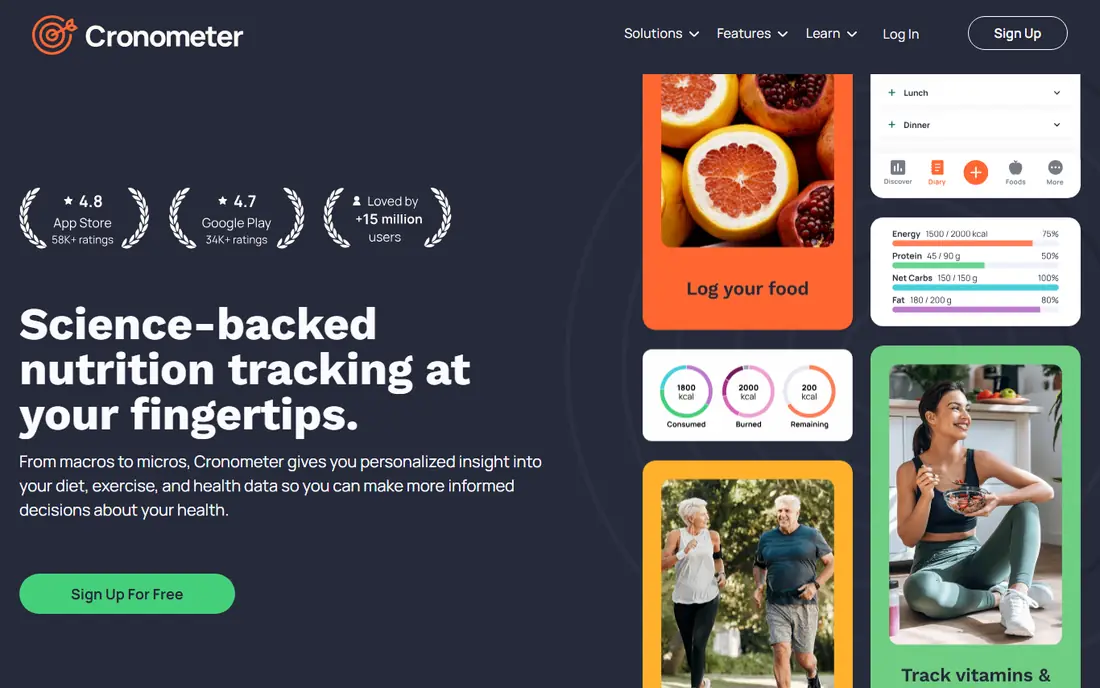
Cronometer is the pick for users who care about nutrients, not just calories. The free tier includes barcode scanning and detailed micronutrient breakdowns, and its database leans toward verified entries rather than user guesses. That accuracy helps people tracking vitamins, minerals or specific nutrients.
The interface is denser than Lose It or MyFitnessPal, and newcomers may find the detail overwhelming at first. Photo and voice logging sit behind Gold, so fast photo loggers should look elsewhere. For careful, accurate logging, Cronometer's free tier is hard to beat.
- Barcode scanning on the free tier
- Up to 84 nutrients tracked
- Verified database focus
- Interface is denser than simpler rivals
- Photo and voice logging need Gold
Yazio suits users who want a clean app with fasting and meal planning alongside calorie counting. The design is tidy, the fasting timer is genuinely useful for intermittent fasting, and recipes and meal plans help people who want structure beyond a blank log. It feels calmer than larger, busier apps.
The free tier is limited compared with Cronometer or FatSecret. Barcode scanning and photo logging need PRO, so packaged-food scanners will need to pay. Yazio earns its place for design and fasting tools, not for free-tier generosity, so check the PRO feature list before committing.
- Clean interface
- Fasting tracker
- Meal plans and recipes
- Barcode and photo logging need PRO
- Free tier is more limited than Cronometer
Lifesum is built for people who want a plan, not just a log. Diet options such as low carb or Mediterranean shape daily targets and meal suggestions, and the design is polished and easy to follow. Barcode scanning on the free tier, where offered, makes everyday logging less of a chore.
Plans are also a limit. Users who want full control over their own targets may find Lifesum's guided approach restrictive, and many features need Premium. It suits people who like structure and are happy to follow a plan, less so people who want a blank, flexible tracker.
- Diet-specific plans
- Barcode scanning on free tier in many cases
- Clean design
- Full plans and many features need Premium
- Calorie goals are plan-driven
MacroFactor is the most coach-like app here. It watches your logged intake and weight over time, then adjusts calorie and macro targets each week instead of leaving you with a fixed number. Lifters and people with specific physique goals often find that adaptive approach more useful than a static budget.
There is no free tier beyond a trial, so MacroFactor is a paid commitment from the start. Casual users who just want to watch calories will find simpler, cheaper apps enough. It earns its price only if you log consistently and actually want targets that change with your data.
- Targets adjust weekly based on logged data
- Strong macro focus
- Expenditure tracking
- No lasting free tier
- Price is higher than simpler trackers
MyNetDiary balances a strong food database with guided targets and coaching tips that help new users. It covers special diets and diabetes tracking options that many rivals handle poorly, and its target setting is more personalised than a one-size-fits-all calculator. That makes it a good middle ground.
Some advanced features need Premium, and parts of the interface feel less modern than Lifesum or Yazio. Users who want the slickest design may prefer a rival, but users who want solid tracking with useful guidance will find MyNetDiary dependable and well rounded.
- Strong food database
- Personalised targets
- Diabetes and diet tracking options
- Some advanced features need Premium
- Interface can feel dated in places
FatSecret is the best truly free option in this list. Barcode scanning, calorie and macro goals and health app sync are included without a subscription, and community features add motivation for users who like challenges. For a user who refuses to pay for basic logging, it is the obvious starting point.
The design is functional rather than beautiful, and Premium mainly adds meal plans and extra tracking rather than opening core logging. Users who want a polished interface or adaptive targets may prefer a paid rival. For free, accurate-enough daily logging, FatSecret is hard to fault.
- Barcode scanning free
- Calorie and macro goals free
- Community and challenges
- Premium adds mainly meal plans and extra tracking
- Design is functional rather than polished
Carb Manager is the clear pick for keto and low-carb eaters. It tracks net carbs properly, offers keto recipes and meal plans, and handles fasting and ketone tracking in a way general apps do not. For a low-carb user, that focus saves constant manual maths and guesswork.
For general calorie counting, Carb Manager is more app than most people need, and full features need Premium. Users who do not follow a low-carb diet will find simpler apps clearer and cheaper. Choose it for its diet focus, not as a generic tracker, and it does that job well.
- Built for keto and low-carb diets
- Net carb tracking
- Recipes and meal plans
- Full features need Premium
- Less suited to general calorie counting
How we picked these
We compared official feature pages, pricing pages, privacy policies and app store listings for each option. We kept only products that are still offered in October 2026 and that fit the topic directly. We checked whether a free tier or trial is real, what the paid plan adds, and where each product falls short, so the list reflects trade-offs rather than marketing claims alone.
How to choose a calorie tracker you will keep using
Start with logging friction, not features. The best app is the one you will still open in week six. Test barcode scanning, search and recent foods for the meals you actually eat. If scanning is behind a paywall and you scan daily, that paywall is the real price, whatever the free tier claims.
Next, check database accuracy for your staple foods. Search ten foods you eat weekly and compare entries with package labels. User-submitted entries can contain errors, so an app with verified entries, such as Cronometer, may be worth more than an app with a larger but messier database.
Finally, set targets sensibly. Use the app as a record, not as a judge. Avoid very low calorie targets, watch for signs of obsessive logging, and get professional advice if you have a history of disordered eating, diabetes or another condition that affects nutrition. A tracker should support steady habits, not drive extreme restriction.
Frequently asked questions
What is the best app for calorie counting?
Cronometer is the best free pick for detailed, accurate tracking, while Lose It is the simplest for a daily calorie budget. MyFitnessPal has the largest database, but its barcode scanner now needs Premium for new accounts, so check that before you choose.
What are the best calorie counter apps that are free?
FatSecret and Cronometer offer the strongest free tiers, with barcode scanning included. MyFitnessPal, Lose It and Yazio are free to log by hand, but keep key features such as barcode scanning behind paid tiers.
Is MyFitnessPal still worth it?
It can be, if you value its huge database and integrations and are willing to pay for Premium. If barcode scanning matters to you and you do not want to pay, Cronometer or FatSecret give you that feature free.
Do calorie apps work for weight loss?
They can help by making intake visible and consistent, but accuracy depends on honest logging and correct portion sizes. Apps work best alongside steady activity, sleep and a sustainable eating pattern, not as a short-term fix.
Should I track macros or just calories?
Calories matter most for weight change, while macros matter more for training, muscle retention and specific diets. Lifters and low-carb dieters benefit from macro tracking, while many general users do fine starting with calories alone.
Sources
See where you really rank - block by block
ProMapRanker scans Google Maps across a grid of your service area. Simple monthly plans from $19, white-label on every plan.
Start freeKeep reading
 free alternatives to grok imagine
Free Alternatives to Grok Imagine in 2026
We compared the best free alternatives to grok imagine for image generation, from fast daily credits to design tools, so you can create without paying.
Read → best tools for instagram content creation
Best Tools for Instagram Content Creation in 2026
Compare the best tools for Instagram content creation, from Canva and CapCut to Later and Buffer, on design, video, planning, scheduling, and price in 2026.
Read → best tool to split pdf files
Best Tool to Split PDF Files in 2026
We compared the best tool to split pdf files on split modes, file limits, privacy and price, so you can split a PDF cleanly and keep every page in one go.
Read →