 ProMapRanker
Best Call Tracking Software for Trampoline Parks (2026)

Overall call attribution for multi-location parks · Pricing starts at: See website
Direct answer
CallRail is my top pick for trampoline parks because it ties every inbound call to the ad, keyword or Google Business Profile listing that produced it, and it handles multiple locations and staff routing well. It offers a free trial, so you can test the call flow before committing. If you mainly need to prove which local listings drive calls, look at CallTrackingMetrics; if you want calls and text messages handled in one inbox with booking follow-up, look at WhatConverts.
I compared these tools from vendor documentation and public sources rather than hands-on tests. My focus was how each one fits the way a trampoline park actually takes calls: birthday-party enquiries, group bookings, opening-hours questions and location-specific calls across branches.
Key takeaways
- Trampoline parks get most bookings by phone during party-season peaks, so call attribution matters more than raw call volume.
- Dynamic number insertion lets you keep one main number on your website while still seeing which page or campaign triggered each call.
- Call recording and routing rules help front-desk staff send birthday-party enquiries to the right person instead of a general voicemail.
- Google Business Profile call tracking needs a separate number per location so you can see which park branch is being called.
- Check whether the tool charges per number, per minute or per user before you scale to multiple parks.
Quick comparison
| Pick | Great for | Pricing starts at | Free tier | |
|---|---|---|---|---|
| CallRail | Overall call attribution for multi-location parks | See website | Free trial | Visit |
 CallTrackingMetrics | Proving which local listings and ads drive calls | See website | Free trial | Visit |
 WhatConverts | Calls and texts in one lead inbox | See website | Free trial | Visit |
 Yext | Managing listings and call buttons together | See website | Not stated | Visit |
 Uberall | Multi-branch listing and call tracking | See website | Not stated | Visit |
 GatherUp | Turning callers into reviews after a visit | See website | Free trial | Visit |
 Local Viking | Google Business Profile call and location data | See website | Free trial | Visit |
The best call tracking software for trampoline parks compared
CallRail is a call tracking and analytics platform built around showing you where each phone call came from. For a trampoline park, that means you can see whether a booking enquiry arrived from your Google Business Profile, a paid search ad, a Facebook post or a directory listing. It suits parks with one busy site as well as small groups running two or three branches.
The workflow fits a park's front desk well. You assign a tracking number to each marketing source, calls route to the right line, and recordings and transcripts let you review how staff handled a birthday-party quote. Dynamic number insertion keeps your main number visible to visitors while still capturing the source. You can also set call tags so party bookings, group events and general questions are separated in reports.
The limits are mostly about scale. Each tracking number and each call minute has a cost, so a park running many campaigns and branches should model the bill before adding sources. Small single-site parks that only want a call log may find it more than they need.
- Strong call attribution and recording
- dynamic number insertion
- good multi-location reporting
- Costs rise with numbers and minutes
- advanced routing needs setup
CallTrackingMetrics
Great for: Proving which local listings and ads drive calls
CallTrackingMetrics is a call tracking and contact-centre platform with strong attribution and routing features. It fits trampoline parks that run several marketing channels and want a clear record of which one produced each booking call, including calls from Google Business Profile and local directories.
For a park, the useful parts are the routing rules and interactive voice menus. You can send party enquiries to the events team and general questions to the front desk, then review recordings to check how bookings were handled. Reports break calls down by source, campaign and location, which helps when you decide where to spend the next marketing budget.
The trade-off is setup time. Routing trees and number pools take planning, and staff who only answer phones may find the interface heavy. Parks without a marketing coordinator may prefer a simpler tool.
- Detailed source attribution
- flexible routing and IVR
- solid reporting for agencies
- More configuration work
- interface can feel technical for front-desk staff
WhatConverts is a lead tracking platform that captures phone calls, web forms and chats and ties each one to its marketing source. It suits trampoline parks that want one place to see every booking enquiry, whether the parent called, filled in a party form or sent a text message.
The lead inbox is the practical part. A party enquiry that comes in by phone appears alongside form submissions, so staff can follow up in order and mark each lead as booked or lost. You can see which source produced the most booked parties rather than just the most calls, which is more useful for a park spending money on local ads.
Its call routing is less detailed than dedicated call platforms, and pricing is built around lead volume. Parks with very high call volumes and complex phone trees may need a different tool.
- Combines calls, forms and chats into leads
- clear lead-source reporting
- good for follow-up
- Lead-based pricing
- call routing less deep than dedicated call platforms
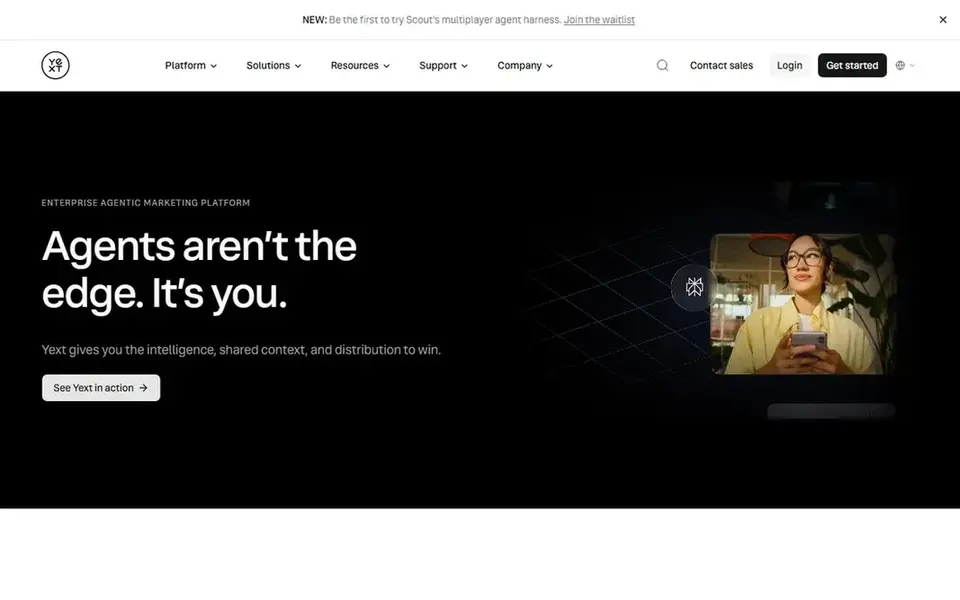
Yext is a listings and digital presence platform that also tracks calls generated from your business listings and pages. It fits trampoline park groups that want their Google Business Profile, Apple Maps and directory listings consistent across branches while still seeing which listings produce calls.
For a park, the value is in keeping opening hours, phone numbers and party information accurate everywhere, then measuring calls from those surfaces. When a parent finds your park on a map listing and taps call, Yext can attribute that call to the listing. That helps you spot which directories actually send bookings.
It is a wider platform than pure call tracking, so a park that only wants call analytics may be overbuying. Pricing is quote-based, so ask for a scoped quote for your number of locations.
- Central control of listings and call buttons
- good multi-location consistency
- call tracking built in
- Broader platform than call tracking alone
- pricing is quote-based
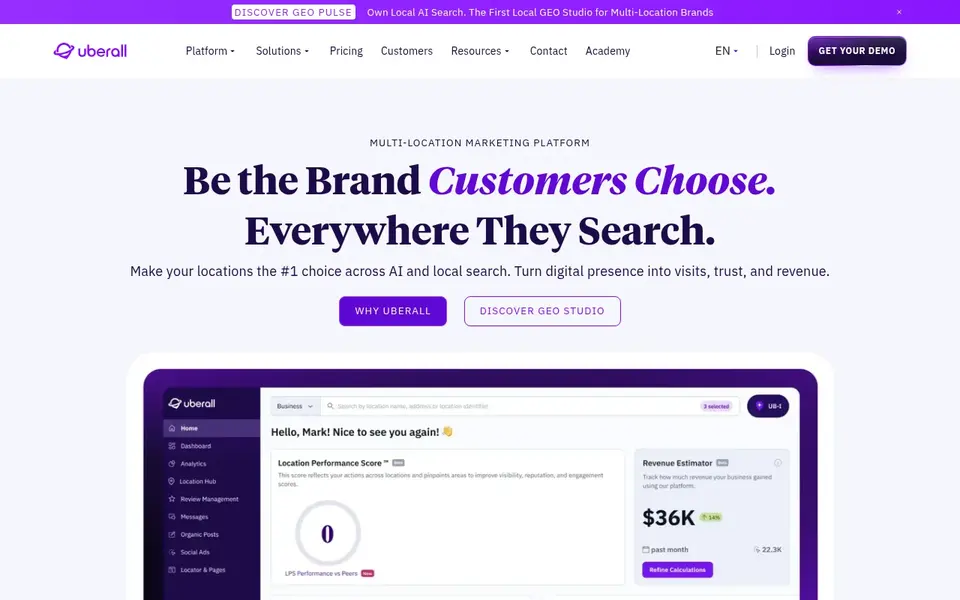
Uberall is a location marketing platform for managing listings, reviews and local pages across many branches. It suits trampoline park groups with several sites that need each branch's phone number, hours and party details correct across maps and directories, with call tracking attached.
The branch-level view is the useful part. You can see calls per location and compare how each park's listing performs, which helps when one branch gets more party enquiries than another. Review tools also let you follow up with visitors after a session, within Google's guidelines.
It is more platform than a single park needs, and pricing is quote-based. A one-site park should look at a simpler call tracker first.
- Strong multi-location listing management
- call tracking per branch
- review tools included
- Quote-based pricing
- heavier than a single-site park needs
GatherUp is a customer feedback and review management tool. It fits trampoline parks that already track calls and want to turn happy party guests into reviews on Google and other platforms, using requests sent after the visit.
For a park, the workflow is simple: after a birthday party or open-jump session, send a review request by text or email and route feedback through a private form first. That follows Google's rules because you ask every customer, not just the ones you expect to be positive. It pairs well with call tracking because you can see which calls turned into bookings and then into reviews.
It is not a call tracking platform, so do not buy it expecting call attribution. Use it alongside a tool like CallRail rather than instead of one.
- Review requests by text and email
- simple customer feedback flow
- works alongside call tracking
- Not a full call-routing system
- limited call analytics
Local Viking is a Google Business Profile management tool with call tracking and local ranking data. It fits trampoline parks that get most enquiries through their map listing and want to see calls alongside ranking changes for terms like "trampoline park near me".
The practical use is watching how listing changes affect calls. If you update party information or photos and calls rise, you can see the link in the data. Call tracking from the listing helps you judge whether map visibility is turning into bookings.
Its call features are narrower than a dedicated platform, with limited routing. Parks with complex phone trees should pair it with a full call tracker.
- Google Business Profile focused
- tracks calls from listings
- useful local ranking data
- Narrower than full call platforms
- limited routing features
How I chose
I built this list from vendor documentation and public sources, not from hands-on testing. I read each vendor's product pages, feature lists and help documentation to understand what the software does, then judged fit against how trampoline parks take calls: party enquiries, group bookings, hours questions and branch-specific calls.
I weighted call attribution, routing, recording and multi-location support, because those decide whether a park can tell which marketing produced a booking. I also noted limits such as per-number costs, quote-based pricing and setup effort. Where a tool is really a listings or review platform, I said so rather than presenting it as a full call tracker.
What to check before you buy
- Confirm the tool supports dynamic number insertion so your main park number stays visible while sources are tracked.
- Ask how tracking numbers are priced per branch, since a multi-site park needs a number per location and per campaign.
- Check whether calls can route to different staff for birthday parties, group bookings and general questions.
- Confirm call recording and transcripts are available and that you follow consent rules for your region.
- Make sure reports separate booked parties from general enquiries, not just total call counts.
- Ask whether the tool connects to your booking system or CRM so leads are not re-entered by hand.
Frequently asked questions
Do trampoline parks need call tracking?
Yes, if you spend money on local ads or listings. Call tracking shows which source produced each booking call, so you can put budget behind the channels that fill party slots. Parks that rely on walk-ins and online booking only may not need it.
Can call tracking work with Google Business Profile?
Yes. Assign a separate tracking number to each branch's listing so calls from the map are attributed to that location. Keep your main number consistent elsewhere so parents are not confused by different numbers.
Will call tracking hurt my local rankings?
Using tracking numbers on your website with dynamic number insertion is a common practice and keeps your main number for search engines. Keep your Google Business Profile number consistent and avoid swapping numbers in ways that confuse visitors.
How many tracking numbers does a trampoline park need?
At minimum one per branch, plus extra numbers for major campaigns such as party-season ads. Start small, measure which sources matter, then add numbers only where the data justifies the cost.
Can I ask every guest for a review?
Yes, you can ask all guests, but do not filter for positive feedback only or offer incentives. Send requests to everyone after a visit and let reviews happen naturally, which keeps you within Google's guidelines.
Sources
See where you really rank - block by block
ProMapRanker scans Google Maps across a grid of your service area. Simple monthly plans from $19, white-label on every plan.
Start freeBrowse all guides
← Best Call Tracking Software for Staffing Agencies in 2026Best Call Tracking Software for Travel Agencies (2026) →
 best call tracking software for speech therapists
Best Call Tracking Software for Speech Therapists in 2026
A practical guide to the best call tracking software for speech therapists, comparing call attribution, intake routing and reporting tools.
Read → best call tracking software for print shops
Best Call Tracking Software for Print Shops in 2026
A practical guide to the best call tracking software for print shops in 2026, compared on call attribution, quote follow-up and local search fit.
Read → best call tracking software for paving companies
Best Call Tracking Software for Paving Companies in 2026
A guide to the best call tracking software for paving companies in 2026, covering call attribution, recordings, and quote follow-up for asphalt and concrete crews.
Read → how to delete a review on google maps
How To Delete A Review On Google Maps?
Everything you need to know about how to delete a review on google maps: what it is, why it matters for local SEO, and exactly how to act on it.
Read → local seo benchmarking
Local SEO Benchmarking: How to Set and Beat Your Baselines
Set local SEO benchmarks with geo-grid baselines and learn how to measure progress against competitors.
Read → google business profile audit
Google Business Profile Audit: A Free 30-Point Checklist
Run a free Google Business Profile audit with this 30-point checklist to find quick wins.
Read →More in Local SEO & Google Maps · All guides A to Z by date · Latest guides