 ProMapRanker
Best Calendar Method Apps for Women in 2026


temperature-based contraception · Pricing starts at: $21.99 per month
Key takeaways
- Calendar method apps estimate fertile days from past cycle dates, and they work best when cycles are fairly regular.
- Natural Cycles is the only app here with FDA clearance as a contraceptive, and it uses daily temperature readings, not calendar dates alone.
- Clue and Flo are the most flexible general trackers, while Kindara and Fertility Friend suit detailed charting.
- Irregular cycles, illness, travel, and missed entries all weaken predictions, so treat app dates as estimates.
- These apps are not medical advice, and calendar-based methods are less reliable for contraception than other methods such as hormonal contraception or IUDs.
Quick comparison
| Pick | Great for | Pricing starts at | Free tier | |
|---|---|---|---|---|
| Natural Cycles | temperature-based contraception | $21.99 per month | Free trial | Visit |
 Clue | flexible cycle tracking | Free | Yes | Visit |
 Flo | content and community | Free | Yes | Visit |
 Kindara | detailed fertility charting | Free | Yes | Visit |
 Ovia Fertility | trying to conceive | Free | Yes | Visit |
 Fertility Friend | full chart analysis | Free | Yes | Visit |
 Glow | conception tracking and community | Free | Yes | Visit |
 Premom | ovulation test tracking | Free | Yes | Visit |
 Tempdrop | hands-free temperature tracking | See website | No | Visit |
The best calendar method apps for women
These apps all support calendar-based cycle tracking, but they differ in how much they rely on dates alone, temperature, or other fertility signs.
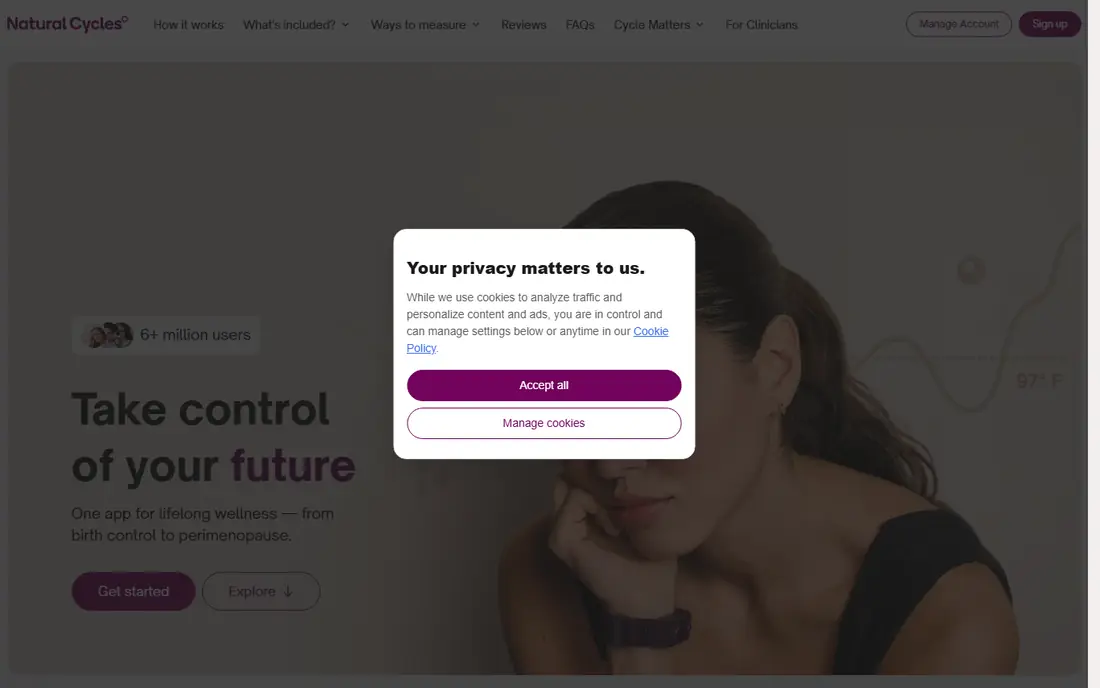
Natural Cycles is the most distinct app in this list because it is cleared by the FDA as a contraceptive in the US, and it does not rely on calendar dates alone. You take your temperature each morning, and the algorithm marks days as red (potentially fertile) or green (not fertile). The annual plan is listed at $149.99 a year and includes a wearable band in some offers, while the monthly price is $21.99.
That clearance comes with responsibility. Typical-use effectiveness is lower than perfect use, and the app needs consistent temperature data to work well. If you sleep irregularly, travel often, or struggle to measure at the same time each morning, predictions will be weaker. For readers who want a hormone-free contraceptive method and will track daily, it is the most serious option here, but it is not a casual calendar app.
- FDA-cleared as a contraceptive
- Red and green day system is easy to read
- Works with wearable temperature data
- No free tier beyond a trial
- Needs daily temperature readings
- Less suited to very irregular cycles
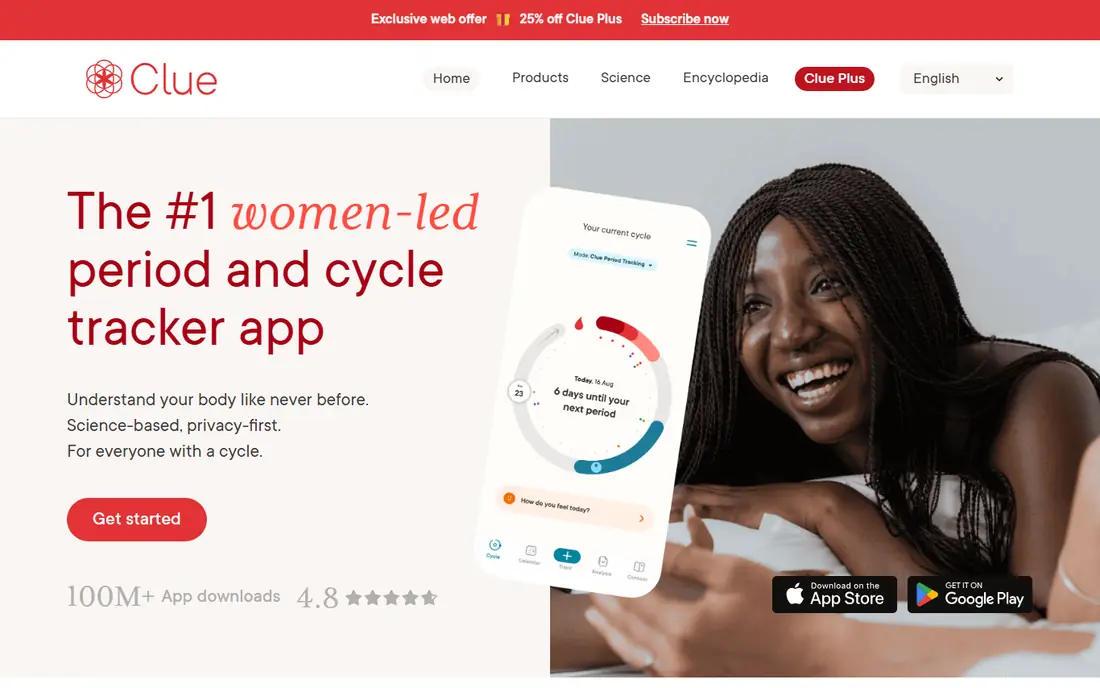
Clue is our pick for most readers who want a straightforward calendar method app without a heavy sales push. You log period dates, symptoms, and other signs, and Clue learns your pattern over time to forecast your period and fertile window. The free tier covers core tracking, while Clue Plus, listed at $39.99 a year, adds deeper analysis and advanced predictions.
Clue is based in Berlin and has a strong privacy record compared with many US health apps, which matters when you are logging sensitive health data. Its predictions still depend on regular cycles and consistent logging, so irregular cycles will produce wider, less certain windows. For general cycle awareness and a calm, clear interface, Clue is hard to beat.
- Clean, science-led design
- Strong privacy stance
- Flexible tracking for irregular cycles
- Advanced predictions sit behind Clue Plus
- No temperature-based contraception in the standard app
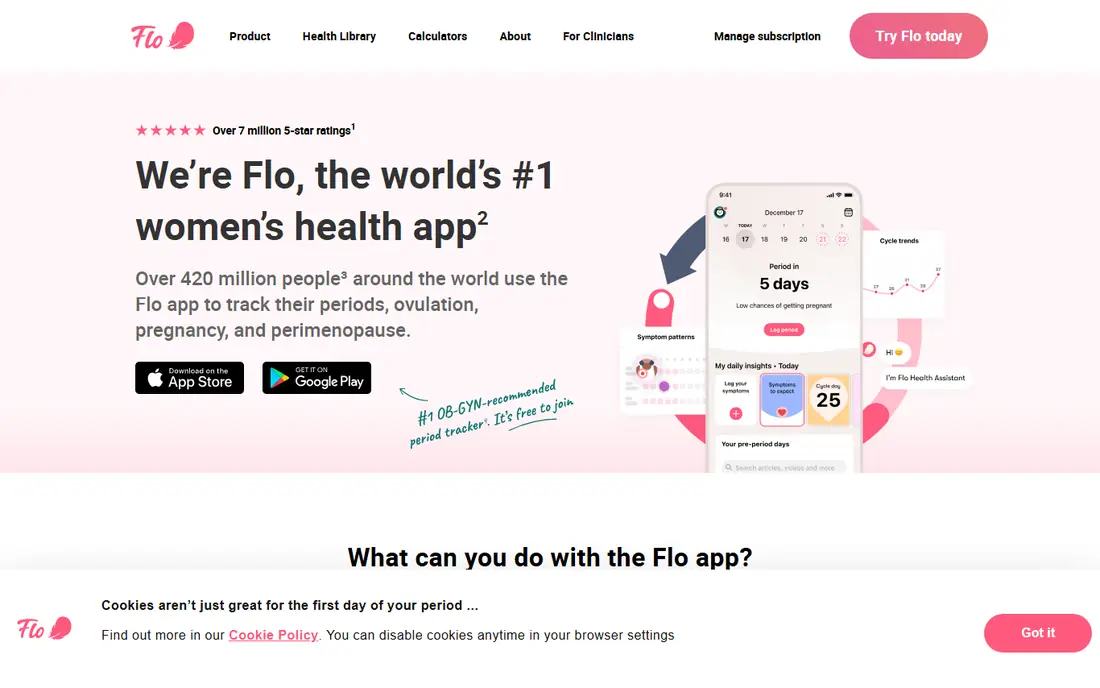
Flo is the largest period tracker in this list, with cycle predictions, symptom logging, pregnancy mode, and a large library of articles. The free tier covers core tracking, while Flo Premium is listed at $47.99 to $59.99 a year and adds a health assistant, symptom checker, and community features. For readers who want education alongside tracking, Flo offers more content than any other app here.
The trade-offs are upselling and trust. Premium prompts appear often, and Flo faced an FTC action in 2021 over data sharing disclosures, which it has since addressed in its policies. Read the current privacy policy before you log sensitive data, and check what is shared with third parties. Flo is not cleared as a contraceptive, so do not use its fertile window alone to avoid pregnancy.
- Very wide feature range
- Large article library
- Community and health assistant features
- Premium upselling is frequent
- Past privacy settlement still raises questions for some readers
Kindara is built for readers who want to practice a fertility awareness method properly, not just log period dates. It charts basal body temperature and cervical fluid alongside your calendar, which gives a fuller picture of your fertile window than dates alone. The free tier covers basic charting, while Premium is listed at $4.99 a month and adds more features.
Kindara pairs with its Wink thermometer for automatic temperature syncing, though that device costs extra. The app suits readers who are willing to learn charting rules and log daily, and it is less useful if you only want a quick period prediction. Its charts are clear and uncluttered, which helps when you are reviewing several cycles at once.
- Built around fertility awareness
- Clear temperature charts
- Community support
- Best features sit behind Premium
- Companion thermometer costs extra
Ovia Fertility tracks periods, fertile windows, symptoms, and health data, and it carries you through conception into pregnancy mode. It is free, with no in-app purchases listed on its store page, which makes it one of the most accessible options here. The app also offers health articles and, through employers in some cases, coaching support.
Because Ovia is free, expect ads or employer-related features in some versions, and remember that its fertile window is an estimate from your logged cycle history. It does not measure hormones or confirm ovulation. For readers trying to conceive who want a free, full-journey tracker, Ovia is a solid choice, but pair it with ovulation tests or temperature charting if timing matters.
- Free to use
- Covers conception through pregnancy
- Symptom and health logging
- Ad-supported in places
- Predictions rely on logged data, not measured hormones
Fertility Friend is the most detailed charting app in this list, and it has been used by fertility-focused readers for years. It supports full temperature charting with automatic detection of temperature shifts, cervical fluid logging, ovulation test logging, and detailed chart analysis. The free tier is generous, and a paid VIP membership adds more analysis and data history.
The interface looks older than Clue or Flo, and new users may need time to learn its charting rules. That learning curve is the price of its depth. If you want to understand your cycle in detail, share charts with a clinician, or track several fertility signs at once, Fertility Friend gives you more control than any general tracker here. It is not a contraceptive device, so do not use it alone to avoid pregnancy.
- Deepest charting tools
- Automatic temperature shift detection
- Chart sharing with clinicians
- Interface feels dated
- Advanced features need a paid membership
Glow focuses on trying to conceive, with cycle and fertility predictions, symptom logging, and a large community where readers share experiences. The free tier covers core tracking, while Glow Premium is listed at around $59.99 a year and adds advanced charts, analysis, and forecasts. Partner sharing lets a partner follow the cycle and fertile window, which some couples find useful.
Glow had a California privacy settlement in 2020 and a later bug report, so privacy-conscious readers should read its current policy closely before logging sensitive data. Its predictions are estimates from logged data, and irregular cycles will weaken them. For readers who value community support while trying to conceive, Glow is a strong option, but it is not a contraceptive tool.
- Large community
- Fertility predictions
- Partner sharing features
- Premium features cost extra
- Past privacy settlement noted in public reports
Premom stands out for one practical feature: it can read ovulation test strips from a photo, turning a faint line into a numeric result and a chart. That helps readers who use ovulation tests to pin down their fertile window more precisely than calendar dates alone allow. The app also tracks temperature, symptoms, and cycle dates, with a premium tier for extra features.
Premom is firmly aimed at conception, so readers who only want period tracking may find its fertility focus too narrow. Past reports have raised privacy questions about the app, so check its current data policy before use. For readers already using ovulation tests, Premom adds real value that a plain calendar app cannot match.
- Reads ovulation test strips by photo
- Strong fertility focus
- Free core tracking
- Fertility focus may not suit general cycle tracking
- Privacy questions raised in past reports
Tempdrop is a wearable armband sensor, not just an app, and it belongs here because temperature is the key input for serious calendar and fertility awareness methods. You wear it overnight and it records your temperature while you sleep, then syncs with its app and with charting apps such as Fertility Friend. That removes the need to take your temperature at the same time each morning, which is a common failure point for temperature methods.
The sensor costs money, and the price varies by bundle, so we list it as See website. Tempdrop alone does not tell you your fertile window; you still need to chart the data and apply fertility awareness rules, or pair it with an app that does. For readers with irregular sleep or shift work, it can make temperature tracking realistic where a morning thermometer routine would fail.
- Worn overnight, so no morning thermometer routine
- Pairs with charting apps
- Useful for irregular sleep
- Sensor purchase required
- App alone does not predict fertility without charting
How we picked these
We compared official app pages, store listings, and fertility awareness guidance, and kept only apps that support calendar-based cycle tracking with a real user base in 2026. We gave weight to charting depth, temperature support, privacy practices, and whether an app is cleared as a contraceptive, because those differences matter more than design polish. Where a price could not be confirmed from the vendor, we wrote See website rather than guessing.
A plain note on reliability and safety
Calendar method apps estimate fertile days, and no estimate is certain. Irregular cycles, illness, stress, travel, and missed entries all shift predictions, and a fertile window shown by an app can be wrong. These apps are not medical advice, and calendar-based methods are less reliable for contraception than other methods, including hormonal contraception, IUDs, and condoms. If avoiding pregnancy matters to you, talk with a clinician about methods with higher typical-use effectiveness, and do not rely on an app alone unless it is cleared for that purpose and you follow its rules closely.
Check privacy before you log. Fertility data is sensitive, so read how each app stores, shares, and deletes data, and whether you can export or delete your history. Choose an app based in a jurisdiction whose privacy rules you trust, use a separate email if that helps, and turn off data sharing options you do not need.
How to use a calendar method app well
Log consistently, even on days when nothing notable happens, because gaps weaken predictions. Add temperature or cervical fluid data if your goal is fertility awareness rather than simple period tracking, since dates alone give the weakest estimate. Review several cycles before trusting a pattern, and treat a predicted fertile window as a range, not a single day. If cycles are often irregular, absent, or very painful, bring your charts to a clinician rather than trying to interpret them alone.
Frequently asked questions
What is the calendar method?
The calendar method estimates fertile days from the dates of past periods, using cycle length to predict ovulation. It is simple and needs no devices, but it is the least precise fertility awareness method on its own. Adding temperature or cervical fluid signs, as in the symptothermal method, gives a fuller and more reliable picture.
Can I use a calendar app as birth control?
Only Natural Cycles in this list is FDA-cleared as a contraceptive, and it uses temperature data, not calendar dates alone. Other calendar apps are trackers, not contraceptives, and using their fertile window alone to avoid pregnancy carries a higher risk of pregnancy than other methods. Talk with a clinician if contraception is your goal.
Which app is best for irregular cycles?
Clue and Fertility Friend handle irregular cycles best in this list, because they let you log many signs and review patterns over time rather than forcing a fixed 28-day model. Even so, predictions will be less certain with irregular cycles. If cycles are often irregular or absent, bring your logs to a clinician for advice.
Do I need a thermometer or wearable?
Not for simple period tracking, but temperature data improves fertility awareness a lot. A standard basal thermometer works if you measure at the same time each morning. A wearable such as Tempdrop helps if your sleep is irregular, since it records temperature overnight without a morning routine.
Are fertility apps private?
Privacy varies by app and by jurisdiction. Some apps store data in the cloud and share data with third parties, while others limit sharing and offer deletion. Read the privacy policy, check data sharing settings, and pick an app whose practices you are comfortable with before logging sensitive health details.
When should I talk to a clinician?
Talk to a clinician if cycles are very irregular, absent, unusually painful, or if you have been trying to conceive for a year (or six months if you are over 35) without success. Bring your app charts, since several months of logged data can help a clinician spot patterns faster than a single visit description.
Sources
See where you really rank - block by block
ProMapRanker scans Google Maps across a grid of your service area. Simple monthly plans from $19, white-label on every plan.
Start freeKeep reading
 best resource management software
Best Resource Management Software in 2026
We compared the best resource management software for scheduling, capacity and utilization, with current pricing and free trials, to help teams choose well.
Read → best reporting tools
Best Reporting Tools in 2026
Compare the best reporting tools for dashboards, scheduled reports, and business insights, from Power BI and Tableau to Looker Studio for every team size.
Read → best remote support software
Best Remote Support Software in 2026
Looking for the best remote support software? We compare 9 tools on price, security, session controls, and fit for helpdesks, MSPs, and small teams in 2026.
Read →