 ProMapRanker
Best Business Networking Apps in 2026

Key takeaways
- LinkedIn remains the default for a professional profile, hiring and sales prospecting, because that is where most professionals already look.
- Meetup and Eventbrite suit in-person connections, while Lunchclub suits short one-to-one video introductions.
- Alignable and Wellfound serve narrower groups well: local small businesses and startup hiring respectively.
- Most networking apps are free to join, so the real cost is time, not money, and a focused profile beats a presence on every app.
- Our pick for most people is LinkedIn plus one event or introduction app that matches a clear goal.
Quick comparison
| Pick | Great for | Pricing starts at | Free tier | |
|---|---|---|---|---|
 LinkedIn | Professional identity and hiring | Free | Yes | Visit |
 Meetup | Local and online group events | Free | Yes | Visit |
 Lunchclub | Curated one-to-one meetings | Free | Yes | Visit |
 Alignable | Local small business referrals | Free | Yes | Visit |
 Fishbowl | Anonymous industry discussion | Free | Yes | Visit |
 Wellfound | Startup jobs and funding contacts | Free | Yes | Visit |
 Xing | Business in German-speaking Europe | Free | Yes | Visit |
 Eventbrite | Finding and hosting events | Free | Yes | Visit |
 ADPList | Mentorship in design and product | Free | Yes | Visit |
The best business networking apps
A good networking app should do one thing well: put you in front of the right people, with a reason to talk. These nine cover different routes to that goal, from a public profile to a local group, a scheduled introduction and a mentor session. We compared official feature pages, pricing pages and app store listings, and we left out apps that are no longer active in 2026, including Shapr and Bumble Bizz.
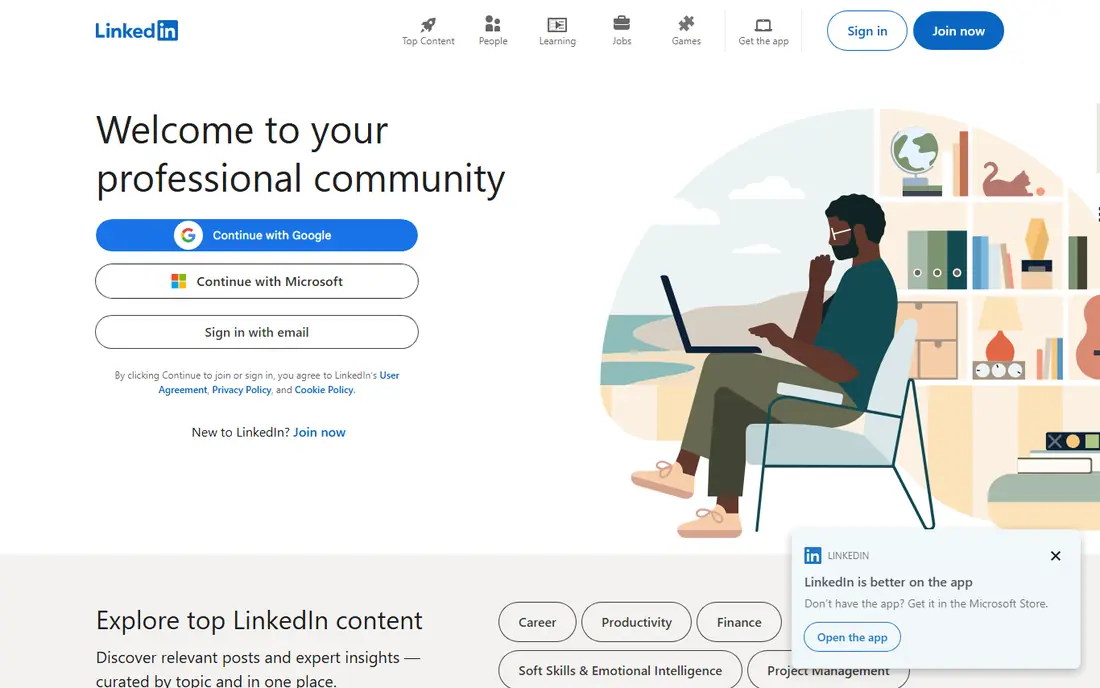
LinkedIn is the first place most professionals check when they hear a name, see a job title or consider a supplier. A complete profile, with a clear headline, a plain description of what you do and a few posts about your work, acts as a public record that other apps cannot match. Recruiters, clients and partners use its search to find people by role, company and location, which makes it useful for hiring and for sales prospecting alike.
The weakness is attention. A busy feed, frequent connection requests and generic messages mean a thoughtful note stands out only when it refers to something specific, such as a shared group, a recent post or a clear shared interest. Premium plans add search and messaging features, but a free account is enough to build a profile, join groups and start conversations that matter.
- Largest professional audience
- Strong search for people, jobs and companies
- Posts and articles build visible expertise
- Feed can feel noisy
- Premium features need a paid plan
- Cold messages are easy to ignore
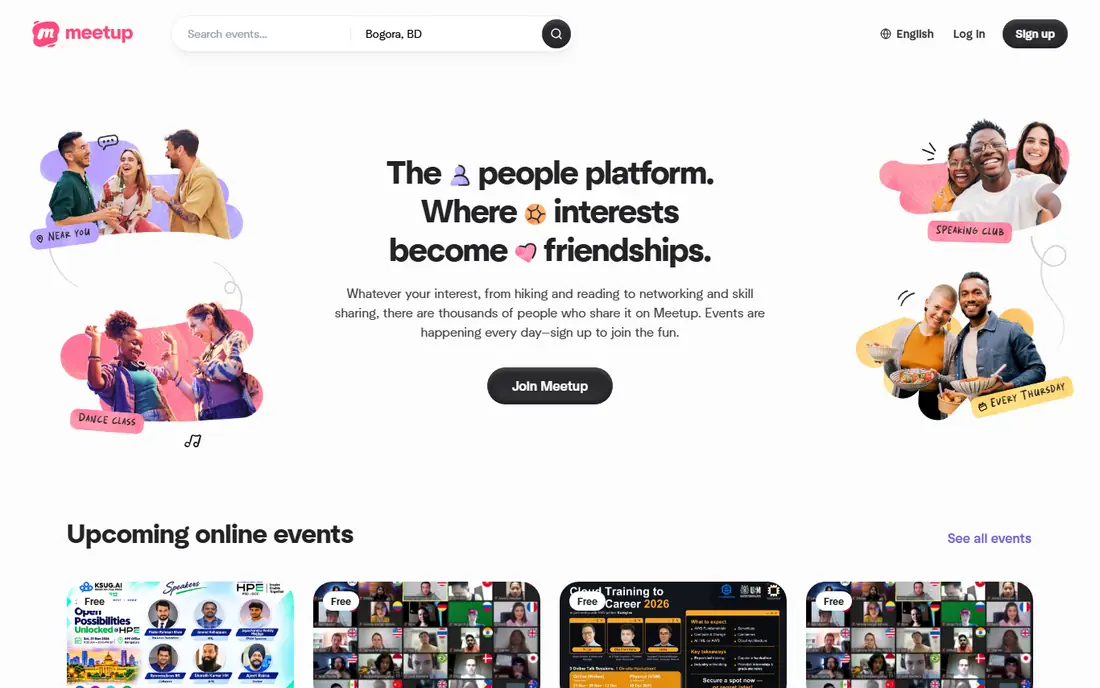
Meetup turns online contacts into face-to-face relationships, which is where many business connections become real. You can find groups for founders, marketers, developers, designers and many other fields, then attend a talk, a workshop or a casual social event and meet people who share a field or a problem. Regular attendance builds familiarity faster than a stream of online messages.
Quality varies. A group with an active organiser and a clear topic will be worth repeat visits, while a group with no recent events is a sign to move on. Joining and attending is free in most cases, though organisers pay to run a group, so the best groups tend to be the ones where the organiser has a reason to keep them active.
- Wide range of professional and interest groups
- Easy to find events near you
- Attending is usually free or low cost
- Group quality varies by city
- Organising a group needs a paid plan
- Some groups go quiet
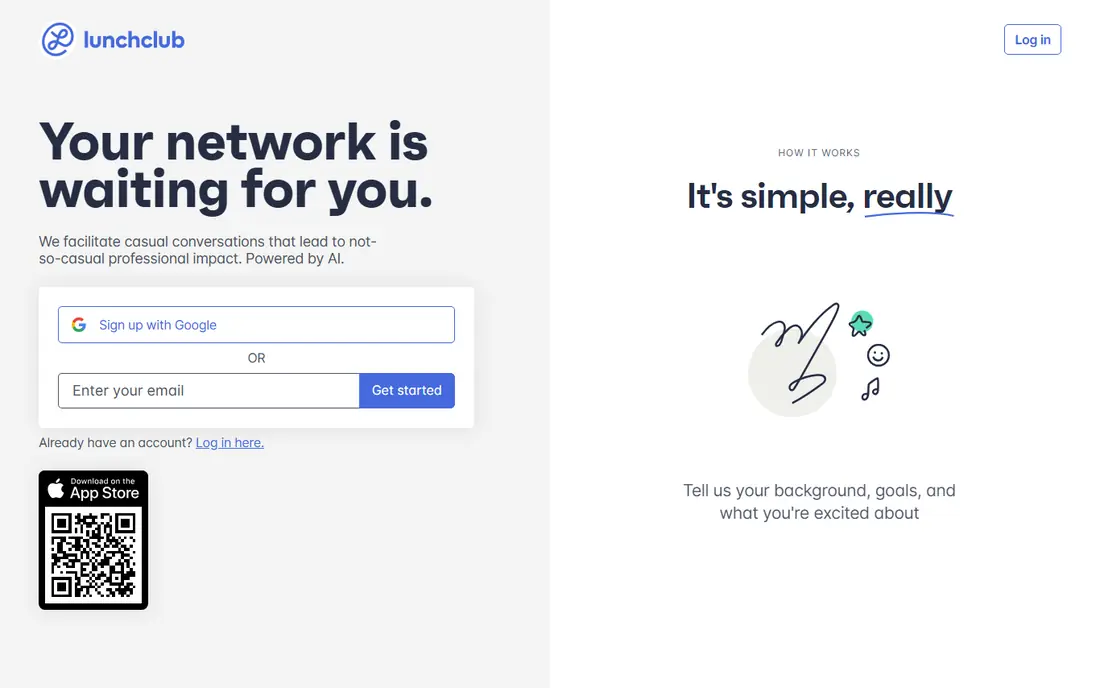
Lunchclub removes the hardest part of networking, which is choosing who to meet. You set your goals and interests, and the service matches you for a short one-to-one meeting, usually by video, with someone whose goals overlap. That format suits busy people who want real conversations without spending an evening at an event.
A match is only a start. A short meeting turns into a useful connection only if you follow up with a note, a link or a second meeting, and if you are clear about what help you can offer in return. Lunchclub works best as a steady habit, such as one meeting a week, rather than a one-off attempt.
- Matches you for short video or in-person meetings
- Low effort compared with event hunting
- Good for mentors and peers
- Match quality depends on your profile and goals
- Meetings need follow-up to turn into relationships
- Coverage varies by city
Alignable is made for owners of small local businesses, and that focus is its strength. Instead of a global feed, it centres on nearby businesses, referral partnerships and local groups, so a plumber, a cafe owner, a bookkeeper and a web designer in the same town can find each other and trade referrals. Profiles are simpler than LinkedIn profiles, which keeps the focus on what a business offers and who it serves.
The limit is scope. A freelancer who serves clients worldwide, or a manager at a large company, will get less from a local network than from LinkedIn. For a local business owner, though, Alignable often brings more direct value than a global platform, because the people you meet are the people your customers already know.
- Built for small business owners
- Local referral groups
- Easy to connect with nearby businesses
- Less useful outside the United States and Canada
- Larger companies will find it too narrow
- Some features need paid plans
Fishbowl is different from the other apps here, because it is built for candid discussion rather than polished profiles. Members join industry groups, known as bowls, and can post anonymously about workplaces, salaries, hiring and career moves. That honesty helps when you want to know what a company is really like before applying, or how pay compares in your field.
Anonymity cuts both ways. Posts can be blunt, and not every claim can be checked, so treat Fishbowl as a source of questions to verify, not as settled fact. It works best alongside LinkedIn: use Fishbowl to learn and to sense-check a move, then use LinkedIn to make the formal introduction.
- Honest discussion about companies and roles
- Industry groups called bowls
- Useful for salary and workplace insight
- Anonymity can bring blunt or unkind posts
- Not a place for formal introductions
- Verification varies
Wellfound, formerly AngelList Talent, connects job seekers, founders and investors in the startup world. Job listings often show salary ranges and equity details, and candidates can message founders directly rather than going through a long application form. For someone who wants to join an early-stage company, or for a founder hiring a first team, that direct route saves time.
The trade-off is narrowness. If you want a corporate role, a government job or a traditional profession, Wellfound will have far fewer options than LinkedIn. Within startups, though, it is one of the most direct networking routes, because the people hiring are often the people reading your message.
- Startup jobs with salary ranges
- Direct contact with founders
- Investor and hiring information in one place
- Focused on startups, so corporate roles are thin
- Smaller companies may reply slowly
- Competition for popular roles is high
Xing is the LinkedIn alternative that matters most in Germany, Austria and Switzerland. Many professionals in that region keep a Xing profile as their main business profile, and local employers, events and groups are built around it. If you do business, hire or job hunt in the DACH region, a Xing profile can open doors that LinkedIn alone will not.
Outside that region, Xing has far less reach, so it should be an addition rather than a replacement. Keep LinkedIn as your main profile, add Xing when your work touches German-speaking Europe, and use the same clear headline and description on both so people recognise you at once.
- Strong in Germany, Austria and Switzerland
- Local events and groups
- Job search for the DACH region
- Limited reach outside German-speaking Europe
- English-language users may find fewer contacts
- Premium features cost extra
Eventbrite is best thought of as a door to networking events rather than a network itself. It lists conferences, workshops, meetups and social events in many cities, and it lets organisers sell tickets and manage attendees. For a professional, browsing Eventbrite for events in your field is a reliable way to find a room full of relevant people.
The event decides the value. A small workshop with time to talk will beat a large conference where everyone watches talks and leaves. If you host events, Eventbrite also gives you a simple way to collect registrations and follow up with attendees afterwards, which is where the networking benefit continues.
- Huge event listings in many cities
- Easy event hosting and ticketing
- Good for workshops and conferences
- Organisers pay fees on paid tickets
- Networking depends on the event itself
- Large events can feel impersonal
ADPList connects people with mentors in design, product management, data and related fields, usually for a free short session. A mentee can book time with a practitioner at a larger company, ask about a portfolio, a career move or a product problem, and leave with concrete next steps. That direct access is hard to get through a cold message alone.
Sessions are short, so preparation matters. Bring one clear question, a link to your work and a note of what you have already tried, and follow up with thanks and a short update later. ADPList will not replace a broad network, but for a designer or product person seeking guidance, it is one of the most useful free options here.
- Free mentorship sessions with experienced practitioners
- Strong in design, product and data
- Easy booking
- Narrower than general networking apps
- Popular mentors book out fast
- Sessions are short by design
How we picked these
We compared official feature pages, pricing pages and app store listings, and we checked that each app is still active in 2026. We favoured apps with a free tier, a clear purpose and a real user base for that purpose, and we excluded apps that have closed or gone quiet, even when older lists still recommend them. Prices here are starting prices or free tiers from vendor pages, and they can change, so check the plan before paying.
How to choose the right networking app
Start with your goal, not with the app. If you need a visible professional record, start with LinkedIn. If you need local clients, start with Alignable or Meetup. If you need a mentor, start with ADPList or Lunchclub. If you need a startup role, start with Wellfound. One app used well beats five apps used thinly.
Make your profile do the work
Write a headline that says who you help and how, in plain words, rather than a list of job titles. Add a short description of your work, a photo that looks like you, and links to work people can see. A clear profile makes every introduction easier, because the other person can tell at once whether a conversation is worth their time.
Follow up, or the meeting fades
Most networking fails after the first meeting, not during it. Send a short note within a day, mention one thing you discussed, and suggest a simple next step, such as sharing a link, making an introduction or meeting again in a few weeks. Keep notes on who you met and what you promised, so follow-up does not depend on memory.
Protect your time and privacy
Set a weekly limit for networking, such as two events or two meetings, and stick to it. Share work details freely, but be careful with personal contact details, client names and salary information until you know someone better. On anonymous apps, read critically and verify claims before acting on them.
Frequently asked questions
What is the best networking app for most people?
LinkedIn is the best networking app for most people, because it covers a professional profile, job search, hiring and sales prospecting in one place. Add one more app for your specific goal, such as Meetup for events or Lunchclub for introductions, rather than joining everything at once.
Is there a best networking app that is completely free?
Most apps here are free to join and use for basic networking, including LinkedIn, Meetup, Lunchclub, Alignable and ADPList. Paid plans add search, messaging or organiser features, but a free account is enough to build a profile, attend events and start conversations.
How is Alignable different from LinkedIn?
Alignable focuses on local small businesses and referrals, while LinkedIn covers a global professional audience across all company sizes. A local business owner may get more referrals from Alignable, while a job seeker or a corporate professional will usually get more from LinkedIn.
Are Shapr and Bumble Bizz still good networking apps?
No. Both apps are no longer active as standalone networking apps in 2026, according to recent guides, so older lists that recommend them are out of date. Use LinkedIn, Meetup or Lunchclub instead for the same kinds of introductions.
How often should I use a networking app?
A steady habit works better than a burst. One or two meetings or events a week, with prompt follow-up, builds a network over months without taking over your work week. Track who you meet and what you promised, so each meeting leads to a next step.
Can I network well without attending in-person events?
Yes, through Lunchclub meetings, ADPList mentorship sessions and LinkedIn messages, especially when you follow up well. In-person events still help, because a face-to-face meeting builds trust faster, so mix online and in-person contact when you can.
Sources
See where you really rank - block by block
ProMapRanker scans Google Maps across a grid of your service area. Simple monthly plans from $19, white-label on every plan.
Start freeKeep reading
 wpforms alternatives
Best WPForms Alternatives in 2026
We compare 9 wpforms alternatives for WordPress forms, with free and paid options, current pricing notes, and honest limits for small business sites in 2026.
Read → windows task scheduler alternatives
Best Windows Task Scheduler Alternatives in 2026
Looking for Windows Task Scheduler alternatives? We compare 9 schedulers for Windows and cross-platform work, from free tools to enterprise automation.
Read → which ai video service is best
Which AI Video Service Is Best in 2026
which ai video service is best? We compare 10 legitimate AI video services on price, avatars, editing and output quality to help you pick the right tool.
Read →