 ProMapRanker
Best Brain Training Apps in 2026

Key takeaways
- Lumosity offers the widest game library, while Elevate is best for practical reading, writing, and math skills.
- Peak and Elevate give the best balance of a usable free tier and a modest paid plan for daily training.
- BrainHQ has the strongest research focused design, which suits older adults who want structured exercises.
- No brain training app has proven it can prevent dementia or broadly raise general intelligence, so keep expectations realistic.
- The best app for brain training is the one you will open most days, so test free tiers for a week before you pay.
Quick comparison
| Pick | Great for | Pricing starts at | Free tier | |
|---|---|---|---|---|
 Lumosity | Broad game library | $14.99 per month | Yes | Visit |
 Elevate | Reading, writing, and math | $9.99 per month | Yes | Visit |
 Peak | Short daily workouts | See website | Yes | Visit |
 BrainHQ | Research based exercises | $14.00 per month | Free trial | Visit |
 CogniFit | Clinical assessment | $19.99 per month | Yes | Visit |
 NeuroNation | Memory and concentration | See website | Yes | Visit |
 Nibble | Knowledge and logic variety | See website | Yes | Visit |
 MindPal | Quick focus sessions | Free | Yes | Visit |
 AARP Staying Sharp | Seniors and members | See website | No | Visit |
The best brain training apps in 2026
We compared official app store listings, pricing pages, feature descriptions, and public reviews for apps that are still maintained in October 2026. We focused on skill range, daily session length, free tier depth, and whether the app suits seniors, professionals, or casual users. We did not claim clinical testing of our own, and we treat game scores as practice on those tasks, not proof of wider brain gains.
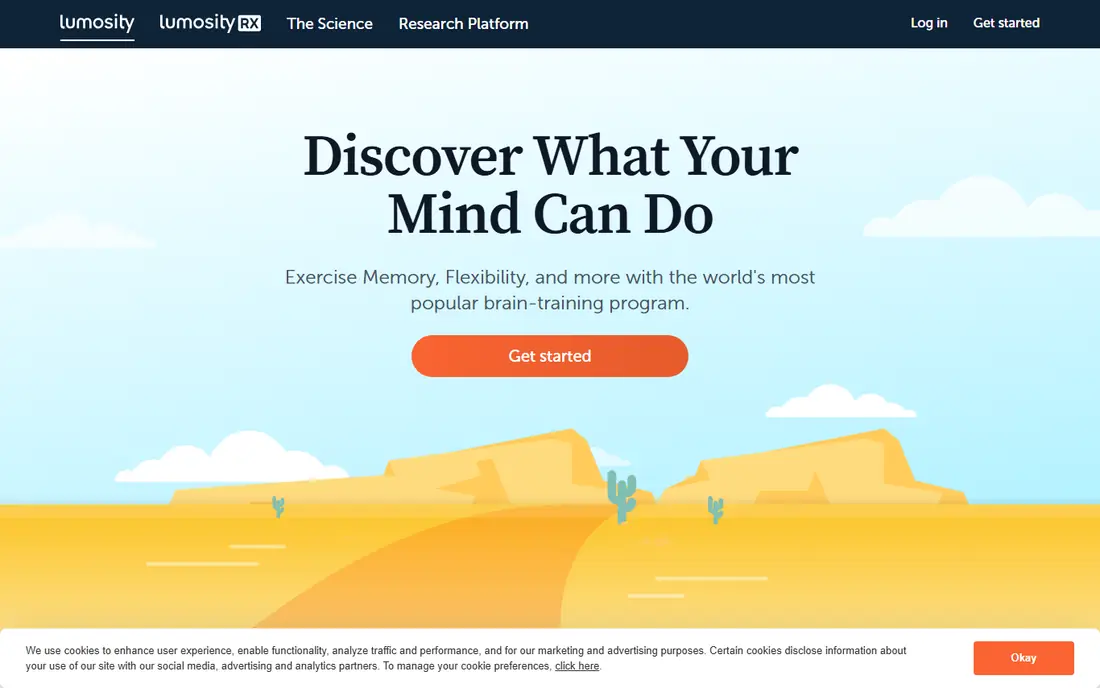
Lumosity remains the best known brain training app, with dozens of games covering memory, attention, speed, flexibility, and problem solving. Its daily workout format removes decision fatigue: you open the app, play a short set, and see progress over time. That structure suits people who want a habit more than a menu of choices. The free tier gives a baseline test and a limited daily workout, while full access needs a subscription listed at $14.99 per month on app stores in October 2026, with cheaper annual options on its site. If variety matters most and you will play most days, Lumosity is a solid pick. If you only want one skill, a focused app may give better value.
- Large game library
- Daily workouts
- Progress tracking across five skill areas
- Monthly price is high
- Free tier limits daily games
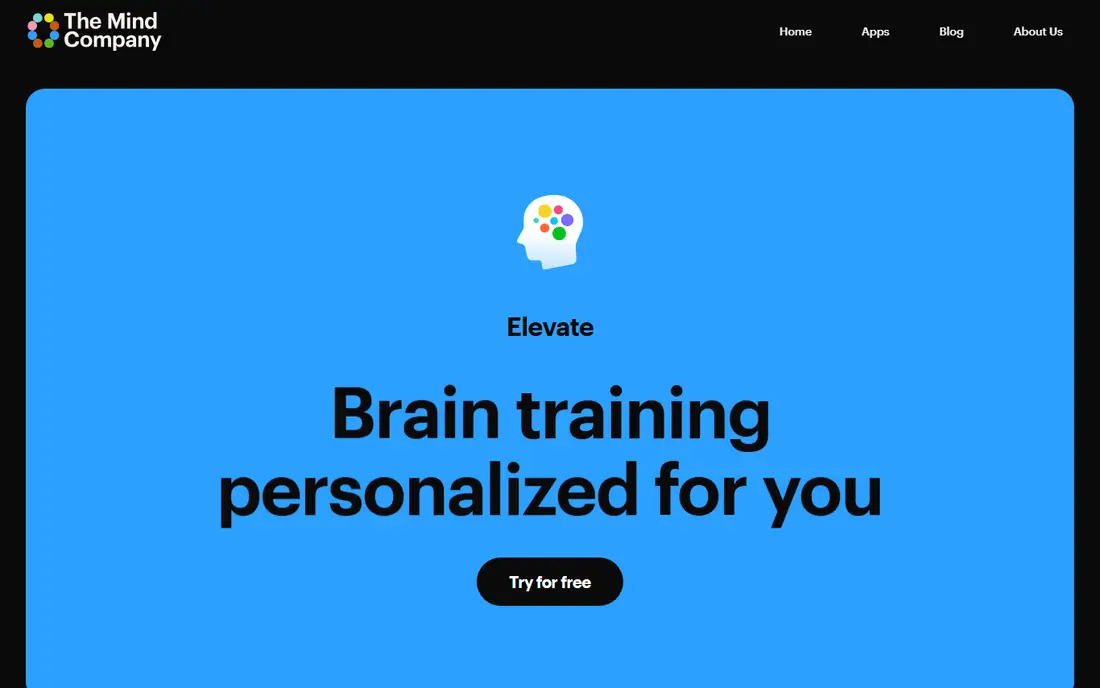
Elevate trains skills you use at work and in daily life, including vocabulary, reading comprehension, writing brevity, and mental math. That practical focus is its main strength. Instead of abstract puzzles only, you practice the kind of quick thinking that shows up in emails, reports, and conversations. Sessions run about ten minutes, which fits a commute or a lunch break. The free tier offers a personalized daily program with limited games, while Premium is listed at $9.99 per month or $39.99 per year on the US App Store in October 2026, with a trial on the annual plan. For professionals and students, Elevate is often the best value in this list, because the skills transfer more directly to daily tasks than pure memory drills do.
- Practical everyday skills
- Clean design
- Short daily sessions
- Less game variety than Lumosity
- Some games need Premium
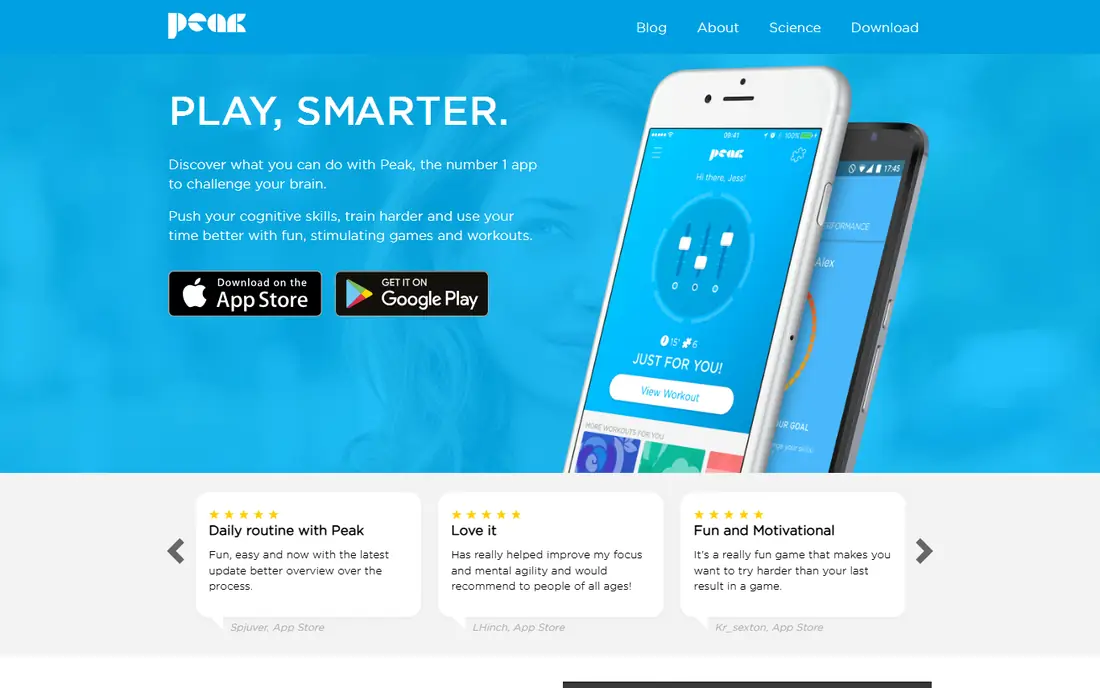
Peak is built around short, game like daily workouts that cover focus, memory, problem solving, and mental agility. Its design is polished and its sessions are brief, which helps habit building for people who dislike long training blocks. A coach feature and progress charts add structure without making the app feel like homework. The free tier gives access to the game library with capped sessions, while Peak Pro adds advanced training modules and fuller tracking. Prices vary by app store and billing period, so check the listing in your region before you subscribe. Peak is a good choice if you want a fun, mobile first routine and you are happy to keep sessions under ten minutes.
- Polished design
- Short sessions
- Broad game rotation
- Pricing varies by store and plan
- Advanced modules need Pro
BrainHQ takes a more serious, exercise led approach than most rivals, with programs built around attention, memory, and processing speed. It is often cited as having the strongest research base in this category, and its tone suits older adults who want structured training rather than arcade style games. Sessions are a little longer, often around fifteen minutes. Free access is limited, commonly to a daily exercise, while paid plans are listed near $14 per month or about $96 per year in 2026 comparisons. If you want training that feels like a program rather than a game collection, BrainHQ is the pick. If you need bright, fast rewards to stay motivated, Peak or Lumosity may hold your attention better.
- Exercises designed with research input
- Focus on processing speed
- Structured programs
- Less game like than rivals
- Free access is limited to a daily exercise
CogniFit starts with an assessment that maps strengths and weak areas across many cognitive skills, then builds a personalized program around the results. That assessment led approach suits people who want a baseline and a plan, rather than random games. It is also used in more clinical and educational settings than most consumer apps here. The free tier covers an initial assessment and limited games, while paid plans are listed near $19.99 per month in 2026 comparisons, with variation by plan and region. The price is high for casual play, but it may be justified if you want detailed tracking or you are working with a clinician. Casual users should start with the free assessment and compare it with a cheaper app before paying.
- Detailed cognitive assessment
- Personalized programs
- Many cognitive skills covered
- Higher monthly price
- Interface feels more clinical than playful
NeuroNation offers adaptive training that adjusts difficulty as you improve, with a focus on working memory, concentration, and processing speed. Its programs feel structured, with an initial assessment and a clear daily plan, which suits users who want guidance rather than open choice. Sessions run about fifteen minutes in many programs. The free tier includes an assessment and core exercises, while paid plans open full programs and tracking. Prices vary by store and subscription length, so check the current listing before you commit. NeuroNation is a strong middle ground: more structured than Peak, less clinical than CogniFit, and well suited to adults who want memory and focus work.
- Adaptive personal training
- Focus on memory and concentration
- Structured programs
- Pricing varies by plan
- Fewer games than Lumosity
Nibble takes a different route to mental exercise. Instead of repeating the same drills, it offers short daily lessons and games across history, science, logic, words, and other subjects. That variety keeps the habit fresh and builds general knowledge alongside reasoning, which some users find more rewarding than abstract scores alone. The free tier is limited, while paid plans are listed near $11.99 per month in 2026 comparisons, with variation by region. Nibble is not the best pick if you want deep training in one skill such as processing speed. It is a good pick if you get bored with pure brain games and want a daily learning habit that still exercises memory and reasoning.
- Short lessons across many subjects
- Logic and word games
- Fresh daily content
- Not a pure brain game app
- Depth per skill is lower than focused apps
MindPal is a budget friendly starting point for people who want short focus and attention exercises without a subscription. Sessions are brief, often around five minutes, which makes it easy to fit into a break. That low friction matters: a free app you use daily beats a paid app you open twice and forget. The trade off is depth. MindPal does not match Lumosity or CogniFit for game count, assessment detail, or long term tracking. Use it as a first step, or as a second app for quick resets during the day, and move to a fuller program if you want structured progress over months.
- Free to start
- Quick sessions
- Focus on attention and focus resets
- Smaller library than major rivals
- Fewer tracking features
AARP Staying Sharp combines games, assessments, and brain health articles in a format designed for older adults. The content is clear, the pace is calm, and the lifestyle material around sleep, exercise, and social connection adds context that pure game apps skip. For members, it is included with an AARP membership listed at $16 per year in 2026 comparisons. The limit is access and variety. Full use needs membership, and the game library is smaller than Lumosity or Peak. For seniors who are already members, or who want a trusted, low pressure starting point, Staying Sharp is excellent value. Younger users or people who want deep training should pick a dedicated app from earlier in this list.
- Senior friendly design
- Games plus brain health content
- Included with AARP membership
- Requires AARP membership for full access
- Less game variety than Lumosity
How we picked these
We checked that each app is still available on iOS, Android, or the web in October 2026, then compared official feature pages, app store pricing, free tier depth, and public reviews. We kept apps with a real free tier or trial, a clear skill focus, and ongoing maintenance, and we left out apps that had been removed from stores. We also made sure the list covers different needs, including seniors, professionals, clinical assessment, and casual daily play. We did not run clinical trials and we do not claim that any app improves general intelligence or prevents cognitive decline. Our method rests on published features, pricing, and review evidence, plus the well established point that practice improves the trained task most, with wider transfer less certain. Check pricing in your app store, because prices vary by country and billing period.
How to get value from a brain training app
Pick one skill goal first, such as memory, focus, or mental math, and choose the app that trains that skill directly. A broad app is fun, but a focused app gives you clearer progress to judge. Play for ten to fifteen minutes most days rather than an hour once a week, because consistency matters more than session length for habit and for tracking.
For seniors
Choose a calm design, larger text, and a structured program, such as BrainHQ or AARP Staying Sharp. Pair app sessions with walking, sleep, reading, and social contact, which have stronger evidence for brain health than games alone. If memory problems worry you, speak to a clinician rather than relying on an app score.
For work and study
Elevate is the most direct fit for writing, reading, and math, while Nibble suits general knowledge and reasoning variety. Use the app as a warm up, then apply the skill in real work, such as drafting a short email without extra words or doing mental math before you reach for a calculator.
Free versus paid
Start free for a full week and note whether you look forward to the session or dread it. Pay only if the paid tier opens the games or tracking you actually use, and set a calendar reminder before any trial ends. Canceling a forgotten subscription costs more than any benefit from an app you stopped opening.
Frequently asked questions
What is the best brain training app for seniors?
BrainHQ and AARP Staying Sharp are the strongest senior picks in this list. BrainHQ offers structured, research focused exercises, while Staying Sharp pairs games with brain health content and is included with AARP membership. Both use a calmer pace than arcade style apps, which many older adults prefer.
What are the best free brain training apps?
Peak, Elevate, Lumosity, NeuroNation, and MindPal all offer free tiers with daily games or programs. MindPal is the most budget friendly, while Peak and Elevate give the best balance of free depth and paid value. Try two free tiers for a week and keep the one you open most.
What is the best brain game app for memory?
Lumosity, NeuroNation, and CogniFit all include memory games, with CogniFit offering the most detailed assessment. For everyday memory, such as names and lists, also practice spaced repetition with real material, because recall of real content transfers better than a game score alone.
What is the best app for brain training at work?
Elevate is the best work focused pick, because it trains writing, reading comprehension, vocabulary, and math. Its sessions are short and its exercises map to emails, reports, and meetings. Nibble is a good second choice if you want broader knowledge and logic variety.
Do brain training apps actually work?
Apps improve performance on the tasks they train, and some programs show gains on closely related tasks, but broad transfer to general intelligence is not proven. Treat an app as useful practice and a habit builder, not as a medical treatment. Sleep, exercise, learning, and social contact matter more for long term brain health.
How long should I train each day?
Ten to fifteen minutes most days is a practical target for most apps in this list. Short, regular sessions build a habit and give you enough data to see progress. Longer sessions do not automatically give better results, and they make it harder to stay consistent over months.
Sources
See where you really rank - block by block
ProMapRanker scans Google Maps across a grid of your service area. Simple monthly plans from $19, white-label on every plan.
Start freeKeep reading
 which software is best for pdf page removal
Which Software Is Best for PDF Page Removal in 2026
Find which software is best for pdf page removal, from free online tools to desktop editors, with page controls, privacy, safety, and pricing compared.
Read → when i work alternatives
Best When I Work Alternatives in 2026
Looking for when i work alternatives? We compare 8 scheduling apps for hourly teams, covering pricing, free plans, time clocks and the best fit for business.
Read → the best tool for keyword analysis
The Best Tool for Keyword Analysis in 2026
Find the best tool for keyword analysis with our 2026 comparison of 10 keyword analysis software tools on data depth, difficulty scores and price today.
Read →