 ProMapRanker
Best Boondocking Apps in 2026

Key takeaways
- iOverlander is our pick for most boondockers because it covers free sites, water, and services, with offline maps on its paid tier.
- Campendium suits RVers who want reviews, cell coverage reports, and free and dispersed site filters in one place.
- The Dyrt suits campers who want a large campground database plus a curated free camping collection.
- Harvest Hosts and Hipcamp are not free public land camping, but they help in areas where dispersed sites are scarce.
- Always check current land rules, stay limits, and fire restrictions before you camp, since app listings can be out of date.
Quick comparison
| Pick | Great for | Pricing starts at | Free tier | |
|---|---|---|---|---|
 iOverlander | Free sites and offline maps | Free | Yes | Visit |
 Campendium | RV reviews and cell coverage | Free | Yes | Visit |
 The Dyrt | Large campground database | $59.99 per year | Free trial | Visit |
 Harvest Hosts | Farm and winery stays | $99 per year | No | Visit |
 Hipcamp | Private land camping | Free | Yes | Visit |
 Allstays Camp and RV | Detailed campground filters | See website | No | Visit |
 RV LIFE Campgrounds | RV trip planning | See website | Free trial | Visit |
 Gaia GPS | Offline maps for remote areas | See website | Yes | Visit |
The best boondocking apps
Boondocking means free dispersed camping, usually on public land in an RV, without hookups. That freedom comes with responsibility: you must check land rules, stay limits, fire restrictions, and road access before you set up. These apps help you find sites, check cell coverage, plan routes, and stay legal, but no app replaces a check with the land manager.
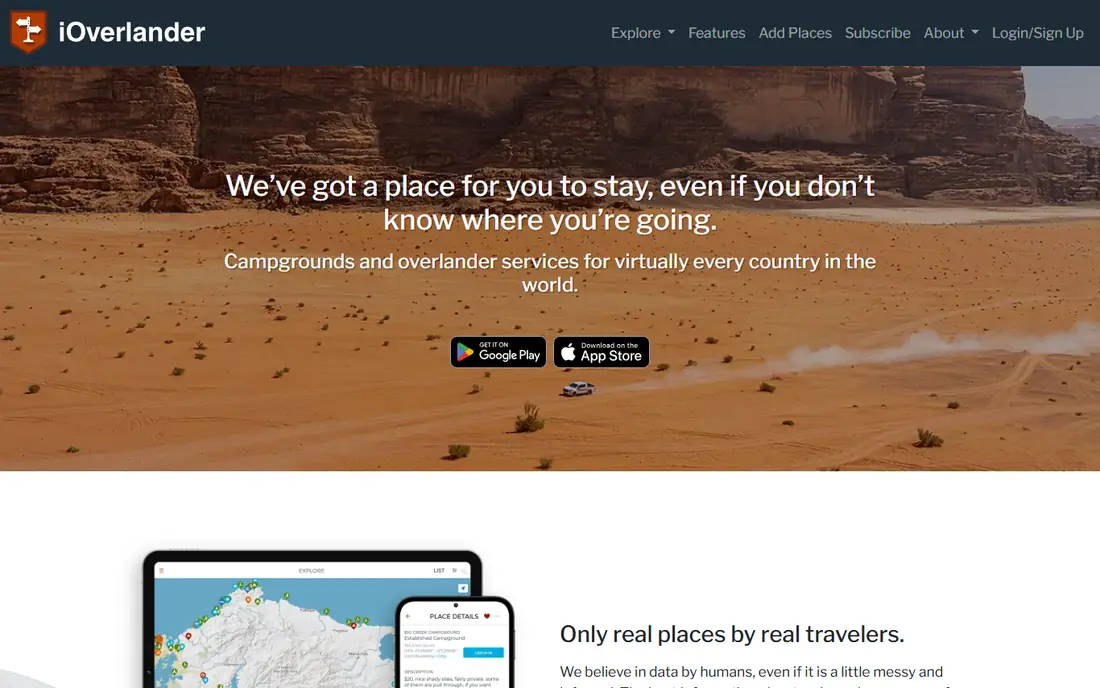
iOverlander is our pick for most boondockers because it is built for the kind of travel that goes beyond campgrounds. You can find free dispersed sites, water points, dump stations, and repair services, and the Pro tier adds offline maps for areas with no signal. For international travel and remote US routes, that breadth is hard to match.
The catch is that user-submitted listings vary in quality and freshness. A site that was legal and accessible last year may have new rules, a closed road, or a changed stay limit. Always read recent reviews, check the land manager's current rules, and have a backup site in mind before you drive down a remote road.
- Large database of free and paid sites
- Offline maps on Pro
- Covers water, dump, and service points
- Listing quality varies since many entries are user-submitted
- Pro features require a paid plan
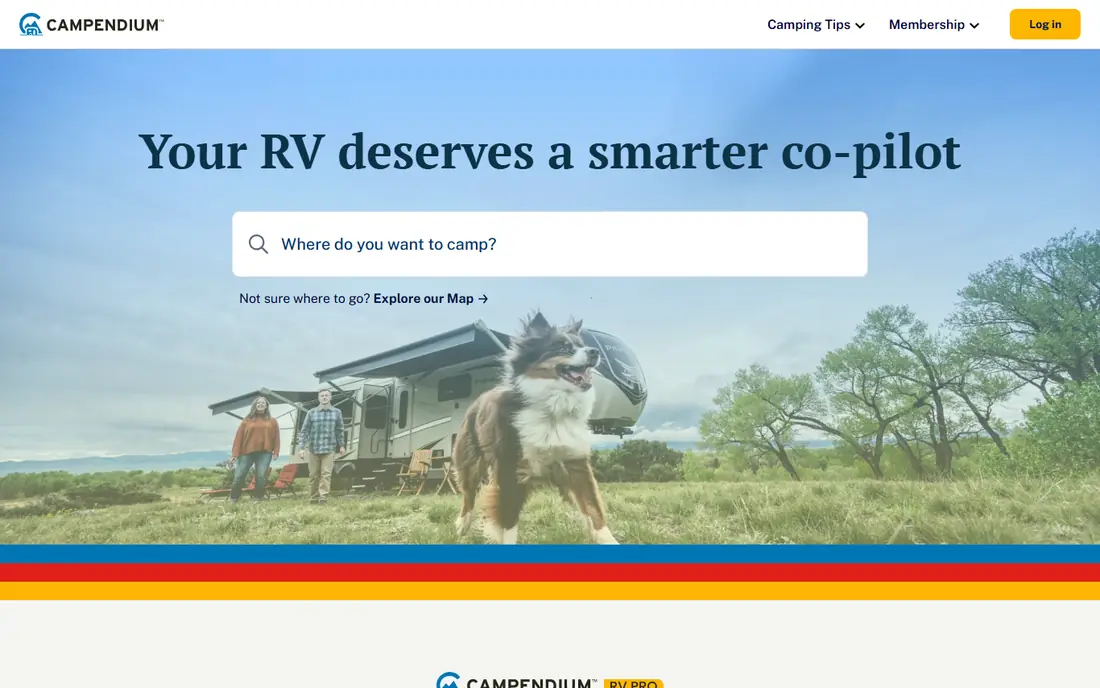
Campendium suits RVers who work from the road or need to know if they can get online. Its free and dispersed filters help you find boondocking sites, while cell coverage reports by carrier show which networks work at a site, based on user reports. Reviews also cover rig size, road access, and noise, which matter more in an RV than in a tent.
The limit is that coverage and access details depend on user reports, so a site with few reviews may have thin data. The free plan covers search, while RV Pro adds more features, so check the current pricing page before you pay. For remote work, pair app reports with a carrier coverage map and a backup plan.
- Free and dispersed site filters
- Cell coverage reports by carrier
- Detailed RV reviews
- Paid RV Pro tier needed for some features
- Coverage reports depend on user submissions
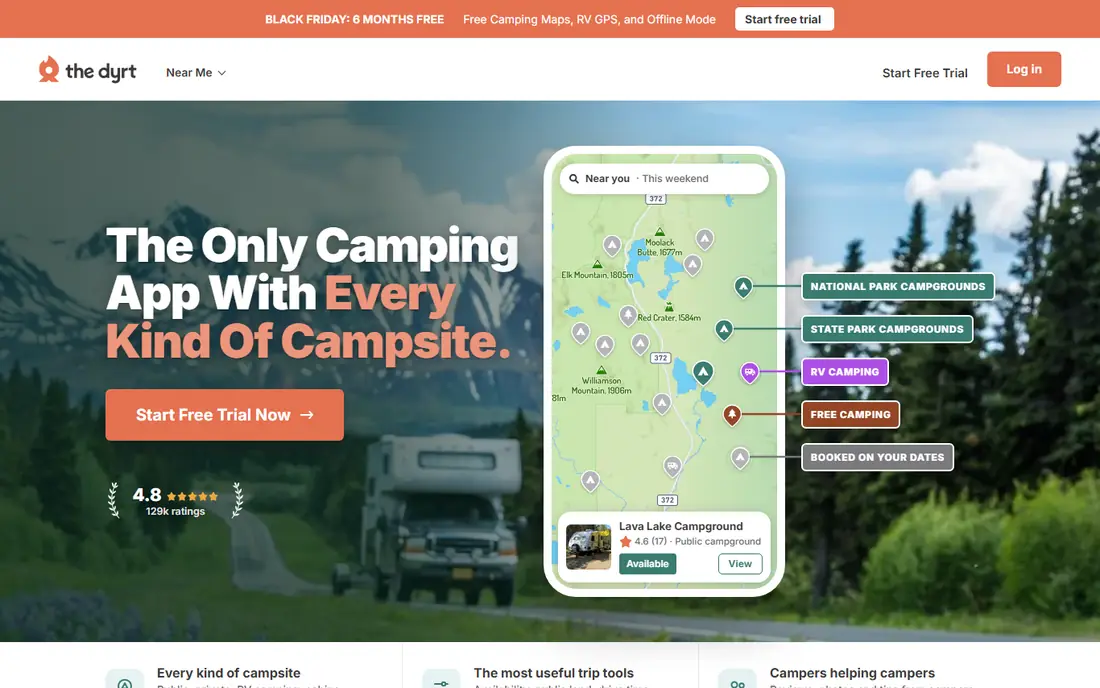
The Dyrt suits campers who want one database for campgrounds and free camping alike. Its free camping collection highlights free sites, while its wider database covers paid campgrounds for nights when you need hookups, laundry, or a dump station. Pro adds offline maps and trip planning, which help on routes with weak signal.
The catch is that The Dyrt is not a pure boondocking app. Its free collection is curated, so it will not list every dispersed site on public land, and some remote spots may only appear in iOverlander or Campendium. Use The Dyrt for planning and backup options, and use a dispersed-site app for deep public land searches.
- Large campground database
- Curated free camping collection
- Offline maps and trip planning on Pro
- Pro is a yearly subscription
- Free camping collection is curated, not a full dispersed site list
Harvest Hosts is not boondocking on public land, but it solves a real boondocking problem: the eastern US and other areas with little public land. Members can stay overnight at farms, wineries, breweries, and attractions, usually for one night, in a self-contained RV. That gives you a safe, legal overnight stop when dispersed sites are far away.
The catch is cost and etiquette. Classic membership starts at $99 per year, and hosts expect support, often around $30 in purchases or donations, so a stay is not free. You must also request stays in advance, arrive in the agreed window, and follow host rules. Treat it as a paid membership stop, not as free dispersed camping.
- Thousands of farm, winery, brewery, and attraction hosts
- Self-contained RV stays
- Good option where public land is scarce
- Annual membership, not free camping
- Hosts expect a purchase or donation, often around $30
- Stays are usually one night
Hipcamp suits campers who want private land options when public dispersed sites are full, closed, or too remote. You can search farms, ranches, and private campsites, filter for RV size and hookups, and read host reviews before you book. That flexibility helps on popular routes where free sites fill early.
The limit is price. Most Hipcamp stays are paid, so it is a backup and variety option, not a free boondocking replacement. Check the total price, cancellation terms, rig limits, and access road details before you book, since private land rules vary by host.
- Private land campsites, farms, and ranches
- Filters for RVs, hookups, and amenities
- Host reviews
- Most stays are paid, not free
- Availability and rules vary by host
Allstays Camp and RV suits RVers who plan by filters, not by browsing. You can filter campgrounds, rest stops, dump stations, and services by rig needs, hookups, and amenities, which helps when you need a specific stop on a long route. For detailed trip planning, that filter depth is still useful even as newer apps look cleaner.
The catch is that Allstays is a paid app with a dense interface that takes time to learn. Check the current store listing for price and platform, since it differs by store. If you want simple browsing, iOverlander or Campendium will feel easier. If you want filter control, Allstays earns its place.
- Detailed filters for campgrounds, rest stops, and services
- Useful for RV trip planning
- Works offline for saved data
- App purchase required
- Interface is dense compared with newer apps
RV LIFE Campgrounds suits RVers who plan full trips, not just single nights. You can research campgrounds, read reviews, and plan routes that account for RV size and road limits, which matters for boondocking access roads and for getting to a site safely. That trip-level view helps you pair free nights with paid nights for water, dumping, and laundry.
The limit is that RV LIFE is a suite, and campground access alone may not show its full value. Check current pricing and trial terms, and test whether its routing and planning tools match your rig and travel style. For a single free site search, a simpler app may be faster.
- Campground reviews and planning tools
- RV-safe routing options
- Trip planning for RV dimensions
- Pricing and plan details vary, so check the current page
- Best value comes with wider RV LIFE tools
Gaia GPS is the map tool that makes boondocking safer, rather than a campsite list itself. You can download offline maps for public land, mark waypoints for sites and water, track your route, and see land boundaries and roads in remote areas. For dispersed camping, where signal often fails, offline maps are not a luxury, they are a safety tool.
The catch is that Gaia GPS will not find campsites for you in the same way iOverlander does. Pair it with a campsite app: find the site in iOverlander or Campendium, then save it as a waypoint in Gaia GPS and download the map area before you leave signal. Check current pricing for premium maps, since free maps cover basics but not every layer.
- Detailed offline maps for public land
- Tracks, waypoints, and route planning
- Useful beyond camping
- Not a campsite database by itself
- Premium maps require a paid plan
How we picked these
We compared official feature pages, pricing pages, and app listings for boondocking and camping apps that are live in October 2026. We looked for free dispersed site search, cell coverage reports, offline maps, and legal stay information, and we kept a mix of free site finders, membership stops, and map tools. We left out apps we could not confirm as live and working, including FreeRoam, whose camping app status was unclear in October 2026.
How to boondock legally and safely
Start with the land manager, not just the app. Dispersed camping is often allowed on Bureau of Land Management land and National Forest land, but rules vary by area, with stay limits commonly around 14 days, plus fire restrictions, permit rules, and seasonal closures. Check the current rules for the exact area, and do not rely on an old app listing.
Next, plan for self-sufficiency. Carry enough water, food, and fuel, know where the nearest dump station and water fill are, and download offline maps before you lose signal. Check road access for your rig size, since a site that suits a van may not suit a large RV, and always have a backup site in case your first choice is full or closed.
Finally, leave no trace. Pack out all trash, use existing sites and roads where required, follow fire rules, and respect wildlife and other campers. Dispersed sites stay open because campers take care of them, so a clean, quiet stay protects access for the next boondocker too.
Frequently asked questions
What is the best app for boondocking?
iOverlander is our pick for most boondockers because it covers free sites, services, and offline maps. Campendium is a strong second choice for RVers who need cell coverage reports. The best boondocking apps depend on your rig, route, and whether you need offline maps.
Is boondocking free?
Dispersed camping on public land is often free, but it is not the same as a free campground with services. You pay in other ways: fuel, water, dumping, and time to find a legal site. Membership stops like Harvest Hosts and paid sites like Hipcamp are not free, even when they feel close to boondocking.
Is boondocking legal everywhere?
No. Dispersed camping is allowed on many public lands, but rules, stay limits, fire restrictions, and closures vary by area. Always check the land manager's current rules for the exact location, and never camp on private land without permission or in an area posted as closed.
How do I check cell coverage for boondocking?
Campendium offers carrier coverage reports from users, and iOverlander listings often mention signal. For work-critical trips, check carrier maps, carry a backup option if possible, and download offline maps before you leave signal, since app reports can be out of date.
What do I need for a first boondocking trip?
You need a legal site, enough water and power for your stay, offline maps, and a plan for dumping and refilling. Start with a short, easy-access stay near a town, test your power and water use, and build up to longer remote stays once you know your rig's limits.
Sources
See where you really rank - block by block
ProMapRanker scans Google Maps across a grid of your service area. Simple monthly plans from $19, white-label on every plan.
Start freeKeep reading
 wpforms alternatives
Best WPForms Alternatives in 2026
We compare 9 wpforms alternatives for WordPress forms, with free and paid options, current pricing notes, and honest limits for small business sites in 2026.
Read → windows task scheduler alternatives
Best Windows Task Scheduler Alternatives in 2026
Looking for Windows Task Scheduler alternatives? We compare 9 schedulers for Windows and cross-platform work, from free tools to enterprise automation.
Read → which ai video service is best
Which AI Video Service Is Best in 2026
which ai video service is best? We compare 10 legitimate AI video services on price, avatars, editing and output quality to help you pick the right tool.
Read →