 ProMapRanker
Best Bible App in 2026: 8 Apps Compared

Key takeaways
- YouVersion is the best free starting point for most readers, with reading plans, audio, and a large range of translations at no cost.
- Blue Letter Bible is the strongest free option for word studies, with original language tools that paid apps often charge for.
- Logos and Accordance suit serious study, but they cost more and take longer to learn than a simple reading app.
- Dwell is the pick for listeners, while Bible Gateway is the pick for quick lookups and comparing translations side by side.
- The best app is the one you will open daily, so start free and only pay when a specific study feature proves its worth to you.
Quick comparison
| Pick | Great for | Pricing starts at | Free tier | |
|---|---|---|---|---|
 YouVersion | Daily reading, plans, and community | Free | Yes | Visit |
 Bible Gateway | Comparing translations and quick reference | Free | Yes | Visit |
 Blue Letter Bible | Free original language word studies | Free | Yes | Visit |
 Logos | Deep study, sermons, and research | Free | Yes | Visit |
 Olive Tree | Affordable study on a phone or tablet | Free | Yes | Visit |
 Accordance | Scholarly study on Mac | See website | Free trial | Visit |
 Dwell | Listening to the Bible daily | See website | Free trial | Visit |
 Bible.is | Audio Bibles in many languages | Free | Yes | Visit |
The best bible apps
A bible app should fit how you actually read: a few minutes over breakfast, a deep study session on a Saturday, or listening on a commute. The apps below cover those different habits, and they differ a lot in price and depth. We compared their official feature pages, app store listings, and current pricing notes to sort the simple readers from the study tools.
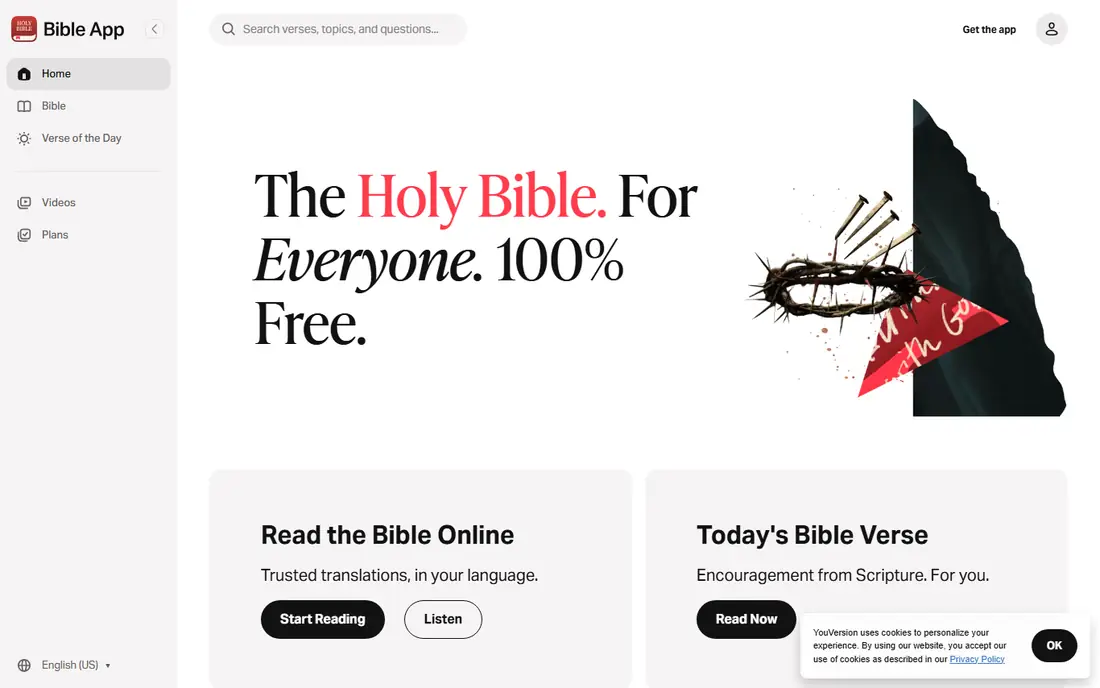
YouVersion is where most people should start, simply because it removes every barrier. It is free, it works on phones, tablets, and the web, and it offers a huge catalogue of translations and reading plans, from short devotionals to full-year plans. You can read with friends, highlight verses, take notes, and listen to audio for many versions, all without a subscription or a locked feature.
The honest limit is depth. YouVersion is built for daily reading and habit building, not for tracing a Greek word through every use in the text. If you want that kind of study, pair it with Blue Letter Bible rather than expecting YouVersion to do everything. For most readers, though, the combination of free access, plans, and audio is hard to beat, and it explains why it remains the most widely used bible app.
- Completely free with no paid tier
- Thousands of plans and translations
- Audio and offline reading for many versions
- Study tools are lighter than Logos or Blue Letter Bible
- Social features may distract some readers
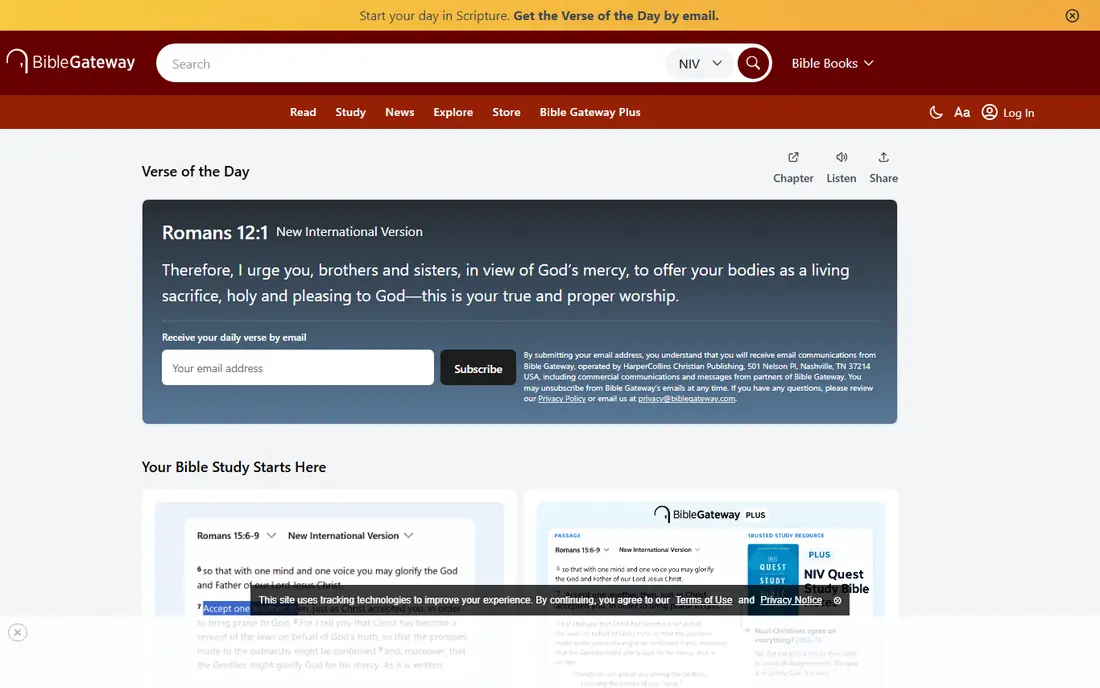
Bible Gateway is the reference desk of bible apps. When you want to check how a verse reads in several translations, search for a phrase, or pull up a passage fast, it is hard to beat. The free tier covers the core job well, with reading plans, audio for many versions, and devotionals that suit a short daily habit.
The catch is that the deeper study library, including many commentaries and study notes, requires a paid Bible Gateway Plus subscription, and we have not quoted a price here because it varies by billing period and region, so check the site before you subscribe. Bible Gateway also feels more like a website than a polished mobile reading app. Use it as your lookup tool alongside a daily reader, and it earns its place quickly.
- Dozens of translations to compare
- Strong search
- Reading plans and devotionals
- Fuller study resources sit behind Bible Gateway Plus
- The website can feel busy
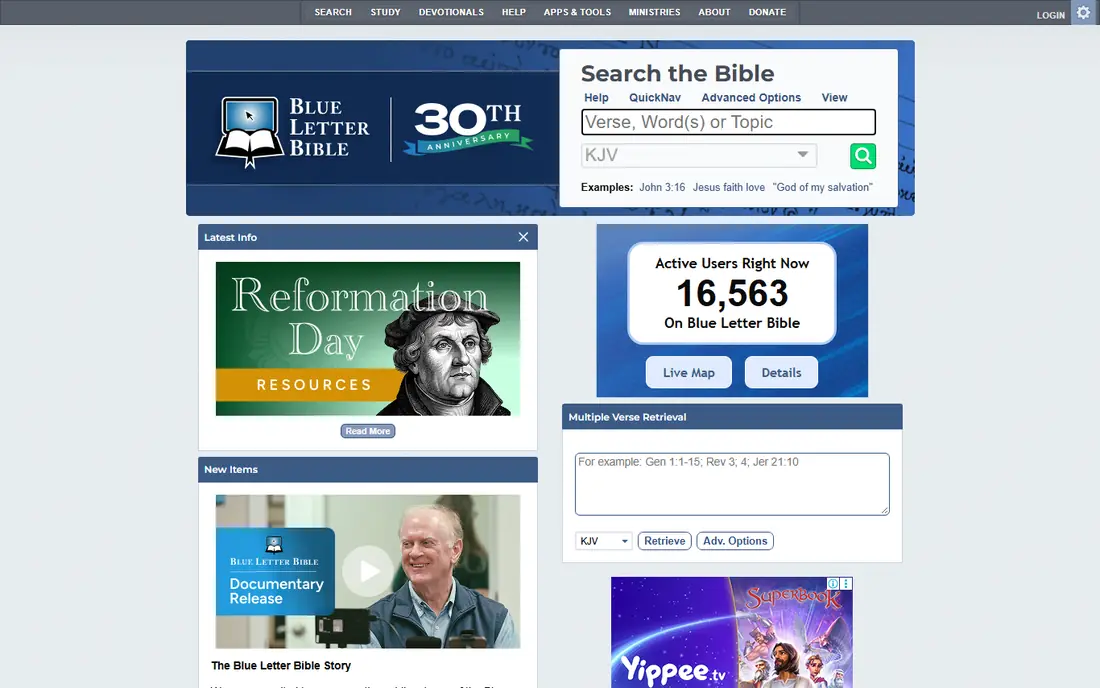
Blue Letter Bible is a quiet favourite among people who want to go deeper without paying. Tap a word and you can see its original Hebrew or Greek term, its dictionary entry, and other places the same word appears. Commentaries and cross references are included free, which makes it a serious study tool at zero cost, and that is rare.
The trade-off is presentation. The site and app look older than their rivals, and finding your way around takes a little patience at first. If you care more about substance than polish, that hardly matters, and the free tools here match or beat paid study features elsewhere. Keep Blue Letter Bible bookmarked for study sessions, even if you read daily somewhere else.
- Free interlinear text, lexicons, and concordance tools
- Commentaries included
- No subscription needed for core tools
- Interface looks dated
- Mobile experience is less polished than YouVersion or Olive Tree
Logos is the study platform for pastors, students, and anyone who treats bible study as research. Its strength is linking: a footnote leads to a lexicon, a lexicon leads to other uses of a word, and a search can run across your whole library at once. The base app is free, and paid subscriptions and library purchases add more books and tools, with some plans reported from around $4.99 per month.
The honest weakness is cost and complexity. A large Logos library can run into hundreds of dollars, and new users can feel lost among the panels and options. Logos fits best when you study several times a week, preach or teach, or need original language work regularly. Casual readers should start with YouVersion and Blue Letter Bible, and move to Logos only when they hit the limits of free tools.
- Linked library of Bibles, commentaries, and language tools
- Powerful search across everything you own
- Desktop, web, and mobile apps
- Full libraries and subscriptions can get expensive
- The learning curve is steep for beginners
Olive Tree sits in a useful middle ground between a free reader and a full research platform. The app itself is free, it reads well on a phone, and it lets you open a Bible beside a commentary or notes, highlight passages, and work offline once resources are downloaded. Many resources can be bought individually, which suits readers who want one good commentary rather than a whole subscription library.
The catch is that the free base is only a starting point, and the resources that make Olive Tree shine cost extra. The desktop app is also less developed than the mobile one, so desktop-first studiers may prefer Logos or Accordance. For a reader who mainly studies on a phone and wants a tidy, affordable setup, Olive Tree is a strong, practical choice.
- Clean mobile reading and study
- Split screen and notes
- Resources bought once rather than only by subscription
- Desktop experience is thinner than mobile
- The best resources are paid extras
Accordance has long been a favourite in seminaries and among scholars, especially on Mac, thanks to its speed and its original language tools. Searches run fast, texts link cleanly, and the library covers the academic resources serious students need. If your study involves parsing verbs, comparing manuscripts, or building detailed word studies, Accordance handles that work with less fuss than many rivals.
The weakness is access. Packages vary widely in price, and the full library is a serious purchase, so this is not a casual buy. New users should use the trial, test the exact tools they need, and compare package contents carefully. Accordance fits scholars and advanced students best, while most everyday readers will get what they need free elsewhere.
- Fast, powerful original language tools
- Strong academic library
- Clean interface for deep work
- Historically Mac-first, so Windows users should check current support
- Pricing varies by package and needs a quote check
Dwell is built for people who absorb Scripture better by ear. It offers professionally read audio, a choice of voices, background music options, and a read-along mode that highlights text as it plays. Listening plans help you work through books of the Bible on a commute, a walk, or while doing chores, which suits busy schedules far better than a reading-only app.
The catch is price and purpose. Full access requires a subscription, reported in comparisons at around $59.99 per year, so check the current rate in the app store before you subscribe. Dwell is also not a study platform, so pair it with a free study tool if you want word studies as well. For listeners, though, the audio quality and the listening plans make it worth the cost.
- High quality audio with many narrator voices
- Read-along text
- Plans built around listening
- Paid subscription needed for full access
- Less suited to deep written study
Bible.is deserves a place for a simple reason: language coverage. It offers audio Bibles in a very wide range of languages, including dramatised readings, and much of it is free. That makes it valuable for multilingual households, mission work, and anyone who wants to hear Scripture in a language other than English, as well as for English listeners who enjoy dramatised audio.
The limit is study depth. Bible.is is a listening and reading app, not a research tool, and its interface is simpler than YouVersion or Logos. Use it for what it does best, which is making the text audible and accessible, and keep a study app alongside it if you want commentaries and word tools. For free audio alone, it is an easy recommendation.
- Free dramatised and plain audio
- Wide language coverage
- Simple listening and reading
- Study tools are limited
- App experience varies by language and version
How we picked these
We compared official feature pages, app store listings, and current pricing notes for widely used bible apps, and we kept only apps that are currently available and that genuinely support reading or study, not apps that only offer verse images or quotes. We weighed translation range, reading plans, audio, offline access, study tools, and price, and we favoured free options where they matched paid ones. We did not claim hands-on testing, and we used "See website" where a price varied by store, region, or package.
How to choose the right bible app
Start by naming your main habit. If you want a daily reading habit, pick YouVersion, set a plan that fits your time, and turn on reminders. If you want to understand words and context, add Blue Letter Bible for study sessions. If you listen more than you read, try Dwell or Bible.is first. Trying to make one app do all three jobs usually leads to frustration, while a simple pair of apps covers most needs free.
Next, check the translation you trust and use most. Not every app carries every translation, and audio availability varies by version, so confirm your preferred version is available and downloadable for offline use before you commit to a plan. Also check whether notes and highlights sync across your phone and computer, since losing study notes is a common complaint. Finally, if you pay, start with the shortest billing period, test the features you actually need for two weeks, and only then switch to an annual plan.
Frequently asked questions
What is the best bible app free?
YouVersion is the best free bible app for most readers, because it is fully free, offers many translations and plans, and includes audio and offline reading. Blue Letter Bible is the best free option for deeper study, since its word study tools cost nothing. Together, they cover daily reading and study without a subscription.
What is the best bible app for bible study?
Logos is the strongest choice for deep study, with a linked library and powerful search, while Blue Letter Bible is the best free study alternative. Olive Tree offers a good middle path on mobile, with affordable individual resources. Choose Logos if you study often and teach, and Blue Letter Bible if you study occasionally and want to keep costs at zero.
What is the best app for bible study on a phone?
Olive Tree and YouVersion both work well on a phone, with Olive Tree offering stronger study layout and YouVersion offering stronger plans and community features. Blue Letter Bible also works on mobile, though its interface is less polished. Try all three free before you pay for anything.
Which bible app is best for listening?
Dwell is the best listening-focused app, with multiple narrator voices and listening plans, while Bible.is offers strong free audio in many languages. YouVersion also offers free audio for many versions, so listeners on a budget can start there and move to Dwell only if they want its voice options and listening design.
What is the best free bible study app?
Blue Letter Bible is our pick for free study, thanks to its interlinear text, lexicons, concordances, and commentaries at no cost. YouVersion and Bible Gateway both add useful free reading and reference features. If you want scholarly depth without paying, start with Blue Letter Bible and add YouVersion for plans.
Does the best bible app need a subscription?
No, most readers do not need a subscription. YouVersion, Blue Letter Bible, and Bible.is are free for their core features, and Olive Tree and Logos both offer free base apps. Pay only when you need a specific library, a voice library, or advanced study tools that free apps do not provide.
Sources
- https://favourudelue.com/the-best-bible-apps-compared/
- https://www.logos.com/popular-bible-apps
- https://wakealarm.app/blog/best-bible-apps/
- https://www.bible.com
- https://www.biblegateway.com
- https://www.blueletterbible.org
- https://www.logos.com
- https://www.olivetree.com
- https://www.accordancebible.com
- https://dwellapp.io
- https://www.bible.is
See where you really rank - block by block
ProMapRanker scans Google Maps across a grid of your service area. Simple monthly plans from $19, white-label on every plan.
Start freeKeep reading
 zoom alternatives
Best Zoom Alternatives in 2026
Compare Zoom alternatives in 2026, with free meeting limits and prices, so you can pick the best alternative to Zoom for your team, class, or community.
Read → which software is best for remote work
Which Software Is Best for Remote Work in 2026
Answering which software is best for remote work, we compare Slack, Zoom, Asana, Notion, Teams and more, with pricing and honest tradeoffs in 2026 now.
Read → which ai tool is best for content writing
Which AI Tool Is Best for Content Writing in 2026
Wondering which ai tool is best for content writing? We compare ChatGPT, Claude, Jasper, Grammarly, and more on price, quality, and best use in 2026 now.
Read →