 ProMapRanker
Best B2B Customer Support Platforms in 2026


Large high-volume operations · Pricing starts at: $55 per user per month
Key takeaways
- B2B support differs from consumer support because accounts, not just individual users, matter: one company can have many contacts, contracts, and SLAs.
- Zendesk suits large, high-volume operations, while Freshdesk and Zoho Desk suit growing teams that need value without enterprise complexity.
- Intercom suits AI-first, chat-led support, while Pylon and Plain suit Slack-native B2B teams that live inside customer channels.
- AI pricing is now the hidden cost: per-resolution and per-seat AI add-ons can change the total far more than the base seat price.
- Pilot with real tickets, real SLAs, and real account views before you sign, since a demo inbox hides the account complexity that defines B2B work.
Quick comparison
| Pick | Great for | Pricing starts at | Free tier | |
|---|---|---|---|---|
| Zendesk | Large high-volume operations | $55 per user per month | Free trial | Visit |
 Freshdesk | Growing teams needing value | $19 per agent per month | Free trial | Visit |
 Intercom | AI-first chat support | $29 per seat per month | Free trial | Visit |
 Help Scout | Small email-first teams | $25 per user per month | Yes | Visit |
 Salesforce Service Cloud | Enterprises on Salesforce | $25 per user per month | Free trial | Visit |
 HubSpot Service Hub | Teams running HubSpot CRM | $20 per seat per month | Yes | Visit |
 Zoho Desk | Budget teams and Zoho users | See website | Yes | Visit |
 Front | Shared inbox collaboration | See website | Free trial | Visit |
 Pylon | Slack-native B2B support | $59 per seat per month | Free trial | Visit |
The best B2B customer support platforms
We compared support platforms on ticketing, account views, SLA management, channels, AI features, and pricing transparency. B2B fit was weighted heavily: a platform that handles single-user tickets well but cannot show an account's full history, contracts, and SLAs will frustrate a B2B team quickly.
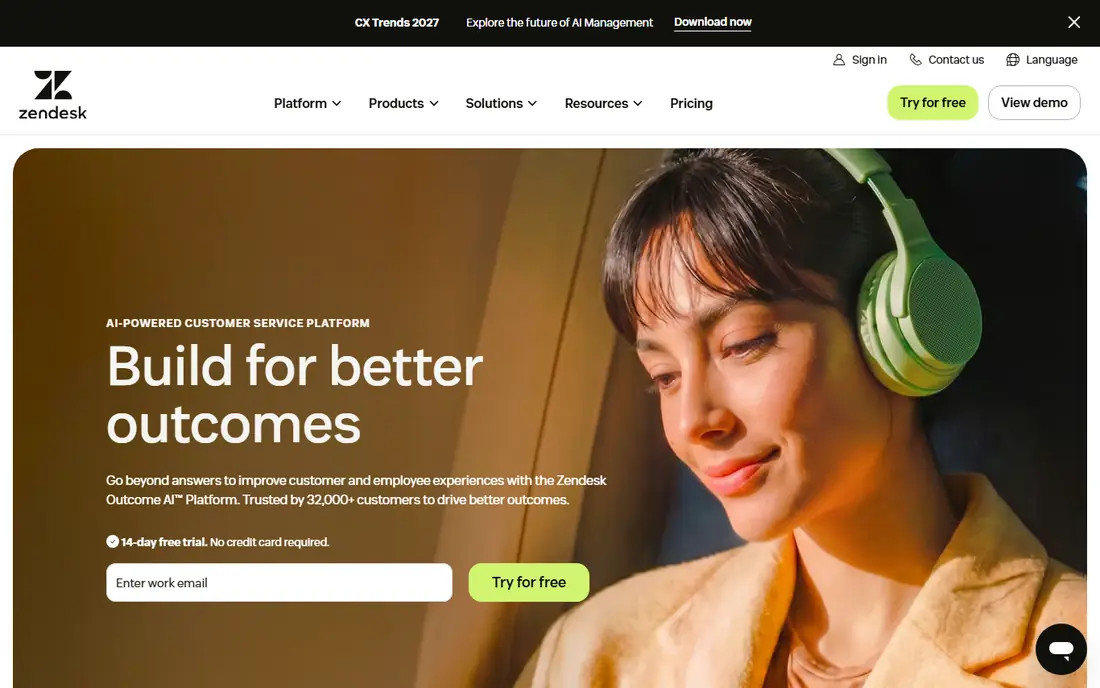
Zendesk is the default for large, high-volume support operations, and its breadth is the reason. It covers email, chat, messaging, phone, and social channels in one system, with routing, triggers, macros, and reporting that scale to hundreds of agents. Its app marketplace adds integrations for almost every CRM, billing, and monitoring tool a B2B team uses.
The cost story needs care. Suite Team is listed around 55 dollars per user per month, but advanced AI, Copilot, and per-resolution AI charges sit on top, and recent comparisons note that a fully loaded Zendesk seat can cost far more than the base price. Zendesk also offers organisation views, but account-centric reporting is weaker than purpose-built B2B tools without add-ons. Choose Zendesk when volume, channels, and ecosystem matter most, and budget for the AI add-ons you will actually use.
- Broad channel coverage
- Large app ecosystem
- Mature routing, macros, and reporting
- AI features are largely add-ons
- Costs rise fast with Copilot and AI resolutions
- Complexity for small teams
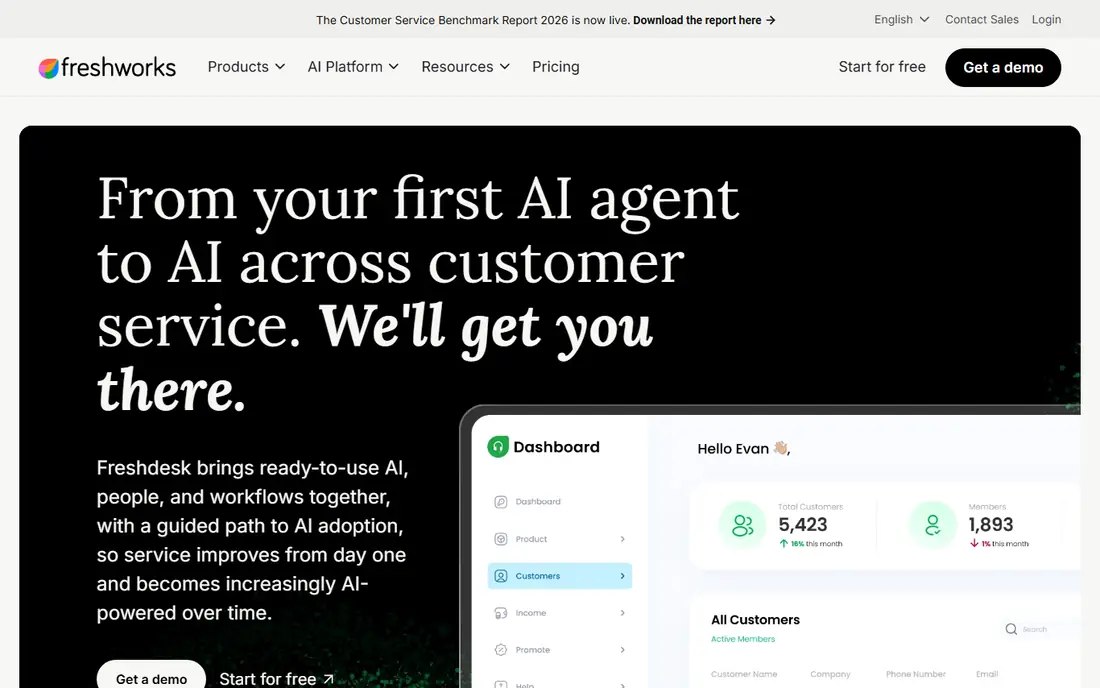
Freshdesk is the value pick for growing B2B teams that need solid ticketing without enterprise pricing. Growth at 19 dollars per agent per month on annual billing covers email ticketing, a knowledge base, and core automation, and higher tiers add Freddy AI features. It is easy to set up, easy to train agents on, and covers the channels most B2B teams actually use.
The limits are account depth and AI metering. Freshdesk's account hierarchy and Slack-native support are moderate compared with Pylon or Salesforce, and AI sessions are not unlimited on every plan, so check the AI terms before promising deflection savings. For a team moving off shared inboxes or spreadsheets, Freshdesk gives a clean, affordable step up that will last for years.
- Good value at Growth tier
- Email ticketing plus knowledge base
- Freddy AI on higher tiers
- AI sessions are metered on some plans
- Account hierarchy is moderate
- Not the strongest Slack-native option
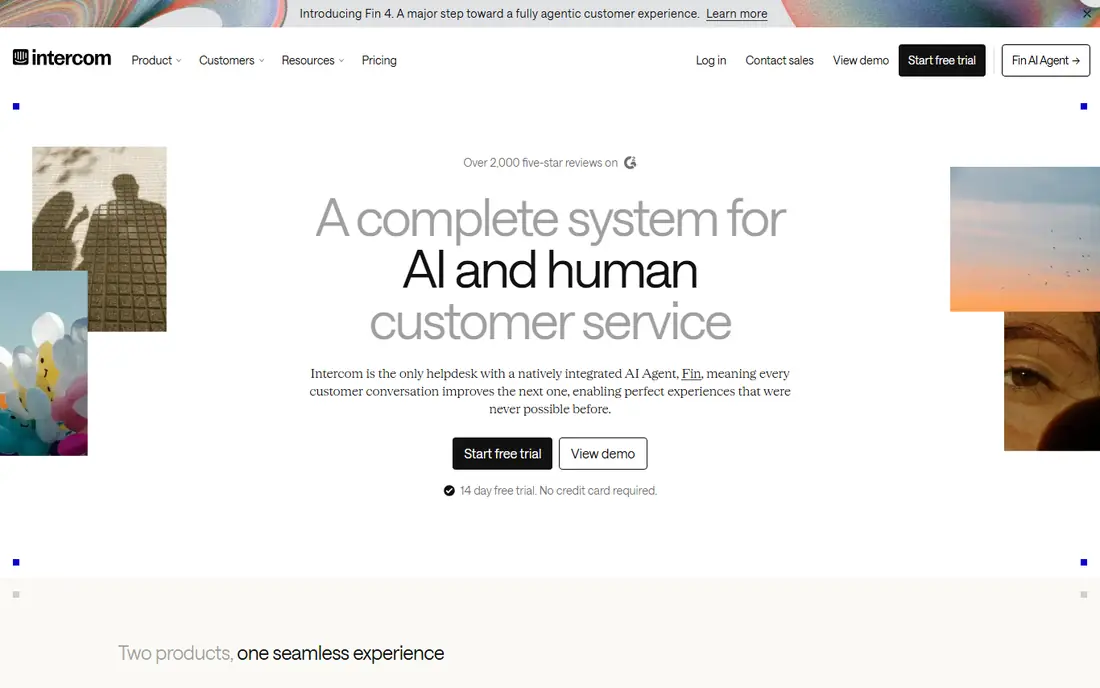
Intercom suits digital-first B2B teams that want chat and AI deflection at the centre of support. Its Fin AI agent resolves common questions in Messenger and the help centre, and its Essential plan is listed around 29 dollars per seat per month on annual billing. For SaaS companies with in-app support and a high volume of repeat questions, that AI-first model can cut response times sharply.
The pricing model is the thing to model carefully. Fin outcomes are billed separately, commonly around 99 cents per resolution in recent comparisons, so a team with high AI volume can see costs rise with success. Advanced workflows also need higher tiers. Choose Intercom if chat and AI deflection fit how your customers actually contact you, and forecast AI resolution volume before you sign.
- Strong Fin AI agent
- Messenger-led support
- Help centre and shared inbox in one place
- Fin resolutions are billed per outcome
- Advanced workflows need higher tiers
- Ticket depth is thinner than Zendesk
Help Scout is the simplest platform on this list, and that simplicity is its appeal for small B2B teams. It gives you shared inboxes, live chat, a knowledge base, and basic workflows without the complexity of an enterprise suite. Standard is listed around 25 dollars per user per month, and a free plan for up to five users lets a tiny team start without a budget discussion.
The tradeoff is B2B depth. Help Scout's account-centric views are light, and it lacks the Slack-native or CRM-deep features that larger B2B teams need. AI Answers are also metered per resolution on some plans. Choose Help Scout when your team is small, email-first, and values a clean inbox over account hierarchies and complex SLAs.
- Simple shared inbox
- Free plan for up to five users
- AI Answers and drafts on higher tiers
- Light account-centric features
- Channel coverage is email and chat first
- AI Answers are metered
Salesforce Service Cloud is the strongest B2B choice for enterprises already running Salesforce, because support lives on the same account, contact, and contract records that sales and success teams use. That shared view means an agent can see a customer's full history, entitlements, SLAs, and open opportunities without switching systems, and managers can report on support by account, not just by ticket.
The cost is complexity. Service Cloud needs implementation skill, and pricing rises across editions as you add features, with entry pricing around 25 dollars per user per month in recent comparisons for starter editions. Outside Salesforce, much of its advantage disappears, so non-Salesforce teams should compare Zendesk or Pylon first. Inside Salesforce, though, it is hard to beat for account-centric B2B support.
- Deep account hierarchy and CRM integration
- Strong SLA and case management
- Einstein AI features
- Complexity and implementation effort
- Pricing rises across editions
- Overkill outside Salesforce
HubSpot Service Hub suits teams already running HubSpot CRM, because support tickets sit on the same company records that marketing and sales use. That company view gives B2B teams the account context they need, and the free tools let a small team start ticketing without a licence cost. Starter is listed around 20 dollars per seat per month on monthly billing in recent comparisons.
The limits are depth and tier costs. Complex routing, advanced SLAs, and some AI features need higher tiers, and those tiers can carry onboarding fees. If your team lives in HubSpot and needs solid, CRM-connected support rather than a standalone enterprise help desk, Service Hub is a natural fit. If you need Zendesk-level routing complexity, compare the higher HubSpot tiers carefully before committing.
- CRM-first company views
- Free tools for small teams
- Ticketing plus knowledge base and feedback
- Higher tiers add onboarding fees
- AI features vary by tier
- Less depth than Zendesk for complex routing
Zoho Desk is the budget pick for B2B teams, especially those already using Zoho CRM or Zoho One. It offers a free tier for up to three users, low entry pricing on paid editions, and Zia AI features on higher tiers, covering email, chat, phone, and social ticketing. For a small team that needs a real help desk without a large monthly bill, Zoho Desk is hard to beat on price alone.
The tradeoff is polish and depth. Its interface and app ecosystem feel less refined than Zendesk or Intercom, and its account-centric features are moderate rather than leading. Pricing also varies by edition, with recent comparisons listing entry figures from around 7 to 14 dollars per user per month depending on the source, so confirm the current edition price. Choose Zoho Desk when budget and Zoho integration matter more than a premium interface.
- Low entry pricing
- Free tier for small teams
- Zia AI assistant on higher tiers
- Interface and ecosystem are less polished than rivals
- Account depth is moderate
- Pricing varies by edition
Front is built around collaborative inboxes rather than traditional ticket queues, which suits B2B teams where support, success, and sales all touch the same customer emails. Agents can assign, comment internally, and collaborate on threads without forwarding emails or losing context, and the interface feels like email done properly for teams. That model works well for relationship-driven B2B support.
The limit is structure. Front is weaker than Zendesk or Salesforce for complex ticket routing, SLA reporting, and account-level analytics, and pricing varies by tier, with recent comparisons listing entry figures from around 19 to 25 dollars per seat per month depending on the source. Choose Front when email collaboration is your main workflow, and choose a ticket-first platform when SLA and routing complexity dominate.
- Collaborative shared inbox
- Strong email workflow
- Good for account and success teams
- Less structured ticketing than Zendesk
- Pricing varies by tier
- AI features are add-ons on some plans
Pylon is built specifically for B2B SaaS teams whose customers live in Slack and Microsoft Teams. Agents work from shared Slack channels with full account context, so a message in a customer channel becomes a tracked issue with SLA, owner, and history, without asking the customer to use a portal. That Slack-native model is why many B2B SaaS teams choose Pylon over a general help desk.
Pricing reflects that focus. Entry pricing is listed around 59 dollars per seat per month in recent comparisons, with AI agent features as a separate add-on around 50 dollars per seat per month. That makes Pylon more expensive than Freshdesk or Zoho Desk, but for a team whose customers expect Slack support, the fit can justify the price. Pilot it with your most active Slack customers before rolling it out to every account.
- Native Slack and Teams support
- Strong account context
- Built for B2B SaaS workflows
- Higher entry price
- AI agent is a separate add-on
- Less suited to high-volume consumer ticketing
How we picked these
We compared official pricing pages and recent 2026 comparisons on seat prices, AI billing, account features, and channel coverage. We did not claim hands-on deployment, and we did not invent prices where sources disagreed. Where pricing varied, we used the most commonly reported figure or marked the price as See website.
How to choose for a B2B team
Start by mapping how your customers actually contact you. If they email and use a portal, a ticket-first platform like Zendesk, Freshdesk, or Salesforce fits. If they live in Slack, Pylon or a Slack-connected tool will save more time than any ticket feature. If they use in-app chat, Intercom's model fits better than an email-first inbox.
Next, test account views with real data. Import ten real accounts with multiple contacts, contracts, and SLAs, then ask an agent to answer three questions: what is this account's SLA, what else is open for this account, and who else at the customer is involved. A platform that answers those questions in one view will serve B2B work far better than one that shows only single tickets.
Finally, model the full cost for a year. Add base seats at your real headcount, AI add-ons or per-resolution charges at your forecast volume, onboarding fees, and any CRM or Slack integration costs. A cheap base price with expensive AI charges can cost more than a higher base price with AI included, so compare totals, not headlines, before you sign.
Frequently asked questions
What is the best B2B customer support platform?
It depends on your channels and CRM. Zendesk suits large high-volume teams, Freshdesk suits growing teams on value, Salesforce suits enterprises on Salesforce, HubSpot suits HubSpot teams, and Pylon suits Slack-native B2B SaaS teams.
How is B2B support different from consumer support?
B2B support serves accounts, not just individuals, so one company can have many contacts, contracts, entitlements, and SLAs. Platforms need account views, SLA tracking, and multi-stakeholder visibility, not just single-user ticket queues.
How much does Zendesk cost?
Zendesk Suite Team is listed around 55 dollars per user per month, with Growth around 89 dollars, plus add-ons for advanced AI and Copilot at around 50 dollars per agent each in recent comparisons. Model the full loaded cost, not just the base seat price.
Is Intercom good for B2B support?
Intercom suits chat-led, AI-first B2B SaaS teams, especially those with in-app support and many repeat questions. Its Fin AI resolutions are billed per outcome, so forecast AI volume before budgeting, and check whether its ticket depth meets your SLA needs.
Should B2B teams support customers in Slack?
Many B2B SaaS customers prefer Slack, and tools like Pylon make Slack support trackable with SLAs and account context. If your customers already work in Slack, meeting them there can improve response times, but you still need a system of record behind the channel.
What is the cheapest B2B support platform?
Zoho Desk and Freshdesk are among the cheapest credible options, with Zoho offering a free tier for small teams and Freshdesk Growth at 19 dollars per agent per month. Help Scout also offers a free plan for up to five users for very small teams.
Sources
See where you really rank - block by block
ProMapRanker scans Google Maps across a grid of your service area. Simple monthly plans from $19, white-label on every plan.
Start freeKeep reading
 wpforms alternatives
Best WPForms Alternatives in 2026
We compare 9 wpforms alternatives for WordPress forms, with free and paid options, current pricing notes, and honest limits for small business sites in 2026.
Read → windows task scheduler alternatives
Best Windows Task Scheduler Alternatives in 2026
Looking for Windows Task Scheduler alternatives? We compare 9 schedulers for Windows and cross-platform work, from free tools to enterprise automation.
Read → which ai video service is best
Which AI Video Service Is Best in 2026
which ai video service is best? We compare 10 legitimate AI video services on price, avatars, editing and output quality to help you pick the right tool.
Read →