 ProMapRanker
Best Aviation MRO Software in 2026


Large airline and engine MRO operations · Pricing starts at: See website
Key takeaways
- This article covers maintenance, repair and overhaul software for aviation, meaning the systems that plan, document, and sign off aircraft and component work.
- Ramco Aviation, AMOS, and TRAX eMRO are the broadest platforms here, built for airlines and large repair organizations with complex fleets.
- IFS Maintenix, Rusada Envision, WinAir, CAMP Systems, and Flightdocs suit narrower fleets or specific shop types, so fleet size matters more than feature count.
- Every vendor here prices by quote, so a demo with your own fleet data matters more than a published price page.
Quick comparison
| Pick | Great for | Pricing starts at | Free tier | |
|---|---|---|---|---|
| Ramco Aviation | Large airline and engine MRO operations | See website | No | Visit |
 AMOS | Integrated airline maintenance and engineering | See website | No | Visit |
 TRAX eMRO | Airlines and MROs needing mobile shop tools | See website | No | Visit |
 IFS Maintenix | Complex fleet planning and execution | See website | No | Visit |
 Rusada Envision | Component and line maintenance shops | See website | No | Visit |
 WinAir | Smaller MROs and general aviation shops | See website | Free trial | Visit |
 CAMP Systems | Business aviation maintenance tracking | See website | No | Visit |
 Flightdocs | Business aviation maintenance and compliance | See website | Free trial | Visit |
The best aviation mro software
The tools below all support maintenance, repair and overhaul work for aviation, but they differ in fleet size, shop type, and deployment style. We compared official product pages, documentation, and public customer announcements.

Ramco Aviation is an end-to-end suite for operators that run many kinds of maintenance at once. Its modules cover planning, engineering, supply chain, quality and compliance, and finance, so a shop visit can be tracked from contract and work scope through kitting, execution, and billing. Mobile apps give technicians digital task cards and electronic sign-offs, which supports paperless shop work.
The trade-off is scale. Ramco fits airlines, engine shops, and large MRO providers that need that breadth, and its recent airline and engine MRO wins show where it competes best. A small single-hangar shop will likely find the implementation effort and cost heavier than a lighter tool built for its size.
- Covers line, hangar, component, and engine work
- Mobile task cards and sign-offs
- Strong supply chain and finance modules
- Quote-only pricing
- Implementation is a major project for smaller shops
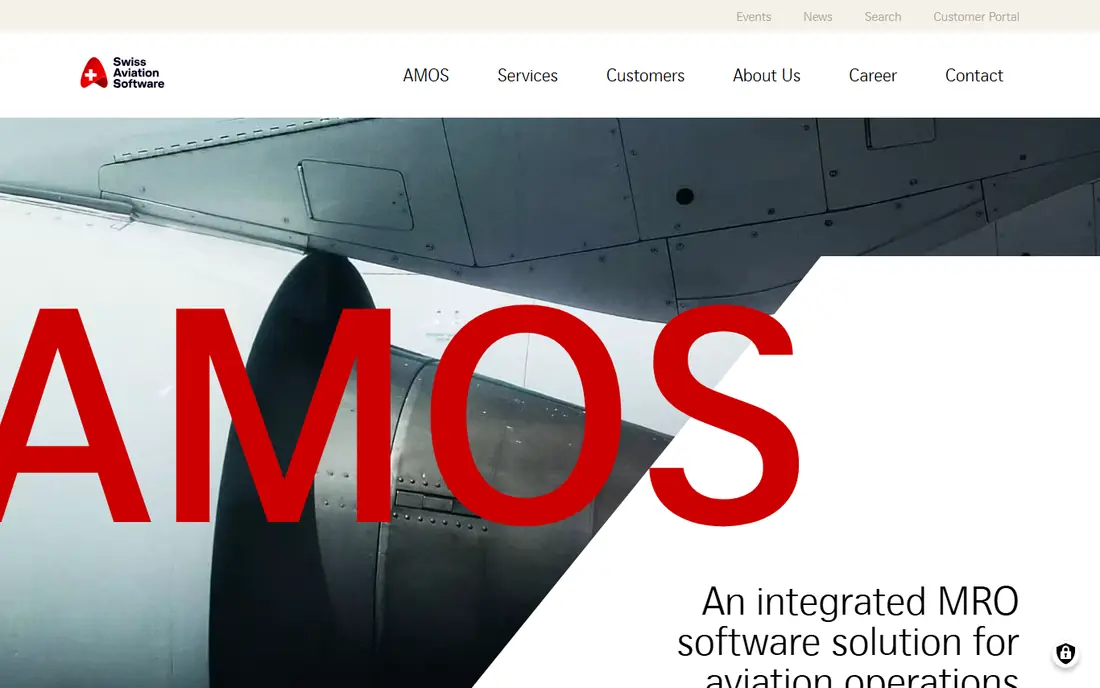
AMOS, from Swiss AviationSoftware, is one of the most established systems for airline maintenance, engineering, and logistics. It brings planning, monitoring, and documentation into one system, so airworthiness records, parts, and workforce data stay linked rather than scattered across spreadsheets. That integration is the reason many large carriers stay with it for years.
The honest cost is change. AMOS is a core operating system for a technical department, not a quick add-on, so buyers should budget for implementation, data migration, and training. Teams that want a lighter tool for one hangar should look further down this list.
- Deep maintenance, engineering, and logistics integration
- Long track record with airlines
- Strong compliance focus
- Quote-only pricing
- Setup and training take real time
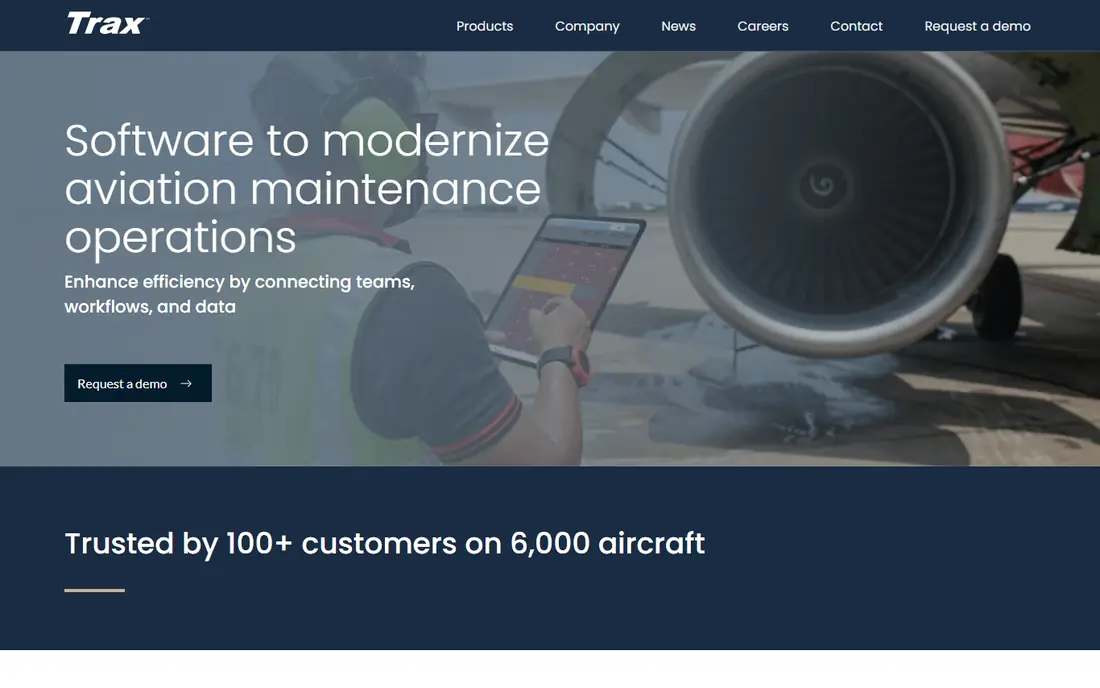
TRAX eMRO is a web-based maintenance and engineering platform with a companion set of mobile apps for hangar, line, warehouse, and shop work. Its modules cover engineering, planning, production, inventory, quality, technical records, and finance, and the mobile tools support offline work and digital signatures. That combination suits airlines and MROs with staff spread across ramps and shops.
The catch is fit. TRAX serves large commercial and defense fleets, and its depth reflects that audience. A small shop that only needs work orders and records may not use most of the platform, so a focused trial with real shop workflows is worth the time.
- Web-based system with mobile apps
- Paperless workpacks and digital signatures
- Broad module coverage
- Quote-only pricing
- Breadth can feel complex for small operators
IFS Maintenix is built for operators with complex, mixed fleets where planning is the hard problem. It handles maintenance programs, planning, execution, and materials in a connected way, and it sits inside the wider IFS portfolio for organizations that also need enterprise asset and service tools. Large airlines and defense fleets are its natural audience.
For a smaller repair shop, that power comes with overhead. Implementation, configuration, and integration work should be treated as a project with its own timeline and budget. Buyers with a simpler fleet will get faster value from a shop-focused tool.
- Strong planning and optimization for large fleets
- Deep engineering data support
- Part of a wider IFS suite
- Quote-only pricing
- Enterprise implementation effort
Rusada Envision targets MRO providers, airlines, and lessors that need clear control over maintenance, airworthiness, and component work. It covers planning, work execution, inventory, and compliance records, with deployment options that suit shops that cannot move fully to the cloud. That balance makes it a practical middle ground between a full airline suite and a basic work-order tool.
The limit to check is ecosystem fit. Envision covers core MRO work well, but teams with unusual finance, flight operations, or analytics needs should confirm integrations during a demo. Its strength is focused maintenance control, not being every system at once.
- Focused MRO workflows
- Airworthiness and compliance tracking
- Cloud and on-premise options
- Quote-only pricing
- Smaller vendor footprint than the largest suites
WinAir is a practical pick for repair stations, helicopter operators, and general aviation shops that need proper aviation records without an airline-scale platform. It covers work orders, inventory, maintenance tracking, and compliance documentation in a system shaped around shop workflows. For a team moving off spreadsheets, that structure is a clear step up.
The trade-off is ceiling. WinAir is not pitched as a replacement for a large airline suite, and very large fleets may outgrow it. Shops should confirm that its reporting and audit trail meet their regulator and customer requirements before committing.
- Built for aviation maintenance shops
- Inventory and work order tracking
- More approachable than airline suites
- Less suited to very large airline fleets
- Pricing still requires a quote
CAMP Systems is best known for maintenance tracking in business aviation, where owners and operators need reliable records for airframes, engines, and components. It helps teams track due items, inspections, and compliance status, and it supports the program data that buyers, auditors, and maintenance providers ask for. For a flight department or management company, that record quality matters at resale and audit time.
The honest limit is scope. CAMP is strongest as a tracking and compliance record system, while some rivals on this list offer deeper shop-floor execution, planning, and inventory control. Teams that need both should check whether CAMP plus a shop tool, or a single broader suite, fits better.
- Long history in business aviation
- Maintenance tracking and compliance records
- Engine and airframe program support
- Quote-only pricing
- Less of a full shop execution suite than some rivals
Flightdocs gives business aviation operators a cloud system for maintenance tracking, compliance, inventory, and work management. Its design suits flight departments, charter operators, and management companies that need current aircraft status without running an airline IT department. A trial helps teams test how cleanly their existing records import.
The catch is audience. Flightdocs is shaped around business aviation workflows, so a large commercial airline with heavy maintenance planning needs will likely need a broader suite. For its target audience, though, that focus is a strength, since the workflows match how those operators actually work.
- Cloud-based maintenance tracking
- Compliance and inventory tools
- Built for business aviation operators
- Business aviation focus
- Enterprise airline needs may exceed its scope
How we picked these
We compared official product pages, module lists, deployment options, and public customer announcements, and we kept only systems that still serve aviation maintenance in October 2026. We favored breadth of coverage, from planning and execution to records and compliance, and we mixed large airline suites with shop and business aviation tools so different fleet sizes can find a fit. Pricing is quote-based across this market, so we list See website rather than inventing figures.
What to check before you choose
Start with your fleet and your regulator. A business jet operator, a component shop, and a large airline face different record, planning, and audit needs, and the right system follows those needs rather than a feature list. Ask each vendor to load a sample of your own aircraft, components, and maintenance program data during a demo, since clean data import is where many projects succeed or stall.
Check the shop floor, not just the office. Mobile access, offline capability, digital signatures, and parts tracking decide whether technicians actually use the system every day. Finally, confirm support hours, hosting options, and integration with your existing finance and supply systems, and get implementation time and cost in writing before you sign.
Frequently asked questions
What is aviation MRO software?
It is software for maintenance, repair and overhaul work on aircraft, engines, and components. It plans inspections, tracks work orders and parts, keeps airworthiness records, and supports compliance sign-offs.
What is the best aviation mro software for a small repair shop?
WinAir and Flightdocs are often easier starting points for smaller operations, depending on whether the shop serves general aviation or business aviation. Larger airlines usually need Ramco Aviation, AMOS, TRAX, or IFS Maintenix.
How much does aviation MRO software cost?
Vendors in this market generally price by quote, based on fleet size, modules, users, and hosting. Expect a sales conversation and a demo, and ask for implementation, training, and support costs in the same quote.
Does MRO software replace regulatory compliance work?
No. The software organizes records, due items, and sign-offs, but the operator and its approved maintenance organization remain responsible for following the rules that apply to their fleet. Treat the system as a record and workflow tool, not as approval by itself.
Can MRO software work on the shop floor?
Yes, most modern systems offer mobile apps or web access for technicians, with digital task cards and signatures. Check offline support if your hangar has weak connectivity.
Sources
See where you really rank - block by block
ProMapRanker scans Google Maps across a grid of your service area. Simple monthly plans from $19, white-label on every plan.
Start freeKeep reading
 wpforms alternatives
Best WPForms Alternatives in 2026
We compare 9 wpforms alternatives for WordPress forms, with free and paid options, current pricing notes, and honest limits for small business sites in 2026.
Read → windows task scheduler alternatives
Best Windows Task Scheduler Alternatives in 2026
Looking for Windows Task Scheduler alternatives? We compare 9 schedulers for Windows and cross-platform work, from free tools to enterprise automation.
Read → which ai video service is best
Which AI Video Service Is Best in 2026
which ai video service is best? We compare 10 legitimate AI video services on price, avatars, editing and output quality to help you pick the right tool.
Read →