 ProMapRanker
Best Aviation Authoring Software in 2026


Airlines managing manuals end to end · Pricing starts at: See website
Key takeaways
- Aviation authoring is not generic writing. The winning tool must handle revision control, standards tracing, and controlled distribution to frontline staff.
- Comply365, NIVOMAX and Web Manuals are built for airlines and operators, while Arbortext, FrameMaker and Flare are built for structured technical content.
- S1000D and ATA iSpec 2200 support is the first filter. If a tool cannot handle your standard, its other features do not matter.
- Our pick for most airline operators is Comply365 for its end to end manual workflow, with NIVOMAX for S1000D heavy publication programs.
Quick comparison
| Pick | Great for | Pricing starts at | Free tier | |
|---|---|---|---|---|
| Comply365 | Airlines managing manuals end to end | See website | No | Visit |
 NIVOMAX | S1000D and ATA publication programs | See website | No | Visit |
 Web Manuals | Operators needing compliance tracking | See website | Free trial | Visit |
 PTC Arbortext | Aerospace technical publications at scale | See website | No | Visit |
 Adobe FrameMaker | Structured long documents | $29.99 per month | No | Visit |
 MadCap Flare | Single source technical documentation | See website | Free trial | Visit |
 Oxygen XML Editor | XML authoring teams on a budget | See website | Free trial | Visit |
 RWS Tridion Docs | Large structured content programs | See website | No | Visit |
 Paligo | Cloud based structured authoring | See website | Free trial | Visit |
The best aviation authoring software
Aviation manuals carry safety weight. A flight operations manual, a maintenance manual or a component maintenance manual must be current, traceable to a regulation, and available to the right crew at the right time. That is why aviation authoring tools focus on revision history, approval workflows and targeted distribution, not just clean text editing.
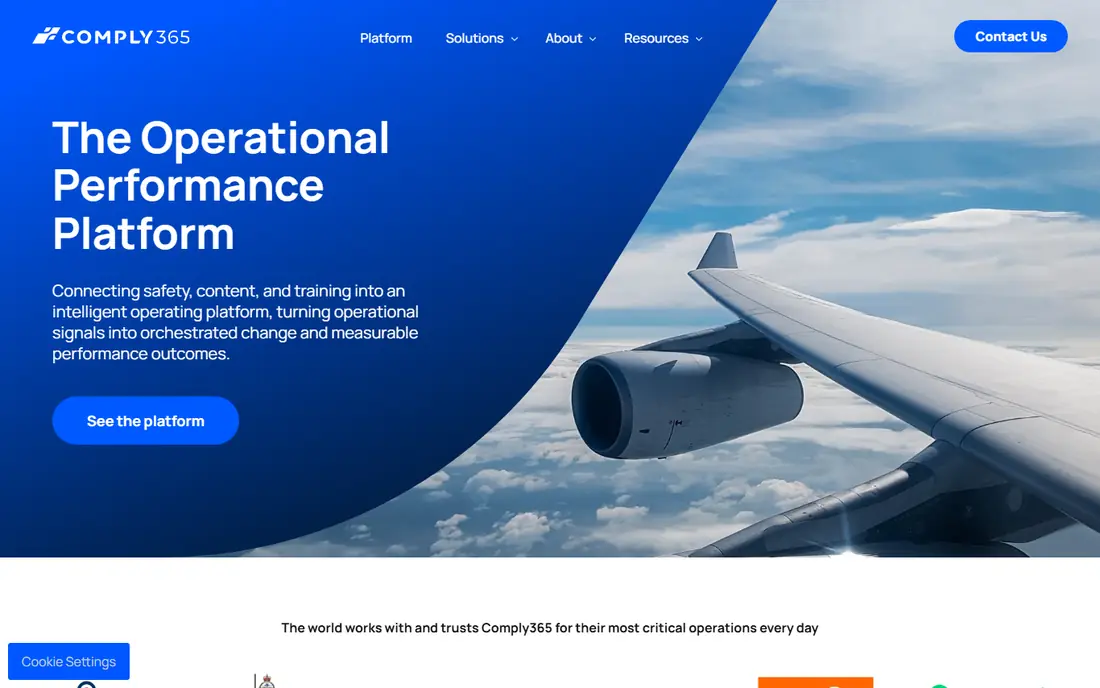
Comply365, with its ProAuthor authoring solution, is designed for airlines that need to author, revise and distribute manuals without handing content to an outside provider for every change. Authors can work in XML without a steep XML learning curve, reuse content across manuals, and publish to mobile users with targeted distribution and compliance tracking.
The strength is the full loop. A revision does not end when a document is edited. It ends when the right pilots, cabin crew or engineers have the new version, can see what changed, and have their reading tracked. That loop is why larger operators choose Comply365 over a generic editor, even though pricing requires a quote and rollout needs care.
- XML authoring with ProAuthor
- Revision and distribution in one system
- Mobile access for frontline staff
- Pricing is quote based
- Implementation needs planning
- Best value for airlines, not small general teams
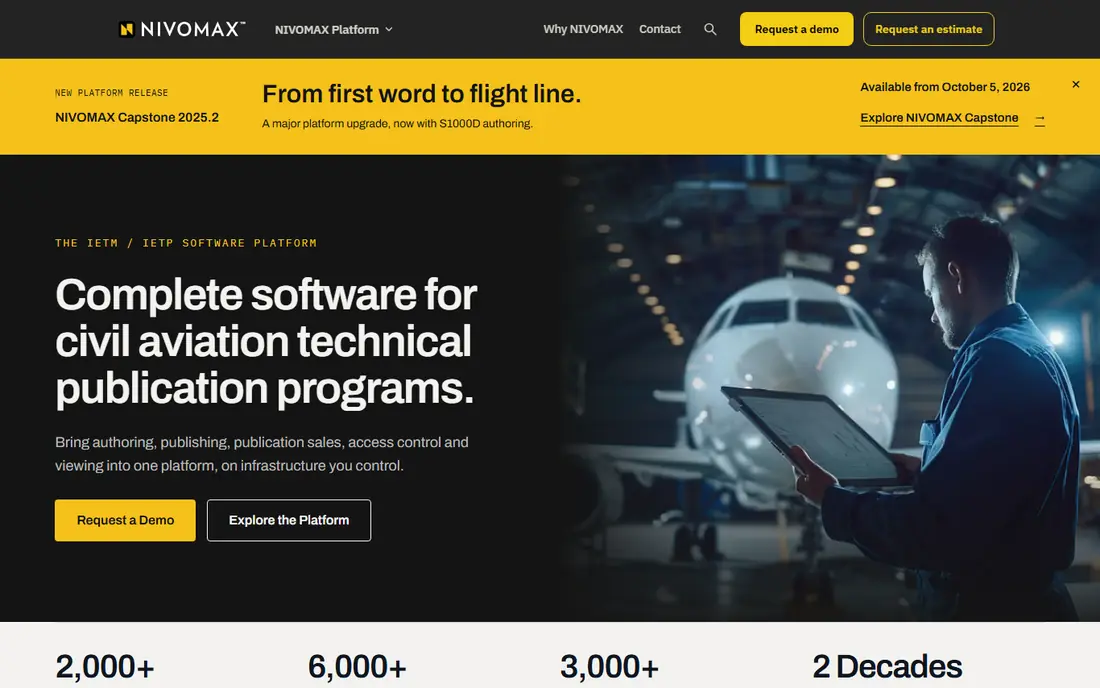
NIVOMAX is built for technical publication programs that live in aviation standards. It supports S1000D issues and ATA iSpec 2200 content, alongside XML, SGML and PDF sources, so programs can modernize without treating every legacy manual as a fresh conversion project. Its Arkitect, Horizon and Axis applications cover publishing, viewing and access control as one connected model.
The platform also suits organizations that need control over installation, running as a single tenant system on infrastructure the licensee controls. That control is valuable in restricted settings, but it means the buyer must plan identity, updates and recovery as part of the purchase, not as an afterthought.
- S1000D and ATA iSpec 2200 support
- Single tenant deployment option
- Publishing and entitlement controls
- Pricing is quote based
- Niche platform with a learning curve
- Setup needs standards expertise
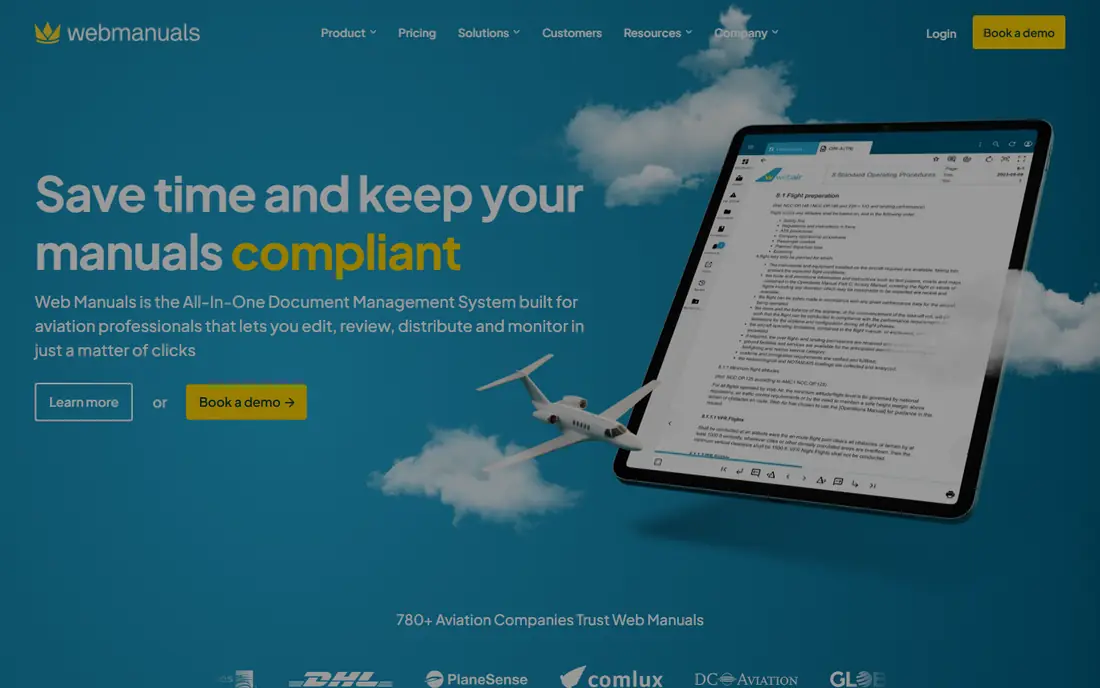
Web Manuals helps aviation professionals edit, distribute and monitor manuals from one system. Teams can collaborate on documents, track compliance, prepare for audits, and make sure readers see current versions. For operators that mainly manage company manuals, safety checklists and crew documents, that focus is a good match.
It is less of a pure S1000D authoring engine than NIVOMAX, so publication programs built around data modules should check that fit first. For many airlines, charter operators and maintenance organizations, however, Web Manuals hits the practical middle: easier than a heavy structured system, far more controlled than shared documents.
- Collaborative manual editing
- Compliance monitoring
- Version control and distribution
- Pricing varies by package
- Editor pricing can rise with team size
- Deep S1000D work may need other tools
PTC Arbortext has been used for aerospace technical publications for years, including component maintenance manuals and service bulletins under ATA iSpec 2200. Add-on solutions for Arbortext support CMM and service bulletin structures, with output to SGML, PDF and print. That track record matters in programs where output must match a standard layout exactly.
Arbortext is not a quick cloud signup. It is an enterprise structured authoring platform, and teams should budget for configuration, stylesheets and training. For large manufacturers and suppliers with established Arbortext content, staying on the platform often beats migrating a library that already works.
- Long history in aerospace publishing
- Structured authoring at scale
- ISpec 2200 add-ons exist for component manuals
- Pricing is quote based
- Desktop heritage needs IT support
- Learning curve for new authors
Adobe FrameMaker remains a workhorse for long, structured technical documents. It handles books, chapters, cross references and conditional content well, and it can publish to PDF and online help formats from a single source. Aerospace and defense teams that already use Adobe tools often find it a natural fit.
FrameMaker does not ship as a ready made aviation compliance system. Teams must configure templates, standards structures and review workflows themselves, or buy add-ons for specific standards. It is best for technical publication teams that value document control and already work in the Adobe ecosystem.
- Strong structured and unstructured authoring
- Long document handling
- Publishing to PDF and online formats
- Monthly cost adds up per author
- Interface feels dated to some teams
- Aviation standards work needs configuration
MadCap Flare lets a team write content once and publish it as online help, PDF, Word and other formats. Its XML based topics, variables and snippets support reuse across manuals, and its import tools help teams move content from Word, FrameMaker or DITA without starting over. That makes it a strong choice for documentation teams that serve several audiences from one source.
For aviation, Flare is a general structured tool rather than a standards specific platform. S1000D or iSpec 2200 work will need careful template and workflow design. Teams that mainly produce company manuals, training material and online help will get more from Flare than teams whose core output is standards governed data modules.
- Single sourcing and reuse
- Multi format publishing
- Import from Word, FrameMaker and DITA sources
- Pricing is subscription based
- Cloud collaboration is quoted separately
- Aviation standards need custom setup
Oxygen XML Editor is a favorite among XML authors because it offers validation, transformation, and schema aware editing in one desktop tool. It supports DITA, DocBook and other XML vocabularies, which makes it useful for teams that author structured aviation content but do not need a full component content management system.
The catch is audience. Non technical contributors may find Oxygen harder than a web based authoring tool, and review, approval and distribution workflows must be built around it. It fits best when the authoring team is already comfortable with XML and wants a capable editor without enterprise platform pricing.
- Full XML editing and validation
- DITA and DocBook support
- Lower cost than enterprise platforms
- Interface is technical for non XML authors
- Aviation workflows need setup
- Collaboration tools are lighter
RWS Tridion Docs is a component content management system for organizations that manage large volumes of structured content across languages and products. Content is stored as reusable components, so a change to a procedure can flow to every manual that uses it, and translation workflows keep versions aligned.
That power comes with enterprise weight. Tridion Docs needs planning, configuration and training, and it is priced for large programs. Aviation manufacturers and large operators with many manuals, languages and product variants are the natural buyers. A small operator with a handful of manuals should look at Web Manuals or Comply365 first.
- Component content management at scale
- Reuse and translation workflows
- Enterprise governance
- Pricing is quote based
- Implementation is a project, not a signup
- Smaller teams will find it too large
Paligo offers structured authoring in the cloud, which appeals to distributed teams that do not want to install and maintain desktop editors for every author. Writers, reviewers and subject experts can work in the browser, reuse topics, and publish to online and PDF outputs from the same source.
As with other general structured tools, Paligo does not arrive prebuilt for S1000D or iSpec 2200. Teams must design their information model and review process around their standard. It is a good fit for technical publication teams that want modern cloud collaboration and are willing to shape the tool to aviation requirements.
- Cloud based structured authoring
- Single sourcing
- Collaboration and publishing from the browser
- Pricing is quote based for many plans
- Aviation standards need configuration
- Offline work is limited compared with desktop tools
How we picked these
We compared official product pages and public documentation for tools that support aviation manual authoring, structured technical publishing, or the S1000D and ATA iSpec 2200 standards. We favored tools still sold in October 2026, with revision control, standards support or controlled distribution. We did not claim hands-on testing, and where pricing was not published we wrote See website.
What to check before you buy
Start with your standard and your output. Confirm, in a demo with your own content, that the tool handles S1000D data modules or iSpec 2200 structures as you need them, including graphics, applicability and revision markings. A tool that only handles generic XML will force costly workarounds on every publication cycle.
Next, test the revision loop from end to end. Author a change, route it for review and approval, publish it, and check that frontline readers see the new version with a clear record of what changed. Ask how compliance tracking works, how readers are notified, and how an audit would prove who read which version and when.
Finally, cost the migration, not just the license. Moving manuals, converting legacy SGML or PDF content, building stylesheets and training authors can exceed the first year subscription. Ask for a migration plan, a realistic timeline, and references from operators with a similar fleet or product mix before signing.
Frequently asked questions
What is aviation authoring software?
Aviation authoring software is used to create, revise, publish and distribute technical manuals for airlines, manufacturers and maintenance organizations. It adds revision control, standards support, approval workflows and controlled distribution to normal document editing, because aviation manuals must stay current and traceable.
What is the difference between S1000D and ATA iSpec 2200?
S1000D is a modular, XML based standard where information lives as data modules in a common source database. ATA iSpec 2200 is a document centered standard for aircraft technical information, including maintenance manuals and illustrated parts catalogs, often delivered as SGML or PDF. Many programs must support one, and some must support both during a transition.
Do small operators need enterprise aviation authoring tools?
Not always. A small operator with a handful of company manuals may do well with Web Manuals or a structured editor plus a clear review process. Enterprise platforms make sense when the manual count, fleet size, languages or standards requirements make manual tracking risky.
Can general technical writing tools work for aviation?
Yes, for some work. FrameMaker, Flare, Oxygen and Paligo can produce strong structured manuals, but they need configuration for aviation standards, review workflows and distribution tracking. Aviation specific tools add those workflows out of the box, at a higher price.
How long does implementation take?
A cloud manual system can be live in weeks for a small operator, while a standards based publication platform can take months with content migration, stylesheet work and training. Ask for a phased plan that gets current manuals under control before attempting a full standards migration.
What should we check about distribution and compliance?
Check that readers get targeted, current versions on the devices they actually use, that changes are highlighted, and that reading and revision history can be shown in an audit. If a tool cannot prove who received which version, it is not yet a complete aviation solution.
Sources
- https://www.comply365.com
- https://www.nivomax.com
- https://webmanuals.aero
- https://www.ptc.com/en/products/arbortext
- https://www.adobe.com/products/framemaker.html
- https://www.madcapsoftware.com/products/flare/
- https://www.oxygenxml.com/xml_editor.html
- https://www.rws.com/content-management/tridion-docs/
- https://paligo.net
See where you really rank - block by block
ProMapRanker scans Google Maps across a grid of your service area. Simple monthly plans from $19, white-label on every plan.
Start freeKeep reading
 wpforms alternatives
Best WPForms Alternatives in 2026
We compare 9 wpforms alternatives for WordPress forms, with free and paid options, current pricing notes, and honest limits for small business sites in 2026.
Read → windows task scheduler alternatives
Best Windows Task Scheduler Alternatives in 2026
Looking for Windows Task Scheduler alternatives? We compare 9 schedulers for Windows and cross-platform work, from free tools to enterprise automation.
Read → which ai video service is best
Which AI Video Service Is Best in 2026
which ai video service is best? We compare 10 legitimate AI video services on price, avatars, editing and output quality to help you pick the right tool.
Read →