 ProMapRanker
Best Apps to Learn Korean in 2026

Key takeaways
- LingoDeer and Talk To Me In Korean give the clearest grammar path for beginners, while Duolingo gives the easiest free daily habit.
- KoreanClass101 suits listening practice, Pimsleur suits speaking drills, and italki suits live conversation.
- HelloTalk and Drops work best as supplements for chatting and vocabulary, not as a full course alone.
- Learn Hangul first. Reading the Korean alphabet early makes every later app faster and less confusing.
Quick comparison
| Pick | Great for | Pricing starts at | Free tier | |
|---|---|---|---|---|
 Duolingo | Daily habit | Free | Yes | Visit |
 LingoDeer | Structured Korean grammar | $14.99 per month | Yes | Visit |
 Talk To Me In Korean | Grammar and audio lessons | $16.99 per month | Yes | Visit |
 KoreanClass101 | Audio and video library | $4 per month | Yes | Visit |
 Pimsleur | Audio speaking drills | $19.95 per month | Free trial | Visit |
 italki | Live tutoring | $5 per lesson | No | Visit |
 HelloTalk | Language exchange | Free | Yes | Visit |
 Drops | Visual vocabulary | See website | Yes | Visit |
The best apps to learn Korean
We compared Hangul teaching, grammar explanations, speaking practice, listening material, and price for learners from absolute beginner to intermediate level.
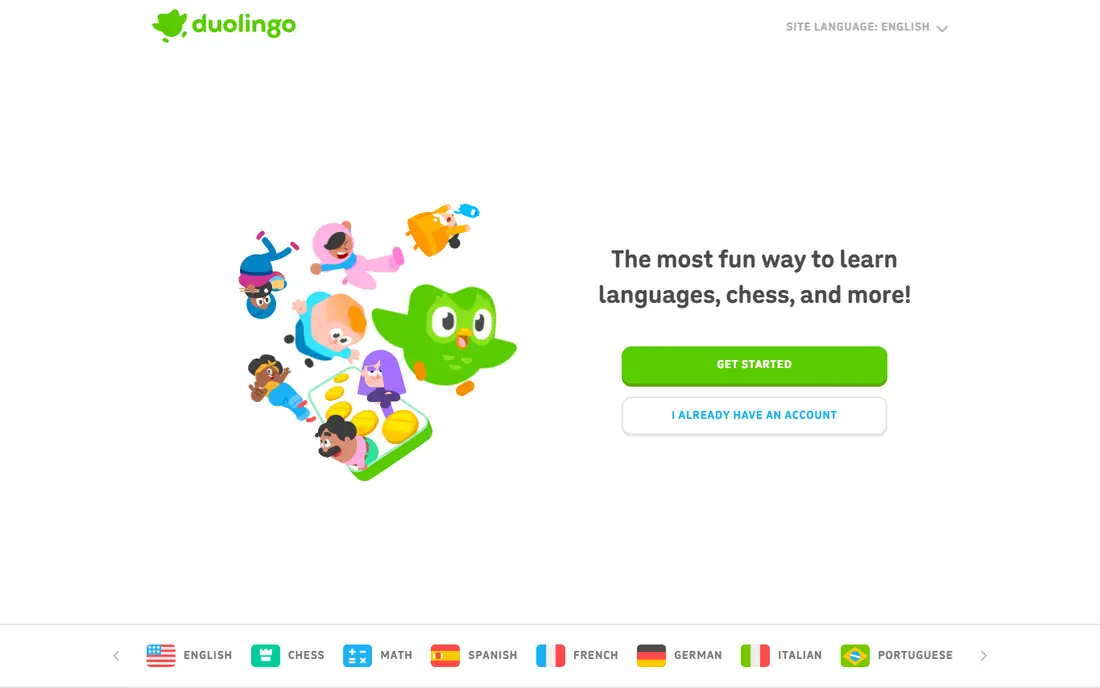
Duolingo is the lowest-friction start for Korean. Short lessons, streaks, and a free course make it easy to open daily, and early lessons cover Hangul and basic phrases. For a learner who is unsure whether Korean study will stick, that free start is valuable.
Depth is the limit. Grammar notes are short, and many reviews note that the Korean course feels thinner than Duolingo courses for French or Spanish. Use it to build a habit and basic vocabulary, then add a grammar course when you want to build sentences with confidence.
- Free core course
- Short gamified lessons
- Hangul practice and streaks support a habit
- Grammar explanations are brief
- Korean course depth is weaker than its European language courses in many reviews
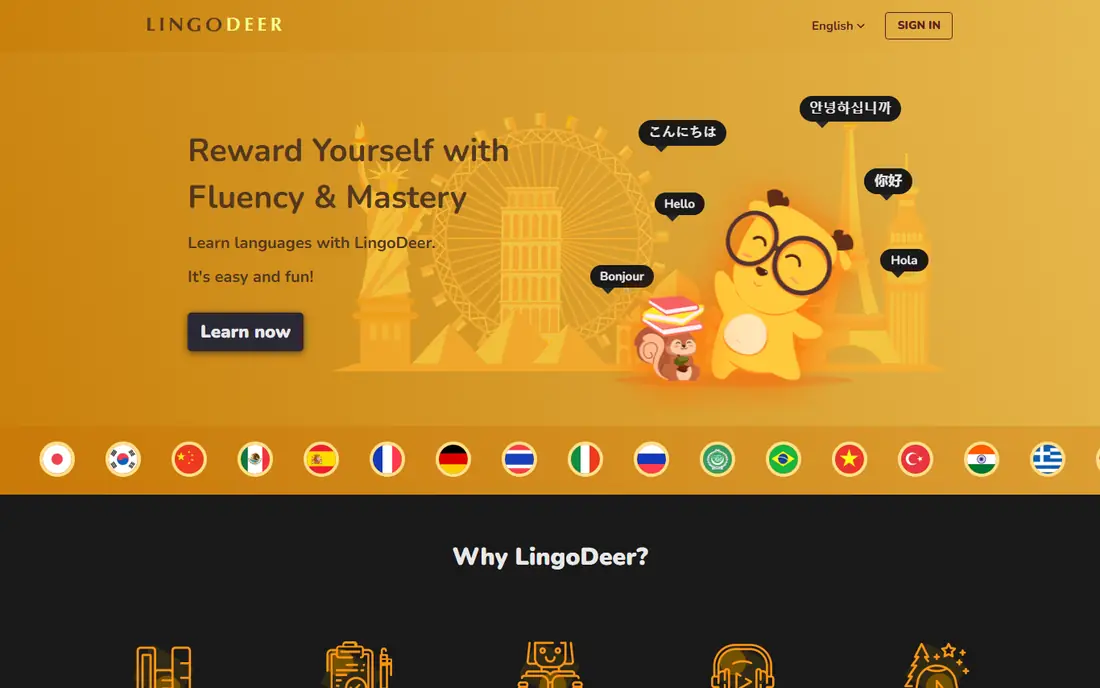
LingoDeer was built for Asian languages, and that focus shows in its Korean course. Each lesson opens with a grammar tip that explains the point before you practise it, including particles, verb forms, and honorific levels that confuse many beginners. Audio uses native speakers, and progression runs from Hangul through intermediate patterns.
Speaking is the weaker side. Exercises include recorded speaking, but there is no live conversation, so pair LingoDeer with a tutor or exchange partner if speaking matters. For grammar structure alone, it is one of the strongest single apps in this list.
- Built for Asian languages
- Clear grammar tips before practice
- Native speaker audio
- Speaking practice is limited
- Free tier is limited compared with Duolingo
Talk To Me In Korean, often called TTMIK, has taught Korean since 2009 and remains a trusted name for grammar. Its audio lessons explain particles, verb endings, and sentence patterns in plain language, and a large free audio library lets beginners start without paying. The curriculum runs from absolute beginner toward advanced levels across separate courses.
The app experience feels dated next to Duolingo-era apps, and the best course material sits behind a subscription. Treat TTMIK as your grammar backbone, and use a gamified app for daily review if you want a more modern interface.
- Long-established Korean curriculum
- Free audio library
- Clear grammar explanations for English speakers
- App interface feels older than newer apps
- Full course access requires a paid plan
KoreanClass101 suits learners who like audio and video lessons and want a lot of material. It offers lessons from absolute beginner to advanced, with dialogues, vocabulary lists, and cultural notes. Entry pricing is low in published comparisons, though full premium features cost more and sales change often.
Choice overload is the risk. With thousands of lessons, beginners can drift between topics without a clear path. Pick one structured pathway, follow it in order, and use the rest of the library as extra listening, not as your main course.
- Very large lesson library
- Audio and video lessons at many levels
- Frequent sales on plans
- Library size can overwhelm beginners
- Lesson quality varies across the large catalogue
Pimsleur teaches Korean through listening and speaking drills, asking you to answer prompts and repeat phrases. That method builds pronunciation and recall well, and it works during walks, drives, and chores where a screen app cannot. It is a strong supplement for learners who freeze when speaking.
Reading, writing, and grammar get less coverage, so Pimsleur alone will not take you far. Pair it with LingoDeer or TTMIK for grammar, and use its free trial during a normal week before paying.
- Hands-free audio lessons
- Strong pronunciation and recall drills
- Good for commutes
- Little reading practice
- Subscription cost adds up
- Korean content is narrower than a full course
Live tutoring is where Korean speaking improves fastest. On italki you can book a native Korean teacher, practise Hangul reading, conversation, or TOPIK preparation, and get corrections in real time. Prices vary, and many teachers offer a low-cost trial lesson.
The work is choosing well. Book trials with two or three teachers, check their focus on beginners or exam preparation, and settle on one regular teacher. A weekly tutor plus a daily grammar app is a strong combination for most learners.
- Live one-to-one lessons
- Teachers at many prices
- Flexible scheduling and trial lessons
- Cost varies by teacher
- Lesson quality varies, so trials matter
HelloTalk connects learners with native Korean speakers for language exchange. You can chat by text or voice, get corrections on messages, and practise real phrases with people who use them daily. That real contact helps once you can read Hangul and form basic sentences.
It is not a course. There is no set grammar path, and chat partners vary in helpfulness and reliability. Use HelloTalk after a few weeks of structured study, set clear exchange rules, and keep personal details private in chats.
- Free language exchange with native speakers
- Text, voice, and correction tools
- Large community
- Not a structured course
- Chat quality varies
- Premium features cost extra
Drops does vocabulary in short, visual bursts. Each word pairs with an image, which helps visual learners remember nouns and everyday terms. The free plan gives five minutes per day, which is enough for a quick review beside a main course.
Five minutes is also its limit. Drops will not teach grammar, sentence building, or conversation, and the free tier will frustrate learners who want longer sessions. Use it as a vocabulary snack, not as your main Korean study.
- Free five minutes per day
- Visual vocabulary with images
- Quick daily review
- Five-minute free limit is short
- Not a grammar or speaking course
How we picked these
We compared official course pages, pricing pages, and app store listings for Hangul teaching, grammar depth, speaking options, listening material, and free tiers. We favoured apps that offer a Korean course in 2026, cover beginners, and state a clear price or free option. We did not claim hands-on testing, and we treated third-party price roundups as a starting point, with vendor pages as the check before purchase.
How to choose the best Korean learning app for you
Learn Hangul first, before buying a long course. Hangul can be learned in a few days of focused study, and reading it removes the need for romanisation, which slows later learning. Many apps teach Hangul, but a dedicated Hangul chart and writing practice in week one will pay off for months.
Match the next app to your weak point. If grammar confuses you, pick LingoDeer or TTMIK. If you cannot speak, add italki or Pimsleur. If you forget words, add Drops or a flashcard app. One main course plus one speaking option and one vocabulary tool is enough for most learners.
For beginners specifically
Start with Hangul, greetings, numbers, and present-tense verbs, then add particles and honorific basics slowly. Practise reading short sentences out loud, even if you do not understand every word, since reading fluency builds listening speed. Keep a list of words from daily life, and review them in sentences rather than alone.
Moving toward intermediate Korean
At intermediate level, shift time toward listening and reading real material, such as short dramas with Korean subtitles, news summaries, or graded readers. Keep grammar study, but let real content drive new vocabulary. A tutor can help you move from textbook sentences to natural conversation at this stage.
Frequently asked questions
What is the best app to learn Korean for beginners?
LingoDeer and Talk To Me In Korean are strong beginner picks for grammar, while Duolingo is a strong free start for a daily habit. Learn Hangul first, then pick the grammar course you will open most often. Add speaking practice early if conversation is your goal.
What are the best apps to learn Korean for free?
Duolingo offers the most complete free course, HelloTalk offers free language exchange, and Drops offers five free minutes per day. Talk To Me In Korean also offers a free audio library. Free plans have limits, but they are enough to test whether Korean study suits you before paying.
Which is the best Korean learning app for speaking?
Italki is the best option for real speaking, since live tutors correct you and adapt to your level. Pimsleur is a strong audio option for pronunciation drills, and HelloTalk offers free exchange chats once you can form basic sentences. Recorded app exercises help, but they do not replace live conversation.
Is Duolingo good for learning Korean?
Duolingo is good for a daily habit, Hangul basics, and everyday vocabulary, but many reviews note thinner grammar and depth than its European language courses. Use it as a starter and review tool, and add LingoDeer or TTMIK for grammar if you want steady progress beyond beginner level.
How long does it take to learn Korean with an app?
Hangul can take a few days, basic conversation can take three to six months of steady daily study, and intermediate level usually takes a year or more. Progress depends on daily time, speaking practice, and review, not on the app alone. A tutor and real listening material speed progress more than extra app features.
What is the best app to learn Korean for K-drama fans?
LingoDeer and TTMIK help with grammar and sentence patterns used in dramas, while KoreanClass101 offers listening material and cultural notes. Once you reach basic level, watch short scenes with Korean subtitles and note phrases you recognise. That real content keeps motivation high and builds listening faster than drills alone.
Sources
- https://www.duolingo.com
- https://www.lingodeer.com
- https://talktomeinkorean.com
- https://www.koreanclass101.com
- https://www.pimsleur.com
- https://www.italki.com
- https://www.hellotalk.com
- https://www.languagedrops.com
- https://82crafted.com/language/best-apps-learn-korean
- https://preply.com/en/blog/best-apps-to-learn-korean/
See where you really rank - block by block
ProMapRanker scans Google Maps across a grid of your service area. Simple monthly plans from $19, white-label on every plan.
Start freeKeep reading
 zoom alternatives
Best Zoom Alternatives in 2026
Compare Zoom alternatives in 2026, with free meeting limits and prices, so you can pick the best alternative to Zoom for your team, class, or community.
Read → which software is best for remote work
Which Software Is Best for Remote Work in 2026
Answering which software is best for remote work, we compare Slack, Zoom, Asana, Notion, Teams and more, with pricing and honest tradeoffs in 2026 now.
Read → which ai tool is best for content writing
Which AI Tool Is Best for Content Writing in 2026
Wondering which ai tool is best for content writing? We compare ChatGPT, Claude, Jasper, Grammarly, and more on price, quality, and best use in 2026 now.
Read →