 ProMapRanker
Best Apps to Learn English in 2026

Key takeaways
- Duolingo is the best free starting point for building a daily habit, with gamified lessons that suit beginners.
- Babbel is the best structured self study option, with courses built by linguists and clear grammar explanations.
- Busuu adds native speaker corrections, which helps writing and speaking feel more real than exercises alone.
- For speaking confidence, pair a course app with a tutor or pronunciation tool, because no single app covers every skill well.
Quick comparison
| Pick | Great for | Pricing starts at | Free tier | |
|---|---|---|---|---|
 Duolingo | Daily habit and beginners | Free | Yes | Visit |
 Babbel | Structured courses and grammar | $13.95 per month | Free trial | Visit |
 Busuu | Community feedback and structure | See website | Yes | Visit |
 Memrise | Vocabulary with native video | See website | Yes | Visit |
 Rosetta Stone | Immersion and pronunciation | See website | Free trial | Visit |
 Pimsleur | Audio first learning | $20.95 per month | Free trial | Visit |
 italki | One to one tutoring | See website | No | Visit |
 ELSA Speak | Pronunciation coaching | See website | Yes | Visit |
The best apps to learn english
Learning English needs reading, listening, speaking and writing, and different apps are strong in different skills. We compared course structure, speaking practice, pronunciation feedback, community features and price, using vendor pages and app store listings. The best app for you depends on your level, your time and whether you need conversation or exam preparation.
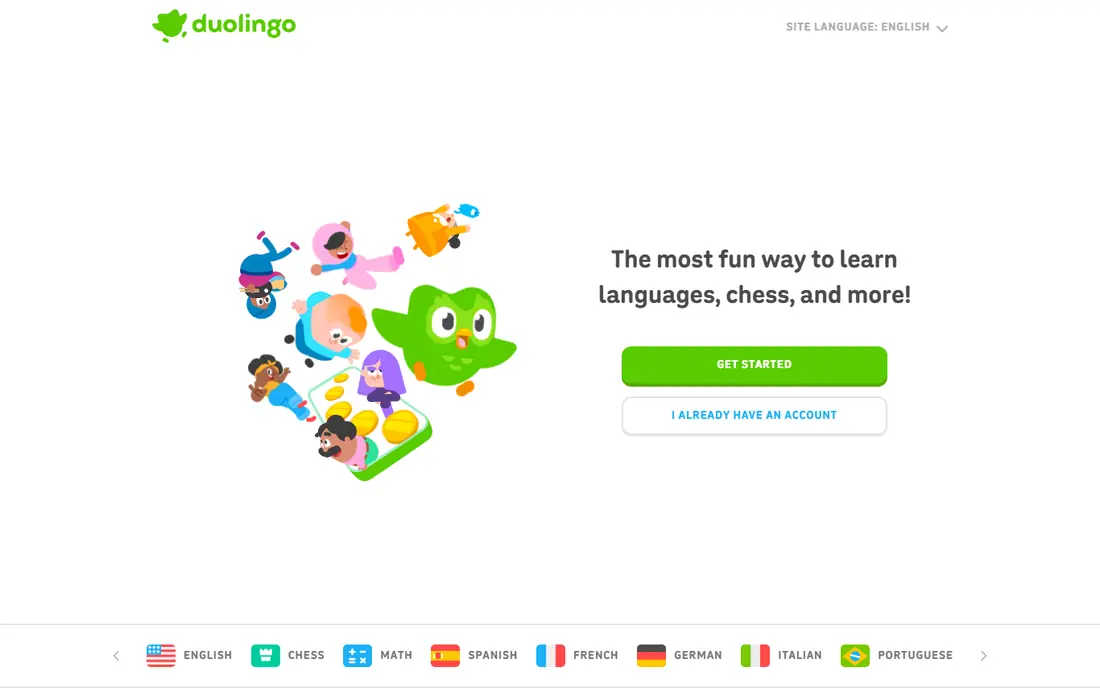
Duolingo is famous for streaks, rewards and short lessons, and that gamification is genuinely useful for beginners who struggle to study every day. Lessons mix vocabulary, listening and simple speaking, and the free tier covers a lot of core content, so you can start without paying. For a learner building a habit from zero, it is the easiest first step.
The limit appears at higher levels. Grammar explanations are thinner than in Babbel, and real conversation practice is limited, so advanced learners will outgrow it as a main tool. Paid Super removes ads and limits, but it does not turn Duolingo into a conversation course. Use it as a daily habit builder, then add speaking practice elsewhere.
- Free core app with gamified lessons
- Short daily sessions
- Large course range
- Advanced grammar and conversation depth are limited
- Free tier has ads and limits
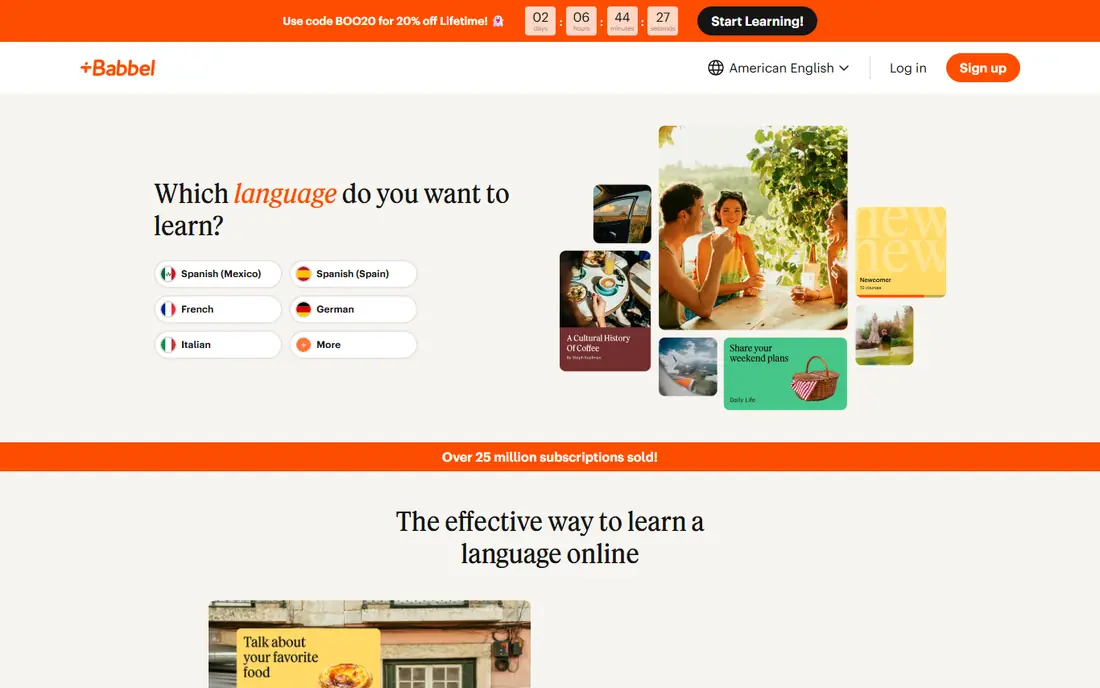
Babbel feels more like a course than a game. Lessons are structured, grammar is explained rather than only drilled, and dialogues focus on practical situations such as travel, work and daily life. That structure suits learners who want to understand why a sentence works, not only memorise it, and who prefer a clear path from beginner to intermediate levels.
It is less playful than Duolingo, and some learners will miss streaks and rewards. Pricing varies by plan length, with monthly rates higher than longer plans, and only the first lesson of each course is free. For structured self study, Babbel is our top pick for English learners who want a textbook style path without a textbook.
- Courses built by linguists
- Clear grammar and review
- Practical dialogues
- Less gamified than Duolingo
- Fewer languages than some rivals
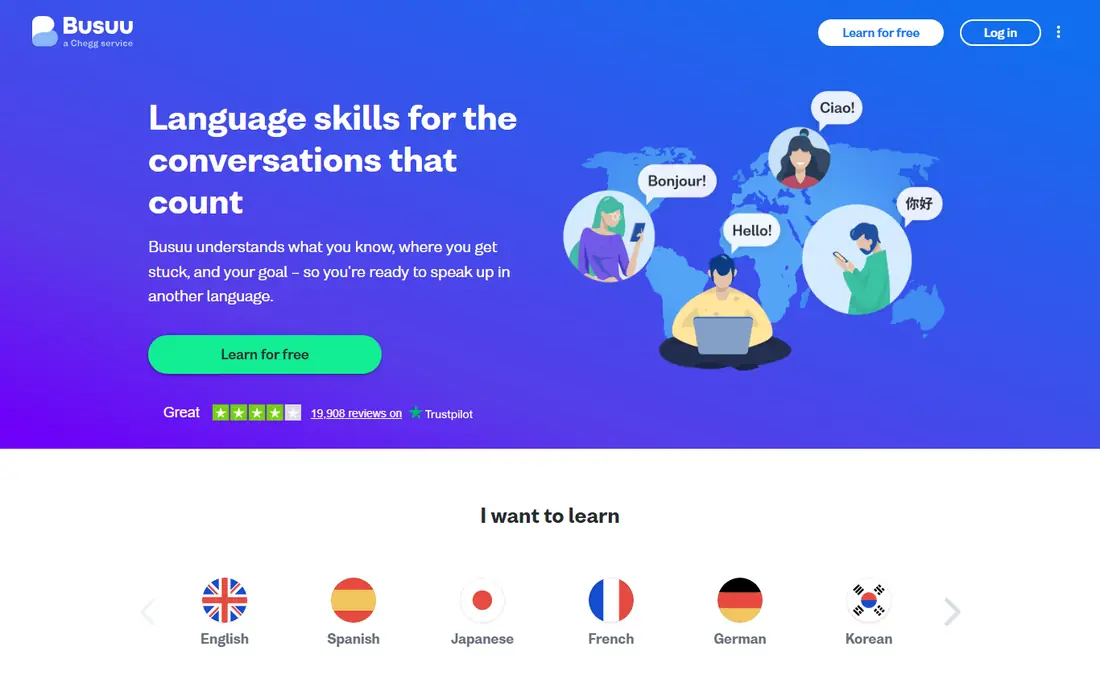
Busuu combines structured courses with a community feature that sets it apart: native speakers can correct your writing and speaking exercises. That feedback makes mistakes visible in a way an automated check often does not, and it adds a social reason to keep practising. Courses are levelled by the Common European Framework, from beginner to upper intermediate, with a study plan based on your goal.
The free tier is limited, and Premium is needed for full content, offline lessons and certificates. Some lessons also feel repetitive over time. For a learner who wants structure plus real human corrections, Busuu is a strong middle option between Duolingo and a tutor.
- Native speaker corrections
- Structured CEFR levelled courses
- Personalised study plan
- Lessons can feel repetitive
- Full features need Premium
Memrise is built for vocabulary that sticks. It uses spaced repetition, showing words again just before you are likely to forget them, and it pairs many words with short video clips of native speakers using them in context. That combination helps with listening and real world phrases, including slang and everyday expressions that textbook courses sometimes miss.
Grammar and structured conversation are weaker here, so Memrise works best as a supplement to Babbel, Busuu or a tutor, rather than as your only course. Pricing varies by platform and plan, so check the current price in your app store or on the vendor site. For fast vocabulary growth, it is a useful second app.
- Native speaker video clips
- Spaced repetition for vocabulary
- Useful free core
- Weaker on grammar and conversation structure
- Pricing varies by store
Rosetta Stone teaches by immersion: you learn words and sentences from images and context, without translating from your first language. That method suits learners who want to think in English early, and its TruAccent speech recognition gives feedback on pronunciation, which helps with accent and clarity. It is one of the longest running language brands, with a deep course library.
The pace can feel slow and repetitive, especially for learners who want quick grammar rules or business vocabulary. Pricing also varies by plan length, with monthly, longer term and lifetime options in some stores. For immersion and pronunciation focused learners, Rosetta Stone remains a solid, if traditional, choice.
- Immersion method without translation
- TruAccent pronunciation feedback
- Long standing course library
- Progression can feel slow
- Less grammar explanation than Babbel
Pimsleur is an audio course first, built around 30 minute lessons you can do while driving, walking or doing chores. It focuses on speaking and listening, with spaced repetition and prompts to answer out loud, which builds speaking confidence faster than tapping exercises. For commuters and busy learners, that hands free format is a real advantage.
Reading and writing practice are limited, so you will need another tool for those skills, and the monthly price is higher than Duolingo or Babbel. A free trial lets you test whether the audio style suits you. If speaking and listening are your priority, and you have commute time, Pimsleur is worth that premium.
- Strong audio lessons for speaking and listening
- Hands free learning
- Structured progression
- Higher monthly price
- Less reading and writing practice
italki is a marketplace for one to one lessons with native English tutors and professional teachers. You choose a tutor by price, availability, accent and reviews, book a trial lesson, and then pay per lesson rather than a fixed monthly subscription. That flexibility suits learners who want real conversation, exam preparation or business English tailored to their job.
There is no single fixed curriculum, so structure depends on the tutor you choose, and quality varies, which is why a low cost trial lesson matters. Hourly prices range widely, from a few dollars for community tutors to much higher rates for professional teachers. For speaking confidence and personal feedback, no app in this list replaces a good tutor.
- Pay per lesson with native tutors
- Choice of teachers and prices
- Real conversation practice
- No fixed course structure
- Quality varies by tutor
ELSA Speak, short for English Language Speech Assistant, focuses on one skill: how you sound. Its speech recognition gives feedback on individual sounds, word stress and intonation, and it tracks progress over short daily sessions. That precision helps learners whose grammar is good but whose accent makes them hard to understand, or who need clear speech for work.
It is not a full English course, so you will still need vocabulary, grammar and conversation practice elsewhere. The free tier covers a limited number of lessons per day, and paid plans give access to full content. Pair ELSA with Babbel or a tutor, and use it as a daily pronunciation coach rather than a standalone course.
- Detailed pronunciation feedback by sound
- Practical topics and idioms
- Daily short practice
- Focus is pronunciation, not a full course
- Full features need a paid plan
How we picked these
We compared course structure, speaking and pronunciation features, community and tutor options, free tiers and pricing from vendor pages and app store listings. We kept apps that are actively maintained, offer English learning for non native speakers, and cover different needs: habit building, structured courses, vocabulary, immersion, audio, tutoring and pronunciation. No single app was judged on one skill alone.
How to build a study routine that works
Pick one core app for structure, such as Babbel or Busuu, and one supplement for your weakest skill, such as ELSA for pronunciation, Memrise for vocabulary or italki for conversation. Study in short daily sessions rather than long weekly bursts, and speak out loud even when an app only asks you to tap, because producing language builds memory faster than recognising it.
Set a clear goal for the next month, such as holding a five minute conversation, writing a work email without help, or passing a practice test, and measure that goal rather than only streaks. Finally, use English outside the app: watch a show with subtitles, read a news article, or talk to a tutor, because app lessons alone rarely lead to fluency.
Frequently asked questions
What is the best app to learn english for free?
Duolingo offers the best free core app for daily practice, with Busuu and Memrise also offering free tiers. Free plans usually include ads or limits, so they suit beginners and habit building more than advanced study.
What is the best app for learning english speaking?
italki offers the best real speaking practice through one to one tutors, while Pimsleur builds speaking and listening through audio lessons. ELSA Speak is best for pronunciation, and Babbel and Busuu add speaking exercises inside structured courses.
What are the best english learning apps for beginners?
Duolingo is best for beginners who need motivation, Babbel is best for beginners who want structure, and Busuu adds community feedback. Start with one, then add a speaking tool once you can form basic sentences.
What is the best free english learning app without ads?
Most free tiers include ads or limits, so a truly ad free free app is rare. Duolingo free includes ads, while paid plans remove them. Busuu and Memrise free tiers also limit content, so check the current free terms before you rely on them.
How long does it take to learn english with an app?
It depends on your starting level, daily time and whether you practise speaking with real people. A beginner studying 20 to 30 minutes a day can usually hold simple conversations within a few months, while fluency for work or study takes longer and usually needs tutoring or immersion as well.
Sources
See where you really rank - block by block
ProMapRanker scans Google Maps across a grid of your service area. Simple monthly plans from $19, white-label on every plan.
Start freeKeep reading
 zoom alternatives
Best Zoom Alternatives in 2026
Compare Zoom alternatives in 2026, with free meeting limits and prices, so you can pick the best alternative to Zoom for your team, class, or community.
Read → which software is best for remote work
Which Software Is Best for Remote Work in 2026
Answering which software is best for remote work, we compare Slack, Zoom, Asana, Notion, Teams and more, with pricing and honest tradeoffs in 2026 now.
Read → which ai tool is best for content writing
Which AI Tool Is Best for Content Writing in 2026
Wondering which ai tool is best for content writing? We compare ChatGPT, Claude, Jasper, Grammarly, and more on price, quality, and best use in 2026 now.
Read →