 ProMapRanker
Best Free Mental Health Apps in 2026


Largest free meditation library · Pricing starts at: $9.99 per month
Key takeaways
- UCLA Mindful, Smiling Mind and Healthy Minds Program are fully free, with no paid tier needed for their core practices.
- Insight Timer offers the largest free meditation library, with a paid MemberPlus tier for courses and offline listening.
- MindShift and MoodTools focus on practical anxiety and mood tools, not just meditation, which suits people who want structured exercises.
- These apps support wellbeing and learning, but they do not replace professional care. If you feel unsafe, contact local emergency services or a crisis line right away.
Quick comparison
| Pick | Great for | Pricing starts at | Free tier | |
|---|---|---|---|---|
| Insight Timer | Largest free meditation library | $9.99 per month | Yes | Visit |
 UCLA Mindful | Simple university-backed meditations | Free | Yes | Visit |
 Smiling Mind | Structured programs for all ages | Free | Yes | Visit |
 Healthy Minds Program | Short science-based wellbeing lessons | Free | Yes | Visit |
 MindShift CBT | Anxiety tools based on CBT ideas | Free | Yes | Visit |
 MoodTools | Mood tracking and thought tools | Free | Yes | Visit |
 Finch | Gentle daily self-care with a companion pet | Free | Yes | Visit |
 Calm | Sleep stories and a free selection | $14.99 per month | Yes | Visit |
The best apps for mental health free
We compared free mental health apps on what is actually free, not just what is free for a trial, plus ease of use, content depth, privacy approach and whether the app is suitable for anxiety, low mood, sleep or general wellbeing. All eight apps below offer a usable free tier in October 2026.
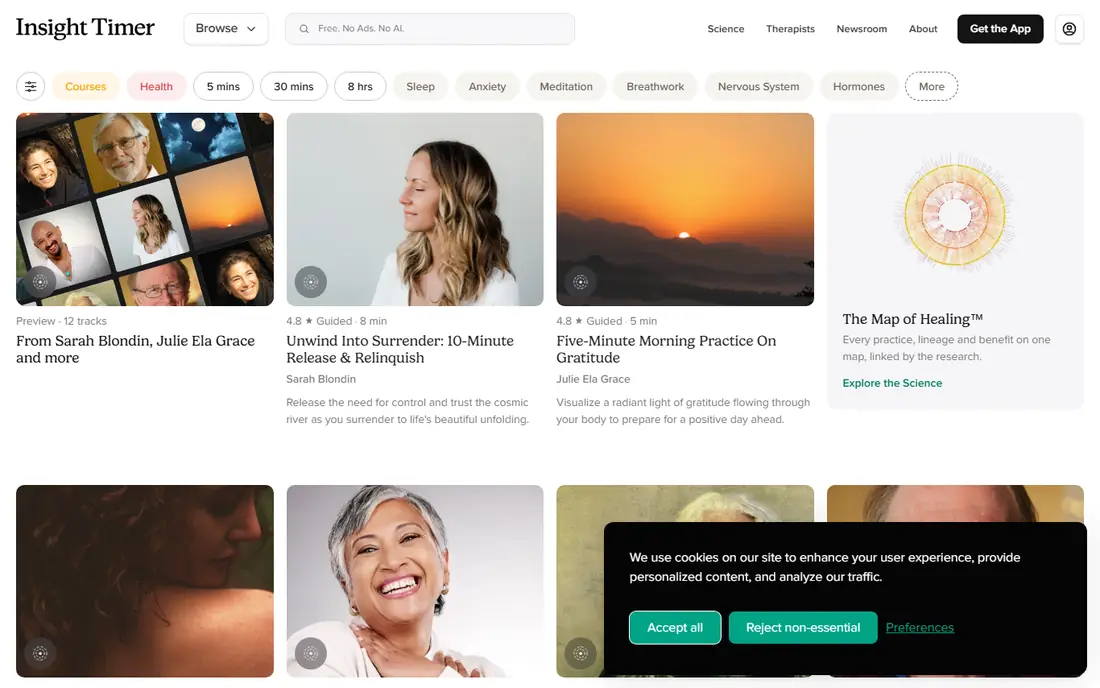
Insight Timer is the best starting point if you want variety without paying. The free library includes guided meditations, sleep content, music and talks from many teachers, plus a timer for silent practice. You can search by time, theme or teacher, which helps when you only have five minutes before bed or ten minutes on a lunch break.
The catch is choice overload. With so much content, beginners may spend more time browsing than meditating, so save a few favourites early and reuse them. MemberPlus is listed at $9.99 per month or $59.99 per year and adds courses, offline listening and extra player features. The free tier alone, however, is enough for a daily meditation habit.
- Very large free library of guided meditations, talks and music
- Meditation timer for unguided practice
- Live events and community features
- Library size can overwhelm beginners
- Courses, offline downloads and advanced player controls need MemberPlus

UCLA Mindful comes from UCLA Health and its mindfulness education centre, and it is entirely free. It offers basic meditations for beginners, wellness meditations for people facing health challenges, informative videos and a timer for your own practice. Meditations are available in several languages, including English and Spanish, which makes it useful for households that do not share one first language.
The app is deliberately simple. It does not offer sleep stories, mood tracking or a large course catalogue, and that simplicity is a strength for beginners who feel overwhelmed elsewhere. Its meditations are for education and practice, not clinical treatment, and the app says so plainly. If you want a calm, no-cost place to learn meditation, start here.
- Entirely free, with no ads reported in the app
- Guided meditations in English and Spanish plus other languages
- Basic and wellness practices
- Smaller library than Insight Timer
- Limited extra features beyond meditations and a timer
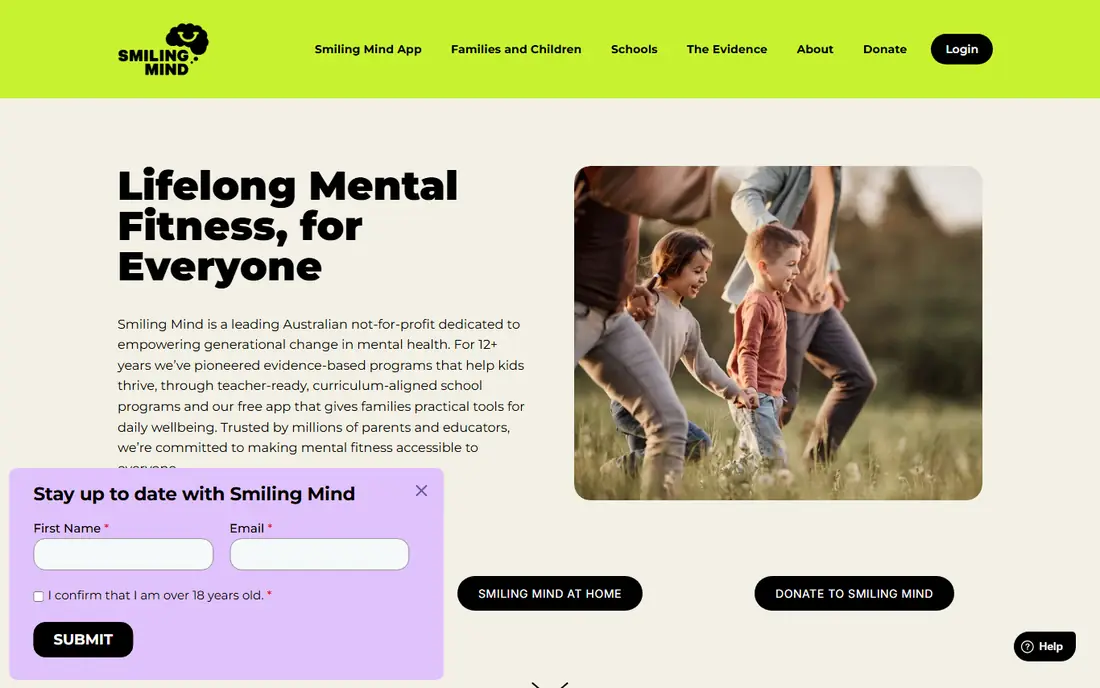
Smiling Mind is a not-for-profit app that is entirely free, with structured programs rather than an open library. Programs are organised by age and need, so a parent, a teenager and a grandparent can each follow a path suited to them. Sessions are short and practical, which helps when a long meditation feels unrealistic on a busy day.
Because Smiling Mind is program-based, it suits people who like guidance and a clear next step. Advanced meditators may want more variety, and sleep-focused users may prefer Insight Timer or Calm for stories and soundscapes. For families, schools and anyone who wants a free, trustworthy starting path, Smiling Mind is one of the strongest picks on this list.
- Entirely free, developed by psychologists and educators
- Age-based programs for children, teens and adults
- Short sessions for busy days
- Less variety for advanced meditators
- Sleep content is more limited than Calm or Insight Timer
Healthy Minds Program comes from the Center for Healthy Minds at the University of Wisconsin-Madison. It teaches wellbeing through four pillars: awareness, connection, insight and purpose, using short lessons, guided practices and micro practices that fit into a few minutes. The app is free with no ads, which makes it easy to recommend without a pricing caveat.
The program feels more like a course than a library, so it suits people who want to learn why a practice helps, not just follow a voice. It does not offer the sleep story catalogue of Calm or the vast teacher library of Insight Timer. For a free, research-linked path to daily practice, Healthy Minds Program is a calm and credible choice.
- Free with no ads
- Four-pillar approach covering awareness, connection, insight and purpose
- Podcast-style lessons and micro practices
- Less content variety than Insight Timer
- App is focused on training, not on sleep stories or community features
MindShift CBT, from Anxiety Canada, is different from the meditation apps above because it targets anxiety directly. It offers tools based on cognitive behavioural therapy ideas, such as challenging unhelpful thoughts, building coping cards, practising breathing and facing feared situations in small steps. Check-ins let you track anxiety levels and see patterns over days and weeks.
The app is free, which makes it a practical first tool for someone who wants to understand anxiety rather than only calm down in the moment. It does not replace therapy, and people with severe anxiety, panic or trauma should seek professional support alongside any app. For mild to moderate anxiety and for learning coping skills, MindShift is one of the most practical free tools available.
- Free tools for anxiety, including thought records, coping cards and breathing exercises
- Check-ins to track anxiety over time
- Based on cognitive behavioural ideas
- Interface is functional rather than polished
- Not a replacement for therapy for severe anxiety
MoodTools is a free app for low mood, built around tools from cognitive behavioural therapy. It includes a thought diary for examining unhelpful thoughts, a mood tracker, an activity log for pleasant activities, and a safety plan section for difficult moments. The design is plain, but the tools are clear and easy to use without a subscription or account pressure.
MoodTools suits people who want to track mood and work on thoughts, rather than listen to meditations. It does not offer sleep stories, courses or a community, and its visual style will not appeal to everyone. For a free, private-feeling tool to notice mood patterns and practise thought work, MoodTools is a solid, no-cost option.
- Free mood tracking, thought diary and activities based on CBT ideas
- Safety plan feature
- Simple, focused design
- Design is plain compared with Finch or Calm
- No guided meditation library
Finch takes a gentler approach to self-care. You care for a virtual pet by completing small daily habits: a check-in, a breathing exercise, a journal entry, a walk or a goal. The pet grows and gains new outfits as you keep going, which turns self-care into a small daily ritual rather than a chore. Many users find that structure easier to stick with than an open meditation library.
The free tier covers core check-ins and habits, while Finch Plus adds extra features and customisation, and pricing should be checked on the vendor site. Finch is not a therapy app and does not offer the structured anxiety tools of MindShift. For someone who struggles to start a habit and likes a warm, low-pressure nudge, Finch is a good free first try.
- Gentle daily check-ins, breathing, journaling and goal tracking
- Virtual pet grows as you complete self-care
- Encouraging tone for habit building
- Some features and customisation need a paid Plus plan
- Pet and gamification style will not suit everyone
Calm is included because its free selection is genuinely useful, even though the full library is paid. Free content includes selected meditations, sleep content and soundscapes, plus a breathing tool, which is enough to test whether Calm suits you before paying. The interface is polished and calm, and sleep stories are a particular strength for people who struggle to fall asleep.
The limit is clear: most of the library sits behind Premium. If you want a large free library, Insight Timer, UCLA Mindful or Smiling Mind will serve you better at no cost. If you try the free selection and find that sleep stories help you most, Calm Premium may be worth it, but start free and check the current price on the vendor site first.
- Strong sleep stories, soundscapes and breathing tools
- Free selection of meditations and sleep content
- Polished, easy interface
- Full library needs Premium, listed at $14.99 per month or $69.99 to $79.99 per year in recent reports
- Free tier is limited compared with Insight Timer
How we picked these
We compared official app pages, store listings and university or nonprofit descriptions for mental health apps with a usable free tier in October 2026. We favoured apps that are free to keep using, not only free during a trial, and we included meditation, anxiety, mood and habit tools, since mental health needs differ. We did not claim hands-on testing, and we did not treat a trial as a free plan.
What to check before you choose
Start with your main need. For meditation, try UCLA Mindful or Insight Timer. For structured learning, try Smiling Mind or Healthy Minds Program. For anxiety tools, try MindShift CBT. For low mood and thought work, try MoodTools. For a daily habit you will actually keep, try Finch. For sleep, try the free selection in Calm alongside Insight Timer.
Check what is free and what is paid before you build a habit around a feature, since courses, offline listening and advanced tools often sit behind a subscription. Check privacy settings, especially for mood and journal data, and decide whether you want an account or anonymous use. Most importantly, use an app as support, not as a diagnosis or treatment, and seek professional help if symptoms persist, worsen or feel unsafe.
When to seek help beyond an app
Apps can support daily wellbeing, but they cannot assess risk, diagnose a condition or replace therapy or medication. If you have thoughts of harming yourself, feel unable to cope, or notice symptoms that interfere with work, school or relationships, contact a clinician, a crisis line or emergency services in your country right away. In the United States, you can call or text 988 for the Suicide and Crisis Lifeline. If you feel you may act on harmful thoughts, call emergency services at 911 or go to your nearest emergency department.
Frequently asked questions
What are the best free mental health apps?
UCLA Mindful, Smiling Mind and Healthy Minds Program are fully free and strong starting points. Insight Timer offers the largest free meditation library, MindShift CBT offers free anxiety tools, and MoodTools offers free mood tracking. The best free app depends on whether you want meditation, anxiety tools, mood work or a daily habit.
Are there truly free therapy apps?
No app on this list replaces therapy, and most free apps offer self-help tools rather than live therapy with a licensed professional. MindShift CBT and MoodTools offer free tools based on cognitive behavioural ideas, which can support learning between therapy sessions. If you need therapy, check employer benefits, community clinics, university services and insurer directories, since many offer low-cost or covered sessions.
What is the best app for anxiety free?
MindShift CBT is the most practical free anxiety app, with thought records, coping cards, breathing exercises and check-ins. Insight Timer and UCLA Mindful also help with calming practices, but they do not teach anxiety-specific coping steps in the same structured way. For severe anxiety, use an app alongside professional support, not instead of it.
What is the best free app for depression?
MoodTools is a useful free option for low mood, with mood tracking, a thought diary and activity planning based on cognitive behavioural ideas. Healthy Minds Program and Smiling Mind also support general wellbeing through regular practice. Apps cannot diagnose or treat depression, so seek professional help if low mood lasts more than two weeks or affects daily life.
Do free mental health apps include sleep help?
Some do. Insight Timer offers free sleep meditations and music, Calm offers a free selection of sleep content, and UCLA Mindful and Smiling Mind include calming practices that some people use before bed. Calm has the strongest sleep story catalogue, but most of it requires Premium, so Insight Timer is the better free sleep pick for most people.
Are mental health apps private?
Privacy varies by app. Nonprofit and university apps such as Smiling Mind, UCLA Mindful and Healthy Minds Program generally collect less data for advertising than commercial apps, but you should still read each privacy policy. Check whether journal and mood data are stored on your device or on servers, whether an account is required, and whether data is shared with advertisers or analytics providers.
Sources
See where you really rank - block by block
ProMapRanker scans Google Maps across a grid of your service area. Simple monthly plans from $19, white-label on every plan.
Start freeKeep reading
 which software is best for pdf page removal
Which Software Is Best for PDF Page Removal in 2026
Find which software is best for pdf page removal, from free online tools to desktop editors, with page controls, privacy, safety, and pricing compared.
Read → when i work alternatives
Best When I Work Alternatives in 2026
Looking for when i work alternatives? We compare 8 scheduling apps for hourly teams, covering pricing, free plans, time clocks and the best fit for business.
Read → the best tool for keyword analysis
The Best Tool for Keyword Analysis in 2026
Find the best tool for keyword analysis with our 2026 comparison of 10 keyword analysis software tools on data depth, difficulty scores and price today.
Read →