 ProMapRanker
Best Apps for Mental Health in 2026


Online therapy with a licensed therapist · Pricing starts at: See website
Key takeaways
- BetterHelp and Talkspace are the main therapy options here, while Daylio, Moodfit, and Finch suit daily mood tracking and habit building.
- I Am Sober and Reframe are the strongest sobriety picks, with I Am Sober free for core tracking and Reframe offering a structured program for drinking less or quitting.
- Check privacy terms closely for therapy and mood apps, because data handling, sharing, and deletion rules differ a lot across vendors.
- Mental health apps are not a substitute for professional care. If you feel unsafe or unable to cope, contact a clinician, a local crisis line, or emergency services.
- In the United States, you can call or text 988 for the Suicide and Crisis Lifeline, and the SAMHSA National Helpline at 1-800-662-4357 offers free, confidential help for substance use.
Quick comparison
| Pick | Great for | Pricing starts at | Free tier | |
|---|---|---|---|---|
| BetterHelp | Online therapy with a licensed therapist | See website | No | Visit |
 Talkspace | Messaging and live therapy | See website | No | Visit |
 Daylio | Simple mood tracking | See website | Yes | Visit |
 Moodfit | Mood, sleep, and habit tracking | See website | Yes | Visit |
 Finch | Gentle daily self-care | See website | Yes | Visit |
 I Am Sober | Free sobriety tracking | Free | Yes | Visit |
 Reframe | Structured drinking reduction program | See website | Free trial | Visit |
 7 Cups | Peer support and listening | Free | Yes | Visit |
The best apps for mental health
We compared the best mental health apps on support type, daily tools, privacy clarity, ease of use, and price. The best mental health software for you depends on whether you want therapy, coping tools, mood patterns, peer support, or help with drinking.
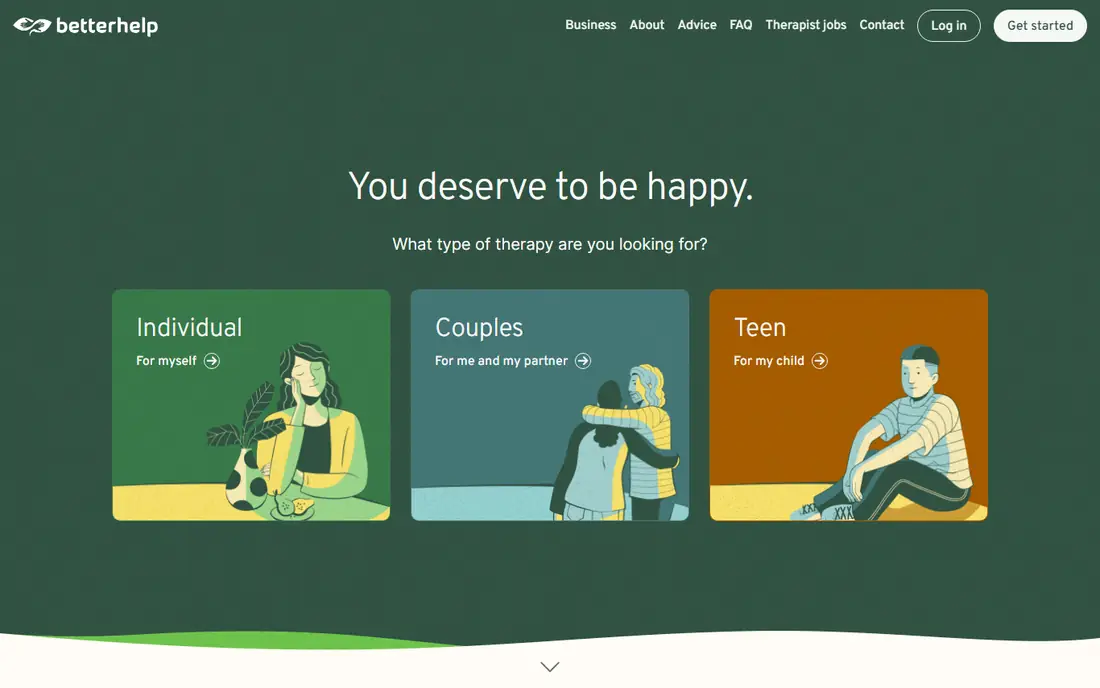
BetterHelp is the largest online therapy service in this list. After a questionnaire about goals and preferences, you are matched with a licensed therapist, and you can message between sessions plus schedule live sessions by video, phone, or chat. Switching therapists is free if the first match does not fit, which matters because fit often decides whether therapy helps.
Pricing is the main uncertainty. Self-pay plans are listed at $70 to $100 per week in recent vendor material, with insurance copays as low as $15 for eligible members, and the final price depends on location, availability, and plan. BetterHelp is not designed for urgent crisis care, minors, or court-ordered therapy. If you want human therapy from home and can afford a subscription, it is a practical starting point.
- Large network of licensed therapists
- Messaging plus live video, phone, and chat sessions
- Easy therapist switching
- Price varies by location and plan
- Not suitable for crisis care
- Some users report billing and cancellation friction
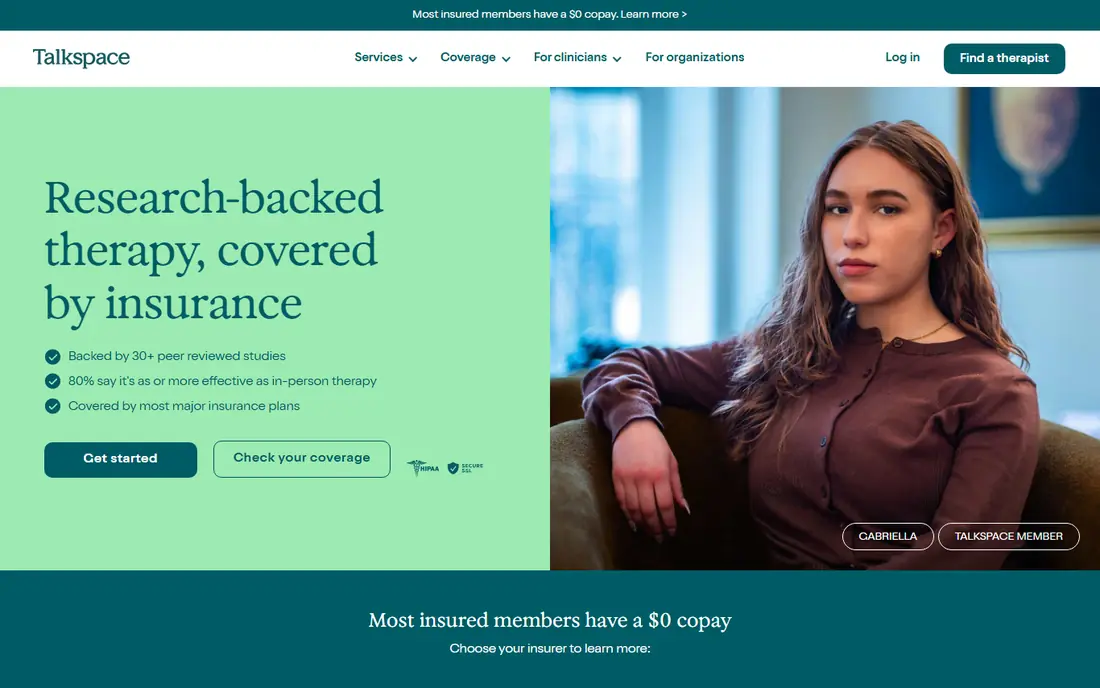
Talkspace pairs messaging therapy with live sessions, so you can write to your therapist during the week and meet by video when you need a live conversation. Plans vary from messaging-focused options to plans with weekly live sessions, and some plans accept insurance, depending on your state and provider. Exercises and symptom tracking sit alongside therapy work.
The catch is price clarity. Talkspace plans are listed from about $69 per week in recent reviews, rising with live sessions, and the right plan depends on how often you want to meet live. If you prefer writing over video, or you want therapy that fits around work hours, Talkspace is worth comparing with BetterHelp before you choose.
- Licensed therapists with messaging and live sessions
- Insurance options for some plans
- Symptom tracking and exercises
- Prices vary widely by plan
- Messaging-only plans suit some people better than others
- Not for crisis care
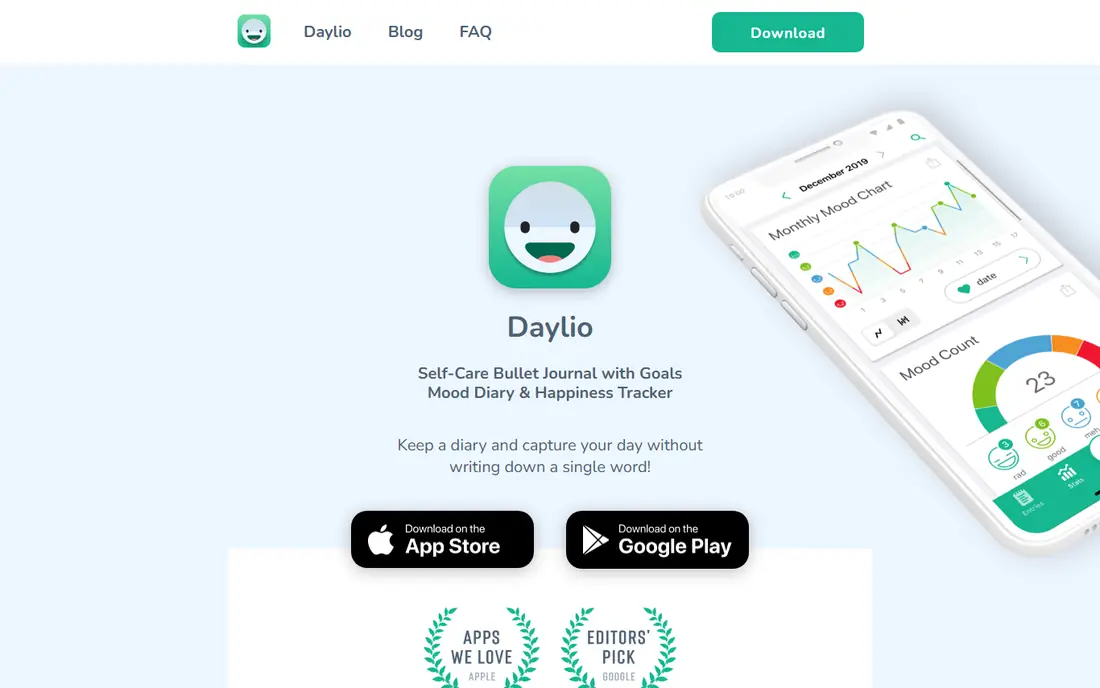
Daylio is the simplest mood tracker in this list, and that simplicity is why people keep using it. You pick a mood, tap activities, and add a note if you want. Over weeks, charts show which activities tend to go with better or worse days, which is useful information to bring to a clinician, coach, or trusted person.
Daylio does not offer therapy, and it will not interpret your data for you. The value comes from consistency, so log at the same time each day if you can. If you want to spot patterns without a heavy journaling habit, Daylio is our top pick for mood tracking.
- Very fast mood and activity logging
- Clear charts and patterns over time
- Free core version
- No therapy or coaching
- Insights need regular logging
- Premium features need a subscription
Moodfit goes further than a simple mood log. It tracks mood alongside sleep, exercise, gratitude, and nutrition, and it includes tools for thought records, breathing, and grounding. That breadth helps people who want to see how daily habits connect with mood, rather than tracking mood alone.
The trade-off is complexity. New users may need a few days to set up the trackers they actually want and hide the rest. Moodfit is not a therapy service, and it does not replace professional care for serious symptoms. For a broad, free-to-start self-care tracker, it is a strong choice.
- Mood, sleep, exercise, and gratitude tracking in one app
- Cognitive behavioural tools
- Custom reminders
- Interface carries many features
- Some tools need a subscription
- No live therapy
Finch turns self-care into a small daily ritual. You care for a virtual pet by completing goals, journaling, breathing, and reflecting, and the pet grows as you keep going. That gentle loop suits people who find traditional mood apps too clinical, or who struggle to start a habit at all.
The playful design is also the limit. Finch is not therapy, and it does not offer crisis support or clinical tools. If a light, kind daily routine helps you check in with yourself, Finch is a good fit. If you need human support, look at BetterHelp, Talkspace, or 7 Cups instead.
- Gentle daily goals and journal prompts
- Virtual pet that grows with your progress
- Breathing and reflection tools
- Playful style will not suit everyone
- Deeper therapy tools are missing
- Some features need a subscription
I Am Sober is our top pick among the best sobriety apps for people who want to quit completely and pay nothing to start. The core tools are free: a sober day counter, daily pledges, milestones, money saved, and a community of people working on similar goals. Workbook activities help you plan for cravings and review difficult days.
Sober Plus, listed at $9.99 per month or $39.99 per year in recent reviews, adds full workbooks and support for more habits. The app does not provide a clinician, and it is not a treatment program on its own. For visible progress and peer support at no cost, I Am Sober is an excellent first step, alongside professional help where needed.
- Free sober day counter and daily pledges
- Milestones and money saved
- Large community and workbook activities
- Coaching is not included
- Full workbooks need Sober Plus
- Community quality varies
Reframe is the most structured option among the best sobriety tracker apps here. Daily lessons, a drink tracker, a toolkit for cravings, and coach-led meetings guide you through cutting back or quitting step by step. That structure suits people who want a program to follow, rather than a counter alone.
The price is the main question. Reframe offers a 7-day trial, then a subscription often listed around $100 per year, with coaching sold separately in some cases, so check the purchase screen carefully. Reframe does not replace medical care, especially if drinking feels hard to control or withdrawal is a concern. In that case, speak to a clinician first.
- Structured daily lessons and drink tracking
- Coach-led meetings and community
- Program for cutting back or quitting
- No permanent free tier
- Price varies by offer, often around $100 per year
- Coaching can cost extra
7 Cups offers something the other apps here do not: a trained volunteer listener, any time, for free. You can chat anonymously about stress, low mood, or daily struggles, join community rooms, and use self-help guides. For people who feel alone but are not ready for therapy, that low barrier matters.
Listeners are not a substitute for licensed therapists, and quality varies. 7 Cups also offers therapy with licensed professionals for an extra cost, which is a separate service from free listening. If peer support and anonymity are your priority, 7 Cups is a kind, accessible place to start.
- Free peer listeners and community rooms
- Anonymous support
- Optional therapy with licensed therapists
- Listeners are trained volunteers, not therapists
- Quality varies by listener
- Therapy costs extra
How we picked these
We compared official feature pages, pricing pages, app store listings, privacy policies, and public reviews for each app. We focused on support type, daily tools, sobriety features, privacy clarity, safety information, and price, and we left out apps that were discontinued or lacked clear safety information. We did not claim hands-on testing, and prices vary by plan and region, so check the vendor pricing page before you subscribe.
How to choose a mental health app safely
Start with what you need most. If you want therapy, compare BetterHelp and Talkspace on price, insurance, and session style. If you want daily tools, try Daylio, Moodfit, or Finch for a week. If drinking is the focus, decide whether you want to quit completely, which points to I Am Sober, or cut back with a program, which points to Reframe. A clear need beats a long feature list.
Then check privacy and safety before you share sensitive details. Read how the app uses mood, journal, and health data, whether it shares data with advertisers, and how to delete your account. Look for crisis information inside the app, and keep a real-world support contact ready. An app can support a routine, but it should never be your only plan when you feel unsafe.
Frequently asked questions
What are the best mental health apps overall?
The best mental health apps depend on your goal. BetterHelp and Talkspace suit online therapy, and Daylio suits mood tracking. For sobriety, I Am Sober and Reframe are strong. Try a free tier first, and speak to a clinician if symptoms persist.
What is the best app to stop drinking?
For quitting completely, I Am Sober is a strong free choice, because it offers a day counter, daily pledges, and community support at no cost. Reframe suits people who want a structured program for drinking less or quitting, with daily lessons and meetings. If drinking feels hard to control, speak to a clinician, because medical support may be needed.
What is the best sobriety tracker app?
The best sobriety tracker app for free tracking is I Am Sober, while Reframe is better for a structured program. Other options in this list, such as Daylio, can track mood alongside sobriety, but they are not built for drinking goals. Pick the tracker whose goal, quit or cut back, matches yours.
What is the best behavioral health software for daily self-care?
For daily self-care, Moodfit and Finch offer the most useful tools, including mood tracking, coping exercises, and habit prompts. BetterHelp and Talkspace are better described as therapy platforms than daily self-care apps. The best behavioral health software for you is the one you open regularly and feel safe using.
Can mental health apps replace a therapist?
No. The best apps for mental health can support routines, tracking, and coping skills, but they are not a substitute for professional care. Therapy apps such as BetterHelp and Talkspace do connect you with licensed therapists, which is different from a self-help app alone. If you feel distressed or unsafe, contact a clinician or a crisis line promptly.
How do I keep my data private in a mental health app?
Use a strong password, turn off any optional data sharing you do not need, and read the privacy policy for advertising, analytics, and deletion rules. Prefer apps that explain data use in plain language and allow full account deletion. Avoid entering details you would not want stored, and check app permissions on your phone.
Sources
See where you really rank - block by block
ProMapRanker scans Google Maps across a grid of your service area. Simple monthly plans from $19, white-label on every plan.
Start freeKeep reading
 zoom alternatives
Best Zoom Alternatives in 2026
Compare Zoom alternatives in 2026, with free meeting limits and prices, so you can pick the best alternative to Zoom for your team, class, or community.
Read → which software is best for remote work
Which Software Is Best for Remote Work in 2026
Answering which software is best for remote work, we compare Slack, Zoom, Asana, Notion, Teams and more, with pricing and honest tradeoffs in 2026 now.
Read → which ai tool is best for content writing
Which AI Tool Is Best for Content Writing in 2026
Wondering which ai tool is best for content writing? We compare ChatGPT, Claude, Jasper, Grammarly, and more on price, quality, and best use in 2026 now.
Read →