 ProMapRanker
Best Apps for Kids to Learn English in 2026

Key takeaways
- Duolingo ABC is the best free start for early reading and phonics, with no ads and no purchases.
- Lingokids suits ages 2 to 8 learning English through play, songs, and games.
- Khan Academy Kids is the best fully free all rounder for early learning, including English activities.
- ABCmouse suits families who want a structured path from preschool to second grade, while Buddy.ai suits speaking practice.
Quick comparison
| Pick | Great for | Pricing starts at | Free tier | |
|---|---|---|---|---|
 Duolingo ABC | Early reading and phonics | Free | Yes | Visit |
 Lingokids | Play based English for ages 2 to 8 | See website | Yes | Visit |
 Khan Academy Kids | Free all round early learning | Free | Yes | Visit |
 ABCmouse | Structured preschool to grade 2 path | See website | Yes | Visit |
 Buddy.ai | Speaking practice with AI tutor | See website | Free trial | Visit |
 Studycat English | Games and voice practice | See website | Free trial | Visit |
 LearnEnglish Kids Playtime | Songs and listening, ages 6 to 11 | Free | Yes | Visit |
 Monkey Junior | Structured reading courses | See website | Yes | Visit |
 EWA Kids | Stories and vocabulary | See website | Yes | Visit |
The best apps for kids to learn english
Learning English as a child covers two different needs: learning to read English, and learning English as an additional language. The apps below cover both, so match the app to your child's age and starting point, not just to the download chart.
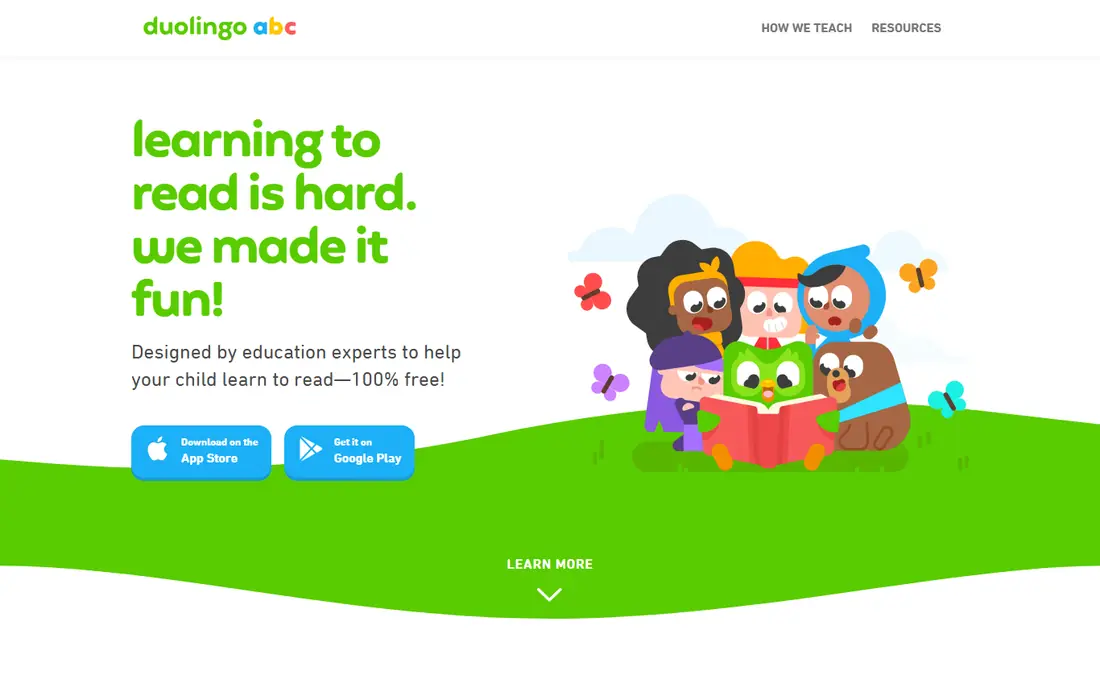
Duolingo ABC teaches children to read English through phonics, letter sounds, blending, sight words, and short stories. Lessons are short and game like, with tracing, listening, and reading tasks that suit preschool to first grade. It works offline for many lessons, which helps for car rides and travel.
The limit is age and scope. Duolingo ABC is not a general English course for older kids, and it does not teach grammar or conversation at a higher level. For a young child learning to decode English, though, it is the best free starting point, and it pairs well with a play based app such as Lingokids.
- Completely free with no ads
- Phonics first lessons
- Short stories and handwriting practice
- Aimed at early readers, not older English learners
- Limited to preschool to first grade level
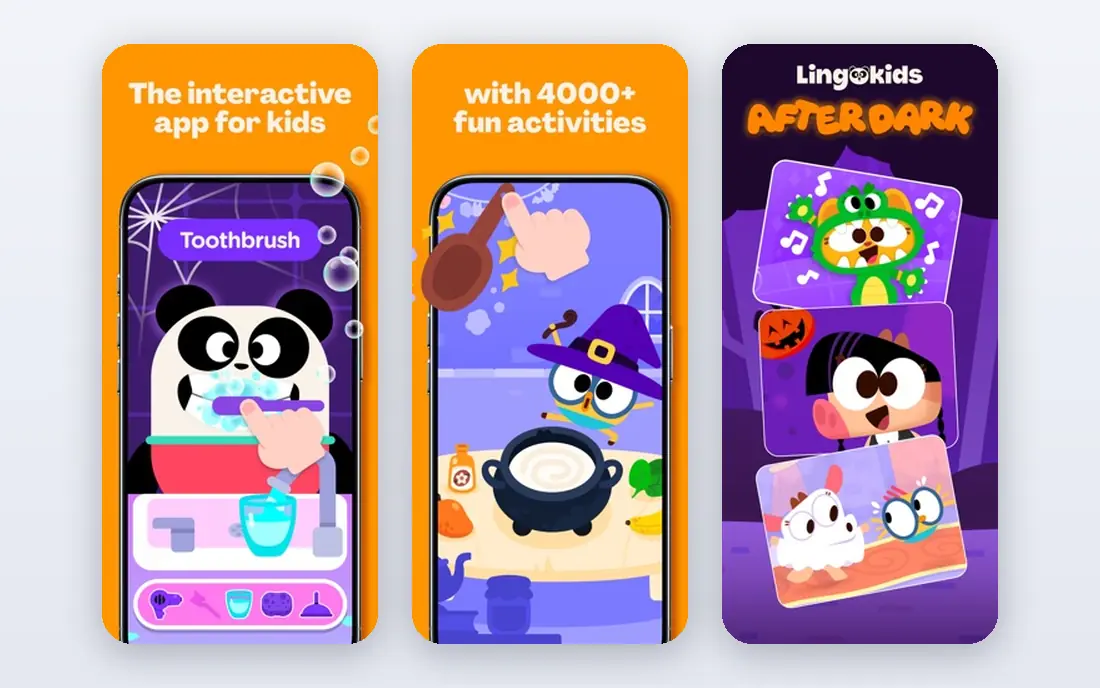
Lingokids teaches English through games, songs, videos, and stories for ages 2 to 8, with content developed with Oxford University Press on some activities. Children learn vocabulary and everyday phrases by playing, rather than by drilling lists. Parents can track progress and set profiles for more than one child on paid plans.
The free version limits daily activities, so families who use it daily will likely need a subscription. Prices vary by app store and promotion, so check the current Lingokids site or store listing before you subscribe. For young English learners who learn best through play, Lingokids is a strong paid choice after the free trial.
- Playlearning games, songs, and videos
- Ad free
- Progress tracking for parents
- Paid plan needed for full access
- App focused, with no desktop version for most use
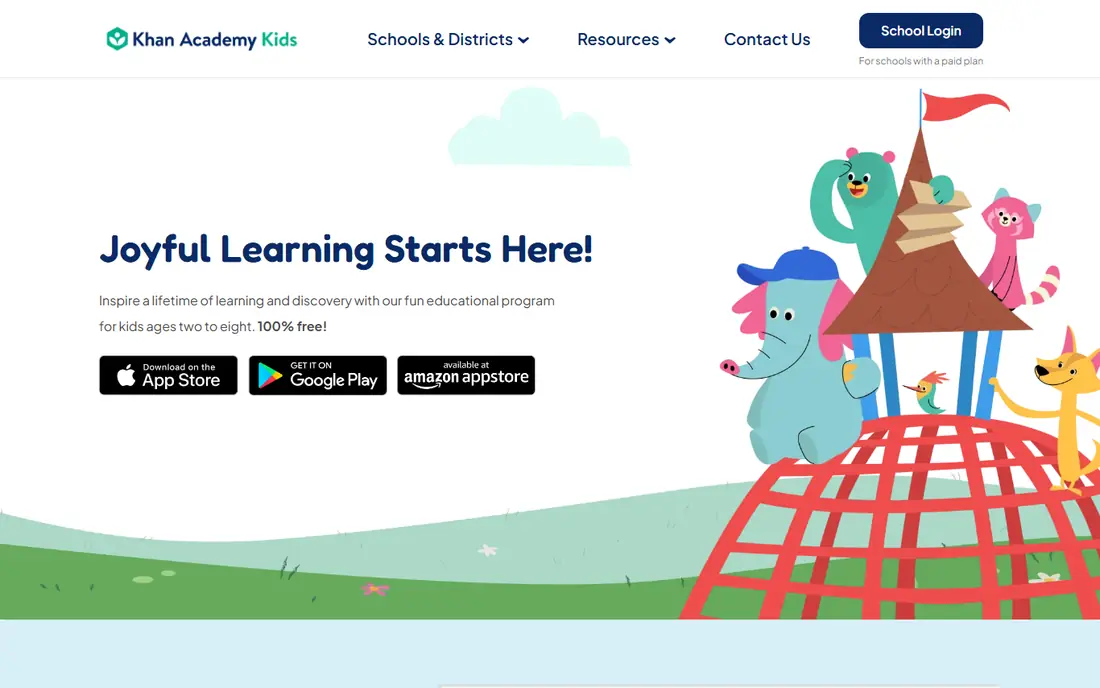
Khan Academy Kids is a free early learning app for ages 2 to 8, with books, phonics games, language activities, maths, and social learning. It is not an English only course, but its reading and language sections are strong, and the whole app is free with no ads or purchases. That makes it the best no cost companion to Duolingo ABC.
Children who need focused English as a second language practice may still need Lingokids or Studycat for vocabulary and speaking. For a free, safe, and broad early learning app that includes English, Khan Academy Kids is hard to beat.
- Fully free with no ads
- Books, phonics, and language activities
- Personalised learning paths
- Broader than English only
- Less speaking practice than Buddy.ai
ABCmouse offers a structured curriculum for ages 2 to 8, with a step by step path through reading, phonics, vocabulary, and early maths. Activities include books, games, songs, puzzles, and art, and parents can follow progress by subject. That structure suits families who want a clear path rather than open play.
The free trial is limited, and full access requires a subscription, with prices that vary by promotion. Some children may find the school like structure less fun than Lingokids. If your child likes completing levels in order, ABCmouse gives that sense of progress.
- Structured step by step learning path
- Thousands of activities
- Progress tracking for parents
- Paid plan needed for full access
- Can feel school like for children who prefer free play
Buddy.ai is a voice based English tutor for kids, where an AI character listens to the child speak and responds in conversation. That speaking practice is rare in kids apps, which often focus on tapping and listening only. Lessons are short, which suits daily practice without long screen sessions.
Buddy.ai is not a full reading curriculum, so pair it with Duolingo ABC or Khan Academy Kids for phonics and reading. For a child who understands English but needs confidence speaking it, Buddy.ai fills a gap that most other apps leave open.
- Voice based speaking practice
- AI tutor listens and responds
- Short daily lessons
- Subscription needed for full use
- Speaking focus means less reading depth
Studycat English, formerly Fun English, teaches everyday English for ages 3 to 8 through games, songs, stories, and speaking tasks. Voice recognition gives instant feedback on pronunciation, which helps children practise saying words, not just recognising them. The design is bright and game led, with no ads in the paid version.
A subscription is needed for full access after the trial, and the content is aimed at younger learners. For a child who likes games and needs listening and speaking practice, Studycat is a good alternative to Lingokids, especially if pronunciation feedback matters.
- Ad free games and songs
- Voice recognition for pronunciation
- Progress tracking
- Subscription needed
- Narrower age range than Lingokids
LearnEnglish Kids Playtime
Great for: Songs and listening, ages 6 to 11
LearnEnglish Kids Playtime, from the British Council, offers animated stories, songs, and games for ages 6 to 11, with a focus on listening and vocabulary. The content is made for English learners, with clear native speaker models and comprehension activities. It is a good free option for school age children.
The app is less structured than ABCmouse, so parents may need to guide which activities to try. For listening practice and songs, especially for children in the 6 to 11 range, it is a useful free addition to a paid app or a school programme.
- British Council content
- Animated stories and songs
- Native speaker pronunciation
- Lighter structure than ABCmouse
- In app purchases for some content
Monkey Junior offers structured English courses for young learners, covering listening, speaking, reading, and writing through lessons, games, and stories. Its phonics and sight word work suits children moving from spoken English to reading, and it supports several languages for instructions.
Full courses require purchases, so check what is included before you buy. For families who want a course like structure for reading, Monkey Junior is a solid option alongside Duolingo ABC, which is free but narrower in scope.
- Structured courses for listening, speaking, reading, and writing
- Phonics and sight words
- Offline use on some plans
- In app purchases for full courses
- Interface can feel busy
EWA Kids offers adapted books, animated speaking lessons, and flashcards for young English learners. Stories help children learn vocabulary in context, rather than as isolated words, and the cartoon style keeps younger learners engaged. A free download lets families try the format before subscribing.
EWA Kids is stronger for vocabulary and reading confidence than for structured grammar. Pair it with a phonics app for younger children, or use it as a reading supplement for older kids who already know basic English.
- Adapted books and stories
- Illustrated flashcards
- Speaking lessons with cartoons
- Subscription needed for full library
- Better for vocabulary than full grammar
How we picked these
We compared official app pages, store listings, and current 2026 guides for kids English apps, with attention to age range, ad policies, and whether each app teaches reading, speaking, or both. We favoured apps that are current, child focused, and clearly suited to a distinct age or skill, and we noted where a free plan is truly free. We did not include ProMapRanker itself in this list.
How to choose an English app for your child
Start with age and goal. Ages 2 to 5 suit Lingokids, Khan Academy Kids, and Duolingo ABC. Ages 6 to 11 suit LearnEnglish Kids Playtime, EWA Kids, and Buddy.ai for speaking. If your child is learning to read, start with Duolingo ABC. If your child already reads but needs English as a second language, start with Lingokids or Studycat.
Keep sessions short, about 15 to 20 minutes, and mix app time with real conversation, books, and songs. Check ad and purchase settings before you hand over a device, and use parent dashboards to see what your child actually practised, not just how long they played.
Frequently asked questions
What is the best app for kids to learn English?
Duolingo ABC is best for free early reading, Lingokids is best for play based English for ages 2 to 8, and Khan Academy Kids is best as a free all rounder. The best choice depends on whether your child needs reading, speaking, or general English exposure.
Is Duolingo ABC really free?
Yes, Duolingo ABC is free with no ads and no purchases, according to its official pages and current guides. The main Duolingo app is different, with ads on the free tier and a paid Super plan, so make sure you install Duolingo ABC for young readers.
What age is Lingokids for?
Lingokids is designed for ages 2 to 8, with games, songs, and videos suited to preschool and early primary children. Older children may find it too simple and may prefer LearnEnglish Kids Playtime, Buddy.ai, or EWA Kids.
How can kids practise speaking English with an app?
Buddy.ai and Studycat English both use voice recognition so children speak and receive feedback. Regular short speaking sessions help more than long passive sessions, and parents can also practise by asking the child to retell a story from the app.
Are kids English apps safe?
Look for ad free apps, child profiles, and parent dashboards, and check privacy policies before you enter personal details. Duolingo ABC, Khan Academy Kids, and Lingokids are all designed as child safe, ad free experiences, while general audience apps may show ads or social features.
Sources
See where you really rank - block by block
ProMapRanker scans Google Maps across a grid of your service area. Simple monthly plans from $19, white-label on every plan.
Start freeKeep reading
 zoom alternatives
Best Zoom Alternatives in 2026
Compare Zoom alternatives in 2026, with free meeting limits and prices, so you can pick the best alternative to Zoom for your team, class, or community.
Read → which software is best for remote work
Which Software Is Best for Remote Work in 2026
Answering which software is best for remote work, we compare Slack, Zoom, Asana, Notion, Teams and more, with pricing and honest tradeoffs in 2026 now.
Read → which ai tool is best for content writing
Which AI Tool Is Best for Content Writing in 2026
Wondering which ai tool is best for content writing? We compare ChatGPT, Claude, Jasper, Grammarly, and more on price, quality, and best use in 2026 now.
Read →