 ProMapRanker
Best Apps for Anxiety in 2026

Key takeaways
- Calm and Headspace remain the strongest starting points for guided meditation, with Calm leaning to sleep and Headspace leaning to structured courses.
- Insight Timer and UCLA Mindful offer the best free value, with large free libraries and no pressure to subscribe.
- Finch, Wysa and Breathwrk suit different needs: gentle daily habits, on-demand coping tools, and short breathing resets.
- No app replaces professional help. If anxiety is severe, frequent or tied to panic, sleep loss or daily functioning, seek care from a clinician.
Quick comparison
| Pick | Great for | Pricing starts at | Free tier | |
|---|---|---|---|---|
 Calm | Sleep and relaxation | $69.99 per year | Yes | Visit |
 Headspace | Structured courses | $69.99 per year | Yes | Visit |
 Insight Timer | Free variety | Free | Yes | Visit |
 Balance | Personalized plans | See website | Yes | Visit |
 Finch | Gentle daily habits | Free | Yes | Visit |
 Wysa | On-demand coping tools | Free | Yes | Visit |
 Breathwrk | Breathing resets | Free | Yes | Visit |
 UCLA Mindful | Free guided basics | Free | Yes | Visit |
The best apps for anxiety
This guide covers general information only. It is not medical advice and it is not a substitute for professional help. We compared official pricing, feature pages and app store listings for apps that support calm, coping skills and daily routine.
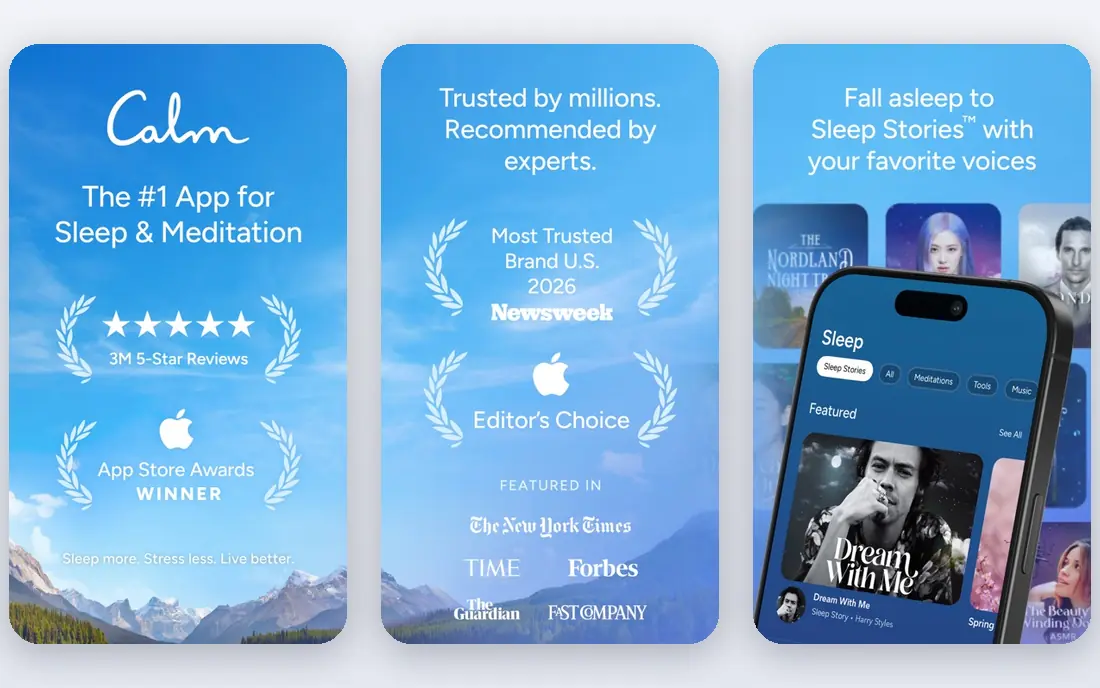
Calm is a good first app for people who want a calm, polished place to start. Guided sessions range from a few minutes to longer wind-downs, and sleep stories and soundscapes help many users build a night routine. The daily guided session gives beginners a simple next step without choosing from a huge catalog.
The limit is structure. Calm offers plenty to listen to, but users who want a clear course that builds anxiety skills step by step may prefer Headspace. Try the free content first, and check whether sleep content or daytime sessions matter more to you.
- Large guided meditation and sleep library
- Short sessions for busy days
- Breathing and sound tools
- Full library needs a subscription
- Less structured skill-building than Headspace
Headspace suits people who like a plan. Courses walk through mindfulness basics, stress and anxiety topics in short daily steps, and SOS sessions offer quick help during a difficult moment. That structure helps users who have tried meditation before and stopped because they did not know what to do next.
The app is less open-ended than Insight Timer, so users who want to pick teachers and topics freely may feel boxed in. For habit building, though, the guided path is a real strength, and the free basics give a fair test of the style.
- Clear beginner courses
- Short SOS sessions for stressful moments
- Sleep and focus content
- Full access needs a subscription
- Tone may feel too structured for some users
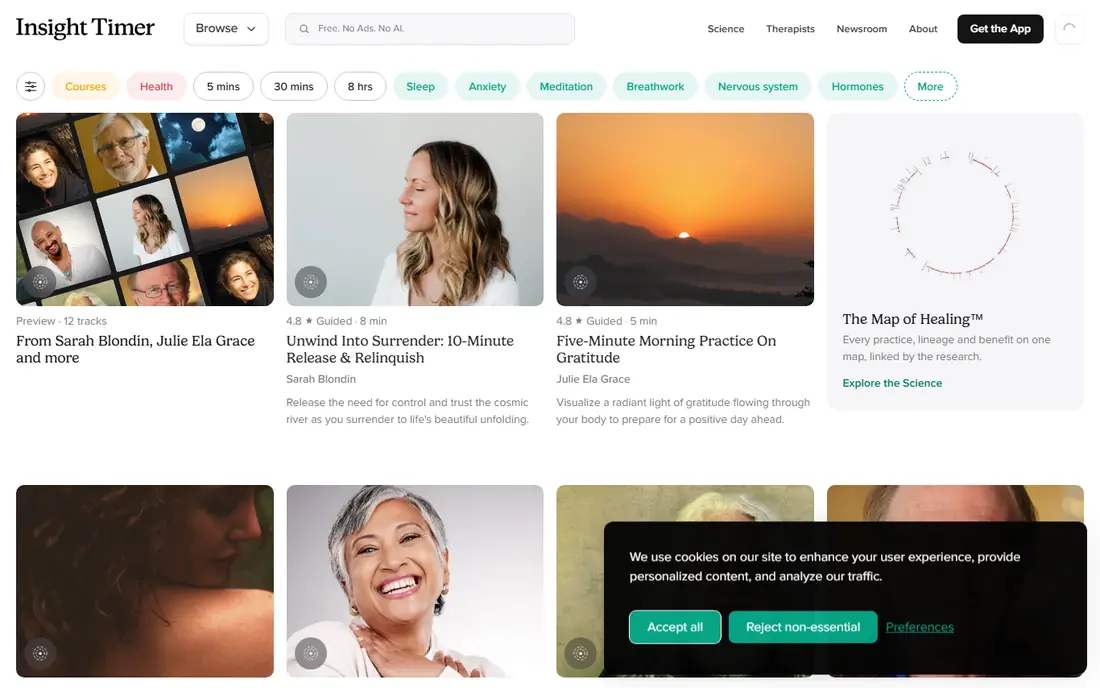
Insight Timer is our pick for users who want strong free content without a subscription. The free library covers anxiety, sleep, breathing and stress, with teachers from many traditions. A simple timer also supports silent practice once you know what works.
Choice is both the strength and the drawback. With so many sessions, beginners may spend more time searching than practicing. Save favorite teachers early, and use short sessions first to learn whose voice and pace suit you.
- Very large free meditation library
- Many teachers and topics
- Timer for unguided practice
- Quality varies by teacher
- Finding the right session takes browsing
Balance builds a daily meditation plan that adapts as you answer questions and complete sessions. That personal touch helps users who feel lost in a large library and want the app to choose for them. Sessions cover stress, sleep, focus and mood, with a calm and steady tone.
Pricing needs checking at sign-up, since offers and annual rates change over time. If the plan fits after the trial period, it can be a strong Headspace alternative. If not, the free options in this guide cover the basics well.
- Adaptive daily plan
- First-year offer often available
- Sleep and anxiety content
- Pricing and offers change
- Less free depth than Insight Timer
Finch takes a different route to calm. Instead of long meditations, it pairs small daily goals, breathing exercises, journaling and mood check-ins with a virtual pet that grows as you complete tasks. That game-like structure helps people who struggle to start a routine at all.
It is not a replacement for guided meditation or therapy, and users who want deep courses should pair it with Calm, Headspace or Insight Timer. As a daily nudge toward small, steady habits, though, Finch is unusually kind and easy to keep using.
- Gentle self-care tasks with a virtual pet
- Mood and habit tracking
- Low-pressure design
- Not a meditation library
- Deeper features need a paid plan
Wysa suits moments when anxiety spikes and a meditation session feels too long. The chat companion offers coping exercises, thought reframing and breathing tools on demand, day or night. That immediate access is its main advantage over library-only apps.
Be clear about limits. Wysa states that its AI support is not a substitute for professional care, and serious or worsening symptoms need a clinician. Use it as a coping aid between real support, not as the only support.
- AI chat companion for in-the-moment support
- CBT-based tools
- Human coaching options in some plans
- AI chat is not therapy
- Full features and coaching cost extra
Breathwrk focuses on one skill that helps many anxious users: paced breathing. Short sessions for calm, focus, energy and sleep use visual cues to guide inhale, hold and exhale. A two-minute reset before a meeting, exam or difficult call can be more practical than a twenty-minute meditation.
The narrow focus is also the limit. Breathwrk does not offer the course depth of Headspace or the sleep library of Calm. It works best as a quick tool beside a broader app, or as a standalone pick for users who know breathing is what helps them most.
- Short guided breathing exercises
- Clear visual pacing
- Useful before stressful events
- Narrower than full meditation apps
- Premium programs need payment
UCLA Mindful offers basic guided meditations from a university mindfulness center, free and without a subscription push. Sessions cover breathing, body scans and working with difficult emotions in a plain, steady style. It is a strong choice for users who want trusted basics at no cost.
The library is small and the design is simple compared with commercial apps. That simplicity is also a virtue for users who feel overwhelmed by choice and upsells. Start here if cost is the main barrier, then move to a larger app only if you need more variety.
- Completely free
- Research-based guided meditations
- English and Spanish options
- Small library
- Plain design
- No paid extras or coaching
How we picked these
We compared official pricing pages, feature descriptions and app store listings, favoring apps with a clear anxiety or stress focus, a usable free tier or trial, and a transparent statement about limits. We included meditation, breathing, habit and coping tools rather than only one style, and we excluded apps that promise diagnosis or treatment. This article is general information only, not medical advice.
Choosing the right anxiety app
Start with your main moment
Think about when anxiety shows up most: at night, before work, during a spike, or as a low daily hum. Sleep trouble points to Calm, habit building points to Headspace, a sudden spike points to Wysa or Breathwrk, and a tight budget points to Insight Timer or UCLA Mindful.
Keep sessions short at first
A three-minute session done daily beats a thirty-minute session done once. Pick an app whose shortest sessions feel doable, set a regular time, and track whether sleep, focus or mood shifts over two weeks. If an app adds pressure or guilt, switch to a gentler option such as Finch.
Know when to seek more help
Apps support routine and coping, but they do not diagnose or treat anxiety disorders. Seek professional help if anxiety is severe, persistent, causes panic, disrupts work, school, sleep or relationships, or comes with thoughts of harming yourself. In a crisis, contact local emergency services or a crisis line right away.
Track what helps in a simple note for two weeks. Record the app, the session length and how you felt before and after, without judging a bad day. Patterns often show up fast: one voice may calm you, one breathing pace may suit you, and one time of day may work better than others. Use that note to keep the routine small and repeatable, and to share useful detail with a clinician if you later seek support.
Frequently asked questions
What are the best anxiety apps?
Calm and Headspace are strong all-round picks, Insight Timer is best for free variety, and Finch, Wysa and Breathwrk cover habits, coping and breathing. The best choice depends on whether you need sleep help, structure, free content or in-the-moment tools.
What is the best free app for anxiety?
Insight Timer offers the largest free meditation library, and UCLA Mindful offers free research-based basics with no subscription. Both are good starting points before paying for Calm, Headspace or Balance.
Can an app help with anxiety?
Apps can support regular practice, breathing and coping skills, and research suggests modest benefits for some users. They work best as part of a wider routine that includes sleep, movement and social support, and they do not replace therapy or medical care.
Is Calm or Headspace better for anxiety?
Calm leans to sleep, relaxation and soundscapes, while Headspace leans to structured courses and SOS sessions. Try the free basics in both, and pick the voice, pace and structure you will actually return to each day.
Do anxiety apps replace therapy?
No. Apps offer general wellness tools and coping practice, not diagnosis or treatment. If anxiety is frequent, severe or hard to manage, talk to a doctor, therapist or other qualified professional about care options.
Sources
See where you really rank - block by block
ProMapRanker scans Google Maps across a grid of your service area. Simple monthly plans from $19, white-label on every plan.
Start freeKeep reading
 top rated pdf scanner software
Best PDF Scanner Software in 2026
Looking for top rated pdf scanner software? We compare 8 scanner apps on scan quality, OCR, price, watermarks and privacy to find your best fit for daily use.
Read → expensify alternatives
Best Expensify Alternatives in 2026
Looking for expensify alternatives? We compare 8 top expense tools on price, cards, receipts and approvals to help your team pick the right one in 2026.
Read → best tools for drawing diagrams
Best Tools for Drawing Diagrams in 2026
Compare the best tools for drawing diagrams, from Lucidchart and Miro to free diagrams.net. See pricing, templates, and collaboration features for teams.
Read →