 ProMapRanker
Best App to Sell Clothes for Free in 2026

Key takeaways
- Vinted and Facebook Marketplace are the strongest free starting points, since Vinted charges no seller fee and local Marketplace sales avoid a platform selling fee.
- Depop now charges no selling commission for US sellers in its current fee model, with payment processing still applying, so check the fee page in the app before you list.
- Poshmark and eBay reach large fashion audiences, but their selling fees are higher, so they suit higher-value or brand-name pieces better than low-price basics.
- Cross-listing the same item on two apps can raise the chance of a sale, but you must remove it everywhere else the moment it sells.
Quick comparison
| Pick | Great for | Pricing starts at | Free tier | |
|---|---|---|---|---|
 Vinted | Everyday clothes with no seller fee | Free | Yes | Visit |
 Depop | Vintage and streetwear | Free | Yes | Visit |
 Facebook Marketplace | Free local sales | Free | Yes | Visit |
 Mercari | Simple shipped sales | Free | Yes | Visit |
 Poshmark | Brand-name and designer fashion | Free | Yes | Visit |
 eBay | Searchable brand-name listings | Free | Yes | Visit |
 thredUP | Hands-off closet cleanouts | Free | Yes | Visit |
 Vestiaire Collective | Authenticated luxury resale | Free | Yes | Visit |
The best app to sell clothes for free
Free to list is not the same as free to sell, so this list separates listing cost from the fee taken at sale, and notes where the buyer pays a fee instead.
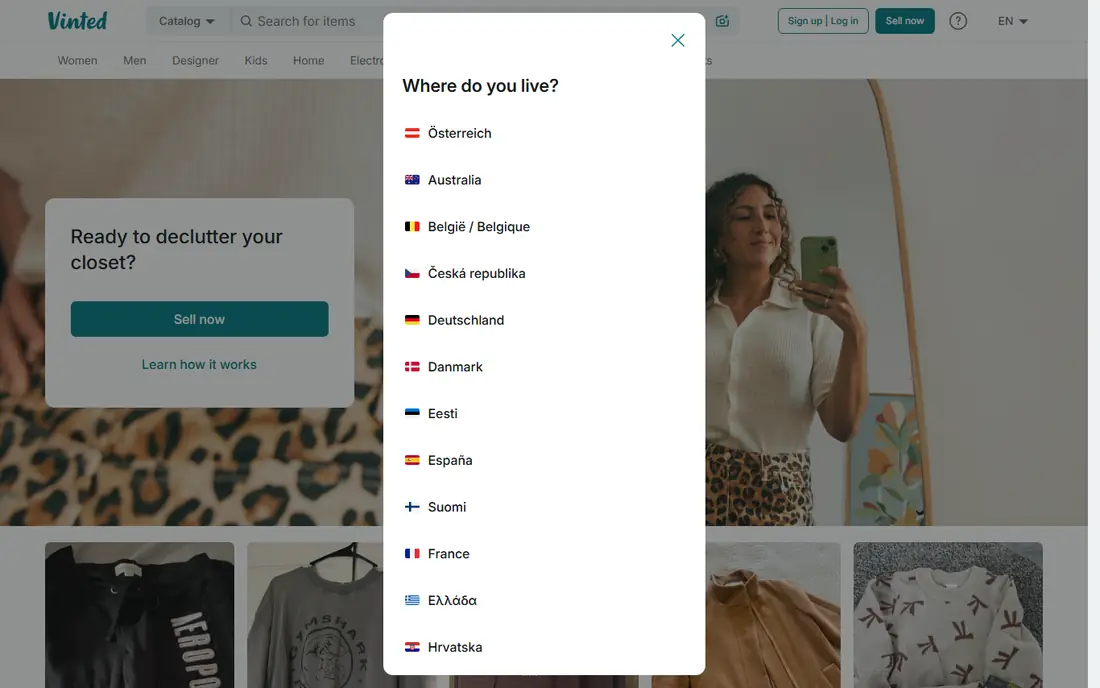
Vinted is our first pick for most closet cleanouts because the math is plain. Sellers pay no selling fee, which means a $20 listing pays $20 before any shipping arrangement you choose, while buyers pay a separate protection fee. That structure makes Vinted especially kind to everyday brands where a 20 percent fee elsewhere would leave almost nothing after shipping.
Listing is quick, and search works well for common brands, sizes and styles. The audience leans toward budget and mid-range fashion, so everyday pieces from high-street brands tend to move faster than rare designer items. If you have a large bag of ordinary clothes to clear, start here and price items to move, since volume matters more than squeezing a few extra dollars from each piece.
The limit is reach and pricing ceiling. Luxury and highly sought-after streetwear may fetch more on a specialist platform, and Vinted offers fewer social selling tools than Poshmark. Still, for free selling in the plainest sense, it is hard to beat, and it is the app we would open first for a general cleanout.
- No seller fee, so you keep the listed price
- Buyer pays a protection fee
- Simple listing flow for everyday brands
- Best for lower and mid-price items
- Buyer protection fee can affect what buyers will pay
- Seller tools are simpler than Poshmark
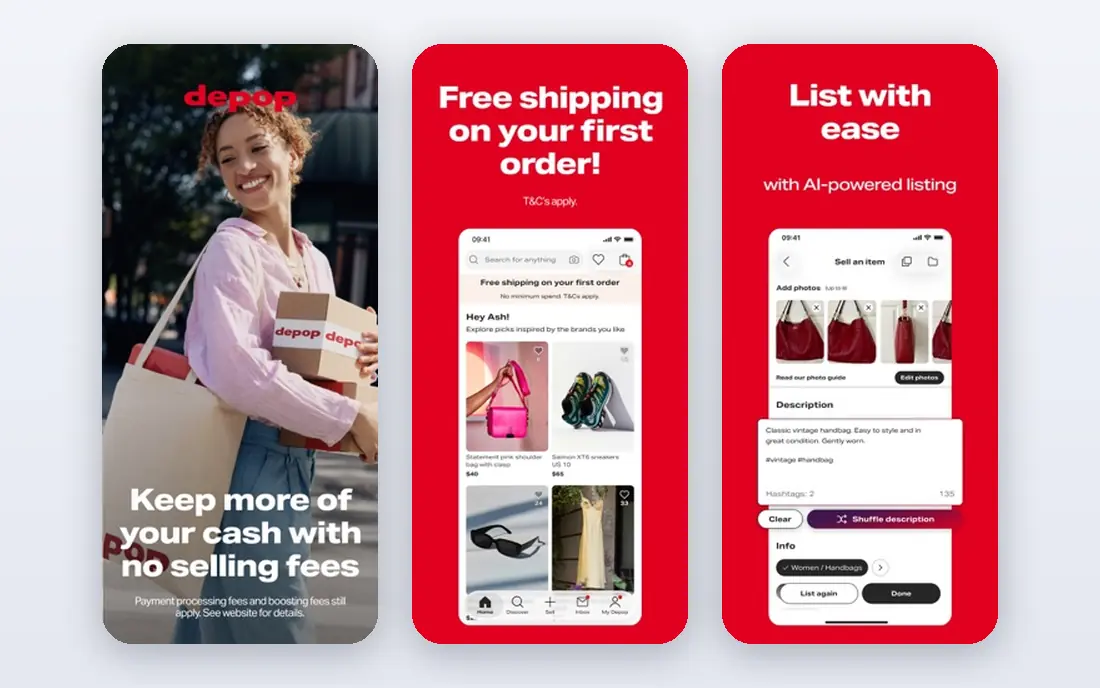
Depop feels closer to a small boutique than a classifieds page. Sellers build a shop profile, curate a feed and attract followers, which suits vintage sellers and anyone with a clear style point of view. A well-shot, well-described vintage jacket can find its buyer here faster than on a general marketplace, because shoppers arrive looking for that aesthetic.
Fees need a careful read. Recent fee summaries describe Depop as charging no selling commission for US sellers, with payment processing of about 3.3 percent plus $0.45 per transaction, plus an optional buyer fee. That is still far cheaper than a 20 percent commission, but it is not zero cost once a sale completes. Check the fee page in the app on the day you list, since platforms change these terms.
The other cost is effort. Depop rewards strong photos, consistent styling and regular listing, and casual sellers who post one blurry photo may wait longer. If your clothes lean vintage, streetwear or trend-led, that effort usually pays. If they are ordinary basics, Vinted will likely move them with less work.
- Strong audience for vintage, Y2K and streetwear styles
- No selling commission in the current US model
- Visual, shop-style profiles
- Payment processing fees still apply
- Optional boosted listings cost extra
- Good photos matter more here than on search-led apps
Facebook Marketplace is the best free route when you do not want to ship at all. List a bundle of clothes, meet locally, and keep the full agreed price, with no platform selling fee on a local pickup deal. That makes it ideal for lots, kids clothes, coats and other items where shipping would eat the margin.
The trade is your time and judgment. You handle messages, no-shows and meetup safety yourself, so meet in a public place and keep the first message thread for reference. Shipped Marketplace sales work differently and do carry a fee, so confirm which sale type you are creating before you publish a listing.
For single low-price items, local selling can feel slow, and shipping apps may move one shirt faster. For a bag of clothes priced as a lot, Marketplace often clears stock in a weekend. Price bundles clearly, list sizes in the title, and say whether you will split the lot.
- No selling fee on local pickup sales
- Huge local audience
- Easy to sell bundles and bulky lots
- Shipped sales carry a selling fee
- You arrange meetups and messages yourself
- Buyer quality varies by area
Mercari suits sellers who want a normal shipped sale without social features. You list, a buyer pays, you print a prepaid label and drop the parcel off. That plain flow appeals to beginners, and it also helps if your closet cleanout includes shoes, bags and accessories alongside clothes.
The fee picture is less generous than Vinted. Mercari charges a selling fee on completed sales, reported at 10 percent in recent comparisons, so factor that into your price before you list. A $30 item does not pay $30, and pricing without the fee in mind leads to disappointment at payout.
Mercari still earns its place because it is dependable for general clothing and mixed lots. It lacks Poshmark's fashion community and Depop's style-led discovery, but many sellers value the lower friction. If you want one app for clothes and everything else in the house, Mercari is a practical second app beside Vinted.
- Listing is free and simple
- Prepaid shipping labels remove guesswork
- Works for clothes plus other household items
- Selling fee applies on completed sales
- Fashion audience is smaller than Poshmark
- Offers and haggling are common
Poshmark is free to join and list, but it is not a low-fee app. Sales of $15 or more carry a 20 percent commission, and smaller sales carry a $2.95 flat fee. That structure hurts low-price basics and helps brand-name, designer and activewear pieces where the audience will pay more and the margin survives the fee.
What you get for that fee is a fashion-first marketplace with sharing, parties, offers and live shows. Sellers who share listings, follow buyers and run closet sales can build repeat traffic, and brands like activewear and designer labels have a ready audience. If you enjoy that social side, Poshmark can outperform quieter apps on the right inventory.
If you dislike social selling, Poshmark will feel like work. Casual sellers with ordinary clothes will usually do better on Vinted or Marketplace. Reserve Poshmark for pieces where its audience justifies the fee, and price with the commission already subtracted.
- Large fashion-focused audience
- Flat-rate shipping labels for buyers
- Social sharing and live selling features
- 20 percent fee on sales of $15 or more
- $2.95 fee under $15
- Sharing and engagement take regular effort
eBay is not a clothes-only app, and that breadth is its strength for specific items. A buyer searching for an exact brand, style and size can find your listing years after a trend fades, which helps with rare, vintage-branded or hard-to-size pieces. Auctions can also reveal a market price when you are unsure what an item is worth.
Fees apply, and they vary by category, so check the fee schedule before you set a price. Shipping also needs more attention than on apps with flat-rate labels, since weight and parcel size change the cost. Photograph labels, flaws and measurements, because eBay buyers expect detail and returns are easier to dispute when a listing is vague.
Use eBay as a specialist tool rather than a default. List brand-name, searchable or rare clothes here, and send everyday basics to Vinted or a local bundle sale. That split keeps fees proportionate to the value of each item.
- Huge searchable audience
- Auctions and fixed-price options
- Strong for specific brands, sizes and rare pieces
- Selling fees apply on completed sales
- Listing and shipping take more care
- Returns follow eBay policy
thredUP suits sellers who value time over payout. You order a cleanout bag, fill it, send it in, and thredUP lists accepted items for you. There is no photography, no messaging and no shipping of single items, which makes it the easiest route for a full wardrobe clearout.
The payout is the catch. thredUP takes a large share, and recent summaries put its bag fee at $14.99 with a payout share that leaves sellers a smaller fraction than direct selling. Items it does not accept may be recycled or returned depending on the option you choose, so read those terms before sending anything sentimental.
Choose thredUP when the alternative is a bag sitting in a closet for months. Choose Vinted, Depop or Poshmark when you want the most money and can spend time listing. The right pick depends on whether your scarce resource is time or cash.
- Mail-in cleanout bag removes listing work
- Handles pricing and photography for accepted items
- Good for large clearouts
- Payout share is much lower than selling yourself
- Not all items are accepted
- A bag fee can apply
Vestiaire Collective is the free-to-list option for designer and luxury clothes, bags and shoes. Listing costs nothing, and eligible items go through authentication, which gives buyers confidence and helps genuine luxury pieces achieve a fairer price than on an unauthenticated general marketplace.
Commission still applies when an item sells, and rates vary by item value, so this is not a zero-fee sale. The process also takes longer, since authentication, buyer payment and shipping checks sit between listing and payout. For ordinary clothes, that process is wasted effort.
For a designer coat, handbag or pair of shoes, though, authentication is worth the fee. Buyers pay more when they trust the item, and sellers avoid the dispute risk that comes with high-value unauthenticated sales. Keep Vestiaire for luxury, and use the other apps here for everything else.
- Authentication on eligible luxury items
- Global luxury audience
- Listing is free
- Commission applies on sales
- Luxury focus only
- Authentication and shipping steps add waiting time
How we picked these
We compared official fee pages, help centers and recent fee summaries for each app, and we kept only apps that are live in the United States, let you list clothes without an upfront listing fee, and have a real buyer audience for clothing. We separated listing cost from sale fees, because an app can be free to join yet expensive at payout, and we favored a mix of free, low-fee, social and hands-off options so different sellers can match the app to their inventory. We did not claim hands-on selling on every app, and we note where fees have changed recently, since those terms decide your payout.
How to get the most from a free listing
Start by sorting clothes into three piles: everyday basics, brand-name or vintage pieces, and luxury items. Send basics to Vinted or a local Marketplace bundle, brand-name and vintage pieces to Depop, Poshmark or eBay, and luxury to Vestiaire Collective. That split keeps fees in proportion to value and puts each item in front of buyers who want it.
Photos decide more sales than price tweaks. Use daylight, show the label, the fabric close up and any flaw, and list measurements for items where fit varies. A clear flaw photo builds trust and reduces returns, while a hidden flaw creates a dispute that costs time and postage.
Price with fees and shipping in mind, and set a floor you will accept before offers arrive. If an item has not had views after a week, improve the title and first photo before cutting the price. Titles with brand, item type, size and color help search on every app here, and they cost nothing to fix.
Frequently asked questions
What is the best app to sell clothes for free?
Vinted is the strongest free pick for most sellers, since it charges no seller fee, while Facebook Marketplace is the strongest free pick for local sales. Depop is a strong low-cost pick for vintage and streetwear, but payment processing still applies.
Do any apps let you sell clothes with no fees at all?
Local Facebook Marketplace pickup sales avoid a platform selling fee, and Vinted avoids a seller fee, though buyers pay a protection fee on Vinted. No shipped sale is entirely free once payment processing and shipping are counted, so read the fee page before you list.
Is Poshmark or Mercari better for selling clothes?
Poshmark suits brand-name fashion and sellers who enjoy social sharing, while Mercari suits general clothes and sellers who want a simpler shipped sale. Poshmark charges a higher commission, so Mercari often leaves more on mid-price general items.
Can I list the same clothes on more than one app?
Yes, and many sellers do. List on two apps at most to keep stock control simple, and remove the item everywhere else as soon as it sells, since selling the same item twice creates a cancellation and a disappointed buyer.
How do I sell clothes fast?
Price everyday items to move, use clear daylight photos, list accurate measurements, and consider a bundle price for basics. Vintage and brand-name pieces sell faster on Depop, Poshmark or eBay, where buyers search for those styles directly.
Do I need to pay tax on clothes I sell?
Tax rules depend on whether you sell personal items at a loss or run a reselling business, and on platform reporting thresholds. This is not tax advice, and you should check current IRS guidance or a tax professional if your sales grow beyond a casual cleanout.
Sources
See where you really rank - block by block
ProMapRanker scans Google Maps across a grid of your service area. Simple monthly plans from $19, white-label on every plan.
Start freeKeep reading
 best rank tracking software
Best Rank Tracking Software in 2026
Searching for the best rank tracking software? We compare 8 tools for daily keyword tracking, local rankings, client reports, and competitor checks in 2026.
Read → best platform for ecommerce website
Best Platform for Ecommerce Website in 2026
Find the best platform for ecommerce website builds in 2026. We compare Shopify, WooCommerce, BigCommerce, Wix and more on price, fees and scale for stores.
Read → best math apps
Best Math Apps in 2026: 8 Apps Compared
Find the best math apps for homework, revision, and deeper study in our 2026 comparison of 8 free and paid solvers, courses, and visual tools for students.
Read →