 ProMapRanker
Best App to Learn Tagalog in 2026

Key takeaways
- Duolingo is the easiest free start for daily habit, while Pimsleur suits learners who want speaking confidence.
- Ling, Mondly and Drops focus on vocabulary and phrases, which helps early conversation.
- Rosetta Stone and Mango Languages offer structured courses, often free through a library.
- Live tutors on italki fill the gap apps leave: real conversation with a native speaker.
Quick comparison
| Pick | Great for | Pricing starts at | Free tier | |
|---|---|---|---|---|
 Duolingo | Free daily habit for beginners | Free | Yes | Visit |
 Pimsleur | Speaking from the first lesson | $19.95 per month | Free trial | Visit |
 Ling | Vocabulary and phrases in short lessons | See website | Yes | Visit |
 Mondly | Daily lessons with speech practice | $9.99 per month | Yes | Visit |
 Drops | Visual vocabulary in five minutes a day | See website | Yes | Visit |
 Rosetta Stone | Immersive structured learning | $11.99 per month | Free trial | Visit |
 Mango Languages | Structured courses, often free via library | See website | Yes | Visit |
 italki | Live conversation with native tutors | See website | No | Visit |
The best apps to learn Tagalog
Tagalog is the basis of Filipino, and the apps below teach it in very different ways: short game lessons, audio speaking courses, vocabulary drills and live tutors. The best app for you depends on whether you want daily habit, spoken confidence or structured grammar, and whether you have family to talk with for practice. No app alone makes you fluent, but the right one gets you speaking sooner.
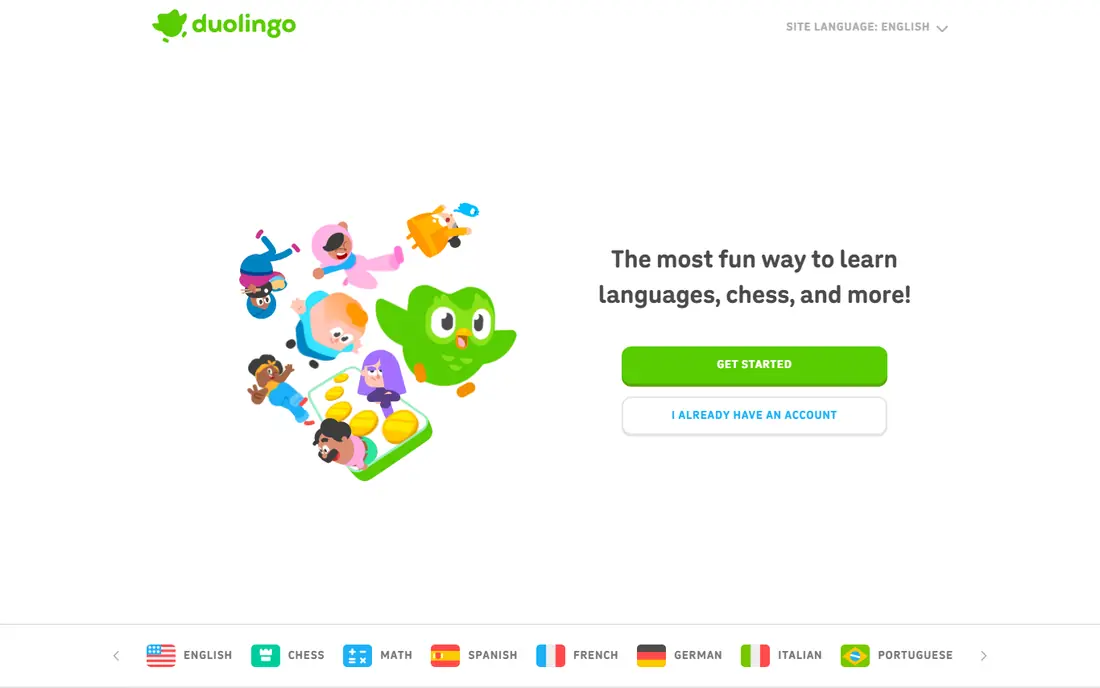
Duolingo is the app most people actually open every day, and that habit is its real strength for Tagalog beginners. Short lessons cover vocabulary, simple sentences and listening, with streaks and levels that keep a five-minute daily routine going. If you have never studied Tagalog, Duolingo is the lowest-friction way to start and to find out whether you will stick with it.
The core course is free with ads and daily energy limits, while Super was listed at $13.99 per month or $95.99 per year in recent comparisons, and Max higher still. The catch is depth: Duolingo teaches patterns more than grammar rules, so pair it with a tutor or a grammar resource once you can handle basic sentences.
- Free core lessons with ads
- Short game lessons
- Tagalog course for English speakers
- Ads and energy limits on free tier
- Grammar explanations are thin

Pimsleur is built for speaking, not tapping through pictures. Each audio lesson asks you to respond out loud, repeats phrases at spaced intervals, and builds toward real conversation in about thirty minutes a day. Learners who want to talk with family, rather than just recognise words on screen, often find Pimsleur the fastest route to confidence.
Premium for one language was listed at $19.95 per month, with All Access at $20.95 per month and a seven-day free trial. The catch is price and scope: it costs more than game apps, and reading, writing and grammar depth are thinner than its speaking strength, so use it as a speaking core, not your only resource.
- Audio lessons build spoken confidence
- Hands-free and offline use
- Structured 30-minute lessons
- Price is high for one language
- Reading and writing get less attention
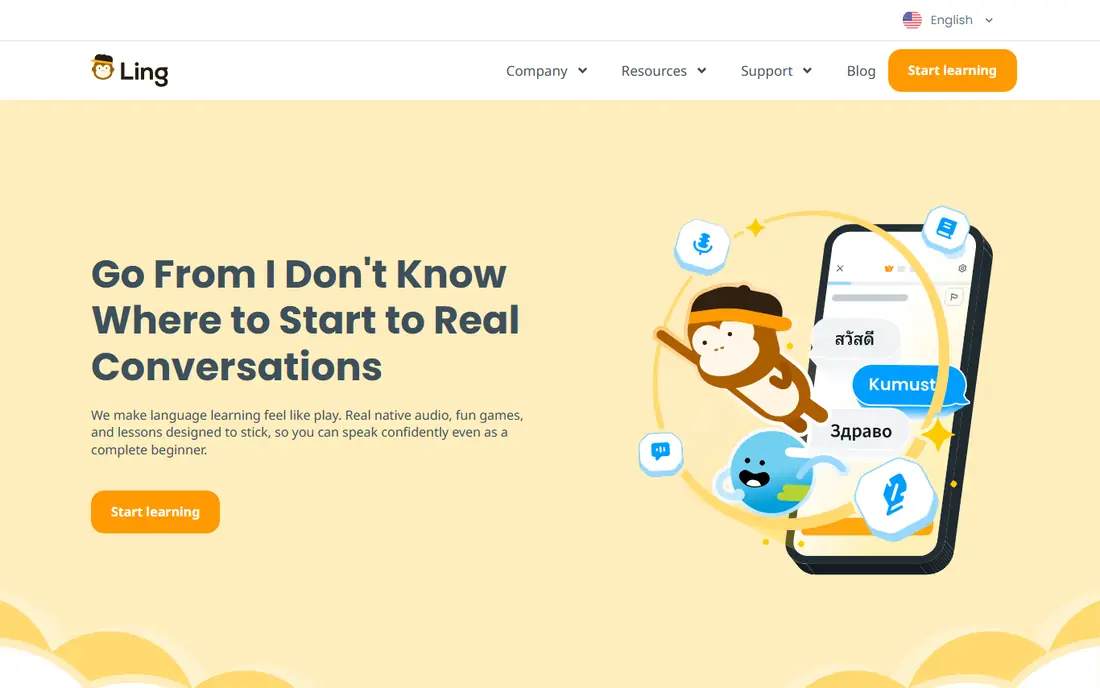
Ling, from the Ling app team, is a focused Tagalog choice for learners who want vocabulary and everyday phrases in short, game-like lessons. It covers reading, listening and speaking drills in a compact format, and its chatbot-style practice gives beginners a low-pressure way to try sentences. For a learner who wants a Tagalog-specific app rather than a general language platform, Ling is a natural first look.
We list pricing as See website because app store and web figures for Ling varied by plan and region in the sources we checked. The catch is depth: Ling is strong on words and phrases, but learners who want full grammar explanations or long conversations will need to add a tutor or a structured course alongside it.
- Tagalog-focused lessons from Ling
- Chatbot-style practice
- Bite-size daily lessons
- Paid features sit behind a subscription
- Grammar depth varies by topic
Mondly suits learners who like a daily lesson with a clear structure: vocabulary, phrases, quizzes and speech practice in a few minutes each day. Its Tagalog course covers everyday topics, and the speech recognition feature lets you practise pronunciation without a tutor present. If Duolingo feels too game-like, Mondly is a slightly more grown-up daily alternative.
Monthly premium for one language was listed at $9.99 per month, with yearly premium at $47.99 and a lifetime offer for all languages in some listings, and a free tier covers daily lessons. The catch is that the free tier is only a taste: serious progress needs the paid plan, so try the free lessons for a week before paying.
- Daily free lessons
- Speech recognition practice
- Large phrase and quiz library
- Full Tagalog course needs a paid plan
- Lifetime and yearly pricing vary by offer
Drops is the vocabulary specialist in this list: five-minute visual sessions teach Tagalog words with illustrations and quick matching games, which suits learners who struggle to find study time. It is easy to open on a commute or in a queue, and the visual approach helps words stick for many learners. Think of Drops as a word bank builder, not a complete course.
We list pricing as See website because Drops subscription figures varied by store and offer in the sources we checked. The catch is scope: Drops teaches words, not grammar or conversation, so pair it with Duolingo, Pimsleur or a tutor if you want to build sentences and speak, not just recognise vocabulary.
- Visual word learning with illustrations
- Five-minute sessions suit busy days
- Tagalog word lists
- Vocabulary only
- Grammar and conversation need another app
- Offline use needs a subscription
Rosetta Stone takes an immersion approach: pictures, audio and speech practice teach Tagalog without translating every word into English, which suits learners who want to think in the language from the start. Its pronunciation feedback and structured path give a more classroom-like feel than a game app, and its lifetime offers can make long-term study cheaper than a monthly subscription.
Pricing was listed at $11.99 per month on a twelve-month plan for one language, with lifetime offers often advertised at a lower promotional price. The catch is fit: check how far the Tagalog course goes before you buy, since depth varies by language, and use the trial to confirm the immersion style suits you.
- Immersive lessons without translation
- Pronunciation feedback
- Structured path
- Price is higher than game apps
- Tagalog depth should be checked before buying
Mango Languages is a structured course that many learners reach for free through a public library, which makes it the best value pick if your library offers it. Lessons build conversations step by step, with cultural notes that explain when a phrase fits and when it does not. For learners who want a calm, course-like path rather than streaks and games, Mango is a strong choice.
We list pricing as See website because Mango is often accessed through a library or institution, and direct subscription pricing varies. The catch is motivation: without game mechanics, Mango relies on your own routine, so set a daily lesson time and pair it with speaking practice if you want conversation, not just comprehension.
- Structured Tagalog conversations
- Cultural notes
- Often free through public libraries
- Direct subscription pricing varies
- Fewer game features than Duolingo
italki fills the gap every app leaves: real conversation with a native Tagalog speaker who can correct you, answer questions and adapt to your family or travel needs. You choose a community tutor for informal practice or a professional teacher for structured lessons, book by the lesson, and try trial lessons before committing. For heritage learners who want to talk with relatives, this is often the most valuable step.
We list pricing as See website because each tutor sets their own rate, with community lessons often starting at a low per-lesson price and professional lessons higher. The catch is structure: italki has no fixed Tagalog course path, so you need to tell your tutor your goals, and tutor quality varies, so use trial lessons to find the right fit.
- Real Tagalog tutors for conversation
- Pay per lesson
- Trial lessons to test a tutor
- No set course path
- Tutor quality and price vary
- Scheduling takes effort
How we picked these
We compared app store listings, vendor pages and Tagalog-specific app roundups, and we kept only apps that offer a Tagalog or Filipino course and are still operating. Prices are app store or vendor figures from recent checks, and where figures varied by store, region or offer we marked the price as See website rather than choosing one. We did not complete a full course in any app for this guide, so teaching notes reflect published course descriptions and public reviews, not a personal fluency test.
How to choose an app to learn Tagalog
Start with your goal. If you want daily habit, Duolingo or Mondly will keep you going. If you want to speak with family soon, Pimsleur or italki will move you faster. If you want words fast, Drops or Ling will build vocabulary, but you will still need conversation practice to use those words.
Use the free tier first. Most apps here offer free lessons or a trial, and a week of real use tells you more than any feature list. Check whether the Tagalog course goes beyond beginner level, whether speech practice works on your phone, and whether the lesson style keeps you coming back.
Add a human as soon as you can. Apps teach words and patterns, but only a tutor or a fluent speaker can correct your pronunciation, explain when Tagalog and Filipino usage differ, and help you handle real family conversation. Even one tutor lesson a week changes what an app can do for you.
Frequently asked questions
What is the best app to learn Tagalog for free?
Duolingo is the best free start, with a full core Tagalog course supported by ads. Mango Languages is also free if your public library offers it, and Drops and Mondly offer free daily lessons for vocabulary practice.
What are the best apps to learn Tagalog for speaking?
Pimsleur is strongest for speaking confidence through audio lessons, while italki gives real conversation with a native tutor. Use Pimsleur for daily speaking drills and italki for live correction and natural conversation.
What is the best Tagalog learning app for beginners?
Duolingo or Mondly suit most beginners, with short daily lessons and clear progression. Ling is a good Tagalog-focused alternative if you want vocabulary and phrases in a compact app.
What is the best app to learn Filipino?
Tagalog and Filipino are closely related, and most apps here teach Tagalog, which is the basis of Filipino. Check each app course description for Filipino labelling, and ask a tutor about formal Filipino usage if you need it for school or work.
Is Duolingo good for learning Tagalog?
Duolingo is good for building a daily habit and learning basic Tagalog vocabulary and sentences, especially for free. It is weaker on grammar explanations and advanced conversation, so pair it with Pimsleur, a tutor or a grammar resource as you progress.
Sources
- https://www.duolingo.com
- https://www.pimsleur.com
- https://ling-app.com
- https://www.mondly.com
- https://languagedrops.com
- https://www.rosettastone.com
- https://mangolanguages.com
- https://www.italki.com
- https://ling-app.com/blog/best-apps-for-learning-tagalog/
- https://vitahaute.com/best-language-learning-apps-2026/
See where you really rank - block by block
ProMapRanker scans Google Maps across a grid of your service area. Simple monthly plans from $19, white-label on every plan.
Start freeKeep reading
 top rated pdf scanner software
Best PDF Scanner Software in 2026
Looking for top rated pdf scanner software? We compare 8 scanner apps on scan quality, OCR, price, watermarks and privacy to find your best fit for daily use.
Read → expensify alternatives
Best Expensify Alternatives in 2026
Looking for expensify alternatives? We compare 8 top expense tools on price, cards, receipts and approvals to help your team pick the right one in 2026.
Read → best tools for drawing diagrams
Best Tools for Drawing Diagrams in 2026
Compare the best tools for drawing diagrams, from Lucidchart and Miro to free diagrams.net. See pricing, templates, and collaboration features for teams.
Read →