 ProMapRanker
Best App to Learn Hindi in 2026

Key takeaways
- Duolingo gives beginners a free, low-pressure start with Hindi, but its course is short and stops well before conversation level.
- Pimsleur and HindiPod101 suit learners who want to speak and listen first, with audio lessons built around real phrases.
- Mango Languages is worth checking through a local library first, since many libraries offer it at no direct cost to card holders.
- HelloTalk and Tandem add real conversation with native speakers, which no lesson app can fully replace.
- Pair one structured course with regular speaking practice if your goal is to hold a conversation, not just finish lessons.
Quick comparison
| Pick | Great for | Pricing starts at | Free tier | |
|---|---|---|---|---|
 Duolingo | Free daily Hindi practice | Free | Yes | Visit |
 Pimsleur | Speaking Hindi while commuting | $14.95 per month | Free trial | Visit |
 Rosetta Stone | Learning without translation | $47.97 for 3 months | Free trial | Visit |
 Mango Languages | Structured lessons through a library | $7.99 per month | Free trial | Visit |
 Ling | Playful vocabulary practice | See website | Yes | Visit |
 Drops | Five-minute vocabulary sessions | See website | Yes | Visit |
 HindiPod101 | Listening lessons and script study | $4 per month | Free trial | Visit |
 HelloTalk | Texting and voice chats with native speakers | Free | Yes | Visit |
 Tandem | Finding a steady language partner | Free | Yes | Visit |
The best app to learn hindi
We compared apps that teach Hindi as a full course, not just a phrase list, and we weighed lesson depth, speaking practice, script teaching, and price. Our pick for most beginners is Duolingo for a free start, with Pimsleur as the stronger choice for speaking.
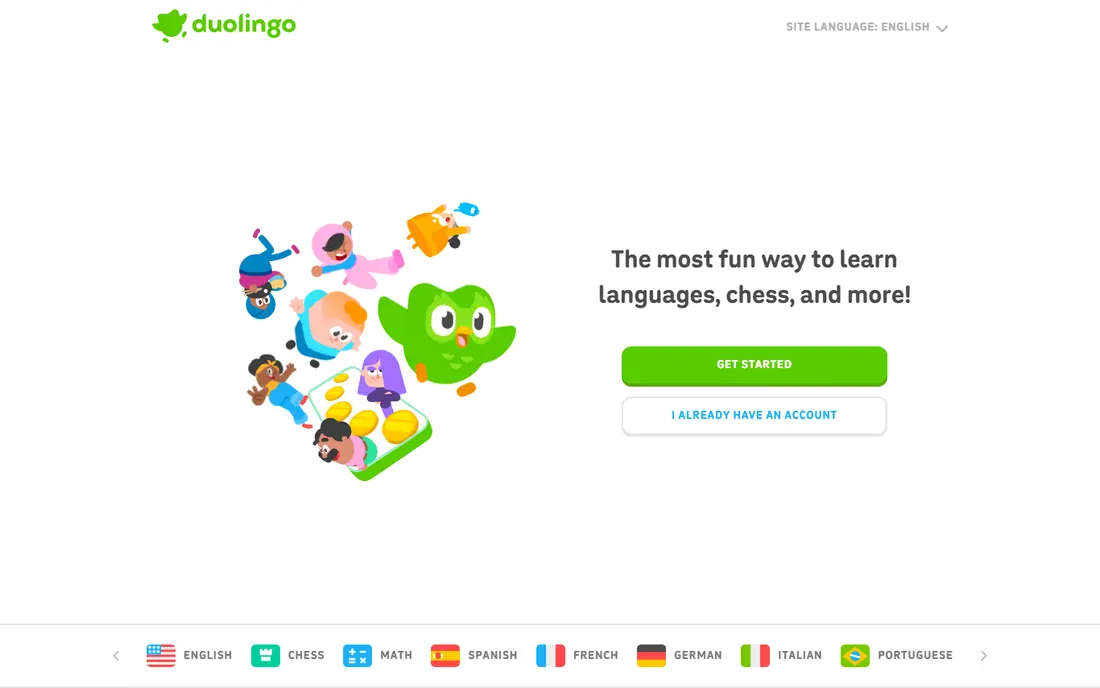
Duolingo works best as a first step, not a final destination. The lessons are short, visual, and easy to fit into a morning routine, and the free plan covers the whole Hindi course rather than a small sample. You will pick up common words, simple sentences, and the shapes of Devanagari letters without paying anything.
The limit shows up once you finish the course. Many learners report that they can read simple words but still struggle to follow spoken Hindi or answer in a real conversation. Treat Duolingo as a warm-up: use it to build a habit and a base vocabulary, then move to audio lessons or a conversation partner when you want to speak with confidence.
- Full Hindi course is free
- Short lessons build a daily habit
- Devanagari script is introduced early
- Course is short and ends at a basic level
- Grammar explanations are thin
- Ads interrupt the free plan

Pimsleur takes a different route from most apps by putting listening and speaking first. Each core lesson is built around a short dialogue, and you are asked to respond out loud before the answer is given. That pressure, kept gentle, is what helps phrases stick for travel, family visits, and everyday exchanges.
The trade is depth on paper. If you want to read Hindi newspapers or write long messages, you will need extra script practice alongside Pimsleur. For a learner whose main goal is to be understood when speaking, though, this is one of the strongest starting points in this list.
- Audio lessons build speaking confidence fast
- Native speaker pronunciation models
- Lessons fit a 30-minute routine
- Reading and writing practice is limited
- Lessons can feel repetitive
- Vocabulary range is narrower than a full course
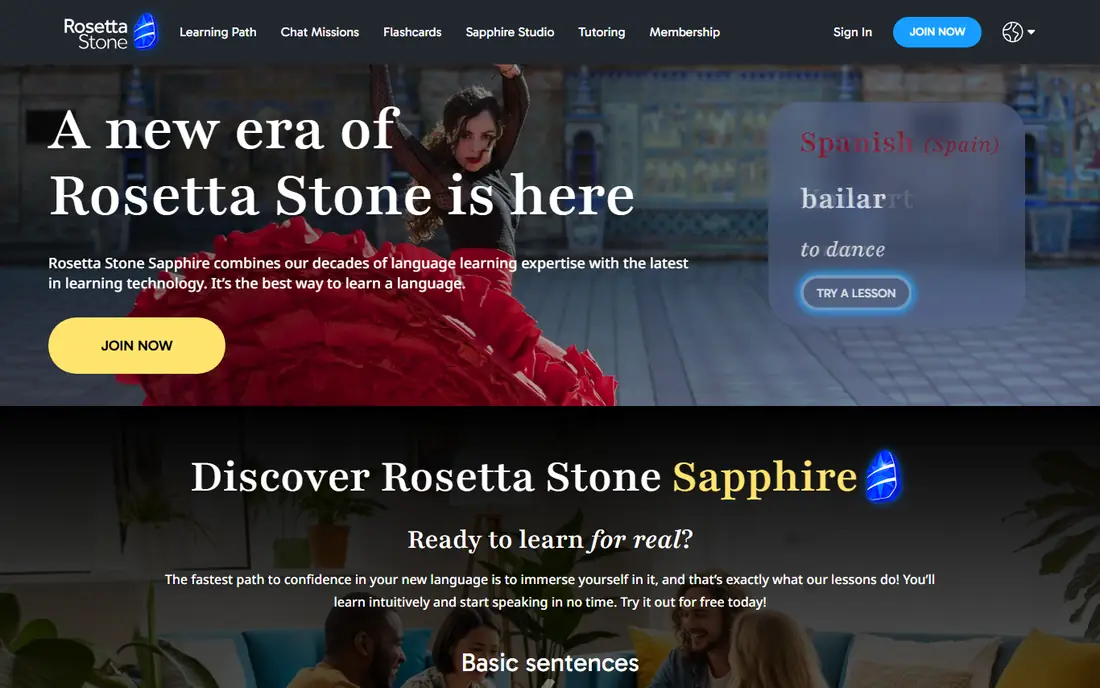
Rosetta Stone teaches Hindi the way a child might absorb a language, by matching pictures, sounds, and words without translating back to English. That approach suits visual learners who get distracted by grammar tables and just want to hear and see the language in context. Its pronunciation tool gives feedback at a fine level, which helps with sounds that do not exist in English.
The catch is that the method can feel slow when you want a rule explained plainly, such as how gender or verb endings change a sentence. It is a solid, steady course for beginners who like routine, but pair it with a grammar reference if you want to understand why sentences are built the way they are.
- Immersion method links images directly to Hindi words
- Pronunciation feedback is detailed
- Works across devices
- No short monthly plan at the entry price
- Grammar is taught by example rather than explained
- Hindi content is not the deepest catalog
Mango Languages feels quieter than the gamified apps on this list, and some learners will prefer that. Lessons move through conversations phrase by phrase, with notes on meaning and use, so you are less likely to feel rushed or tested at every step. The structure is easy to follow, which makes it a good fit for learners who study at a desk rather than in short bursts on a phone.
Before paying, check whether your local library offers Mango at no direct cost, because many do. If you pay directly, the single-language plan is the sensible choice for a Hindi-only learner. Mango is best for building a foundation; advanced learners will outgrow it and need conversation practice or native material.
- Lessons are calm and clearly organized
- Cultural notes add context
- Often free through public libraries
- Exercise variety is limited
- Advanced material is thin
- Direct subscription adds up over a year
Ling is the app to open when you have ten minutes and want to learn words without opening a textbook. Its mini-games, quizzes, and speaking exercises cover everyday topics, and the alphabet section helps beginners get comfortable with Devanagari shapes and sounds. It works well as a second app next to a main course.
Do not expect Ling alone to carry you to conversation level. Its strength is repetition and recall, not long explanations or deep reading practice. Used daily for vocabulary, it keeps words fresh while your main course or tutor handles sentences and speaking.
- Short games make vocabulary review feel light
- Hindi alphabet lessons are included
- Chatbot-style practice adds speaking reps
- Lesson depth is lighter than a full course
- Some features sit behind a subscription
- Grammar coverage is basic
Drops does one thing and does it cleanly: it teaches Hindi words through fast, image-led drills. Each session lasts five minutes on the free plan, which removes the decision about how long to study and makes it easy to keep a streak alive on busy days. For a beginner, that small daily dose adds up to a useful set of nouns, verbs, and phrases.
The limit is obvious once you try to form your own sentences. Drops will not teach you how Hindi word order works or how to ask a follow-up question. Use it to stock your vocabulary, then practise putting those words into sentences with a course, a tutor, or a language partner.
- Sessions are capped at five minutes on the free plan
- Visuals link words to images clearly
- Good for building a word base
- Focus is vocabulary, not sentences or conversation
- Free sessions are time-limited
- Grammar is barely covered
HindiPod101 is built around lessons you listen to, which makes it a natural companion to reading and writing study. Beginner paths introduce Devanagari step by step, from letters and marks to simple words, while later lessons cover travel, work, and everyday life. The range of levels is wider than most apps here, so you are less likely to run out of material.
The size of the library is both a strength and a problem: without a clear path, it is easy to drift between lessons. Pick one learning path, follow it in order, and use the script lessons on a regular schedule. For listening comprehension, HindiPod101 is one of the best value options in this roundup.
- Large library of audio and video lessons
- Devanagari lessons start from single letters
- Lessons span beginner to advanced levels
- Full value needs a paid plan
- Lesson library can feel large and unstructured
- Speaking practice needs a partner elsewhere
HelloTalk turns study into conversation by matching you with native Hindi speakers who want to learn your language. You can exchange text, voice messages, and corrections, and the built-in tools help you understand a message before you reply. Seeing how people actually write and speak in daily life teaches slang, politeness, and rhythm that lesson apps often miss.
The experience depends heavily on who you meet, so take time to find two or three reliable partners rather than chatting with everyone. Keep early conversations in the app, share no personal details, and use the correction tools to turn each chat into a lesson. For speaking confidence, regular short chats here beat another month of solo drills.
- Large community of Hindi speakers
- Built-in translation and correction tools
- Moments feed shows real everyday language
- Quality of partners varies
- Free accounts have limits on some features
- Safety depends on choosing partners carefully
Tandem is built for language exchange, pairing Hindi learners with native speakers who want to practise English or another language you know. Profiles show interests and learning goals, which makes it easier to find someone you actually enjoy talking to, and that matters because a partner you like is one you will keep meeting. Video and voice calls add pronunciation practice that text alone cannot give.
Like any exchange app, Tandem rewards patience and clear expectations. Agree on how much time each language gets, prepare a topic or two before a call, and keep notes on corrections after each session. Used once or twice a week, it is the most direct route from app lessons to real conversation.
- Partner matching by interests and goals
- Text, audio, and video chat in one app
- Tutor lessons are available for extra cost
- Good partners take time to find
- Some advanced features need a paid plan
- Conversation quality varies by partner
How we picked these
We compared official feature pages, pricing pages, and app store listings for apps with a real Hindi course or a large Hindi-speaking community, and we left out apps that do not offer Hindi at all. We favoured products that are still maintained and available in October 2026, that teach the Devanagari script or support real speaking practice, and that state their price plainly. We did not claim hands-on testing; our comparisons rest on published features, pricing, and public reviews.
Choosing the right Hindi app for your goal
Start by naming your goal in one sentence, because the best app for travel phrases is not the best app for reading Hindi books. If you want to speak on a trip, put Pimsleur or HindiPod101 first and add HelloTalk for live practice. If you want a free daily habit, start with Duolingo or Drops and judge after a month whether you need deeper material. Library users should check Mango first, since a free library account can save a full subscription fee.
Set a routine you can keep
Short daily study beats long weekend sessions for most learners. Aim for 15 to 30 minutes a day, split between new material and review, and add one speaking session a week as soon as you know basic greetings and questions. Review matters more than speed: a word you can recall a week later is worth more than ten words you met once.
Learn the script early
Devanagari looks hard at first, but learning it early pays off in every other skill. Once you can read the letters, you can sound out new words, use Hindi dictionaries, and follow subtitles and signs. Apps that teach the script step by step, such as HindiPod101 and Duolingo, are worth extra attention for beginners. Keep a small notebook or flashcard set for letters you confuse, and revisit them until they feel automatic.
Frequently asked questions
What is the best app to learn Hindi for beginners?
Duolingo is the easiest free start for most beginners, and Pimsleur is stronger if speaking is your main goal. Start with one of them for a month, then add a conversation app such as HelloTalk once you can handle greetings and simple questions.
What are the best apps to learn Hindi for free?
Duolingo, Drops, HelloTalk, and Tandem all offer useful free plans for Hindi learners. Duolingo covers a full beginner course, Drops covers vocabulary, and HelloTalk and Tandem cover conversation. Mango Languages may also be free through a public library.
Can I learn Hindi only with an app?
An app can build vocabulary, listening, and basic grammar, but conversation still needs a partner or tutor. Most learners reach a stronger level faster when they combine one structured app with weekly speaking practice and some native audio or video.
How long does it take to learn Hindi with an app?
It depends on your goal, your starting point, and how often you study. Basic travel phrases can take a few weeks of daily practice, while holding everyday conversations usually takes many months of steady study plus speaking practice.
Do these apps teach the Devanagari script?
Duolingo, HindiPod101, and Ling include Devanagari teaching, though the depth varies. Pimsleur focuses on speaking and listening, so learners who want to read and write should pair it with a script-focused resource.
Is HindiPod101 or Pimsleur better for speaking?
Pimsleur is better for guided speaking drills, since each lesson asks you to respond out loud. HindiPod101 is better for listening range and script study, with lessons across more levels. Many learners benefit from using Pimsleur for speaking and HindiPod101 for listening.
Sources
See where you really rank - block by block
ProMapRanker scans Google Maps across a grid of your service area. Simple monthly plans from $19, white-label on every plan.
Start freeKeep reading
 wpforms alternatives
Best WPForms Alternatives in 2026
We compare 9 wpforms alternatives for WordPress forms, with free and paid options, current pricing notes, and honest limits for small business sites in 2026.
Read → windows task scheduler alternatives
Best Windows Task Scheduler Alternatives in 2026
Looking for Windows Task Scheduler alternatives? We compare 9 schedulers for Windows and cross-platform work, from free tools to enterprise automation.
Read → which ai video service is best
Which AI Video Service Is Best in 2026
which ai video service is best? We compare 10 legitimate AI video services on price, avatars, editing and output quality to help you pick the right tool.
Read →