 ProMapRanker
Best AI Visibility Tools in 2026

Key takeaways
- Profound is our pick for enterprise teams that need deep citation and competitor analysis across answer engines.
- Otterly.AI and Peec AI are the most accessible starting points for smaller teams, with clear entry pricing.
- AthenaHQ and Scrunch AI suit teams that want action plans, not just dashboards, for AI search optimisation.
- No tool can control what a chatbot says, so use these tools to track and improve, not to promise rankings.
Quick comparison
| Pick | Great for | Pricing starts at | Free tier | |
|---|---|---|---|---|
 Profound | Enterprise citation analysis | See website | No | Visit |
 Peec AI | AI search tracking for SEO teams | See website | No | Visit |
 Otterly.AI | Affordable AI visibility tracking | $29 per month | No | Visit |
 AthenaHQ | Action-oriented GEO platform | $295 per month | Yes | Visit |
 Scrunch AI | Enterprise GEO recommendations | $250 per month | No | Visit |
 Trakkr | Broad engine coverage | $100 per month | Yes | Visit |
 Sight AI | Tracking plus content creation | $49 per month | No | Visit |
 HubSpot AI Search Grader | Free one-time brand check | Free | Yes | Visit |
The best AI visibility tools
AI visibility tools track how your brand shows up in answers from ChatGPT, Gemini, Perplexity, Claude, Copilot, and Google AI Overviews. They run a fixed set of prompts on a schedule, record whether your brand is mentioned, what competitors appear alongside it, what sources are cited, and how sentiment reads. That is different from traditional social listening, which tracks public posts rather than chatbot answers.
We only listed tools that genuinely offer AI visibility tracking in October 2026, based on official feature pages and public 2026 comparisons. If a tool only tracks social mentions and adds a chatbot tab, it did not make this list.
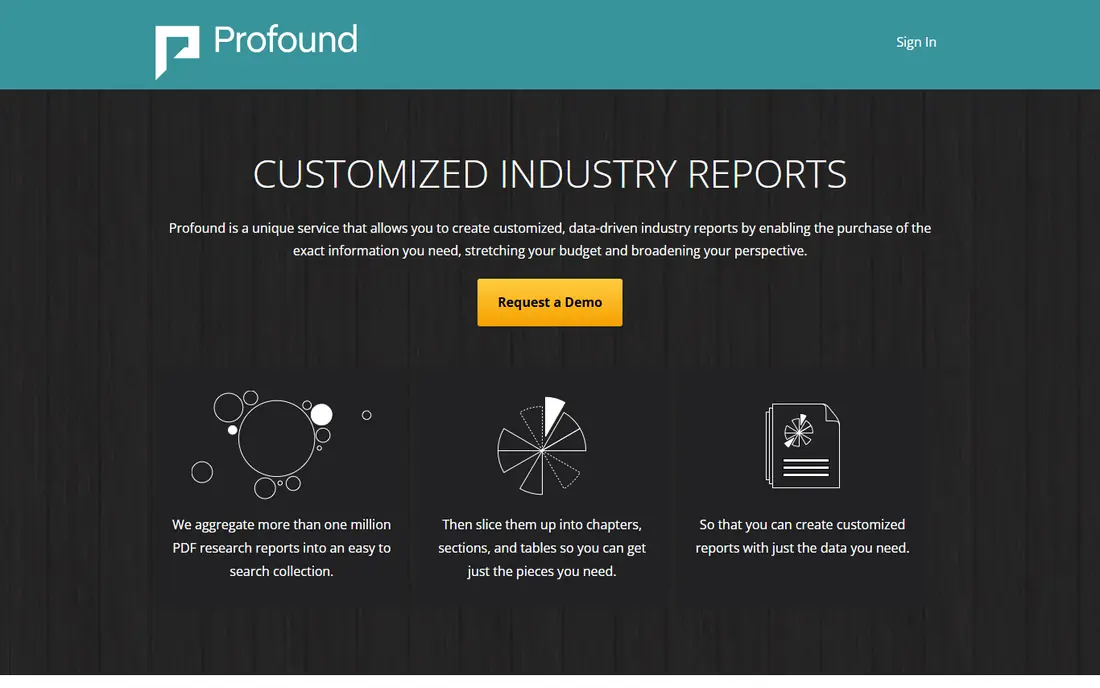
Profound is the most widely cited name in AI visibility, and for good reason. It tracks brand mentions across ChatGPT, Perplexity, Gemini, Copilot, and Google AI Overviews, and it goes deeper than a mention count: it shows which sources the models cite, how competitors compare, and how sentiment shifts over time. That depth suits enterprise teams that report AI visibility to leadership.
Pricing is the barrier. Brand plans are custom for enterprise use, with a free trial offered, and agency pricing listed separately in 2026 comparisons. Small teams should trial Profound against a cheaper tool on the same prompt set, since the extra depth only pays off if someone acts on it each month.
- Wide answer engine coverage
- Citation-level analysis
- Competitor and sentiment reporting
- Enterprise pricing is custom
- Smaller teams may find it more than they need
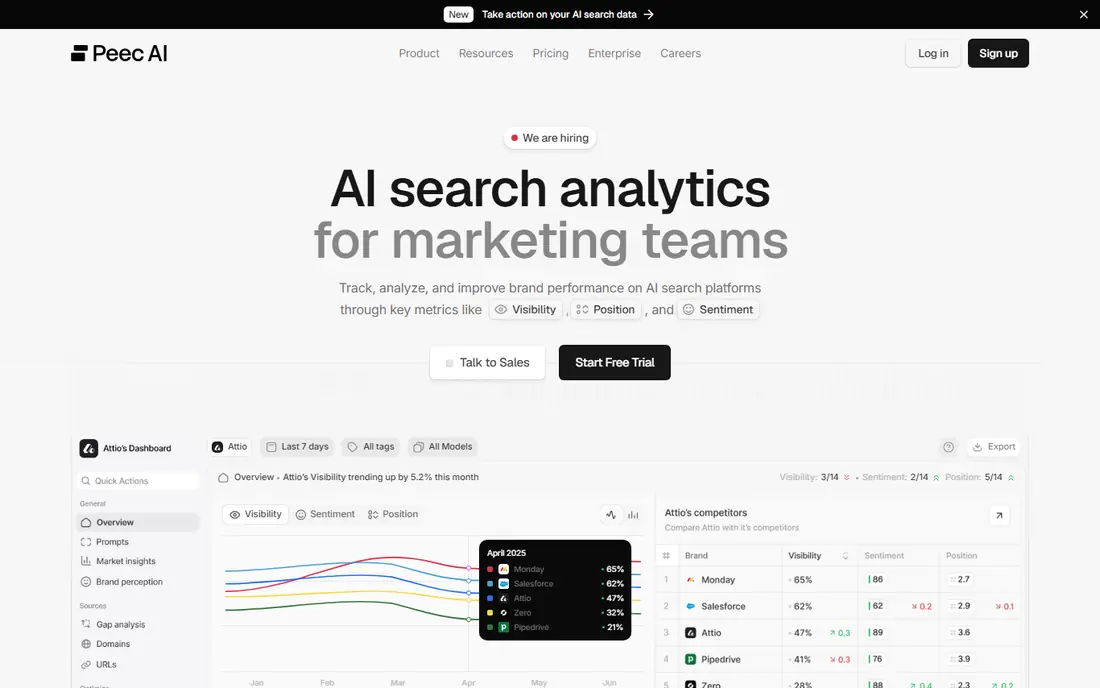
Peec AI is built for SEO and content teams that think in prompts and keywords. It tracks brand performance across AI search platforms, lets you benchmark against competitors, and organises work by project and prompt set. That structure fits teams that already run keyword tracking and want an AI layer alongside it.
Pricing is plan-based, with Starter, Pro, and Advanced tiers, and published 2026 comparisons list entry pricing around $95 to $99 per month, so confirm the current rate and prompt limit before you buy. Peec AI suits agencies and SEO teams that will run it weekly. If you only need a one-time check, the free HubSpot grader below is a better first step.
- Prompt-level tracking
- Competitor benchmarking
- Agency-friendly workspaces
- Pricing varies by plan and prompts
- Fewer engines than some rivals in some comparisons
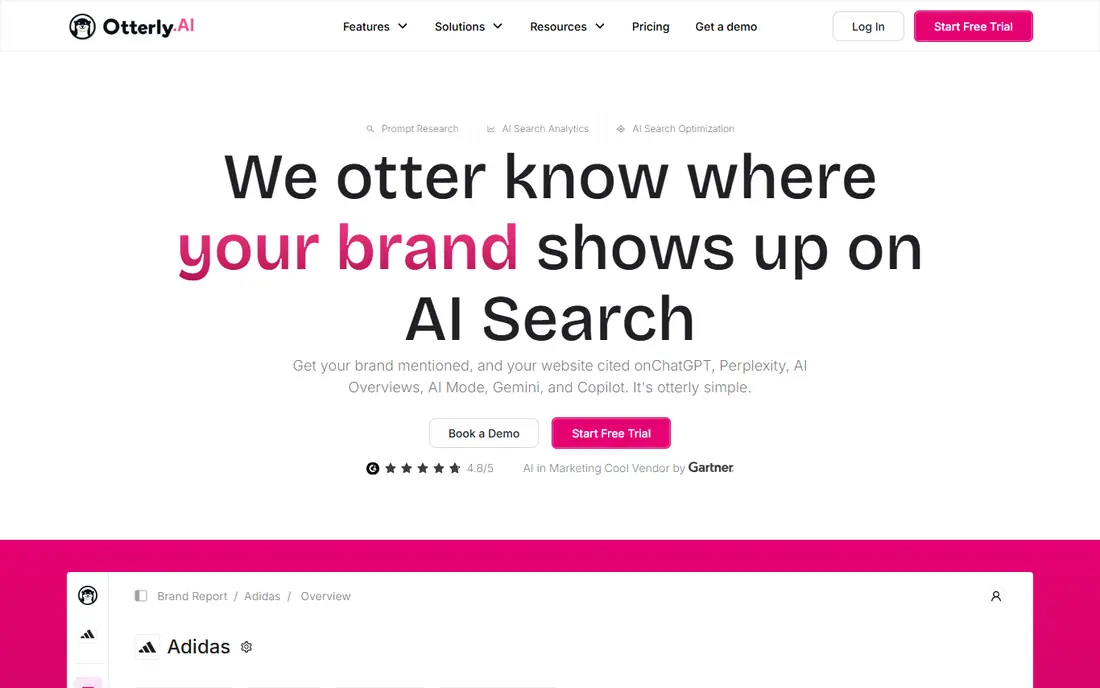
Otterly.AI is the accessible entry point for AI visibility. Its Lite plan starts at $29 per month, or $25 per month billed annually in published comparisons, and it tracks brand presence across ChatGPT, Perplexity, and Google AI Overviews. Share-of-voice views and historical snapshots help small teams see whether their visibility is rising or falling.
Coverage is narrower than Profound, and entry plans cap prompts, so larger brands will need a higher tier. For a solo marketer or a small SEO team starting AI tracking, Otterly.AI is the tool we would try first, since the price makes a three-month test affordable.
- Low entry price
- Share-of-voice tracking
- Historical snapshots of AI answers
- Fewer engines than enterprise tools
- Limits on prompts at entry level
AthenaHQ positions itself as a generative engine optimisation platform, not just a monitor. It tracks brand visibility across five or more AI platforms, including Claude, and pairs tracking with recommended actions for content and citation gaps. A free tier is available in published comparisons, which makes it easier to test than most enterprise tools.
The Starter plan, at $295 per month in published comparisons, puts AthenaHQ above the budget tier. It suits teams that want a plan of action, not just a dashboard, and that have content resources to act on recommendations. Check the credit system carefully, since prompt volume drives cost.
- Tracks ChatGPT, Gemini, Perplexity, Claude, and more
- Action recommendations
- Free tier available
- Starter price is high for small teams
- Credit-based limits need careful checking
Scrunch AI combines AI search visibility tracking with a recommendation layer for generative engine optimisation. It tracks major answer engines, shows how your brand appears across the customer journey, and suggests content changes to improve visibility. That action focus sets it apart from pure monitors.
At $250 per month in published comparisons, Scrunch AI sits in the enterprise tier, and its value depends on acting on its recommendations. Teams without content capacity will get less from it than a cheaper tracker. Teams with a content team ready to publish will find its recommendations more useful than a raw mention count.
- Recommendation layer for GEO work
- Tracks major answer engines
- Customer journey views
- Higher entry price
- Best suited to teams with content resources
Trakkr stands out on coverage in 2026 comparisons, with eight AI platforms tracked, plus mention, citation, sentiment, and prompt-level tracking. It offers a free one-off scan and a 14-day trial, which makes it easy to test against your own brand before paying. At $100 per month in published comparisons, it sits between budget tools and enterprise platforms.
As a newer name, Trakkr has a shorter track record than Profound or Peec AI, so check its engine list and prompt limits against your needs. For teams that want broad coverage without enterprise pricing, it is a strong contender, especially if you test it on the same prompts as a rival tool.
- Covers eight AI platforms in published comparisons
- Mention, citation, and sentiment tracking
- Free scan and trial
- Newer brand than Profound or Peec AI
- Long-term track record is shorter
Sight AI is different because it tries to close the loop: track where your brand is missing, create content to fill the gap, and publish faster. It tracks ChatGPT, Perplexity, Claude, Gemini, Grok, and other engines, and its public tier starts at $49 per month in published comparisons. That combination appeals to content teams that want tracking and production in one subscription.
The extra features add complexity, and Sight AI is newer than the enterprise leaders, so its long-term stability is less proven. If your team already has a content workflow elsewhere, a pure tracker may be simpler. If you want one tool to find gaps and fill them, Sight AI is worth a trial.
- AI visibility tracking plus content tools
- Closed-loop workflow from gap to published content
- Competitive pricing
- Content features add complexity
- Newer platform with a shorter history
HubSpot AI Search Grader is the free starting point for AI visibility. It runs a one-time check on how answer engines describe your brand, with sentiment as a scored dimension, and it needs no subscription. That makes it ideal for a first audit before you spend on a monitor, or for a small business that only needs a baseline.
It is not a replacement for continuous tracking. It does not run weekly prompt sets, store historical trends, or track competitors in depth. Use it to confirm whether you have a visibility problem, then pick a paid tool above for ongoing monitoring if the answer is yes.
- Free one-time check
- Sentiment as a scored dimension
- No subscription needed
- One-time diagnostic only, not continuous monitoring
- Less depth than paid tools
How we picked these
We compared official feature pages, pricing pages, and public 2026 comparisons for tools that track brand mentions inside AI answers, not just social or web mentions. We included enterprise, mid-market, and free options, and we left out tools whose AI visibility could not be verified from their own pages or credible comparisons. We did not claim hands-on testing, and we noted where pricing is custom or varies by prompt volume.
How to use AI visibility data well
Start with a fixed prompt list of 50 to 200 prompts covering your category, your brand, and your key competitors, and run it weekly. That consistency matters more than the tool you pick, since a changing prompt list makes trends meaningless. Review the delta monthly: which prompts gained or lost your brand, which competitors appeared, and which sources were cited.
Then act on citations, not just mentions. If models cite a competitor's guide or a review site, that source is shaping answers about your category. Creating a clear, factual page on that topic, earning coverage from cited sources, and fixing outdated pages about your brand are the levers that actually move visibility. No tool can force a model to mention you, and any vendor that promises that outcome should be treated with scepticism.
What to check before you buy
Confirm which engines are tracked, how often prompts refresh, how many prompts and projects your plan allows, and whether you can export data. Check whether sentiment is measured per prompt or per brand, and whether competitor tracking is included or an add-on. Finally, trial two tools on the same prompt set for two weeks, since coverage and citation results differ more than marketing pages suggest.
Frequently asked questions
What is the best software for AI visibility in search?
Profound is the strongest enterprise choice, while Otterly.AI and Peec AI are the best starting points for smaller teams. The best ai visibility software for you depends on engine coverage, prompt volume, and whether you need action recommendations or just tracking.
What is the best AI visibility tool for small business?
Otterly.AI at $29 per month and HubSpot AI Search Grader for free are the best starting points for small businesses. Otterly.AI gives ongoing tracking, while HubSpot gives a free one-time baseline. Start with the free grader, then move to Otterly.AI if you need weekly monitoring.
How do AI visibility tools work?
They run a fixed set of prompts through ChatGPT, Gemini, Perplexity, and other answer engines on a schedule, then record brand mentions, competitors, citations, and sentiment. They do not control the models, and results vary by prompt wording, location, and model version, so trends matter more than any single snapshot.
Can AI visibility tools improve my rankings in ChatGPT?
No tool can guarantee a mention or a ranking inside a chatbot answer. Tools help you track visibility, find citation gaps, and plan content that models are more likely to cite. Improvement comes from publishing clear, factual, well-sourced content and earning mentions from sources that models already trust.
What is the difference between AI visibility and traditional SEO tracking?
Traditional SEO tracks rankings and clicks in search results, while AI visibility tracks mentions, citations, and sentiment inside chatbot answers. The two overlap, since cited sources often rank well in search, but they measure different surfaces. Most teams in 2026 run one tool for each.
Sources
- https://marketerhire.com/blog/top-tools-for-monitoring-brand-visibility-chatgpt
- http://trakkr.ai/ai-search-tools/best/ai-brand-monitoring-tools
- https://www.datashake.com/blog/the-24-best-brand-monitoring-tools-in-2026
- https://maxaeo.ai/blog/the-12-best-ai-brand-sentiment-analysis-tools-in-2026-track-how-ai-chatbots-feel-about-you/
See where you really rank - block by block
ProMapRanker scans Google Maps across a grid of your service area. Simple monthly plans from $19, white-label on every plan.
Start freeKeep reading
 zoom alternatives
Best Zoom Alternatives in 2026
Compare Zoom alternatives in 2026, with free meeting limits and prices, so you can pick the best alternative to Zoom for your team, class, or community.
Read → which software is best for remote work
Which Software Is Best for Remote Work in 2026
Answering which software is best for remote work, we compare Slack, Zoom, Asana, Notion, Teams and more, with pricing and honest tradeoffs in 2026 now.
Read → which ai tool is best for content writing
Which AI Tool Is Best for Content Writing in 2026
Wondering which ai tool is best for content writing? We compare ChatGPT, Claude, Jasper, Grammarly, and more on price, quality, and best use in 2026 now.
Read →