 ProMapRanker
Best AI Search Monitoring Tools in 2026

Key takeaways
- Profound and Peec AI give the cleanest daily monitoring for brands that need prompt-level detail and competitor comparison.
- Otterly.AI is the lowest-cost way to start monitoring, while Rank Prompt and AIclicks offer mid-priced options with broad engine coverage.
- Scrunch, Semrush, and AthenaHQ suit teams that want audits, content help, or an existing suite beside monitoring.
- Monitoring only helps when someone acts on it. Assign an owner, a prompt list, and a monthly fix list before you buy.
Quick comparison
| Pick | Great for | Pricing starts at | Free tier | |
|---|---|---|---|---|
 Profound | Deep prompt monitoring | $99 per month | Free trial | Visit |
 Peec AI | Daily citation monitoring | $95 per month | Free trial | Visit |
 Otterly.AI | Budget monitoring | $29 per month | Free trial | Visit |
 Scrunch | Share of voice monitoring | $300 per month | No | Visit |
 Semrush AI Visibility | Monitoring inside Semrush | $99 per month | No | Visit |
 AthenaHQ | Free start monitoring | See website | Yes | Visit |
 Rank Prompt | Mid-priced multi-engine monitoring | $49 per month | Free trial | Visit |
 AIclicks | Broad engine monitoring | $59 per month | Free trial | Visit |
The best AI search monitoring tools
We compared tools that run prompts on a schedule, record brand mentions and citations, and report change over time across AI search engines.
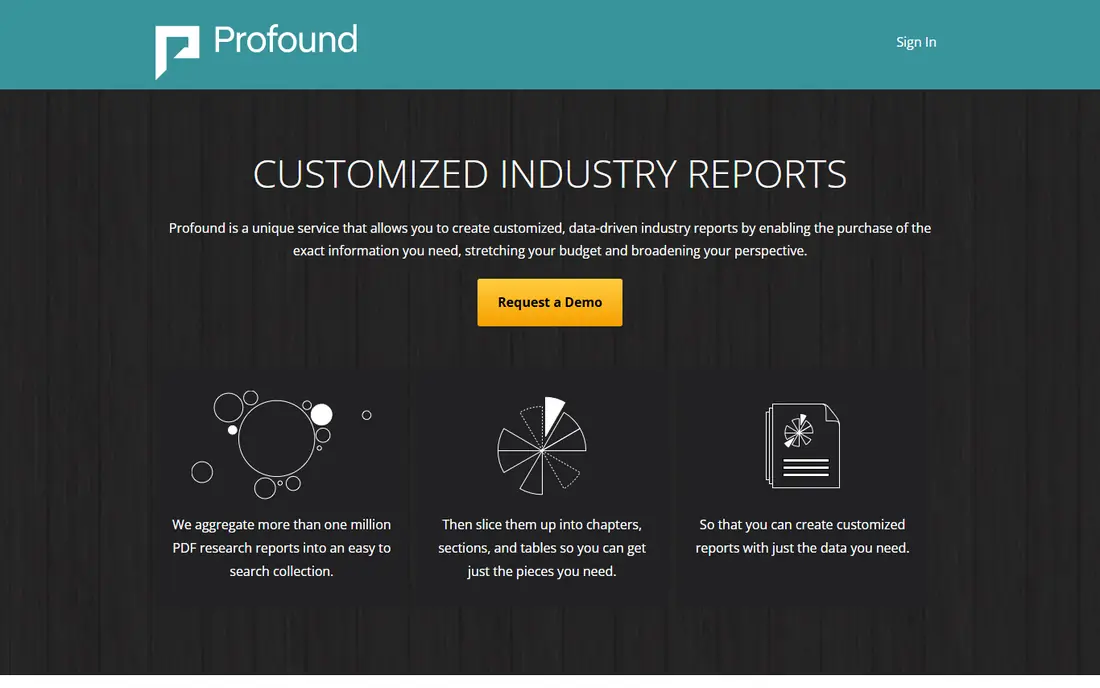
Profound monitors AI answers at prompt level, which is what makes its reports useful for a brand team. Instead of a single visibility score, it shows which prompts mention your brand, which pages get cited, and how competitors appear on the same prompts. Agent analytics add a view of how AI crawlers read your site.
The limit is tier scope. The starter tier is a real monitoring tool, but it does not cover every engine a large brand may need. Test it with your core prompts first, and check which engines the tier you plan to buy actually includes.
- Prompt-level mention and citation data
- Broad engine coverage on higher tiers
- Crawler and agent analytics
- Starter tier covers fewer engines
- Enterprise features cost far more
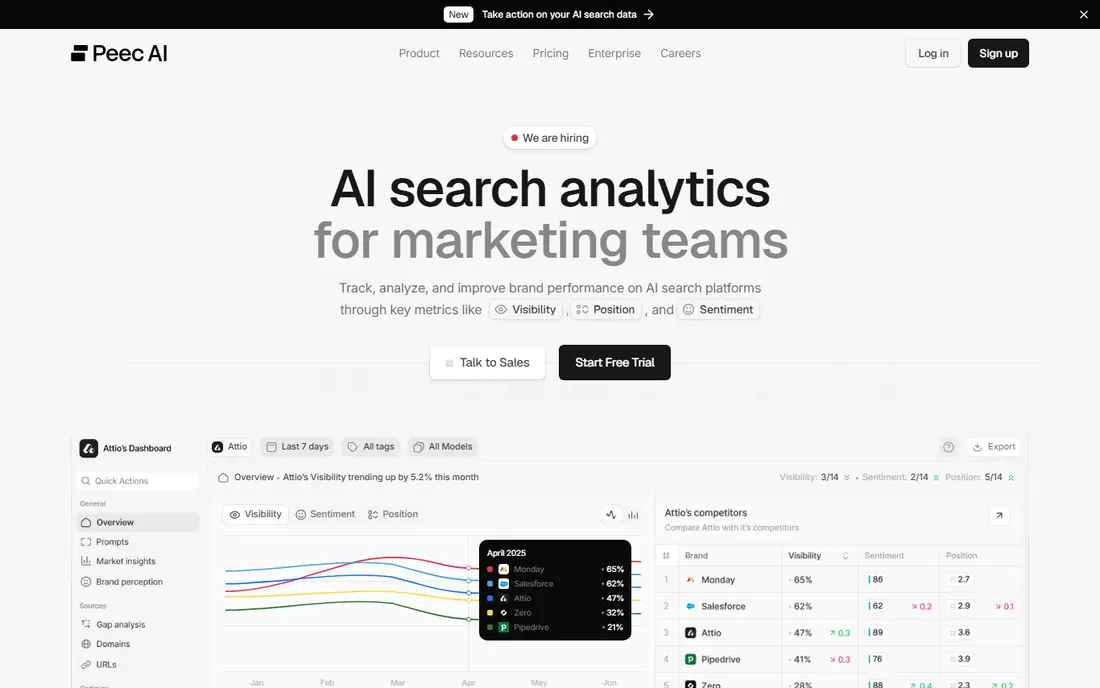
Peec AI is built around one clean daily picture: did AI answers mention your brand, cite your pages, and how did sentiment look. That daily rhythm helps teams spot a drop or a competitor gain quickly, rather than discovering it in a monthly report. Multi-country reporting also helps brands with regional sites.
Engine choice on the starter tier needs care. You pick a subset of engines, so confirm that your buyers main engines are included. If you need many engines and many prompts, the total price will sit above the starter figure.
- Daily monitoring
- Citation versus retrieval reporting
- Sentiment and multi-country views
- Starter tier limits engine choice
- Costs rise with prompts and engines
Otterly.AI gives small teams a daily monitoring habit without a large budget. It tracks mentions and citations across ChatGPT, Google AI Overviews, Perplexity, and Copilot on its core plans, with Gemini and other engines as add-ons in published comparisons. A built-in audit flags pages that AI systems may struggle to cite.
Small prompt limits are the trade-off. Choose buyer questions carefully, and avoid tracking every keyword from classic search. If the reports lead to content fixes each month, the tool earns its price; if no one opens them, even $29 per month is wasted.
- Lowest entry price here
- Daily checks
- Citation tracking and content audit
- Some engines are add-ons
- Prompt limits are tighter at entry level
Scrunch monitors AI answers and pairs that data with audits and page-level fixes. Share of voice reporting shows how often your brand appears compared with named competitors across a prompt set, which helps managers judge progress in one view. Audit features point to pages that need clearer answers or better structure.
Price and ownership are the barriers. At a higher entry point, Scrunch suits mid-size teams and agencies with a content plan ready to act. Pilot it on one category, and judge success by citation and mention change, not by report volume.
- Share of voice and competitor monitoring
- Site audits
- Broad engine coverage in published comparisons
- High entry price
- Needs a clear prompt and content owner
Semrush AI Visibility suits teams that already track rankings in Semrush and want AI monitoring in the same place. It tracks AI mentions and citations, audits pages for AI search readiness, and surfaces real AI search queries in conversation views. That single-workflow benefit saves reporting time for busy teams.
Total cost needs checking. The AI toolkit is an add-on, so the monthly total includes the base Semrush plan. Confirm prompt limits per domain and update frequency before using it for client reporting.
- AI monitoring inside a known SEO suite
- AI search site audit
- Prompt and conversation views
- Add-on price sits on top of a Semrush plan
- Prompt limits apply per domain
AthenaHQ offers a free way to start monitoring AI search, which helps a team learn the workflow before paying. Published 2026 comparisons note a free Essential tier, with paid plans adding more models, prompts, and a content agent that links visibility to content work. That progression suits teams that want to test first.
Free limits mean the free tier is a trial, not a full monitoring system. Check how many prompts and engines it covers, how long data is kept, and what the next paid tier costs. If your prompt list is large, budget for a paid tier from the start.
- Free plan reported in 2026 comparisons
- Broad model coverage on paid plans
- Content agent features
- Paid plans are pricier than budget tools
- Free plan limits apply
Rank Prompt positions itself as an all-round monitoring tool for brands and agencies. Published comparisons list coverage across ChatGPT, Gemini, Grok, Perplexity, and Claude, with mention tracking, citation views, competitor benchmarking, and fix suggestions. The starter price sits between budget tools and enterprise tools.
As a newer name, it deserves a closer check. Ask for a sample report, confirm update frequency, and test whether its prompt data matches what you see when you ask the same questions directly. A trial on your core prompt list is the fastest way to judge it.
- Mid-priced starter tier
- Broad engine coverage in published comparisons
- Competitor benchmarking and fix suggestions
- Newer brand than Profound or Semrush
- Pricing and limits should be confirmed on the vendor site
AIclicks appears in 2026 monitoring comparisons with coverage across ten or more engines, citation and link tracking, and recommendations for improving visibility. That breadth at a mid-range price makes it worth a trial for teams that care about engines beyond the big three.
Brand familiarity is lower than Profound, Peec AI, or Semrush, so verify data quality before committing. Run the same prompt list in AIclicks and in a second tool for a month, and compare mention and citation results. If the numbers track closely, the lower price may be good value.
- Broad engine coverage reported in comparisons
- Citation and link tracking
- Recommendations and free audit options
- Less well known than larger rivals
- Feature depth varies by tier
How we picked these
We compared vendor pages and 2026 monitoring comparisons for engine coverage, prompt limits, citation tracking, update frequency, and reporting clarity. We kept only tools that monitor AI search answers on a schedule, and we left out generic SEO tools without a clear AI monitoring feature and general server monitoring tools, which answer a different question. We did not claim hands-on testing, and prices should be confirmed on vendor sites before purchase.
How to set up AI search monitoring well
Start with a prompt list built from real buyer questions. Include brand questions, comparison questions, pricing questions, and problem questions, and add the same prompts for two or three competitors. A monitoring tool that tracks only brand names will miss the comparison answers where buyers actually choose.
Define what counts as success before you buy. A mention is not the same as a citation, and a citation to a weak page is not the same as a citation to a product page. Track mentions, citations, citation position, and sentiment separately, and review them monthly with the content owner who can fix weak pages.
Avoiding common monitoring mistakes
Do not compare tools on headline price alone. Compare prompts times engines times runs per month, data history, and export options. Do not track too many prompts at first, since a large list creates noise and no clear actions. Start with twenty to fifty core prompts, review them for a month, then expand to the prompts that drive real decisions.
Turning monitoring into fixes
Each month, pick the five prompts where a competitor is cited and you are not, and fix the matching page. Add a clear answer at the top, add facts and sources, improve headings, and check that AI crawlers can read the page. Re-check those prompts the next month. That loop is the whole value of monitoring, and without it the tool is just a dashboard.
Frequently asked questions
What is the best AI search monitoring tool?
Profound suits larger teams that need deep analytics, Peec AI suits clean daily reporting, and Otterly.AI suits small budgets. Rank Prompt and AIclicks offer mid-priced alternatives with broad engine coverage. Choose by prompt list, engines, and budget, then trial your core prompts before a yearly plan.
What is the best AI search monitoring tool for small businesses?
Otterly.AI is a strong small-business pick at $29 per month, and AthenaHQ free plan offers a no-cost start. Start with a tight prompt list focused on buyer questions, and expand only when monthly reports lead to content fixes. A small, used tool beats a large, unused one.
How does AI search monitoring differ from rank tracking?
Rank tracking shows where pages appear in classic search results for keywords. AI search monitoring shows what AI engines say in answers, including brand mentions, cited pages, and competitor presence. The two need different prompt lists, since AI answers respond to questions, not just keywords.
How many prompts should I monitor?
Start with twenty to fifty core buyer prompts, plus the same prompts for key competitors. That size gives clear actions without noise. Expand to category and comparison prompts once the first set leads to regular content fixes and citation gains.
Can AI search monitoring tools improve my citations?
Monitoring alone does not improve citations. It shows where you appear, where competitors are cited, and which pages need work. Citation gains come from fixing those pages: clear answers, strong facts, good structure, and pages that AI crawlers can read. Use monitoring to guide that work each month.
What engines should an AI search monitoring tool cover?
Cover the engines your buyers actually use, which for most teams means ChatGPT, Google AI Overviews or AI Mode, Gemini, and Perplexity, plus Copilot where relevant. Extra engines help only if your audience uses them. Check the exact engine list on the tier you would buy, since starter tiers often cover fewer engines.
Sources
- https://www.profound.com
- https://www.peec.ai
- https://www.otterly.ai
- https://www.scrunch.com
- https://www.semrush.com
- https://www.athenahq.com
- https://rankprompt.com
- https://www.aiclicks.com
- https://otterly.ai/blog/best-ai-search-monitoring-and-llm-monitoring-solutions/
- https://rankprompt.com/best-ai-search-visibility-tracking-tools/
See where you really rank - block by block
ProMapRanker scans Google Maps across a grid of your service area. Simple monthly plans from $19, white-label on every plan.
Start freeKeep reading
 zoom alternatives
Best Zoom Alternatives in 2026
Compare Zoom alternatives in 2026, with free meeting limits and prices, so you can pick the best alternative to Zoom for your team, class, or community.
Read → which software is best for remote work
Which Software Is Best for Remote Work in 2026
Answering which software is best for remote work, we compare Slack, Zoom, Asana, Notion, Teams and more, with pricing and honest tradeoffs in 2026 now.
Read → which ai tool is best for content writing
Which AI Tool Is Best for Content Writing in 2026
Wondering which ai tool is best for content writing? We compare ChatGPT, Claude, Jasper, Grammarly, and more on price, quality, and best use in 2026 now.
Read →