 ProMapRanker
Best AI Marketing Platform in 2026


Teams that already use HubSpot CRM · Pricing starts at: See website
Key takeaways
- HubSpot Marketing Hub is the strongest all-round pick for teams that already use a CRM, since its AI features sit inside email, content, and automation.
- Jasper and Copy.ai suit content-led teams, but Jasper leans toward brand-governed long-form work while Copy.ai leans toward repeatable go-to-market workflows.
- Semrush suits teams that need search and AI visibility measurement alongside content, rather than a pure writing tool.
- Prices vary by seat, credit, or contact count, so compare the same billing unit across vendors before judging which platform is cheaper.
Quick comparison
| Pick | Great for | Pricing starts at | Free tier | |
|---|---|---|---|---|
| HubSpot Marketing Hub | Teams that already use HubSpot CRM | See website | Yes | Visit |
 Jasper | Brand-consistent content at scale | $59 per month | Free trial | Visit |
 Copy.ai | Go-to-market workflows and short copy | $29 per month | Free trial | Visit |
 Writesonic | Content plus AI search visibility fixes | $79 per month | Free trial | Visit |
 Semrush | SEO and AI visibility measurement | $139.95 per month | Yes | Visit |
 Mailchimp | Email marketing for small teams | See website | Yes | Visit |
 ActiveCampaign | Email-led automation for small businesses | See website | No | Visit |
 AdCreative.ai | Fast ad creative for paid campaigns | $39 per month | Free trial | Visit |
 Canva | Visual marketing design for non-designers | See website | Yes | Visit |
The best AI marketing platform
An AI marketing platform should do more than draft text. The tools below cover content, email, ads, search visibility, and automation, and they differ in whether AI is the core product or a layer inside a larger suite.
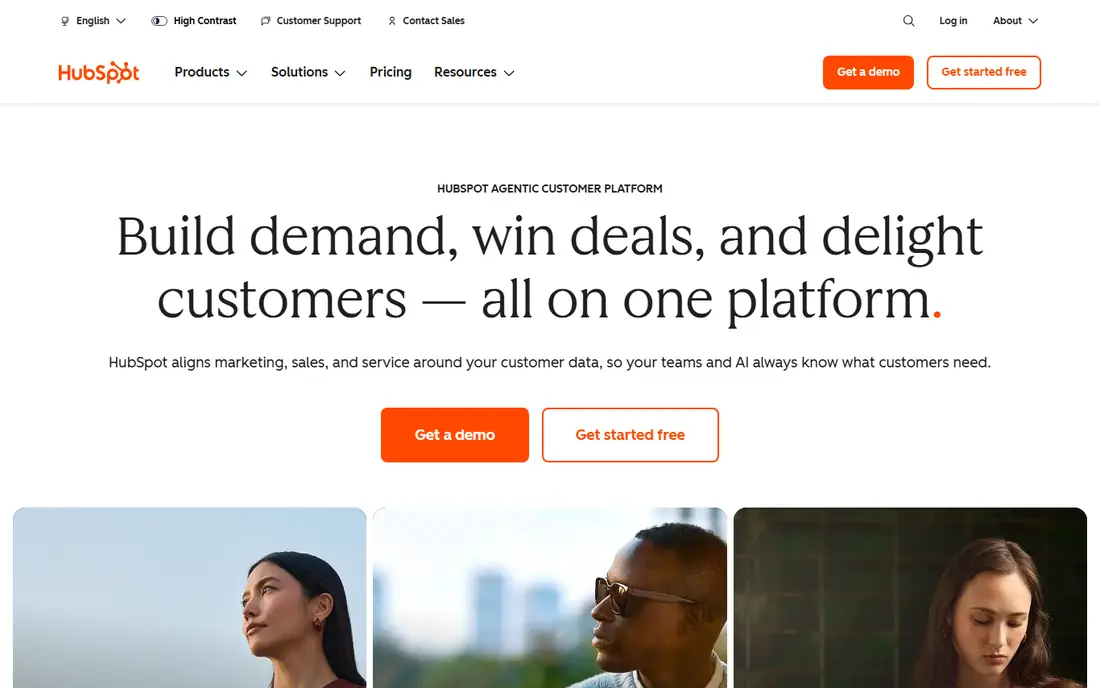
HubSpot is our pick for most teams that already run on its CRM. Its AI assistant, known as Breeze, helps draft content, build emails, summarize records, and support prospecting, all inside the same system that holds contact and deal data. That connection matters, since marketing that draws on real customer data tends to be more relevant than generic generated copy.
The catch is that the free tier only goes so far. Deeper AI features and automation sit in paid hubs, and pricing grows with seats and contacts. If your team does not already use HubSpot, the migration cost should be part of the comparison, not an afterthought.
- AI features across content, email, social, and automation
- CRM data keeps targeting grounded
- Free tier for small teams
- Full AI value needs a paid hub
- Costs rise with seats and contacts
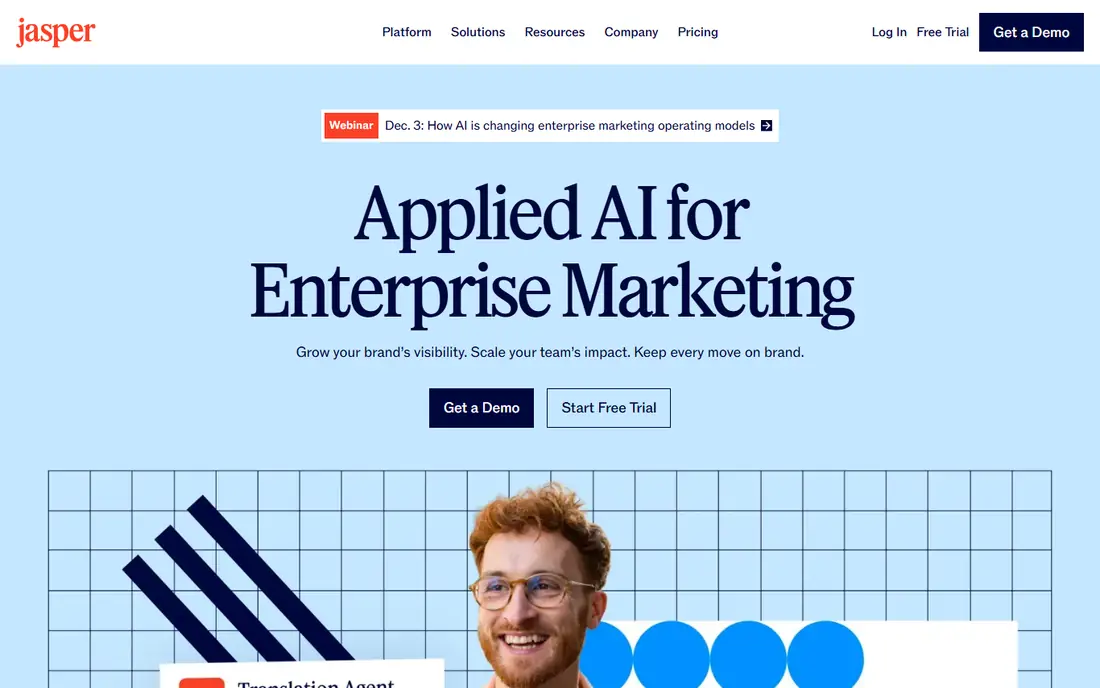
Jasper suits content teams that need many pieces in a consistent voice, such as blogs, landing pages, and campaign copy. Brand voice settings help writers keep tone and terminology steady across authors, which is hard to maintain with a general chatbot. Templates and campaign workflows also speed up repeatable content types.
The price is the main barrier for small teams, and the free option is a trial rather than a lasting plan. Jasper earns its cost when a team publishes often and brand consistency is a real problem. For occasional drafting, a cheaper tool may be enough.
- Strong brand voice controls
- Long-form content workflows
- Team collaboration features
- Higher entry price than some rivals
- No ongoing free plan
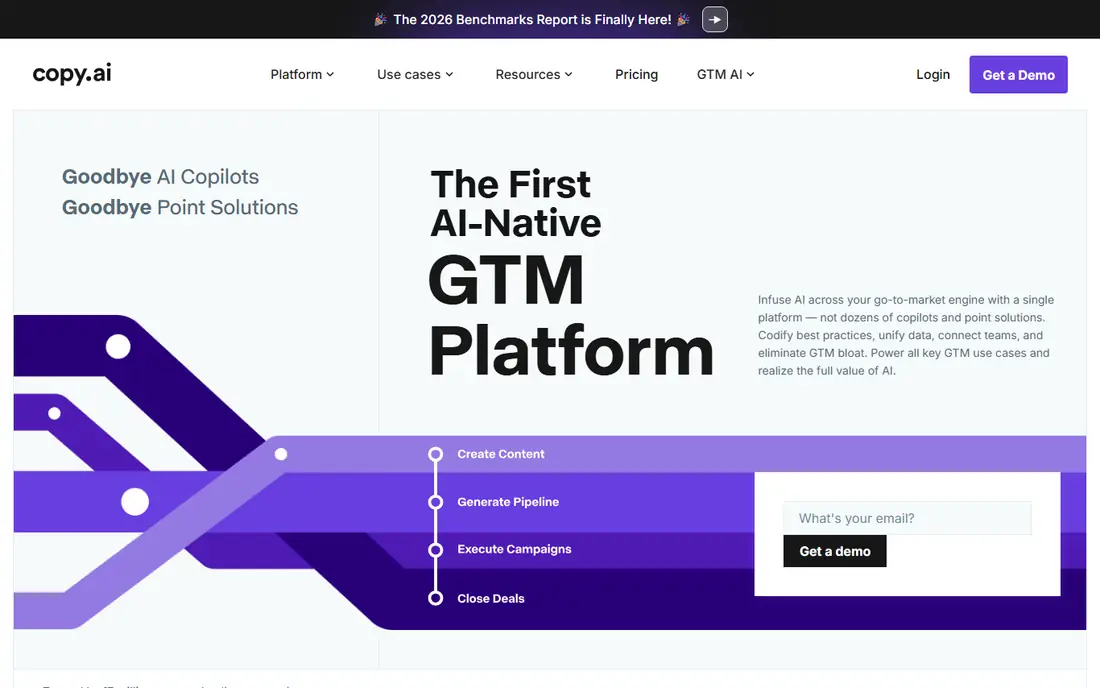
Copy.ai has shifted toward go-to-market workflows, where a team automates repeatable steps such as prospect research, email drafting, and content repurposing. That focus suits sales and marketing teams that run the same playbook many times and want each run to take less manual effort.
Long-form publishing is not its strongest area compared with Jasper, and the most capable workflow tiers are priced well above the entry plan. Copy.ai fits best when the job is volume and repeatability, not a single polished long article.
- Workflow automation for repeatable marketing tasks
- Short copy and prospecting support
- Lower entry price than Jasper
- Less suited to long-form brand publishing
- Higher workflow tiers cost far more
Writesonic covers content creation and adds AI search visibility work, such as tracking how a brand appears in AI answers and suggesting page fixes. That combination suits teams that are starting to care about AI search results as well as traditional search rankings.
The entry price sits above simpler writing tools, so teams that only need drafting may find better value elsewhere. Writesonic makes sense when one subscription needs to cover both content production and AI visibility measurement.
- Content creation plus AI visibility tools
- Landing page and ad copy support
- Action-oriented fixes
- Higher entry price than some content tools
- Breadth can dilute depth
Semrush is a search suite first, with AI visibility tools layered on top. Teams that already track rankings, keywords, and competitors can add AI answer tracking without learning a separate platform. Its large prompt and query datasets also give context that a standalone tracker may lack.
The price reflects that breadth. The base plan is already costly for a small team, and the AI visibility toolkit is an extra charge per domain in many cases. Semrush fits teams that will use the full SEO suite daily, not teams that only want a simple AI visibility score.
- Deep search data
- AI visibility toolkit as an add-on
- Broad keyword and competitor research
- High starting price
- AI visibility features add cost on top of the base plan
Mailchimp remains a practical pick for small teams whose main channel is email. Its AI features help with subject lines, send-time suggestions, and content drafting, without forcing a team to learn a full marketing suite. The free tier also lets a new business start list building at no cost.
The limit is scope. Mailchimp does not match HubSpot on CRM depth or Jasper on long-form content, and pricing grows as a contact list grows. It is a good fit when email is the core channel, and a weaker fit when a team needs deep automation across many channels.
- Easy email building
- AI-assisted subject lines and content
- Free tier for small lists
- AI depth is narrower than dedicated platforms
- Costs rise with contacts
ActiveCampaign suits teams that live in email automation. Its visual automation builder handles welcome series, lead nurturing, and post-purchase flows, and AI features help draft campaigns and segment audiences. A built-in CRM keeps sales follow-up close to marketing activity.
There is no free plan, so a team must pay to test it properly, and entry pricing for email plans has moved upward in recent comparisons. ActiveCampaign earns its place when automation is a daily job, not an occasional task.
- Strong automation builder
- AI-assisted campaign creation
- Segmentation and CRM features
- No free plan
- Pricing has risen for email-led plans
AdCreative.ai does one job well: generating ad creatives and scoring them before spend. For paid social and display teams, that speed matters, since testing many variants by hand is slow and costly. Platform support covers the major ad channels, so creatives can be sized and adapted without a separate design step.
The narrow focus is also the limit. It is not a content platform, an email tool, or a CRM, so teams will still need other tools for the rest of marketing. Use AdCreative.ai as a specialist layer on top of a broader platform, not as the whole stack.
- Fast ad creative generation
- Creative scoring
- Support for major ad platforms
- Narrow focus on ads
- Trial is short and credit-limited
Canva earns its place because much of marketing is visual. Its AI studio, known as Magic Studio, helps generate images, resize designs, draft copy, and create short video, all in a tool most team members can learn quickly. The free plan covers basic design, which suits small teams and solo marketers.
Canva does not replace email automation, CRM, or search tools. Its strength is making marketing assets fast and consistent, especially for social posts, presentations, and ads. Pair it with an email or CRM platform for a complete setup.
- Easy visual design
- AI tools for images, video, and copy
- Free plan for basic use
- Not a full marketing automation platform
- Advanced AI features need a paid plan
How we picked these
We compared official feature pages, pricing pages, and public pricing comparisons checked in October 2026, and kept only platforms that are live and still sold for marketing work. We favored a mix of all-round suites and specialist tools, and we left out narrow chatbots that do not cover a marketing workflow. Where a vendor does not publish a clear starting price, we wrote See website rather than guessing.
What to check before you buy
Start with the channel that drives most of your results. A content platform will not fix weak email automation, and an email tool will not fix poor search visibility. Pick the platform that strengthens your main channel first, then add specialists for the gaps.
Next, check how AI output is reviewed. Generated copy, images, and ad variants still need a human check for accuracy, brand fit, and claims that could mislead buyers. Set a simple review step for anything that goes public, especially pricing, product claims, and health or financial statements. Finally, confirm the billing unit. Seats, credits, contacts, and domains all change the real cost, so model your actual usage for three months before signing an annual plan.
Questions to ask on a trial
- Does the AI use your CRM or site data, or only generic prompts?
- How are credits, seats, or contacts counted on the plan you would buy?
- Can you export your content, lists, and reports if you leave?
Frequently asked questions
What is an AI marketing platform?
An AI marketing platform uses AI across marketing tasks such as content drafting, email creation, ad creative, audience segmentation, and performance reporting. Some platforms are full suites with a CRM, while others focus on one job such as content or ads.
Is HubSpot or Jasper better for AI marketing?
It depends on the job. HubSpot suits teams that need CRM-connected marketing across email, content, and automation. Jasper suits content teams that need many pieces in a consistent brand voice. Teams that need both often use HubSpot as the suite and Jasper for content production.
How much does AI marketing software cost?
Entry prices in this list range from free tiers up to around $140 per month for a full search suite, with many tools in the $29 to $79 per month range. Annual billing usually lowers the monthly figure, but credits, seats, and contacts can change the total.
Can AI write all my marketing content?
AI can draft quickly, but it still needs human review for accuracy, tone, and claims. The best results come from a human brief, an AI draft, and a human edit, rather than publishing raw output. That review step matters most for regulated topics and product claims.
Do I need a separate AI visibility tool?
Not always. Semrush and Writesonic include AI visibility features, while standalone trackers give deeper answer-engine data. Start with the visibility features inside a suite you already pay for, and move to a specialist tracker only if AI answers become a major traffic source.
What should small businesses start with?
Start with one platform for your main channel, such as Mailchimp for email or Canva for visual content, plus a free tier where available. Add a content or search tool only when the first platform is in regular use and the next bottleneck is clear.
Sources
See where you really rank - block by block
ProMapRanker scans Google Maps across a grid of your service area. Simple monthly plans from $19, white-label on every plan.
Start freeKeep reading
 wpforms alternatives
Best WPForms Alternatives in 2026
We compare 9 wpforms alternatives for WordPress forms, with free and paid options, current pricing notes, and honest limits for small business sites in 2026.
Read → windows task scheduler alternatives
Best Windows Task Scheduler Alternatives in 2026
Looking for Windows Task Scheduler alternatives? We compare 9 schedulers for Windows and cross-platform work, from free tools to enterprise automation.
Read → which ai video service is best
Which AI Video Service Is Best in 2026
which ai video service is best? We compare 10 legitimate AI video services on price, avatars, editing and output quality to help you pick the right tool.
Read →