 ProMapRanker
Top 6 AI Key Value Databases, Compared on Price (2026)

Managed NoSQL with vector support on Azure · Pricing starts at: See website
Direct answer
For managed NoSQL with vector support on Azure, Azure Cosmos DB is where this list starts. Listed starting prices: Redis Enterprise from $5 a month. Alternatives: MongoDB Atlas for document model with managed cloud operations, and Redis Enterprise for live AI agents and apps. Prices, free plans and limits for all 6 tools follow.
ProMapRanker put together this guide to AI key value databases for readers who want a clear shortlist without reading every vendor page. It compares 6 tools on starting price, free plans, who each one suits and where each one falls short.
Key takeaways
- Number one here is Azure Cosmos DB, a fit for managed NoSQL with vector support on Azure.
- Redis Enterprise has the lowest monthly starting price in this list: $5 per month.
- Aerospike suits live AI at scale.
- Redis Enterprise comes with a trade-off: memory-first design can raise infrastructure cost.
- Only Redis Enterprise offers a free plan among these 6 tools.
Quick comparison
| Pick | Great for | Pricing starts at | Free tier | |
|---|---|---|---|---|
| Azure Cosmos DB | Managed NoSQL with vector support on Azure | See website | Not stated | Visit |
 MongoDB Atlas | Document model with managed cloud operations | See website | Not stated | Visit |
 Redis Enterprise | Live AI agents and apps | $5 a month | Yes | Visit |
 Amazon DynamoDB | Serverless completely managed key-value workloads | See website | Not stated | Visit |
 Couchbase Capella | Unified operational data product for AI | See website | Not stated | Visit |
 Aerospike | Live AI at scale | See website | Not stated | Visit |
AI Key Value Databases compared in detail
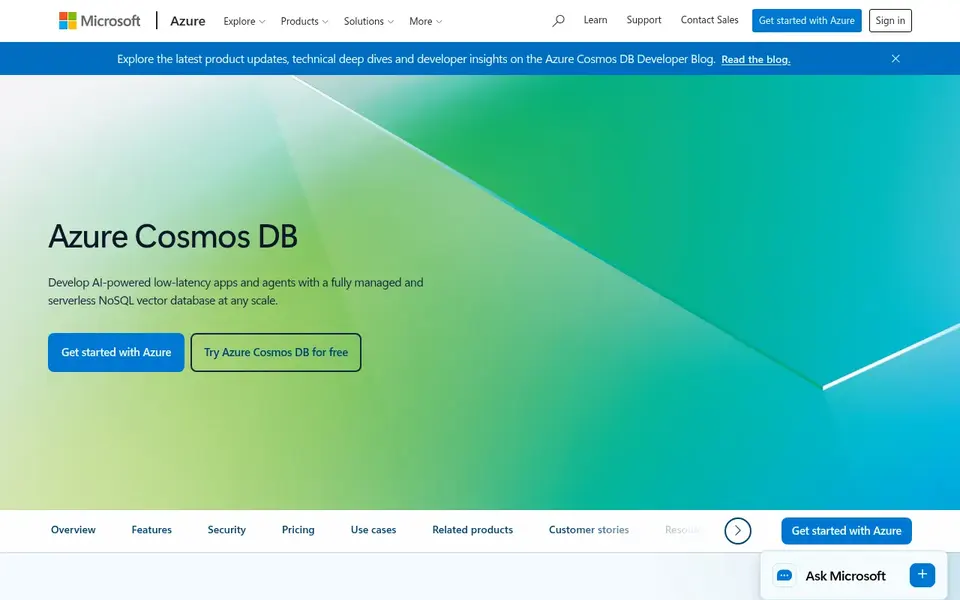
Azure Cosmos DB was built for managed NoSQL with vector support on Azure. If your workloads are straightforward key lookups or you operate primarily outside Azure, a lighter choice may be preferable.
Drawbacks to consider: Configuration choices affect cost and performance.
No starting price is listed for Azure Cosmos DB here; confirm pricing on the vendor site. As for free access: Not stated.
- Vector database capabilities
- Completely managed serverless NoSQL
- Best fit within the Azure ecosystem
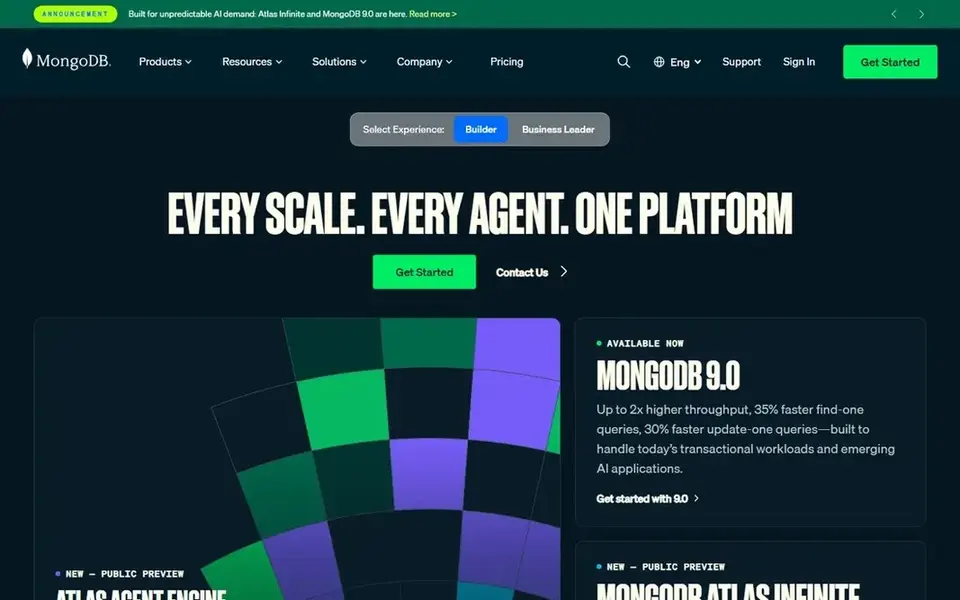
MongoDB Atlas is designed for document model with managed cloud operations. MongoDB Atlas is the managed cloud database service for MongoDB, built around a document model instead of a pure key-value store.
Drawbacks to consider: Key-value access is indirect via documents.
It emphasizes operational simplicity, resilience, scalability, and enterprise-grade security. In practice, teams that require to store rich, nested records alongside AI features commonly prefer this model since related data stays together in one document, reducing the need for complicated joins. Pricing for MongoDB Atlas is not stated here, so ask the vendor for current figures. As for free access: Not stated.
- Adaptable document model
- Built-in resilience and security features
- Index design affects performance
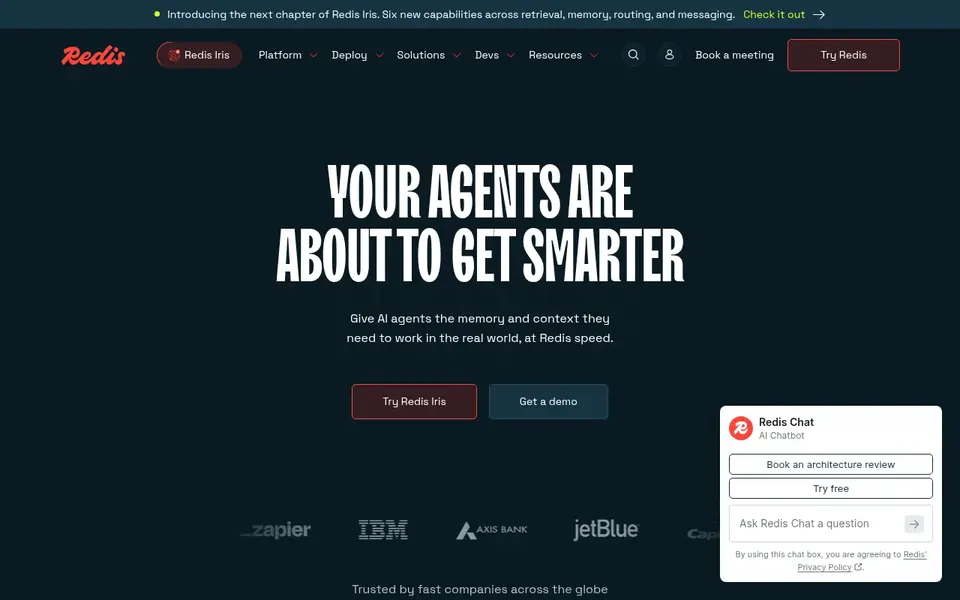
Redis Enterprise is a good fit for live AI agents and apps. It keeps data in memory for quick access and supports a set of data structures beyond straightforward keys and values.
As for the details, since Redis is memory-first, large datasets can become expensive to hold in RAM, and persistence choices need careful configuration for durability guarantees. Starting cost for Redis Enterprise: $5 per month. Free access exists with Redis Enterprise.
Where it falls short: Memory-first design can raise infrastructure cost.
- Live data access
- Enterprise-grade deployment choices
- Advanced clustering layers on operational complexity
Pick Amazon DynamoDB if this describes you: serverless completely managed key-value workloads. Pick DynamoDB for serverless operations and predictable scale.
Worth adding: teams already on AWS frequently choose DynamoDB since it removes server management and scales with demand, making it a practical fit for AI application state, session data, and feature lookups. DynamoDB rewards careful access-pattern design, and changing patterns later can need data remodeling. This comparison lists no price for Amazon DynamoDB; ask the vendor. Trial and free access: Not stated.
Honest limits: Complicated queries may need extra services.
- Automatic multi-region replication
- Completely managed and serverless
- Access patterns must be designed upfront
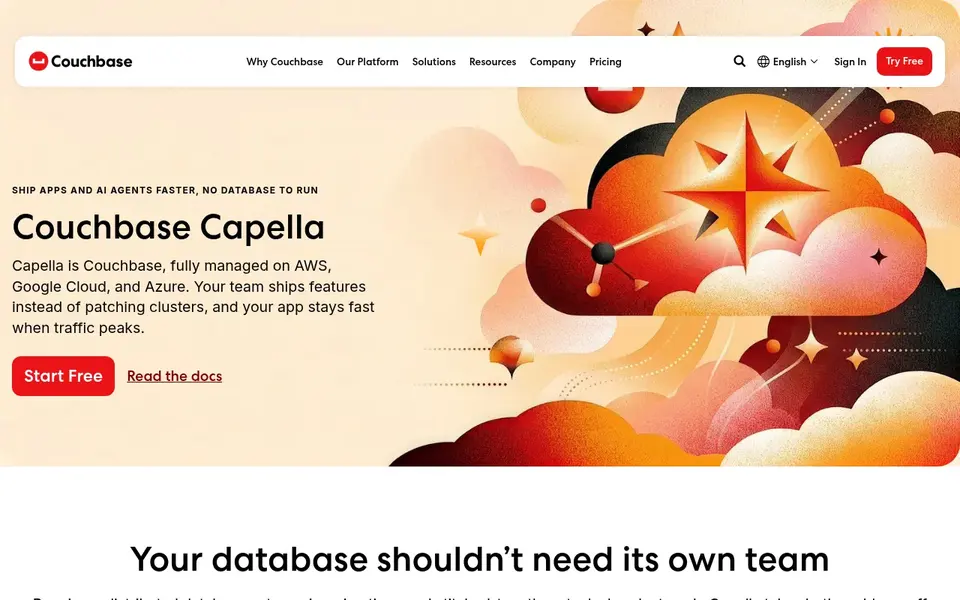
For unified operational data product for AI, Couchbase Capella is a natural candidate. Couchbase Capella is a completely managed operational data product that runs on AWS, Google Cloud, and Azure.
Watch-outs: Broader feature set can mean a steeper ramp-up time.
In practice, evaluate whether you will actually use SQL, analytics, or mobile sync before committing. This comparison lists no price for Couchbase Capella; ask the vendor. Free options: Not stated.
- Completely managed on major clouds
- Mobile sync included
- Best value when several capabilities are used
Aerospike was built for live AI at scale. Aerospike is a live database positioned for AI workloads and trusted in demanding environments. Choose Aerospike when live performance at scale is the dominant requirement and you can invest in the operational setup.
Where it falls short: Specialized architecture needs planning.
Smaller teams without deep infrastructure experience may prefer a completely managed service. In practice, Aerospike's specialized architecture can need more upfront planning than a general-purpose managed database, and its operational model differs from mainstream systems. Pricing for Aerospike is not stated here, so ask the vendor for current figures. Trial and free access: Not stated.
- Live database design
- Capable fit for AI serving layers
- Operational model differs from mainstream databases
How we chose
Selection started from tools commonly considered for AI key value databases, then narrowed to 6 that have clear pricing information or a clear quote process. Treat prices as a snapshot: vendors change plans often, so check the vendor site for the figure that applies today. Order on the page follows fit for the typical buyer first, then price transparency and free access. Your own requirements should decide the final pick.
Pre-purchase checklist
- Get a written quote from Azure Cosmos DB, MongoDB Atlas, Amazon DynamoDB and others; the list shows no starting price for them.
- Look at the free plan from Redis Enterprise closely: its caps decide whether it is usable for real work.
- Before choosing Azure Cosmos DB, weigh its main limit: configuration choices affect cost and performance.
- Compare total cost, not headline price: for Redis Enterprise, add extra seats, add-ons and any usage-based charges.
- See whether Azure Cosmos DB offers onboarding or training, and whether it is included in the price.
Frequently asked questions
Can I try these tools before paying?
Often, yes. Redis Enterprise has a free plan. Use your own data and a real task during the test, and check what the free tier or trial limits before you rely on it.
How do managed services like DynamoDB and Cosmos DB differ from self-managed choices?
Managed services deal with provisioning, scaling, backups, and replication, reducing operational burden. Self-managed or commercially supported choices like Redis Enterprise and Aerospike can offer more control over architecture and tuning. The right choice relies on team skills and compliance needs.
What is the cheapest option for AI key value databases in this list?
On published monthly entry prices, Redis Enterprise is the lowest here at $5 per month. Entry price is only part of the cost, because seats, add-ons and billing terms can change the total. All 6 picks in this AI key value databases comparison list a starting price, free plan details and the main limits on their cards above.
Which AI key value databases have a free plan?
Redis Enterprise is the only tool in this list with a free plan. Free plans usually cap users, projects or features, so check the limits on the vendor page.
Can these databases store vector embeddings for AI retrieval?
Some choices, including Couchbase Capella and Azure Cosmos DB, explicitly list vector search capabilities. Others may support vectors through extensions or adjacent services.
What makes a key-value database right for AI workloads?
AI workloads commonly need quick lookups for features, sessions, embeddings, or agent state. As for the details, a suitable key-value database provides low latency, predictable scaling, and managed operations.
Sources
See where you really rank - block by block
ProMapRanker scans Google Maps across a grid of your service area. Simple monthly plans from $19, white-label on every plan.
Start freeBrowse all guides
← Best Software Development Prompts (2026)Best AI Load Testing Tools in 2026 →
 best no-code platforms for building ai apps
Best No-Code Platforms for Building AI Apps in 2026
6 best No-Code platforms for building AI apps, with entry costs, free tiers and the buyer each one serves. Limits and pricing notes included. Read the profiles.
Read → best ai-powered no-code app builders
Best AI-Powered No-Code App Builders (2026)
Best AI-Powered No-Code app builders: 5 contenders ranked by fit, with entry costs and free tiers. Includes honest limits for each tool. Read the profiles.
Read → best ai graph databases
AI Graph Databases in 2026: Top 5 Compared
5 best AI graph databases, with entry costs, free tiers and the buyer each one serves. Each profile ends with a plain caveat. Current for November 2026.
Read → local data aggregators
Local Data Aggregators: A Complete Guide
Everything you need to know about local data aggregators: what it is, why it matters for local SEO, and exactly how to act on it.
Read → sonarqube alternatives
SonarQube Alternatives in 2026
Compare the best sonarqube alternatives in 2026, with code quality checks, security scanning, quality gates, coverage tracking, and self hosted options.
Read → bright local brighton
Bright Local Brighton: A Complete Guide
Everything you need to know about bright local brighton: what it is, why it matters for local SEO, and exactly how to act on it.
Read →More in Developer Tools · All guides A to Z by date · Latest guides