 ProMapRanker
Best AI Investing Apps in 2026


Automated tax aware portfolios · Pricing starts at: 0.25% per year
Key takeaways
- Automated portfolios suit most long term investors, while research tools suit people who want to pick their own stocks.
- Wealthfront and Betterment both charge 0.25 percent per year for automated investing, while Schwab Intelligent Portfolios charges no advisory fee but requires a higher minimum.
- Magnifi and Danelfin are research assistants, not managed portfolios, so you still make the final trading decision.
- Trade Ideas and Tickeron aim at active traders and cost far more than a basic robo advisor.
- This is not financial advice; trading carries risk, and past performance does not guarantee future results.
Quick comparison
| Pick | Great for | Pricing starts at | Free tier | |
|---|---|---|---|---|
| Wealthfront | Automated tax aware portfolios | 0.25% per year | No | Visit |
 Betterment | Goal based automated investing | 0.25% per year | No | Visit |
 Schwab Intelligent Portfolios | No advisory fee portfolios | See website | No | Visit |
 Magnifi | Conversational investing research | See website | Yes | Visit |
 Danelfin | AI stock scores | See website | Yes | Visit |
 Trade Ideas | Active trading signals | $89 per month | Free trial | Visit |
 Tickeron | Pattern and AI trading tools | See website | Free trial | Visit |
 Robinhood | Low cost self directed trading | Free | Yes | Visit |
The best ai investing apps
We compared automated portfolios, research assistants and active trading tools, because the best ai investing platform for one person can be a poor fit for another. Use this list to match the tool to the job you actually want done.
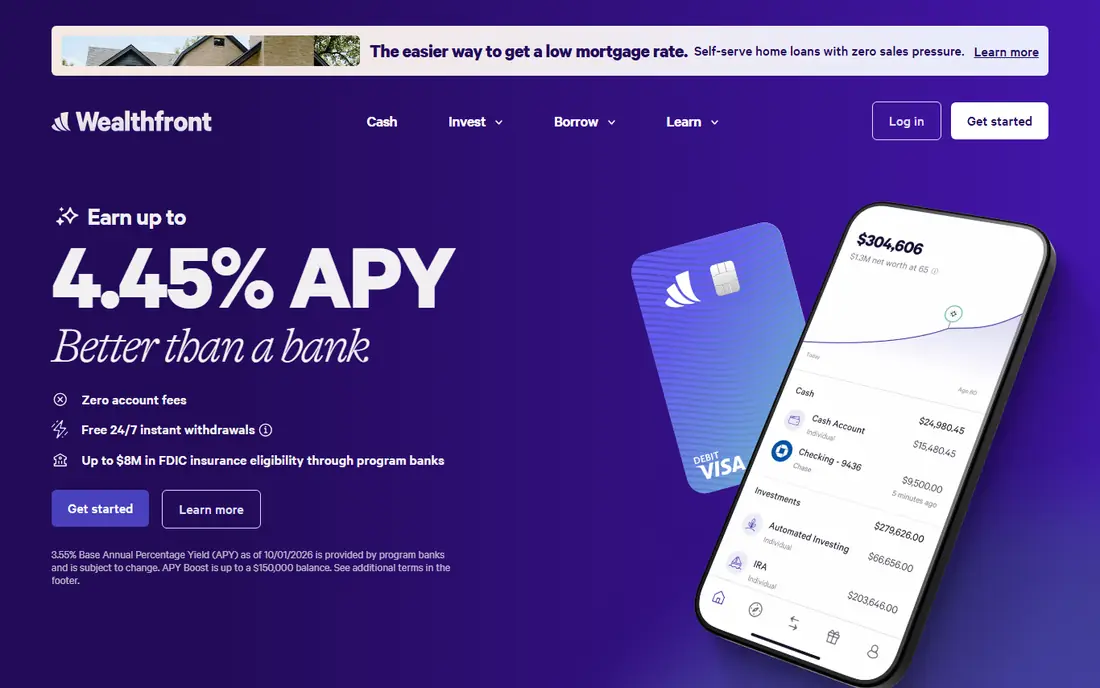
Wealthfront builds a diversified portfolio from your goals and risk tolerance, then manages it without asking you to pick individual stocks. Its tax loss harvesting feature looks for chances to sell a losing position and replace it with a similar one, which can reduce taxable gains in a taxable account. That feature matters most for investors with taxable accounts, and less for people who only hold retirement accounts.
The tradeoff is control. You choose a risk level and a goal, but you do not choose each holding. If you enjoy researching individual companies, this will feel hands off, and that is the point. Wealthfront suits investors who want a disciplined plan and are happy to let automation handle rebalancing and tax management.
- Daily tax loss harvesting on taxable accounts
- Automatic rebalancing
- Wide range of account types
- No human advisor access on the base plan
- Higher minimums apply for some advanced features

Betterment lets you set up a separate goal for retirement, a home deposit or a holiday fund, and it builds a portfolio for each one. That structure helps when different goals have different time horizons, because a short term goal should not carry the same risk as a retirement goal decades away. Automatic deposits and rebalancing keep the plan moving without weekly attention.
The main catch is cost at very small balances, where a flat monthly fee can be a larger share of your account than the percentage fee suggests. Check the current fee schedule for balances under 20,000 dollars before you sign up. For most goal focused investors with steady deposits, Betterment remains a clear and easy to use choice.
- Separate portfolios for separate goals
- Automatic rebalancing
- Tax loss harvesting on the digital plan
- A monthly fee can apply to small balances
- Human advisor access costs more on the premium plan
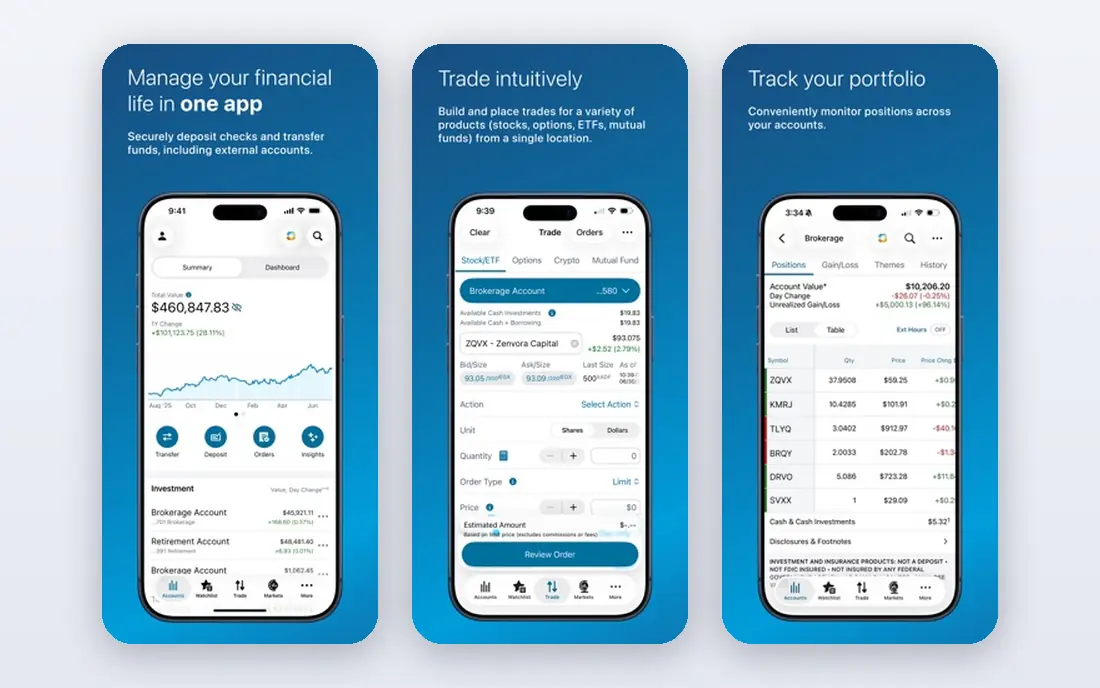
Schwab Intelligent Portfolios charges no advisory fee, which makes it stand out among large robo advisors. You answer questions about goals and risk, and Schwab builds a portfolio of exchange traded funds, then rebalances it over time. The service fits investors who already use Schwab or want a large, established firm behind their portfolio.
The catch is the cash allocation. A portion of your portfolio sits in cash, and that cash earns interest but does not grow the way invested funds can. The minimum investment is also higher than the no minimum options on this list. If you have at least 5,000 dollars to start and you value a zero advisory fee, this is a strong option.
- No advisory fee
- Automatic rebalancing
- Access to Schwab banking and brokerage services
- Higher minimum investment than some rivals
- Part of the portfolio is held in cash
Magnifi works like a research assistant you can question in plain language. You can ask about a stock, a theme or your own holdings, and it returns analysis and comparisons rather than a simple price chart. That approach suits investors who want to understand a company before they buy, without reading a full analyst report first.
It does not replace judgment. Magnifi can surface ideas and flag gaps in a portfolio, but you decide what to buy and when to sell. The free tier is a sensible way to test whether conversational research fits your habits. If you prefer a managed portfolio, pick Wealthfront or Betterment instead and use Magnifi only as a second opinion.
- Plain language questions about stocks and portfolios
- Tools to compare holdings
- Direct investing available
- Research help is not a managed portfolio
- Subscription pricing varies by plan
Danelfin gives each stock a score from 1 to 10 based on its data model, with a breakdown of the factors behind that score. That format is useful for a quick screen, because you can compare several candidates without opening a dozen tabs. It also helps beginners learn which factors, such as momentum or valuation, are driving a particular rating.
The honest limit is that a score reflects a model, not a guarantee. Markets move on news, earnings surprises and interest rate changes that no score can predict with certainty. Use Danelfin to narrow a shortlist, then read company results and news before you trade. Treat any tool that promises certain winners with deep suspicion.
- Simple 1 to 10 AI score for stocks and funds
- Explanations for each score
- Coverage of US and international stocks
- A score is not a recommendation
- Full features require a paid plan
Trade Ideas is built for traders who watch the market during the day. Its scanner flags unusual price and volume moves in real time, and its AI assistant, Holly, generates trade ideas based on tested strategies. Backtesting lets you check how a strategy would have performed on past data before you risk real money.
That power comes with cost and complexity. At 89 dollars per month and up, it only makes sense if you trade often enough for faster signals to matter. Beginners can feel overwhelmed by the number of windows, alerts and settings. This is a specialist tool, not a starter app, and it suits active traders who already understand risk management.
- Real time stock scanning
- AI generated trade ideas
- Backtesting tools for strategies
- Expensive for casual investors
- Steep learning curve for beginners
Tickeron scans charts for patterns and trends, then presents AI generated outlooks for stocks, exchange traded funds and other assets. For a trader who uses charts, that can save time, because the software highlights formations that would take hours to find by hand. It also covers a wide range of markets in one place.
The catch applies to every prediction tool. A pattern that worked in the past can fail when market conditions change, so treat Tickeron as a screening aid, not a signal to follow blindly. Check the current plan details carefully, because features are split across tiers. It fits chart focused traders who already have a plan for position size and stop losses.
- Pattern recognition on charts
- AI trend predictions
- Tools for stocks, funds and crypto
- Predictions are estimates, not certainties
- Pricing tiers can be confusing
Robinhood is the best ai investing app for people who want to trade themselves at low cost. The app is simple, trades in stocks and exchange traded funds carry no commission, and fractional shares let you start with small amounts. Its Cortex AI features add news summaries and portfolio insights, but those sit inside the paid Gold tier.
Robinhood is not a managed portfolio service, and its research tools are thinner than Magnifi or Danelfin. That matters if you want guidance, because you will need to bring your own ideas. For confident self directed investors who value low cost and a clean app, it remains a practical choice, provided you keep position sizes sensible.
- Commission free stock and fund trades
- Simple mobile app
- Fractional shares available
- AI features sit behind the Gold subscription
- Limited research depth compared with specialist tools
How we picked these
We compared official feature pages, pricing pages and app store listings for automated advisors, research tools and trading platforms, and we kept only products that exist and work in October 2026. We grouped them by job, because an automated portfolio and a day trading scanner answer different questions. We favoured tools with clear pricing, a stated method or model description, and a free tier or trial where one is offered.
We did not claim hands on testing that did not happen, and we did not invent returns, accuracy figures or user counts. Where pricing varies by plan or is not published clearly, we wrote See website so you can check the current figure before you pay. This is not financial advice; trading carries risk, and you should only invest money you can afford to leave invested for your stated time horizon.
What to check before you choose an AI investing tool
Start with the job, not the marketing. If you want a portfolio managed for you, shortlist Wealthfront, Betterment and Schwab Intelligent Portfolios, and compare fees, minimums and tax features. If you want to pick stocks yourself, shortlist Magnifi, Danelfin and Robinhood, and compare research depth against cost. Active traders should weigh Trade Ideas and Tickeron against how often they actually trade, because a monthly subscription only pays for itself with regular use.
Check fees in full, including advisory fees, subscription costs and any account fees, and check whether a free tier limits the features you need most. Read the privacy policy and the description of how the AI model works, and be wary of any tool that hides its method completely. Finally, confirm account protection and regulation status on the vendor site, and start small while you learn how a tool behaves in real market conditions.
Frequently asked questions
What is the best ai investing app for beginners?
For most beginners, an automated portfolio from Betterment or Wealthfront is the easiest start, because you answer questions about goals and risk and the service builds the portfolio. Self directed apps like Robinhood suit beginners only if they are willing to learn stock research first. Start with small, regular deposits and a long time horizon.
What is the best ai investing platform for hands off investing?
Wealthfront, Betterment and Schwab Intelligent Portfolios are the strongest hands off options here, because they build, rebalance and monitor a diversified portfolio for you. Schwab charges no advisory fee but holds more cash, while Wealthfront and Betterment charge 0.25 percent per year. Choose based on minimums, tax features and whether you already bank with Schwab.
Are the best ai investing tools free?
Some research tools, including Magnifi and Danelfin, offer free tiers with limited features, and Robinhood offers commission free trades. Managed portfolios are rarely free, because the provider charges an advisory fee or holds cash that earns them interest. Always check what the free tier excludes before you rely on it.
What is the best ai tool for investing in individual stocks?
Magnifi suits investors who like asking questions in plain language, while Danelfin suits investors who want a quick numerical score to compare stocks. Neither tool makes the decision for you, and both work best as a screen before you read company results. Combine a research tool with a low cost broker for execution.
Can AI investing apps guarantee returns?
No tool on this list can guarantee returns, and any app that promises them should be avoided. AI models analyse past data and current signals, but markets react to new information in ways no model can predict with certainty. Use AI tools to organise research and manage a portfolio, not as a promise of profit.
What is the best ai app for investing for retirement?
For retirement, a managed portfolio with automatic rebalancing and tax aware features is usually the calmer choice, and Wealthfront and Betterment both support retirement accounts. Keep contributions regular, match risk to your time horizon, and review the plan once a year rather than reacting to daily market news. This is not financial advice; trading carries risk.
Sources
See where you really rank - block by block
ProMapRanker scans Google Maps across a grid of your service area. Simple monthly plans from $19, white-label on every plan.
Start freeKeep reading
 zoom alternatives
Best Zoom Alternatives in 2026
Compare Zoom alternatives in 2026, with free meeting limits and prices, so you can pick the best alternative to Zoom for your team, class, or community.
Read → which software is best for remote work
Which Software Is Best for Remote Work in 2026
Answering which software is best for remote work, we compare Slack, Zoom, Asana, Notion, Teams and more, with pricing and honest tradeoffs in 2026 now.
Read → which ai tool is best for content writing
Which AI Tool Is Best for Content Writing in 2026
Wondering which ai tool is best for content writing? We compare ChatGPT, Claude, Jasper, Grammarly, and more on price, quality, and best use in 2026 now.
Read →