 ProMapRanker
Best AI Companies to Work in 2026


Foundation model and consumer product work · Pricing starts at: See website
Key takeaways
- This is a guide to employers doing notable AI work, not a verified ranking, and the right choice depends on the kind of work you want to do.
- Foundation model labs such as OpenAI, Anthropic, and Google DeepMind suit researchers and engineers who want to work close to model development.
- NVIDIA, Microsoft, and Meta suit people who want AI work at very large scale, across hardware, cloud, or consumer products.
- Smaller specialists such as Cohere and Databricks suit people who want enterprise or data-focused AI work without joining the largest firms.
- Team, manager, location, and day-to-day work matter more than a company name, so check current job listings and team pages before applying.
Quick comparison
| Pick | Great for | Pricing starts at | Free tier | |
|---|---|---|---|---|
| OpenAI | Foundation model and consumer product work | See website | No | Visit |
 Anthropic | Safety-focused model research | See website | No | Visit |
 Google DeepMind | Long-term AI research at scale | See website | No | Visit |
 NVIDIA | AI hardware and infrastructure work | See website | No | Visit |
 Microsoft | AI across cloud and workplace products | See website | No | Visit |
 Meta | Open model and consumer AI work | See website | No | Visit |
 Cohere | Enterprise language model work | See website | No | Visit |
 Databricks | Data and AI platform work | See website | No | Visit |
The best ai companies to work
The companies below are all doing significant AI work in 2026, but they offer very different jobs. Some build foundation models, some build the chips and platforms those models run on, and some turn AI into products for businesses or consumers. We describe the work at each one in plain terms, without scores or pay figures, so you can shortlist by fit rather than by headline. This is not a verified ranking, and hiring, teams, and roles change often.
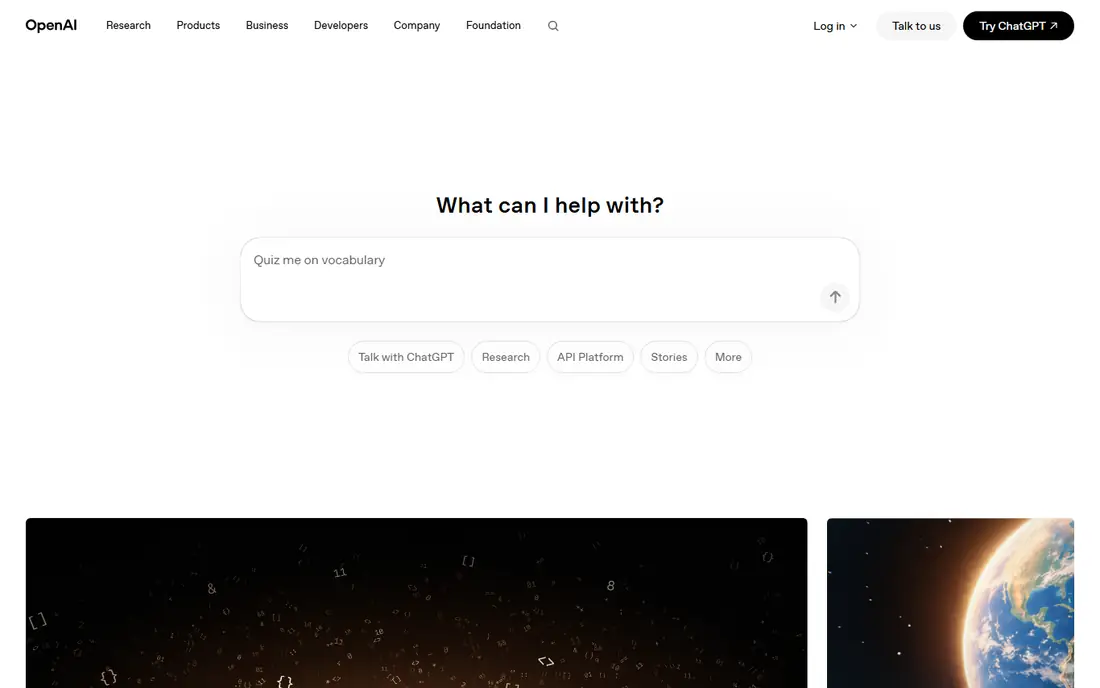
OpenAI is best known for ChatGPT and its GPT models, and working there usually means being close to both research and product. Research roles focus on model capability, safety, and evaluation, while product and engineering roles turn those models into tools people use every day. That closeness to a product with a huge user base is the main draw for many applicants.
The trade-off is selectivity and pace. OpenAI hires carefully, and teams shipping widely used products work under public attention that smaller labs do not face. If you want your work to reach many users quickly, and you are comfortable with that pressure, OpenAI belongs at the top of your list. If you prefer quieter research time, a research-heavy lab may suit you better.
- Work spans research, model development, and widely used products
- Large scope across text, image, audio, and video
- Very competitive hiring
- Pace and workload can be intense in fast-moving product areas

Anthropic builds the Claude family of models, with a public focus on safety, reliability, and careful deployment. That focus shapes the work: research roles often deal with how models reason, how they fail, and how to make their behavior more predictable, while product roles serve businesses that need dependable AI help for coding, writing, and analysis. For people who care about responsible deployment, that framing is a genuine difference, not just marketing.
The company is smaller than Google, Microsoft, or Meta, so role choice in areas outside core research and engineering can be narrower. It is also a selective employer. Still, if safety and enterprise reliability are what draw you to AI work, Anthropic is one of the clearest fits in this list.
- Strong focus on safety, reliability, and reasoning
- Claude is widely used in enterprise settings
- Research-led culture
- Smaller than the largest tech employers, so fewer roles in some functions
- Hiring is selective
Google DeepMind is the research organization behind Gemini and a long line of AI breakthroughs, from games to science. Working there can mean pure research, applied research tied to a product, or engineering that supports large model training and deployment. The scale of computing and data available is a real advantage for researchers tackling hard problems.
Size cuts both ways. DeepMind sits inside a very large company, so your day-to-day experience will depend heavily on your team, manager, and project. Some teams feel like a focused lab, while others feel like part of a large product organization. Check the specific team and role, not just the DeepMind name, before you decide.
- Deep research history across many areas of AI
- Access to large computing resources
- Gemini work spans research and products
- Large organization, so team experience varies a lot
- Research roles are highly competitive
NVIDIA makes the graphics processors and systems that power much of modern AI training and inference, along with the software that runs on them. Working there can mean chip design, systems engineering, software for AI workloads, or research into new computing approaches. If you want to work on the layer that makes large models possible, rather than on the models themselves, NVIDIA is the most direct choice.
The work is deeply technical, and non-engineering roles exist but are not the center of the company in the same way as at a consumer product firm. Deadlines tied to hardware releases can also be intense. For engineers who enjoy that depth, NVIDIA offers a kind of influence that few other employers can match.
- Central role in AI computing hardware
- Work spans chips, software, and data center systems
- Strong demand for its platforms
- Hardware cycles and product deadlines can be demanding
- Roles are concentrated in engineering and technical areas
Microsoft offers AI work in more places than almost any other employer here. Copilot features appear across Office products, GitHub, and Windows, while Azure provides cloud AI services to businesses of all sizes. That breadth means roles for researchers, engineers, designers, product managers, sales engineers, and support specialists, in many locations.
The catch is variation. Microsoft is a huge company, and a role in a fast-moving AI team can feel very different from a role in a mature product division. Read the team description, ask about the product stage in interviews, and weigh location and working patterns as carefully as the company name.
- AI work spans Azure, Copilot, and many business products
- Very wide range of roles and locations
- Large enterprise customer base
- Experience varies a lot by team and division
- Large-company process can slow some projects
Meta builds the Llama family of models and puts AI features into Facebook, Instagram, WhatsApp, and its hardware efforts. That mix gives employees two kinds of work: open model research and development, and consumer product work where AI features reach billions of people. For engineers who like shipping to a mass audience, that scale is hard to match.
Meta has changed AI priorities and organization over time, as large firms do, so a role that looks stable today may shift with a new strategy. Candidates should ask about team direction and recent changes during interviews. If open models and consumer scale appeal to you, Meta remains a strong option.
- Llama models and open model work
- AI features across very large consumer apps
- Research and product roles side by side
- Strategy and priorities have shifted over time
- Consumer product work can be fast-paced and public-facing
Cohere builds language models and tools for businesses, with a focus on enterprise needs such as retrieval, search over company documents, and dependable deployment. That focus makes it a good fit for people who want to solve business problems with AI, rather than chase consumer virality. Teams are smaller than at the largest firms, so individual work can have a clearer effect on customers.
The trade-off is scale and role count. Cohere hires fewer people than the giants here, and its public profile is smaller, which matters if you value name recognition. If enterprise AI and customer-facing problem solving appeal to you more than consumer scale, Cohere is worth a close look.
- Clear enterprise focus, including retrieval and business use cases
- Smaller scale than the largest labs
- Work close to customers
- Smaller brand footprint than the largest model labs
- Fewer roles overall
Databricks builds a platform where companies store, process, and analyze data, and then build AI applications on top of it. Working there can mean data engineering, machine learning infrastructure, analytics, or product work for business customers. That data-first view suits people who believe good AI depends on good data pipelines, governance, and tooling, not just on model size.
The work is less visible to the public than a chatbot launch, and some roles are shaped by enterprise customer needs and long sales cycles. If you enjoy platform engineering and helping many companies use AI well, Databricks offers that at a scale few data firms can match.
- Data and AI platform used by many large companies
- Work spans data engineering, machine learning, and analytics
- Strong enterprise customer base
- Platform work can feel less visible than model research
- Enterprise sales cycles shape some roadmaps
How we picked these
We looked at which companies are doing notable, ongoing AI work in 2026, across foundation models, hardware, cloud, consumer products, and enterprise platforms. We kept the list to employers with public AI products and active hiring, and we avoided scores, pay figures, and ranking claims we could not verify. The order here is a reading order, not a verified league table, and the best employer for you will depend on role, team, and location.
How to choose between AI employers
Start with the work, not the logo, and check the team behind the job listing.
Pick a layer of the stack
Decide if you want to build models, build the hardware and platforms models run on, or build products people use. That one choice narrows this list fast, and it predicts your day-to-day work better than any company ranking.
Read the team, not just the company
Look at the team page, recent product releases, and the job description for clues about pace, scope, and ownership. In interviews, ask what the team shipped recently, what it plans next, and how success is measured. A great company with a poor team fit is still a poor fit.
Weigh location, working patterns, and growth
Check where the role is based, how often the team meets in person, and what growth looks like from that role. A role with a clear path, a manager you trust, and a working pattern you can sustain will usually beat a more famous name with a weaker fit.
Frequently asked questions
What is the best AI company in the world to work for?
There is no single answer, because the best employer depends on the work you want to do. Foundation model labs suit researchers, NVIDIA suits hardware engineers, and Microsoft or Meta suit people who want AI at consumer or enterprise scale. Shortlist by role and team, not by a single ranking.
Which AI companies are hiring in 2026?
The companies in this list all have public AI products and active hiring in many roles, but openings change often. Check each company careers page for current listings in your function and location, since a company can be hiring heavily in one team while another team is quiet.
Do I need a PhD to work at an AI company?
Not always. Research roles at labs such as DeepMind or Anthropic often favor advanced research experience, but engineering, product, design, data, and business roles at the same companies hire people with a wide range of backgrounds. Read the job listing for the actual requirements for that role.
Are startups or large companies better for AI careers?
Startups can offer broader ownership and faster learning, while large companies offer scale, resources, and more structured growth. The right choice depends on your stage of career, your tolerance for risk, and whether you prefer depth in one area or breadth across many.
What should I ask in an AI job interview?
Ask about the team shipped work, how models or products are evaluated, what data and computing resources the team has, and how the role grows over time. Also ask about working patterns, on-call duties where relevant, and how the team handles safety and quality checks.
Sources
- https://openai.com
- https://www.anthropic.com
- https://deepmind.google
- https://www.nvidia.com
- https://www.microsoft.com
- https://www.meta.com
- https://cohere.com
- https://www.databricks.com
- https://www.resumeble.com/career-advice/best-tech-companies-to-work-for
- https://www.teamblind.com/post/ai-company-tier-list-rktwq3li
See where you really rank - block by block
ProMapRanker scans Google Maps across a grid of your service area. Simple monthly plans from $19, white-label on every plan.
Start freeKeep reading
 best rank tracking software
Best Rank Tracking Software in 2026
Searching for the best rank tracking software? We compare 8 tools for daily keyword tracking, local rankings, client reports, and competitor checks in 2026.
Read → best platform for ecommerce website
Best Platform for Ecommerce Website in 2026
Find the best platform for ecommerce website builds in 2026. We compare Shopify, WooCommerce, BigCommerce, Wix and more on price, fees and scale for stores.
Read → best math apps
Best Math Apps in 2026: 8 Apps Compared
Find the best math apps for homework, revision, and deeper study in our 2026 comparison of 8 free and paid solvers, courses, and visual tools for students.
Read →