 ProMapRanker
Best AI Agent Builder Platform in 2026

Key takeaways
- n8n and Dify suit teams that want control and self-hosting, while Zapier and Lindy suit teams that want fast setup with existing apps.
- Botpress and Voiceflow are stronger for customer-facing chat and voice agents, with channel support and conversation design tools.
- Langflow is the best developer starting point for prototyping, but it needs technical skill to run in production.
- Pricing units differ across platforms, so compare executions, conversations, credits, and messages against the same task before choosing.
Quick comparison
| Pick | Great for | Pricing starts at | Free tier | |
|---|---|---|---|---|
 n8n | Technical teams that want control and self-hosting | Free | Yes | Visit |
 Zapier Agents | Teams already using Zapier automations | Free | Yes | Visit |
 Botpress | Customer support agents on many channels | Free | Yes | Visit |
 Voiceflow | Designing chat and voice experiences | See website | Yes | Visit |
 Dify | Open-source visual agents with retrieval | Free | Yes | Visit |
 Langflow | Developers prototyping LLM agents fast | Free | Yes | Visit |
 Relevance AI | Sales and research agent workforces | See website | Free trial | Visit |
 Lindy | Plain-language agents for inbox and calendar work | See website | Free trial | Visit |
The best AI agent builder platforms
We compared builder style, hosting options, integrations, pricing units, and the skill level each platform expects. Flowise is not listed here, because it reached end of life on 31 August 2026.
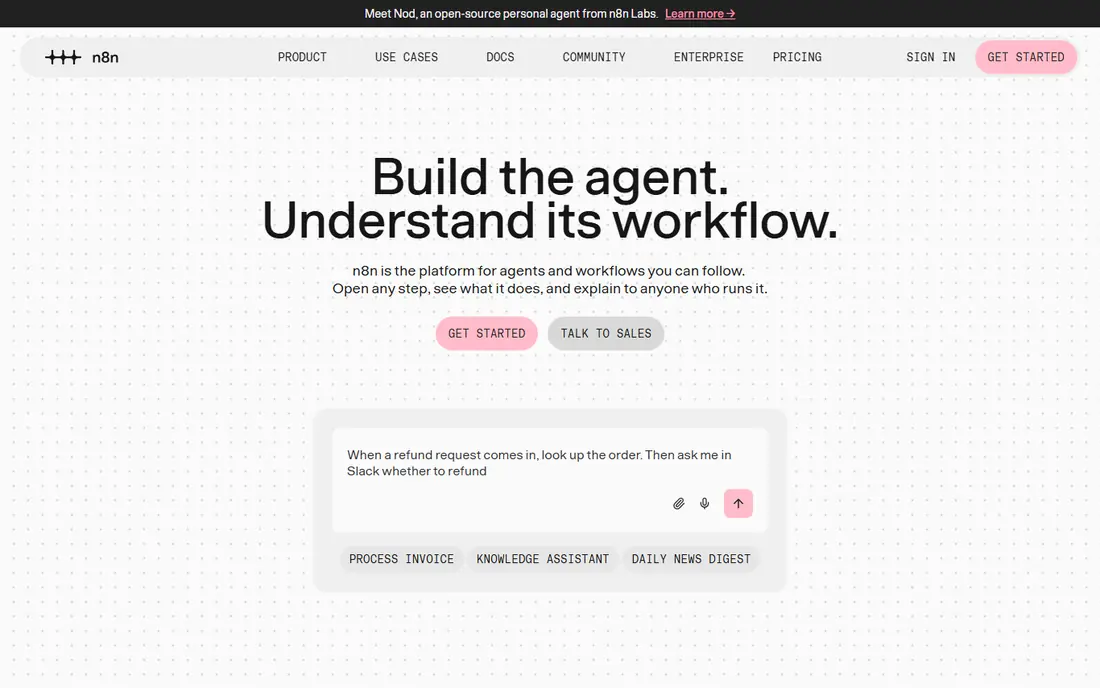
n8n fits teams that want to own their automation stack. The visual canvas covers triggers, app actions, and AI steps, while code nodes allow custom logic when a no-code block is not enough. Self-hosting keeps data and costs under team control, which matters for internal tools and regulated work.
The catch is effort. Self-hosting needs maintenance, updates, and monitoring, and cloud plans charge by executions rather than by user. Teams without a technical owner may move faster on Zapier or Lindy, but teams that can run n8n get a flexible agent builder at a low starting cost.
- Free self-hosted edition
- Visual workflows with code nodes
- Wide app integrations
- Cloud pricing is execution-based
- Setup and upkeep need technical skill
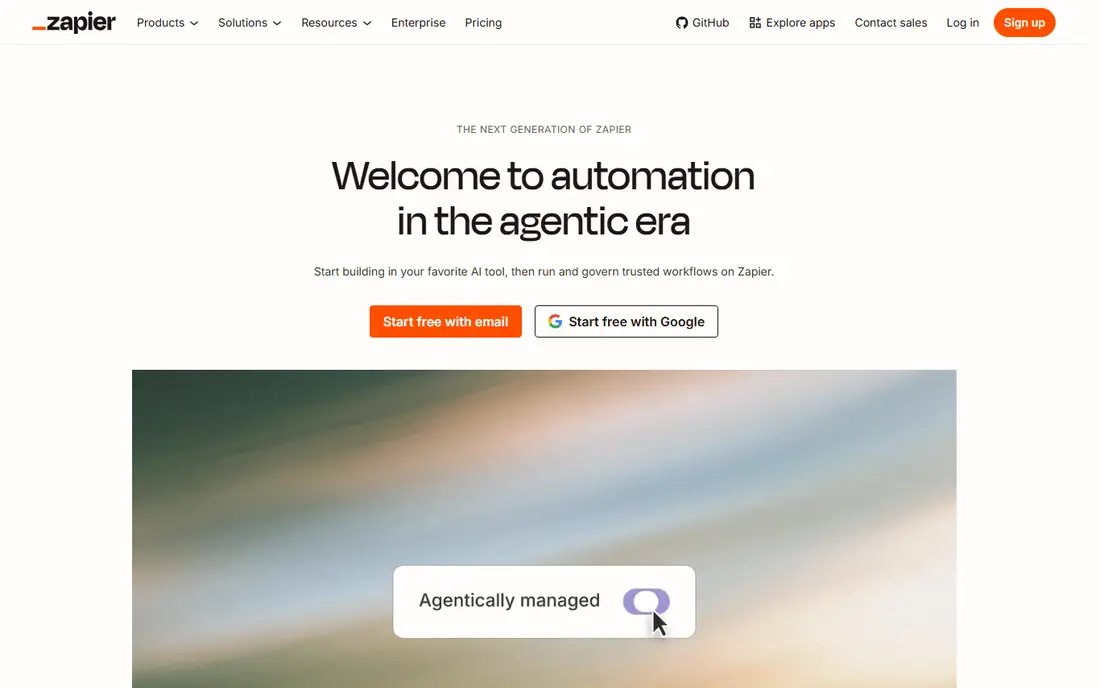
Zapier Agents suit small and midsize teams that already connect apps through Zapier. Agents can read connected tools, take actions, and sit beside existing workflows, so a team does not need a second platform for simple agent tasks. Setup in plain language lowers the barrier for non-developers.
Pricing needs care. Activity counts, tool calls, and model use can add up, and the headline plan price does not always show the full cost of a busy agent. Test one real workflow, watch usage for a month, and only then roll agents out more widely.
- Large app catalog
- Natural-language agent setup
- Fits existing Zaps and data flows
- Costs depend on activities and model use
- Agent limits vary by plan
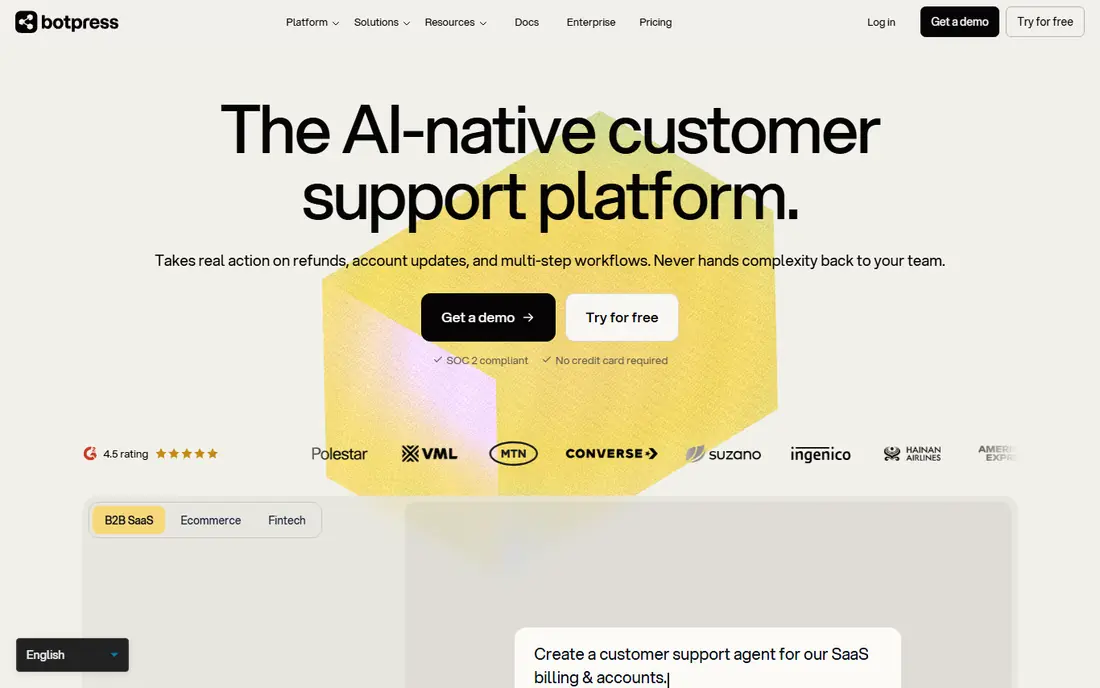
Botpress is a strong pick for support and sales chat agents that must run on several channels. The free tier allows a small number of agents and conversations, which is enough to build and test a real bot. Developers can add custom code and integrations, while non-developers can still design flows visually.
The main limit is conversation pricing. A busy support bot can move past the free allowance quickly, and paid plans are priced for businesses rather than hobby projects. Botpress fits teams with real support volume and a clear channel plan, not users who only need a personal assistant.
- Free tier for starting
- Chat agents for web, messaging, and other channels
- Developer controls
- Paid plans rise steeply with conversations
- Advanced setups need technical skill
Voiceflow suits customer experience teams that design conversations as flows, not as single prompts. The canvas makes branching, prompts, and handoffs visible, which helps teams review an agent before launch. Voice support adds value for phone and smart-speaker use cases where text-only builders fall short.
Pricing is less transparent for businesses, since larger plans need a quote. Small teams should start with the free credit grant, build one complete flow, and test it with real users before asking for business terms. Voiceflow rewards careful design, but it is not the fastest pick for a simple internal helper.
- Visual conversation design
- Chat and voice support
- Testing and collaboration tools
- Business pricing is quote-based
- Voice projects need extra planning and testing
Dify fits teams building LLM apps that answer from their own documents. The visual builder covers agents, workflows, and retrieval, and the open-source edition allows self-hosting without a cloud lock-in. Model choice is flexible, which helps teams balance cost and quality.
Cloud plans use message credits, so a chatty agent costs more than a quiet one. Self-hosting avoids that unit, but it brings the usual upkeep of servers, models, and security. Dify is a good middle ground between a closed no-code tool and a code-only framework.
- Free self-hosted option
- Visual workflows and knowledge retrieval
- Model flexibility
- Cloud pricing is message-based
- Production setup needs technical care
Langflow is the prototyping pick for developers who want to see an agent as a flow. Dragging models, prompts, retrievers, and tools into a canvas speeds up experiments, and the open-source code allows custom changes. It pairs well with other developer tools for evaluation and deployment.
It is not a finished business platform on its own. Teams still need hosting, authentication, monitoring, and cost controls before a prototype serves real users. Langflow works best as the place where an idea is proved, with a production platform chosen once the design is stable.
- Free and open source
- Visual flow builder for LLM chains
- Good for testing ideas quickly
- Developer skill required
- Production hosting and security need extra work
Relevance AI suits go-to-market teams that want several agents working together, for example one agent for research, one for outreach drafts, and one for follow-up. The no-code builder and AI assistance lower the setup burden, and the workforce model matches teams that think in roles rather than single bots.
Pricing needs a current check. Recent comparisons note that public pricing now points larger buyers toward enterprise terms, and free access is limited rather than a permanent free tier. Ask for a clear quote tied to expected agent runs before committing, and test with one sales workflow first.
- Multi-agent teams for sales and research
- No-code builder with AI assistance
- Workforce-style setup
- Public pricing has shifted toward enterprise terms
- Free access is limited
Lindy is the easiest platform here for a non-technical user. Describe the task in plain language, connect email or calendar, and Lindy builds an agent for routine work such as triage, scheduling, and follow-ups. Templates help new users start without designing a flow from scratch.
The trial is short, so a team should test a real daily task during that window rather than browsing templates. Paid pricing is per user with credits, which suits small teams with steady routine work but can rise for heavy use. Lindy is best for personal and team productivity, not for large customer-facing support bots.
- Very easy plain-language setup
- Strong for email, calendar, and routine tasks
- Templates for common jobs
- Trial credits expire after a short period
- Paid plans are per user and usage-based
How we picked these
We compared official pricing pages, builder features, hosting options, and recent platform comparisons checked in October 2026. We excluded Flowise because it reached end of life on 31 August 2026, and we favoured platforms that are still actively offered and clearly support agent building, not just chatbots or single automations. Pricing units differ, so we report the unit each vendor uses and recommend testing one real task before buying. We did not claim hands-on testing that did not happen.
Choosing the right AI agent builder for your team
Match the platform to the job and the skill in the room. A support team needs channels, conversation design, and conversation pricing, which points to Botpress or Voiceflow. A productivity team needs fast setup and app connections, which points to Zapier Agents or Lindy. A technical team that wants control points to n8n, Dify, or Langflow.
Run a cost test before scaling. Build one agent for one real task, measure executions, conversations, credits, or messages over two to four weeks, and compare that cost across two platforms. Also check data handling, model choice, and what happens when an agent fails. The cheapest headline price often loses once real usage, retries, and model calls are counted.
Frequently asked questions
What is the best AI agent builder platform for beginners?
Lindy and Zapier Agents are the easiest starting points, since both allow plain-language setup and connect to common apps. Botpress also offers a free tier, but its paid plans suit business support use more than personal projects.
What is the best AI agent builder software for developers?
n8n, Dify, and Langflow give developers the most control, with self-hosting, code options, and visual flows. Langflow is best for fast prototyping, while n8n and Dify are stronger for running agents in production.
Is there a free AI agent builder platform?
Yes. n8n, Dify, and Langflow offer free self-hosted or open-source editions, and Botpress, Zapier, and Voiceflow offer free tiers or credit grants. Free limits vary, so check executions, conversations, or message credits for your use case.
How much does an AI agent builder cost?
Costs vary by unit: executions, conversations, credits, or messages. Some platforms start free for self-hosting, while business chat platforms can cost over $100 per month. Test one real workflow first to estimate the true monthly cost.
Can AI agent builders work without code?
Yes, many platforms here are no-code or low-code, including Zapier Agents, Lindy, Botpress, Voiceflow, and Relevance AI. Code helps for custom logic and production controls, but it is not required to build a first working agent.
Which platform is best for customer support agents?
Botpress and Voiceflow are the strongest picks for customer-facing agents, thanks to channel support and conversation design tools. Compare conversation limits and voice needs before choosing between them.
Sources
See where you really rank - block by block
ProMapRanker scans Google Maps across a grid of your service area. Simple monthly plans from $19, white-label on every plan.
Start freeKeep reading
 best rank tracking software
Best Rank Tracking Software in 2026
Searching for the best rank tracking software? We compare 8 tools for daily keyword tracking, local rankings, client reports, and competitor checks in 2026.
Read → best platform for ecommerce website
Best Platform for Ecommerce Website in 2026
Find the best platform for ecommerce website builds in 2026. We compare Shopify, WooCommerce, BigCommerce, Wix and more on price, fees and scale for stores.
Read → best math apps
Best Math Apps in 2026: 8 Apps Compared
Find the best math apps for homework, revision, and deeper study in our 2026 comparison of 8 free and paid solvers, courses, and visual tools for students.
Read →