 ProMapRanker
Best Agentic Tools in 2026

Key takeaways
- Most agentic tools are frameworks first, so the real cost is model tokens, hosting, and engineering time, not just a licence fee.
- LangGraph suits production workflows that need explicit state, retries, and human approval steps, while CrewAI suits role-based teams that want a fast prototype.
- Microsoft Agent Framework, OpenAI Agents SDK, and Google Agent Development Kit are the closest to a supported path inside their own cloud ecosystems.
- n8n is the practical pick for workflow-first automation, and UiPath Agent Builder fits enterprises already running UiPath automation.
- Start with one narrow task, cap agent loops, and add human approval before any agent can send mail, move money, or change production data.
Quick comparison
| Pick | Great for | Pricing starts at | Free tier | |
|---|---|---|---|---|
 LangGraph | Stateful production agents | Free | Yes | Visit |
 CrewAI | Role-based multi-agent teams | Free | Yes | Visit |
 Microsoft Agent Framework | Microsoft and Azure shops | Free | Yes | Visit |
 OpenAI Agents SDK | OpenAI-centred agents | Free | Yes | Visit |
 Google Agent Development Kit | Gemini and Google Cloud agents | Free | Yes | Visit |
 LlamaIndex | Document-grounded agents | Free | Yes | Visit |
 n8n | Workflow automation with AI steps | Free | Yes | Visit |
 UiPath Agent Builder | Enterprise automation teams | $25 per month | No | Visit |
The best agentic tools
We compared official documentation, pricing pages, and public release notes for tools that let software agents plan, call tools, and complete multi-step work with limited human input. Our pick for most developers starting today is LangGraph, because its graph model makes state, retries, and approval steps explicit, which matters once an agent touches real systems.
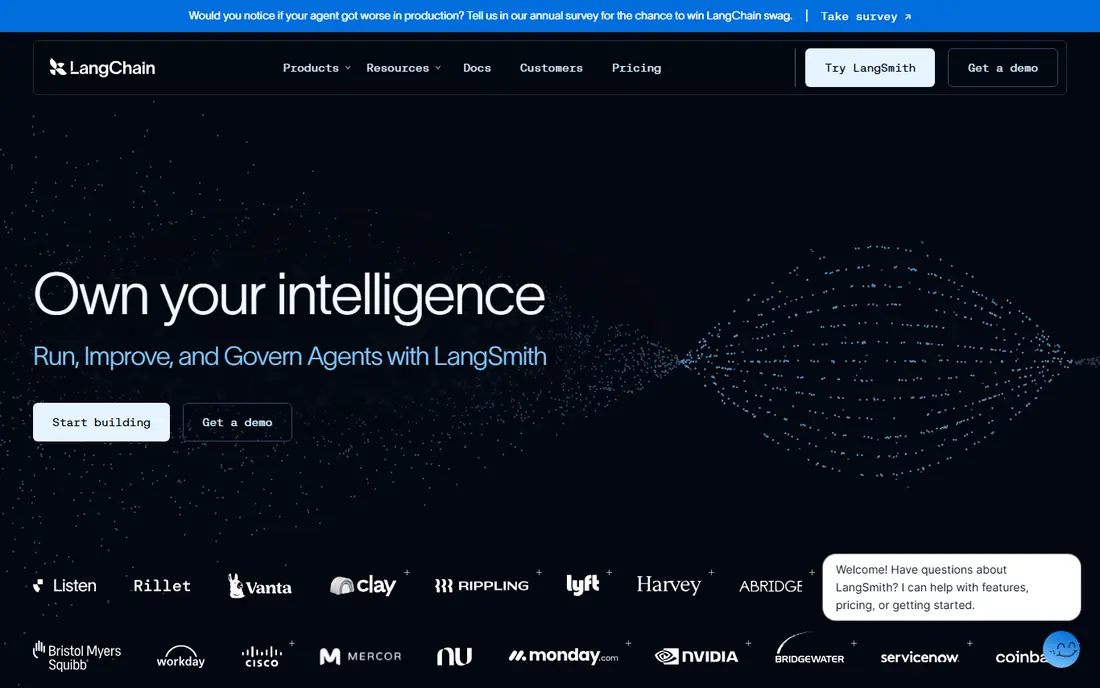
LangGraph, from LangChain, models an agent workflow as a graph of nodes and edges, so a team can define exactly how state moves, when a step retries, and where a human must approve a result. That control is the reason it fits production work: long sessions can be paused and resumed, failures can be inspected node by node, and multi-agent work can share state in a clear way. The framework itself is free and open source, and LangSmith adds tracing, evaluation, and hosted deployment, with a free Developer tier and a Plus tier at 39 dollars per seat per month.
The catch is that control comes with effort. Simple demos take more code than a role-based tool, and teams must still pay their model provider for tokens plus any hosting they use. LangGraph is the right choice when auditability and durability matter more than getting a first demo running in an afternoon.
- Explicit state and cycles
- Python and TypeScript support
- LangSmith tracing and deployment options
- Steeper learning curve than role-based tools
- Hosted deployment and model costs are separate
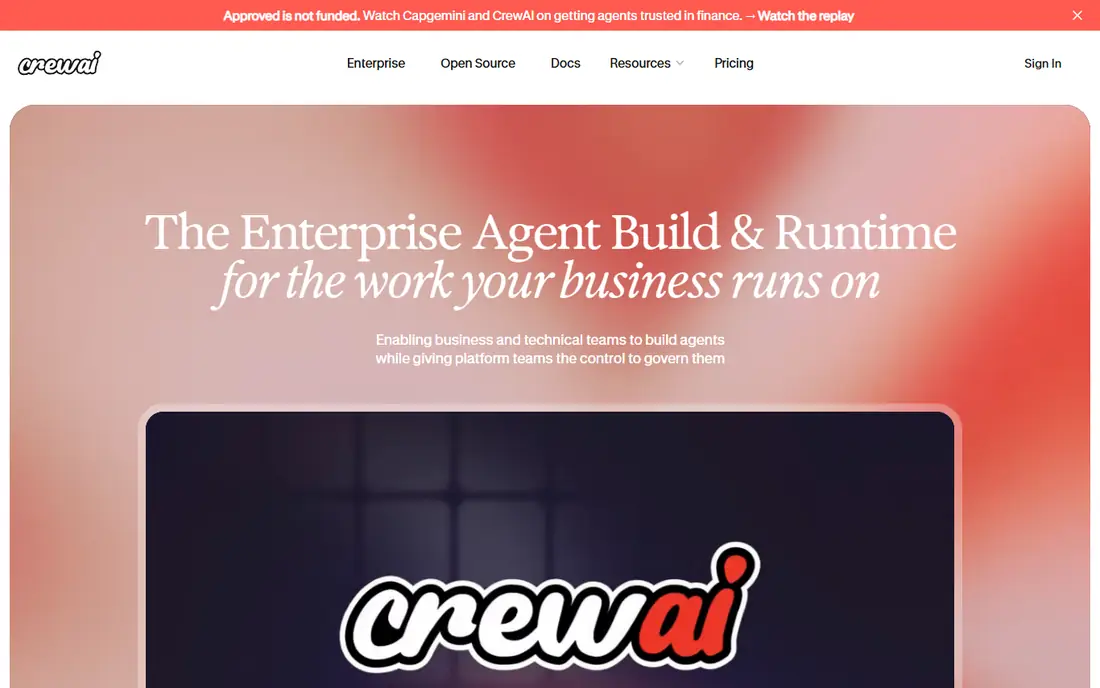
CrewAI lets developers define agents by role and goal, then organise them into crews that hand tasks to each other, which makes research, analysis, and report-style workflows easy to describe. The open source framework is free, and the hosted AMP Basic tier is free with 50 workflow executions per month, which is enough to test the visual Studio and a couple of real workflows. For teams that think in terms of a researcher, an analyst, and a writer, the model feels natural from the first day.
The limit shows up when a workflow needs forced order, branching, or durable state across long runs. Those cases need workarounds, and teams that outgrow the free hosted tier move to a custom enterprise quote rather than a self-serve upgrade. CrewAI is still a strong first pick for prototypes and role-shaped work, provided the team budgets for model tokens separately.
- Fast to prototype
- Role, goal, and task model reads clearly
- Visual Studio on the hosted platform
- Less fine-grained control over flow
- Hosted paid path is quote-based beyond the free tier
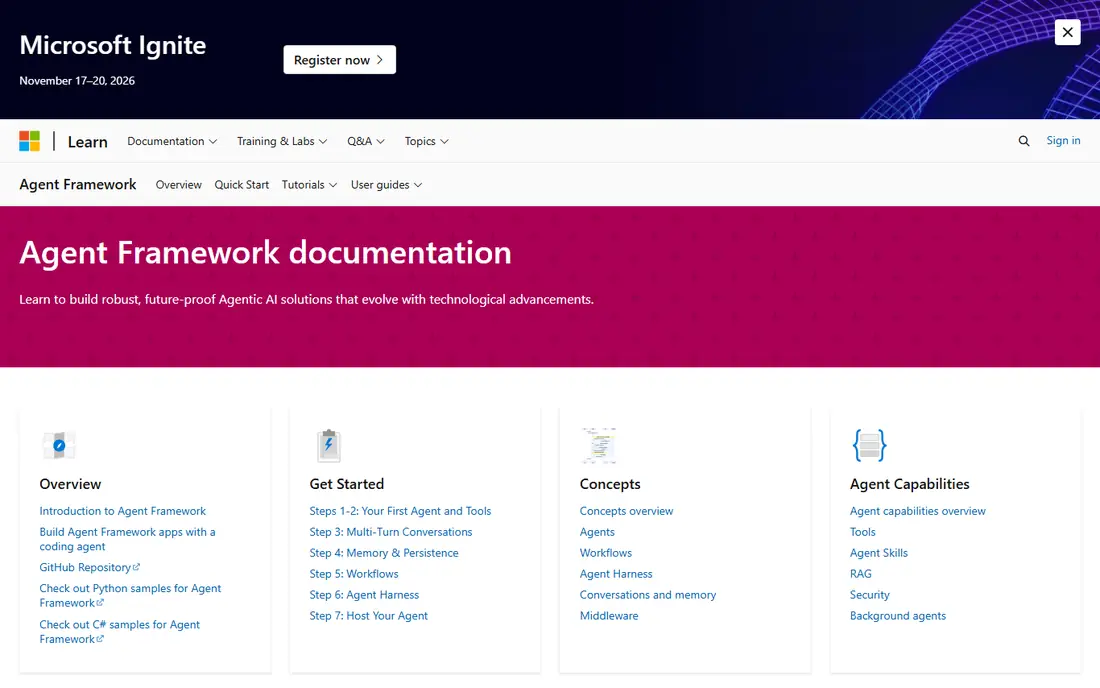
Microsoft Agent Framework is Microsoft's current framework for building single agents and multi-agent workflows, with sequential, concurrent, group chat, and autonomous workflow builders. It fits teams already building on .NET, Python, or Azure, because it connects to Azure OpenAI and other Microsoft services and supports observability through OpenTelemetry. The framework itself costs nothing to install, which makes it easy to evaluate alongside existing Microsoft code.
The honest caveat is maturity and change. The framework has moved quickly, and teams should pin versions and expect API updates as it settles. Model, hosting, storage, and observability costs still apply, so a small pilot that measures cost per completed task is the right way to judge it before committing a product to it.
- Free open source framework
- .NET and Python support
- Workflow builders and Azure integration
- Newer framework with a fast-moving API
- Production costs come from models and Azure services
OpenAI Agents SDK gives developers a small set of core ideas, agents with instructions and tools, handoffs between specialised agents, and guardrails that validate inputs and outputs, plus tracing to inspect runs. That simplicity is a strength for production teams that want predictable code rather than a visual canvas, and it supports voice agents, code execution, web search, and remote MCP servers for connecting external tools. The SDK itself is free and open source, so the bill is driven by model tokens and any tools the agent calls.
The trade-off is ecosystem fit. Teams that standardise on another model provider can still use it, but the smoothest path is with OpenAI models and APIs. There is no drag-and-drop builder, so non-developers will need engineering help, and handoff-heavy designs need history filtering or token costs will grow as conversations get longer.
- Clean agent, handoff, and guardrail model
- Built-in tracing
- Python and Node.js support
- Best with OpenAI models
- No visual builder
- Model and tool costs are separate
Google Agent Development Kit, known as ADK, is an open source framework for building, testing, and deploying agents with Gemini models and a wide range of third-party integrations. It supports Python, TypeScript, Go, Java, and Kotlin, which makes it realistic for teams that already work in those languages, and it is built around debugging, evaluation, and deployment rather than demos alone. Agents can be defined in code, coordinated in multi-agent workflows, and moved toward production on Google Cloud.
ADK is more framework than many small projects need. A single chatbot or one-off automation will be faster with a lighter tool, and teams should budget for Gemini API and cloud hosting costs on top of the free framework. For teams already on Google Cloud that want a structured, supported path to production agents, it is a strong contender.
- Open source and multi-language
- Structured agent definitions
- Google Cloud deployment path
- Overkill for a simple chatbot
- Production costs come from Gemini and cloud services
LlamaIndex is best known for connecting language models to private documents, and its agent support builds on that strength: agents can retrieve, reason over, and act on large bodies of documents such as contracts, manuals, and filings. The core framework is free and open source, while LlamaCloud adds managed parsing and indexing on a credit basis, with a free tier that includes 10,000 credits per month and paid tiers starting around 50 dollars per month. That split lets a team prototype for free and pay only when document volume grows.
The catch is cost predictability. Credit use varies by parsing mode and document complexity, so teams should model a real document set before forecasting a monthly bill. LlamaIndex is the right pick when the agent's value depends on accurate retrieval from documents, rather than when the main need is general workflow automation.
- Strong document parsing and retrieval
- Open source framework
- LlamaCloud managed option
- Credit-based cloud pricing can be hard to forecast
- Agentic features need careful scoping
n8n is a workflow automation platform with AI agent nodes, which makes it the practical pick when the project is really a business process that happens to include AI steps. A workflow can be triggered, branch, loop, call a model, use memory and tools, and write results back to another system, all in a visual canvas, and the self-hosted Community Edition is free with unlimited executions. Cloud plans start at 20 euros per month billed annually for the Starter tier, with 2,500 executions per month.
The limits are worth stating plainly. Polling triggers can burn through a cloud execution allowance quickly, and self-hosting, while free in licence terms, still needs a server, updates, and backups. n8n suits operations teams and developers who want agents inside real workflows, not teams that need deep, code-level agent research.
- Visual workflow builder
- AI agent and MCP nodes
- Free self-hosted Community Edition
- Cloud execution limits can bite with polling triggers
- Self-hosting needs server care
UiPath Agent Builder is a low-code canvas inside UiPath Studio for configuring AI agents, with a code-first Python SDK path for developers who prefer code. Agents inherit retries, observability, evaluations, policy guardrails, and audit logs from the UiPath Platform, and they run alongside robots, APIs, and human approvals through Maestro and Orchestrator. The Basic cloud tier starts at 25 dollars per month, while Standard and Enterprise tiers, which cover full agent programmes, are priced by quote.
The honest limit is that the low entry price does not buy a full enterprise agent programme. Teams should confirm which agent limits, model options, and governance controls sit in each tier, and they should pilot one governed workflow, such as invoice triage with a human approval step, before rolling agents out more widely. For organisations already invested in UiPath, the governance story alone often justifies the choice.
- Visual canvas in Studio
- Governance, audit logs, and guardrails built in
- Runs alongside robots and people
- Entry cloud tier is limited
- Full agent programmes need higher tiers or a sales quote
How we picked these
We compared official documentation, pricing pages, and public release notes, and we favoured tools that are actively maintained in October 2026, that clearly support multi-step agent work with tools, and that cover different buyer types, from solo developers to enterprise automation teams. We checked whether the core framework was free, what the hosted or platform tier costs, and how each tool handles state, tracing, and human approval. We did not list tools that have reached end of life, and we did not claim hands-on testing.
What to check before you build
Start with one task that has a clear success measure, such as drafting a report from three sources or triaging a support queue, and give the agent narrow tools and read-only access first. Cap loops and rounds, set a token budget per task, and log every tool call so a failure can be traced back to a specific step. That discipline matters more than the framework choice, because an uncapped agent can quietly multiply model costs and repeat a mistake many times.
Next, decide where humans must approve. Any action that sends a message, changes a record, moves money, or touches production data should pause for review until the agent has proven itself on that exact task. Check data handling too: know which model provider sees your data, whether prompts are retained, and whether the tool supports the access controls your organisation requires. A small pilot with those guardrails in place will show the true cost per completed task, which is the number that should drive the final decision.
Frequently asked questions
What are agentic tools?
Agentic tools let software agents plan and carry out multi-step work, such as researching a topic, calling APIs, checking results, and handing work to another agent, rather than answering a single prompt. They typically combine a model, tools, memory or state, and a way to observe and control each run.
What is the difference between an agentic platform and an agent framework?
A framework is code a developer uses to build agents, while a platform adds hosting, a visual builder, tracing, governance, or deployment on top. Frameworks give more control and lower licence cost, while platforms can be faster for teams that want managed operations and built-in approvals.
How much do agentic tools cost?
Many frameworks are free, but model tokens, hosting, storage, and observability are billed separately, so the total depends on task volume and model choice. Hosted platforms add subscription or execution-based pricing, and teams should measure cost per completed task during a pilot rather than comparing licence fees alone.
Do I need coding skills to use agentic tools?
Code frameworks such as LangGraph, CrewAI, and the OpenAI Agents SDK need programming skills, while n8n and UiPath Agent Builder offer visual builders that lower the bar. Even with a visual builder, someone still needs to define tools, permissions, and approval steps carefully.
Are agentic tools safe for production use?
They can be, with guardrails: narrow tool permissions, capped loops, human approval for consequential actions, logging of every step, and clear data handling rules. Teams should start with read-only or low-risk tasks and expand permissions only after the agent has proven reliable on those tasks.
Sources
See where you really rank - block by block
ProMapRanker scans Google Maps across a grid of your service area. Simple monthly plans from $19, white-label on every plan.
Start freeKeep reading
 wpforms alternatives
Best WPForms Alternatives in 2026
We compare 9 wpforms alternatives for WordPress forms, with free and paid options, current pricing notes, and honest limits for small business sites in 2026.
Read → windows task scheduler alternatives
Best Windows Task Scheduler Alternatives in 2026
Looking for Windows Task Scheduler alternatives? We compare 9 schedulers for Windows and cross-platform work, from free tools to enterprise automation.
Read → which ai video service is best
Which AI Video Service Is Best in 2026
which ai video service is best? We compare 10 legitimate AI video services on price, avatars, editing and output quality to help you pick the right tool.
Read →