 ProMapRanker
Best Affiliate Marketing Tools for Creators in 2026

Key takeaways
- Fashion, beauty, and home creators usually start with LTK or ShopMy, while tech and niche creators do better on networks such as Impact or ShareASale.
- Amazon Associates converts well because shoppers already trust Amazon, but category commissions are lower than many brand programs.
- A storefront, a link hub, and clear disclosure matter as much as the network, since trust drives clicks more than link volume.
- Join one platform that fits your niche first, learn what converts, then add a second platform rather than joining ten at once.
Quick comparison
| Pick | Great for | Pricing starts at | Free tier | |
|---|---|---|---|---|
 LTK | Established fashion and home creators | Free | Yes | Visit |
 ShopMy | Fashion and beauty storefronts | Free | Yes | Visit |
 Amazon Associates | Product reviewers and broad catalogs | Free | Yes | Visit |
 Impact | SaaS and brand partnerships | Free | Yes | Visit |
 ShareASale | Niche brands and small programs | Free | Yes | Visit |
 CJ Affiliate | Large established brand programs | Free | Yes | Visit |
 Awin | Global brands and publishers | Free | Yes | Visit |
 Rakuten Advertising | Enterprise retailers and publishers | Free | Yes | Visit |
 PartnerStack | B2B SaaS creators | See website | No | Visit |
 Beacons | Link-in-bio shops for creators | Free | Yes | Visit |
The best affiliate marketing tools for creators
Affiliate tools fall into three groups: creator storefronts, affiliate networks, and link hubs. Storefronts such as LTK and ShopMy give you a shop page and brand access. Networks such as Impact, ShareASale, and CJ give you many separate brand programs in one dashboard. Link hubs such as Beacons give you a page to hold all your links. We compared them on brand access, commission structure, payout terms, storefront tools, and how easy they are for a creator to run day to day. Creator joining is normally free, while brands pay the network, so starting prices below reflect the creator side.
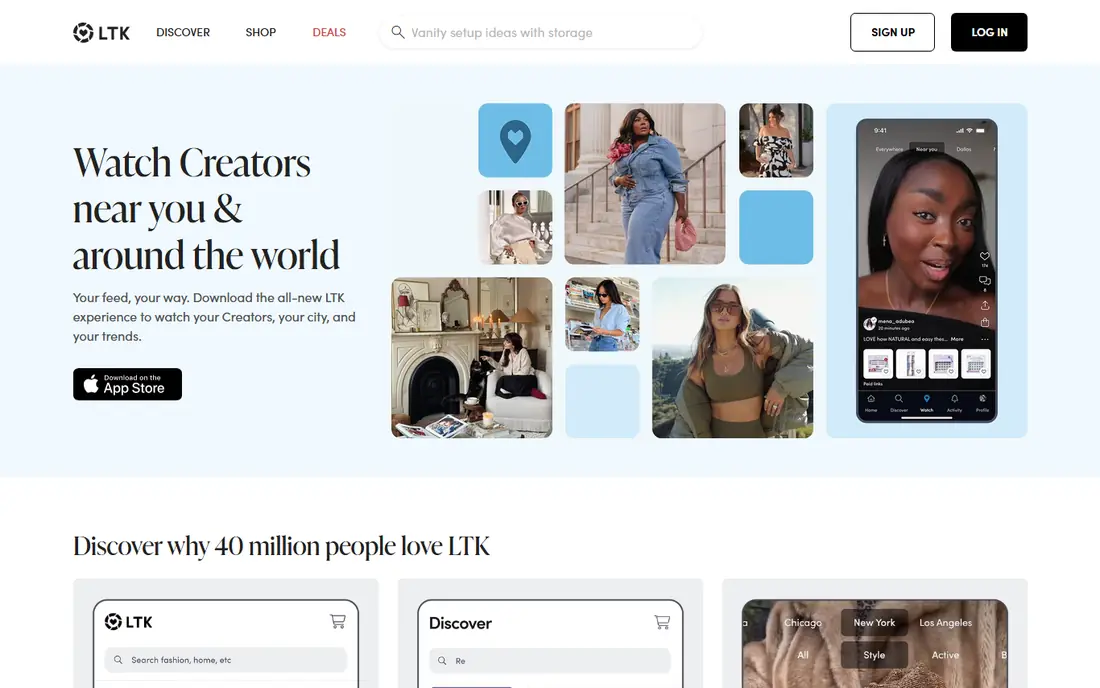
LTK is the leading creator commerce platform for fashion, home, and beauty creators. You build a shop page, post shoppable content, and earn commission when followers buy through your links, while the LTK shopping app brings in shoppers who are already looking to buy. Brand collaboration opportunities add paid work on top of commission for established creators.
LTK is application-based, so new creators without a track record may wait for approval or be turned away. The platform also fits fashion and home content far better than tech or finance, so creators outside those niches should look at networks first. If your content is fashion-led and you have an audience, LTK is the first application to make.
- Large retailer network
- Consumer shopping app drives discovery
- Collaboration opportunities with brands
- Application-based approval
- Fashion and home focus limits other niches
ShopMy gives fashion and beauty creators a clean storefront with shelves for outfits, routines, and favorites, plus tools for brand discovery and gifting. Weekly payouts help cash flow compared with monthly networks, and you can link products from brands outside a single closed system, which gives curators more freedom. For micro creators, ShopMy often feels more open than LTK.
The catalog is smaller than LTK, and the focus stays on fashion and beauty, so tech or home creators may find fewer relevant brands. ShopMy also rewards consistent posting and curation, so a neglected storefront earns little. Treat it as a shop to maintain, not a link dump to forget.
- Polished storefronts and shelves
- Weekly payouts
- Links can cover brands outside a closed network
- Smaller brand catalog than LTK
- Fashion and beauty focus limits other niches
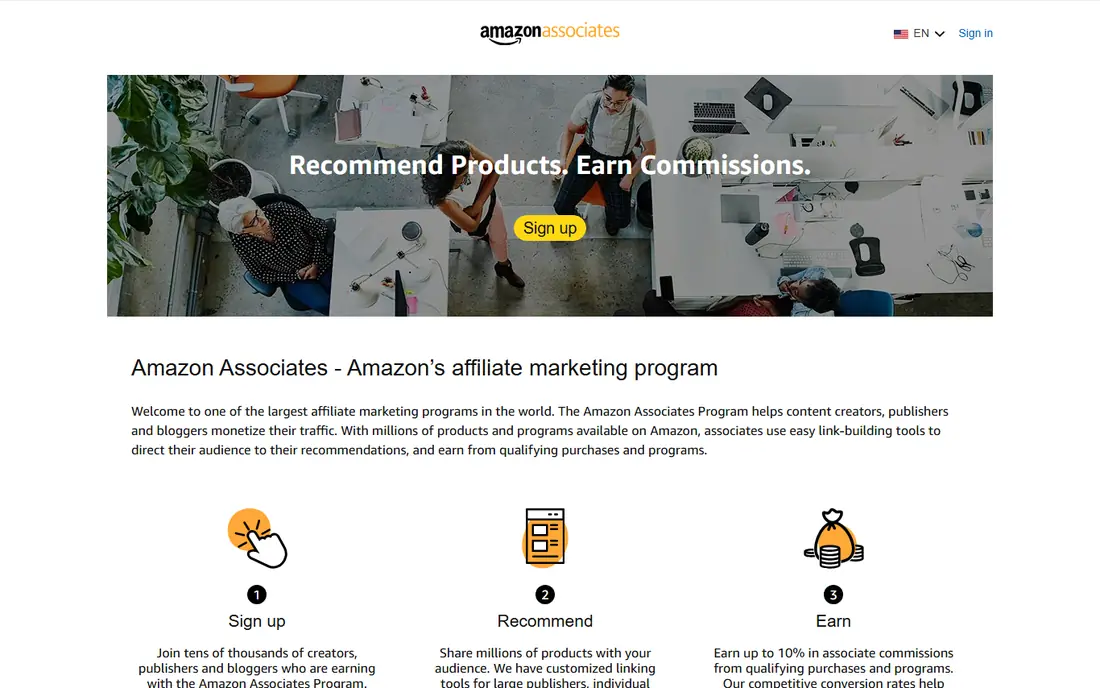
Amazon Associates is the default for product reviewers, tech creators, and anyone whose audience buys across many categories. Shoppers already trust Amazon checkout, so conversion rates are high, and the catalog covers almost every product a creator might recommend. The Influencer Program adds a storefront and product videos for creators who qualify.
The limits are commission rates and cookie length. Category rates are modest compared with many direct brand programs, and the standard cookie window is short, so a delayed purchase may not credit you. Amazon works best as a volume and conversion play, paired with higher-rate brand programs for your top products.
- Huge product catalog
- High conversion from shopper trust
- Product videos and storefronts for influencers
- Category commissions are modest
- Cookie window is short at 24 hours for many purchases
Impact, formerly Impact Radius, is a leading partnership platform for SaaS, software, and large brands. Creators apply to each brand program separately, and many software programs pay recurring commission for as long as a referred customer stays subscribed, which builds steadier income than one-time product sales. Tracking, reporting, and contract terms are clear, which helps when you manage several partnerships.
The approval process is fragmented, since each brand sets its own terms, and the dashboard has more depth than a simple storefront. That depth suits creators who treat affiliate work as a business, with spreadsheets and performance reviews, rather than as a side link in a bio.
- Large brand and SaaS programs
- Recurring commissions on subscriptions
- Strong tracking and reporting
- Each brand needs separate approval
- Dashboard takes time to learn
ShareASale, now part of Awin, hosts thousands of merchants, including many small and niche brands that do not appear on larger networks. For creators in crafts, hobbies, specialty food, or niche home goods, ShareASale often holds the exact brand a larger network misses. Link tools, banners, and data feeds make it simple to build product posts and comparison pages.
Program quality varies, since small merchants set their own terms and support levels. The interface also feels dated next to LTK or Impact. Check each merchant terms, commission, and cookie length before you promote it, and test the checkout yourself when you can.
- Many small and niche brands
- Easy link and banner tools
- Long history as a network
- Interface feels dated
- Program quality varies by merchant
CJ Affiliate, formerly Commission Junction, is one of the oldest large affiliate networks, with major retail, travel, and finance brands. Reporting is strong, product feeds help comparison content, and deep linking lets you send readers to a specific product rather than a homepage. For established creators and bloggers, CJ gives access to brands that smaller networks cannot offer.
New creators may face stricter approval, since brands on CJ often want proven traffic or content quality. The dashboard also takes time to learn. Apply with a finished site or channel, a clear niche, and a few strong posts already live, which improves approval odds.
- Long-running network with major brands
- Strong reporting
- Deep link and product feed tools
- Approval can be strict for new creators
- Interface takes time to learn
Awin is a global network with a strong presence in the UK and Europe as well as the US, and it now includes former ShareASale accounts. For creators with an international audience, Awin gives access to brands and retailers that US-only networks miss, plus tools for voucher codes, product feeds, and cross-border tracking.
Some publisher accounts involve a small signup deposit, which is refunded under the network terms, and program terms vary by merchant. Read the deposit and payout terms for your country before you join, and focus on merchants whose audience matches your readers, since a global catalog alone does not guarantee conversions.
- Large global merchant network
- Includes former ShareASale programs
- Strong for UK and European brands
- Some publishers pay a small signup deposit
- Program terms vary widely
Rakuten Advertising connects publishers with major retail brands, and it is well known for cashback and deal content alongside standard affiliate links. Publisher tools cover link building, product feeds, and reporting, and the brand roster includes retailers that many shoppers already know. For deal and shopping creators, Rakuten is a natural second network.
The enterprise focus can feel heavy for a small creator, and brand approval still varies. Rakuten suits creators with steady traffic and shopping content, rather than a brand-new channel with no posts yet. Pair it with a storefront such as ShopMy for fashion, or Amazon for broad catalog coverage.
- Major retail brands
- Strong publisher tools
- Good for cashback and deal content
- Enterprise focus can feel heavy for small creators
- Approval varies by brand
PartnerStack is built for business software partnerships, where creators, consultants, and agencies refer tools to other businesses. Many programs pay recurring commission on subscriptions, and the marketplace helps partners find SaaS brands in their niche. For a creator who reviews software for small businesses, PartnerStack fits better than a fashion storefront.
Outside SaaS, PartnerStack has little to offer, and access depends on each partner program terms. It is a specialist tool, not a general affiliate home. Use it alongside Impact for software content, and keep a separate network for any consumer products you also recommend.
- Built for B2B SaaS partnerships
- Recurring revenue programs
- Marketplace for partner discovery
- Narrower fit outside SaaS
- Creator access depends on partner programs
Beacons gives creators a link-in-bio page that can also hold a shop, email signup, and digital products. You can add affiliate links from any network into shop blocks, so Beacons works as the front door for LTK, Amazon, Impact, and other programs in one place. Setup takes minutes, and the page looks clean on mobile, where most social traffic arrives.
Beacons is a hub, not a network, so it does not give you brand programs by itself. Advanced features, such as deeper analytics and custom domains, need a paid plan. Use Beacons to organize links you already earn from, and judge it on design and conversion, not on brand access.
- Link-in-bio page with shop blocks
- Combines links, email, and digital products
- Easy setup
- Affiliate features are part of a broader tool, not a full network
- Paid plan needed for advanced features
How we picked these
We compared official creator pages, network directories, and public creator guides from 2026. We required each tool to accept creators, pay commission on referred sales or actions, and work in October 2026. We favored tools with clear payout terms, real brand access for creators, and storefront or reporting tools that help a creator run affiliate work as a business, and we kept storefronts, networks, and hubs separate so readers can see which job each tool does.
How to choose affiliate tools as a creator
Start from your niche, not the platform size
A large catalog does not help if its brands do not match your content. Fashion creators should start with LTK or ShopMy, tech reviewers with Amazon and Impact, and niche bloggers with ShareASale or CJ. List your top ten products first, then find the platform that carries those brands, rather than joining a network and searching for something to promote.
Compare commission, cookie length, and payout together
A high commission with a short cookie can earn less than a lower commission with a longer cookie, since readers often buy days later. Check the cookie length, the payout threshold, and the payout schedule for each program, and track earnings per post so you learn which links actually convert. Disclose affiliate links clearly in every post, since trust and legal rules both require it.
Build a shop, not just a link list
A storefront with context, such as why you recommend a product and who it suits, converts better than a bare list of links. Keep your shop updated, remove discontinued products, and group items by use, such as a starter kit or a travel kit. Review performance monthly, drop programs that never convert, and double down on the products your audience already buys.
Frequently asked questions
How much money can a creator make from affiliate marketing?
Earnings vary widely by niche, audience size, and conversion rate, and most creators start small. Income grows with trust, consistent content, and products that match the audience, rather than with link volume alone. Treat early earnings as a test of what converts, and reinvest time in the products that perform.
Do I need a large following to join affiliate programs?
No, many networks and Amazon Associates accept small creators, while LTK and some brand programs are application-based and prefer an established audience. A small, engaged audience in a clear niche often converts better than a large, general audience, so apply with strong content even when your follower count is modest.
What is a cookie window in affiliate marketing?
A cookie window is the period after a click during which a purchase still credits you. A 24-hour window, such as Amazon standard window, means a purchase a week later does not credit you, while a 30-day window gives readers more time. Check the window for each program, since it changes real earnings.
Should I use LTK or ShopMy?
Fashion creators with an established audience often start with LTK for its retailer scale and shopping app traffic, while smaller fashion creators often start with ShopMy for its storefront and weekly payouts. Many creators use both, with LTK for major retailers and ShopMy for curated shelves and brand discovery.
Do I have to disclose affiliate links?
Yes, disclose affiliate links clearly where readers will see them, such as at the top of a post or next to a link, and follow the rules of your platform and country. Disclosure builds trust as well as meeting legal duties, since readers who know you earn commission still buy when the recommendation is honest.
Sources
See where you really rank - block by block
ProMapRanker scans Google Maps across a grid of your service area. Simple monthly plans from $19, white-label on every plan.
Start freeKeep reading
 best accounting software for startups
Best Accounting Software for Startups in 2026
Compare the best accounting software for startups in 2026, with bookkeeping, invoicing, payroll links, and prices that suit early-stage teams in 2026.
Read → best video editing apps for affiliate marketing
Best Video Editing Apps for Affiliate Marketing in 2026
Compare the best video editing apps for affiliate marketing, from fast short-form editors to full desktop suites, with current pricing and honest trade-offs.
Read → best shift scheduling software
Best Shift Scheduling Software in 2026
Compare the best shift scheduling software, from Homebase and Deputy to When I Work and 7shifts, with free plans and per-user pricing explained for teams.
Read →