 ProMapRanker
Best AEO Tools for Ecommerce in 2026


Large stores and multi-brand teams · Pricing starts at: See website
Key takeaways
- Profound and Scrunch AI give the deepest multi-engine tracking, while Otterly AI gives the cheapest paid start at $29 per month.
- For stores, the value is in product page detail: clear specs, prices, stock status, and FAQs that an answer engine can quote directly.
- Surfer and Frase help fix the pages themselves, while the pure trackers mainly show where a brand is cited or missing.
- Check the entry tier carefully, since some tools limit the number of engines or prompts until you pay for a higher plan.
Quick comparison
| Pick | Great for | Pricing starts at | Free tier | |
|---|---|---|---|---|
| Profound | Large stores and multi-brand teams | See website | Free trial | Visit |
 Peec AI | Agencies and mid-size stores | $95 per month | Free trial | Visit |
 Otterly AI | Small stores starting with AEO | $29 per month | Free trial | Visit |
 Scrunch AI | Enterprise stores and engineering led teams | $250 per month | Free trial (7 days) | Visit |
 AthenaHQ | Teams that want fixes with their tracking | $295 per month | Yes | Visit |
 Surfer | Optimizing product and category pages | $49 per month | No | Visit |
 Frase | Briefs and question based content | $49 per month | Free trial (7 days) | Visit |
 Semrush AI Visibility Toolkit | Teams already paying for Semrush | $99 per month | Free trial (7 days) | Visit |
The best aeo tools for ecommerce
These tools show how AI answers treat a store, and they help teams fix the pages that get cited. We compared tracking depth, ecommerce fit, and price.
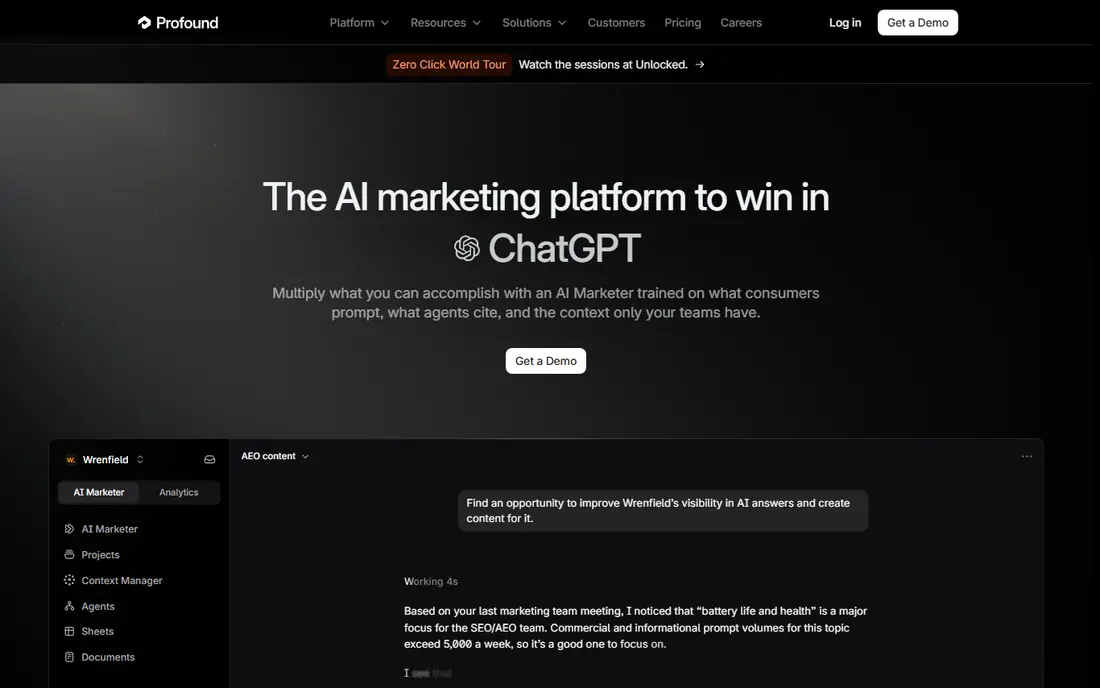
Profound tracks how a brand appears across AI answers and links those mentions back to pages, prompts, and competitors. For an ecommerce team, that matters when a shopper asks an AI assistant for the best running shoes under a set budget, or for a coffee maker that fits a small kitchen. Profound shows which stores get named, which product pages get cited, and where a store is absent from the answer entirely.
The honest catch is cost and complexity. Profound moved away from its old $99 Starter plan during 2026, and current pricing is built around a free trial plus custom and agency plans. Small stores may find the reporting deeper than they need. Larger stores with many product lines, and agencies managing several clients, get the most from it.
- Wide engine coverage on higher plans
- Citation level reporting
- Analytics integrations for traffic and revenue
- Entry pricing is no longer a simple self-serve plan
- Setup suits teams with a dedicated analyst
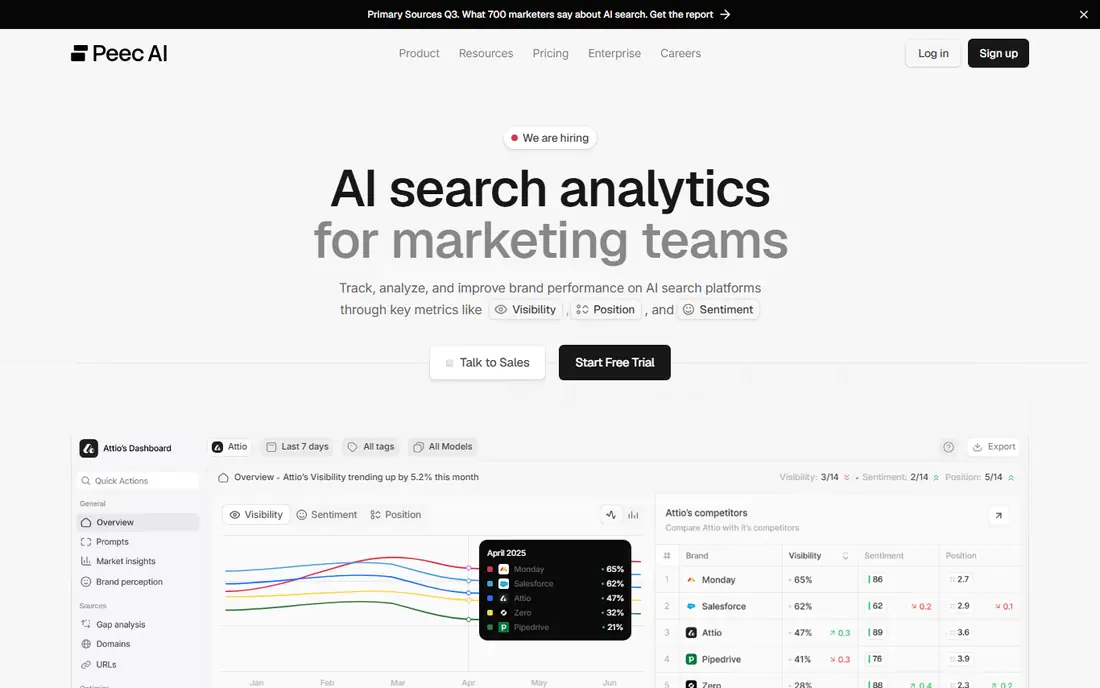
Peec AI focuses on the basics done well: it tracks prompts, records citations, and measures share of voice against competitors. An ecommerce manager can set up prompts around real buying questions, such as which wireless earbuds have the longest battery life, and then see which retailers and brands the answers name. That makes it easy to spot product pages that need better specs or clearer comparison content.
Peec AI works best for teams that want a daily read on visibility without enterprise reporting. It does not try to rewrite pages for you, so the team still needs someone to act on the gaps it finds. At $95 per month for the Starter plan, it sits in the middle of this list, and it is a sensible step up from a budget tracker.
- Clear citation and share of voice reporting
- Prompt level detail
- Straightforward dashboards
- Fewer engines than the largest platforms
- Pricing page is not always shown to logged out visitors
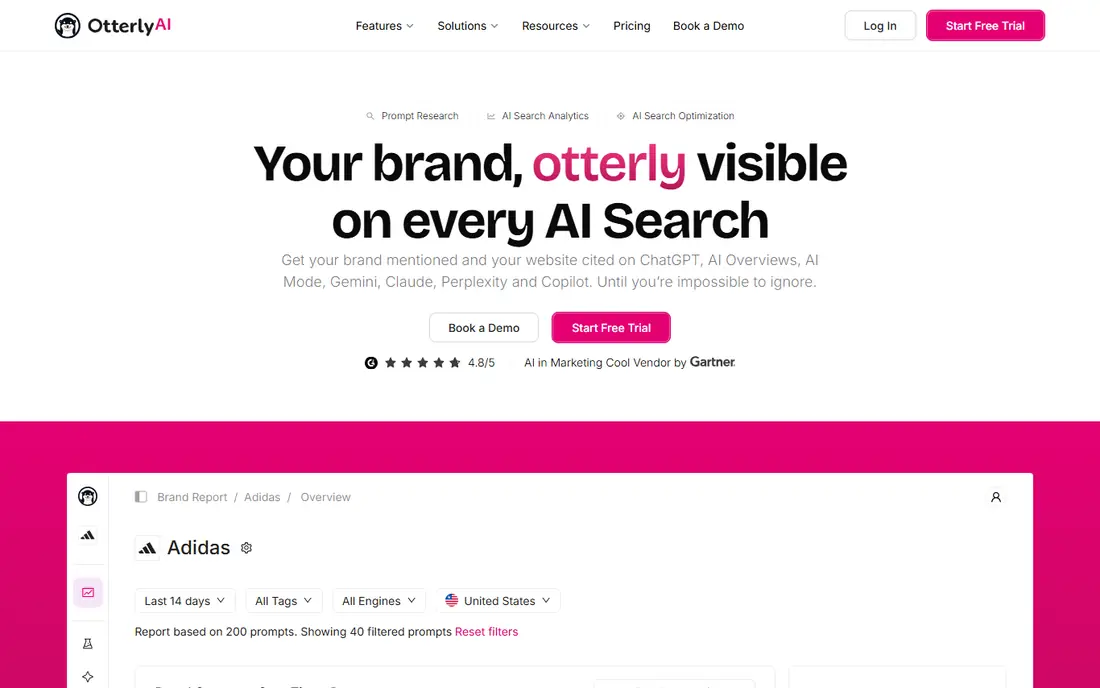
Otterly AI is the cheapest credible way to start tracking AI visibility. The Lite plan starts at $29 per month and covers core engines, with Claude, AI Mode, and Gemini available as paid add-ons. For a small store, that is enough to answer the main question: when shoppers ask AI tools about products we sell, do they see our store, our competitors, or neither.
The trade-off is depth. Otterly AI gives prompt research, citation logs, and sentiment signals, but it does not offer the persona simulations or crawler diagnostics of the enterprise tools. That is fine for a first year of AEO work. A store can learn which categories get cited, fix the weakest product pages, and move to a larger tool only if the data shows it is worth paying more.
- Lowest paid entry price here
- Simple setup
- Daily tracking across major engines
- Fewer diagnostic features than mid-tier tools
- Some engines cost extra as add-ons
Scrunch AI goes beyond a single answer and follows how a brand appears across a conversation. A shopper rarely asks one question and stops. They ask follow-ups about price, size, returns, and delivery, and Scrunch AI maps that journey. It also watches AI crawler traffic, which helps a larger store confirm that its product catalog is actually reachable by the bots that feed AI answers.
The price reflects that depth: $250 per month billed annually on the Starter plan, or $300 month to month. That is hard to justify for a store with a small catalog. For a large retailer with thousands of product pages, the diagnostic detail can pay for itself when it finds whole categories that AI systems cannot read properly.
- Multi-turn conversation tracking
- Bot traffic diagnostics
- Hallucination detection
- Price puts it out of reach for small stores
- Setup takes more work than a simple tracker
AthenaHQ pairs visibility tracking with content recommendations, so the output is closer to a work list than a report. It tracks a brand across many AI models, checks citations, and flags hallucinations, where an AI answer states something wrong about a product. For ecommerce, that last point matters: a wrong price, a wrong spec, or a wrong compatibility claim in an AI answer can cost a sale before the shopper ever reaches the store.
AthenaHQ offers a free plan with credits, which makes it possible to test the platform before paying $295 per month for Starter. The credit system adds a learning curve, since teams must watch how prompts and checks consume credits. Stores that want both measurement and suggested page fixes will like the combination. Stores that only want a simple tracker may find it heavier than they need.
- Free plan with credits
- Wide model coverage on paid plans
- Content optimization recommendations
- Credit based usage takes time to learn
- Starter price is high for small stores
Surfer is a content tool first and a tracker second, which is exactly what many ecommerce teams need. Its editor scores a draft against the pages that already rank, and it highlights missing terms, questions, and structure. Applied to a product page, that means better headings, a fuller spec section, and an FAQ that answers the questions shoppers actually ask an AI assistant.
Surfer starts at $49 per month billed annually on the Discovery plan, and AI tracking is included on higher tiers. It will not replace a dedicated AEO tracker for a large brand, since its tracking is narrower. But for a store whose main problem is weak product copy, Surfer fixes the pages that AI systems read, and that is often the bottleneck.
- Live content scoring while editing
- AI visibility tracking on higher tiers
- Clear audit reports
- Thin on backlink and strategy data
- Full AI tracking needs a higher tier
Frase builds content briefs from the pages that already perform, and it pulls out the questions people ask around a topic. For ecommerce, that is a practical workflow: take a category page, see which questions buyers ask, and add answers to the page itself. A category page for hiking boots, for example, should answer questions about waterproofing, sizing, and break-in time in plain text, not only in images or filters.
Frase starts at $49 per month, with a 7-day trial, and it also offers AI visibility features on its plans. It is less of a pure tracker than Profound or Peec AI, and its backlink data is smaller than Semrush or Ahrefs. As a writing and briefing tool for a store that publishes buying guides and category content, it is one of the best value options here.
- Fast research briefs from top ranking pages
- Question mining for FAQs
- Affordable entry price
- Smaller backlink data than the big suites
- Tracking is less deep than pure AEO platforms
Semrush AI Visibility Toolkit adds AI search tracking to the SEO suite many teams already use. It covers ChatGPT, Google AI features, Gemini, and Perplexity, and it draws on a large prompt database with daily updates. For an ecommerce team, the benefit is one login: keyword research, site audits, rank tracking, and AI visibility sit together, so a drop in AI citations can be checked against ranking and technical data in the same place.
The cost needs care. The toolkit starts at $99 per month per domain, billed annually, on top of a Semrush plan. A team with several stores or many domains can see the bill climb quickly. If a store already pays for Semrush, adding the toolkit is a natural step. If it does not, a dedicated tracker such as Peec AI or Otterly AI may cost less for the same AI visibility job.
- AI visibility inside a full SEO suite
- Large prompt database
- Daily updates
- Price is per domain and adds up for multi-store teams
- Toolkit is an add-on to a paid plan
How we picked these
We compared official feature pages, pricing pages, and public reviews for tools that track or improve visibility in AI answers, and we weighted ecommerce fit: product page optimization, citation tracking for buying questions, and price per domain. We left out tools that only generate content without tracking, and tools with no clear ecommerce use. Prices change often, so we note where a vendor gates engines or features to a higher tier.
What to fix on a store before buying a tracker
A tracker only reports what AI systems already see. Start with the pages themselves. Every product page should state the price, key specs, stock status, and delivery and returns terms in plain text, not only inside images, pop-ups, or scripts. Category pages should answer the main buying questions in short paragraphs, and every guide should link to the products it mentions.
Add structured data for products, reviews, and FAQs where the platform supports it, and keep it accurate. An AI answer that quotes a wrong price or an out of stock item as available creates a bad first visit. Test the store the way a shopper would: ask an AI assistant a buying question in your category, read the answer, and check whether your pages could have supplied each claim. Fix the pages that are missing, thin, or wrong before paying for a larger tracking plan.
Also set a prompt list that matches real buying intent. Include comparison prompts, budget prompts, and problem prompts, such as the best option for a small space or for sensitive skin. Track competitors too, since the gap between your citations and theirs is the clearest measure of progress. Review the data monthly, not daily, and judge a tool by whether it changes what you publish, not by how many charts it produces.
Frequently asked questions
What is the best aeo platform for ecommerce?
There is no single winner for every store. Large stores get the most from Profound or Scrunch AI, mid-size stores from Peec AI or AthenaHQ, and small stores from Otterly AI. The right choice depends on catalog size, budget, and whether the team needs page fixes or only tracking.
How is AEO different from normal SEO for a store?
Normal SEO aims for a click from a search results page, while AEO aims for a citation inside an AI answer. The shopper may never see a list of ten links. That makes clear, quotable product facts and direct answers on the page itself more important than before.
Do I need an AEO tool if I already use Semrush or Ahrefs?
Not always. If a store already pays for Semrush, its AI Visibility Toolkit may be enough. A dedicated tracker adds deeper prompt and citation detail, but it also adds another subscription. Start with the suite add-on, and move to a dedicated tool only if its reports change your publishing plan.
Can AEO tools guarantee that AI answers will cite my store?
No tool can guarantee citations. They can show where a store appears, which pages get cited, and which questions it misses. Rankings in AI answers shift as models and data change, so treat the reports as a guide for page improvements, not as a promise of placement.
What should a product page include for AEO?
Include the price, key specs, compatibility, stock status, delivery and returns terms, and a short FAQ in plain text. Add honest pros and cons where they help a buyer decide. Keep the facts current, since an AI answer may quote a page for weeks after it was last read.
Sources
See where you really rank - block by block
ProMapRanker scans Google Maps across a grid of your service area. Simple monthly plans from $19, white-label on every plan.
Start freeKeep reading
 wpforms alternatives
Best WPForms Alternatives in 2026
We compare 9 wpforms alternatives for WordPress forms, with free and paid options, current pricing notes, and honest limits for small business sites in 2026.
Read → windows task scheduler alternatives
Best Windows Task Scheduler Alternatives in 2026
Looking for Windows Task Scheduler alternatives? We compare 9 schedulers for Windows and cross-platform work, from free tools to enterprise automation.
Read → which ai video service is best
Which AI Video Service Is Best in 2026
which ai video service is best? We compare 10 legitimate AI video services on price, avatars, editing and output quality to help you pick the right tool.
Read →