 ProMapRanker
Best Active Metadata Management Software in 2026

Key takeaways
- Active metadata tools do more than list tables. They collect lineage, usage and quality signals automatically and use those signals to keep documentation current.
- Atlan, Alation and Collibra are the enterprise anchors here, while Secoda, OpenMetadata and DataHub give smaller teams a faster or lower cost start.
- Most enterprise pricing is quote based, so budget for implementation and stewardship time as well as the subscription.
- Our pick for most modern data teams is Atlan for its active metadata focus, with Secoda as the simpler option for small teams.
Quick comparison
| Pick | Great for | Pricing starts at | Free tier | |
|---|---|---|---|---|
 Atlan | Modern data teams using active metadata | See website | No | Visit |
 Alation | Large enterprises needing broad catalog coverage | See website | No | Visit |
 Collibra | Regulated teams needing formal governance | See website | No | Visit |
 Secoda | Small and mid-size data teams | See website | Yes | Visit |
 data.world | Teams that value a knowledge graph view | See website | Yes | Visit |
 OpenMetadata | Engineering teams that self-host | Free | Yes | Visit |
 DataHub | Open source metadata at scale | Free | Yes | Visit |
 Informatica Cloud Data Governance and Catalog | Large hybrid data estates | See website | No | Visit |
 Microsoft Purview | Teams already committed to Azure | See website | No | Visit |
The best active metadata management software
Active metadata is metadata that changes how a system behaves. When a table is used often, when a column carries sensitive data, or when a pipeline breaks, an active platform surfaces that fact where analysts work instead of leaving it in a stale document.
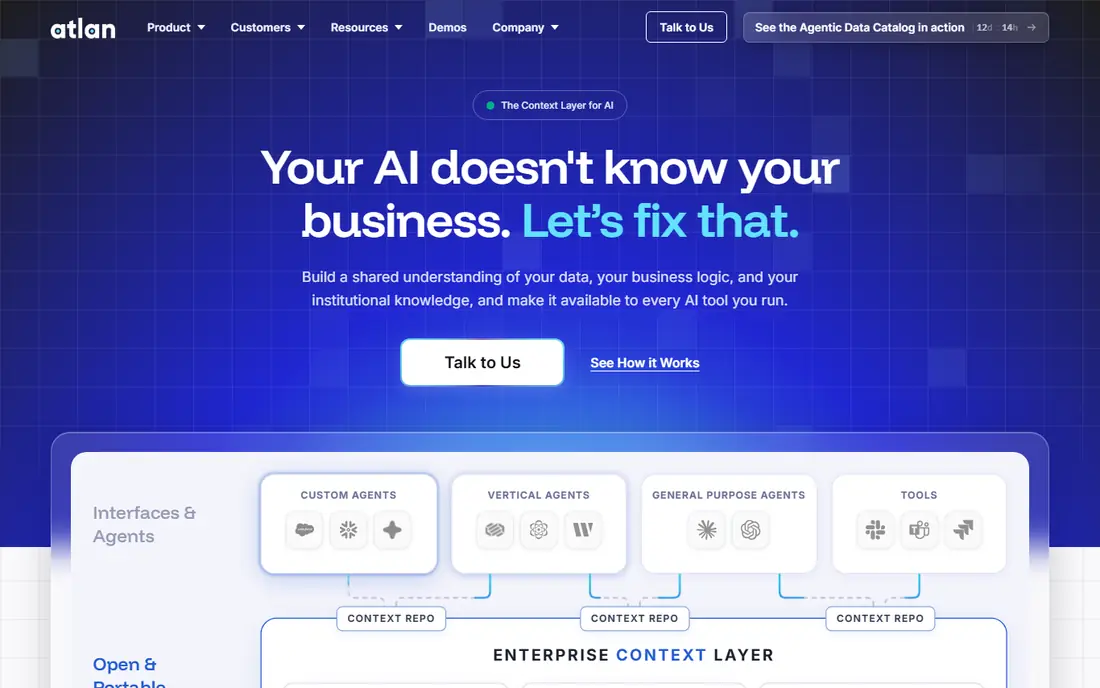
Atlan is built around the idea that metadata should move. It gathers technical metadata, lineage and usage signals from warehouses, lakes, BI tools and pipelines, then presents them in a catalog that analysts can search, tag and discuss. That makes it a strong fit for teams that already run a cloud data stack and want one place where business context and technical detail meet.
The catch is scope. Atlan works best when a team can name owners, agree on terms and keep curation going after launch. Without that discipline, even a strong catalog fills with half finished pages. Buyers should run a proof of concept on their own sources and check lineage depth for the systems they use most, not just the headline connector count.
- Active metadata approach
- Broad connector coverage
- Collaboration built around data assets
- Pricing is quote based
- Smaller teams may need a lighter tool
- Setup still needs data ownership decisions

Alation has long been a default choice for large catalog programs because it puts search and analyst use first. People can find a table, see who used it, read descriptions, and follow lineage to source systems. Its suggestions help teams fill gaps in documentation without asking every engineer to write pages from scratch.
For a smaller team, that maturity can feel heavy. Contracts, implementation and stewardship all add cost beyond the subscription. It remains a good choice when the main problem is discovery across many systems and the organization can staff governance properly.
- Mature catalog and search
- Machine learning suggestions for documentation
- Wide enterprise adoption
- Pricing is quote based
- Implementation can take months
- Some governance features need careful configuration
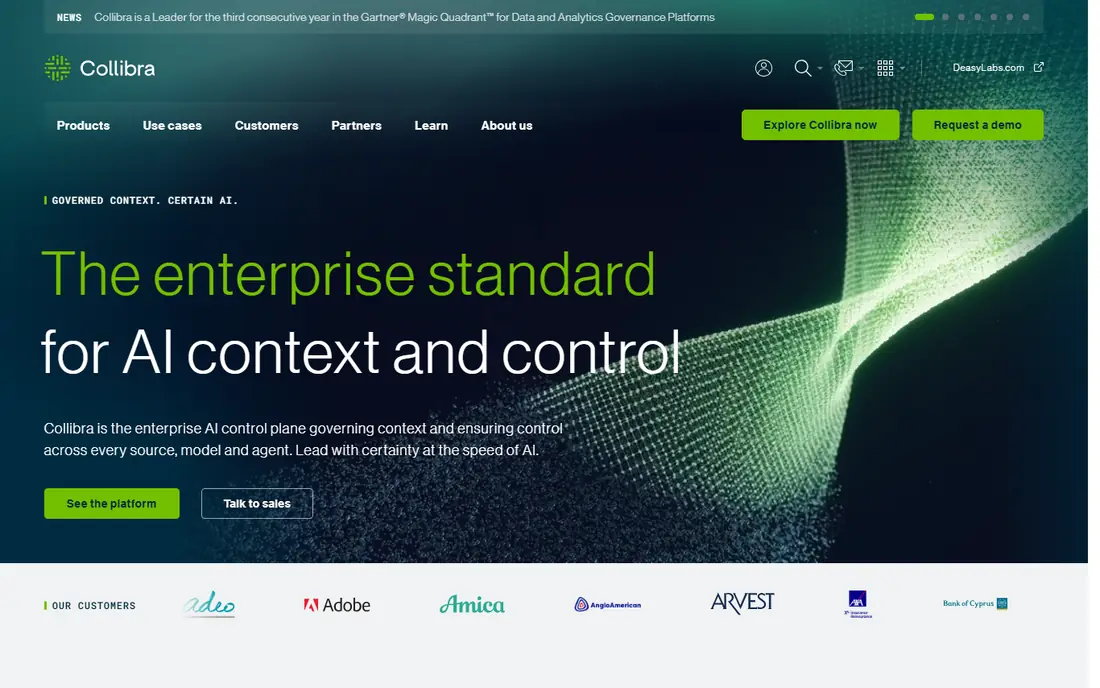
Collibra suits organizations where policy, approval and audit trails matter as much as search. Banks, insurers, health care providers and government teams often need that structure, with defined stewards, workflows for changes, and a business glossary tied to technical assets. Collibra covers those needs in a single platform rather than bolting them onto a search tool.
That strength comes with a trade off. Analysts who only want fast answers may find the workflow layer slower than a discovery first catalog. Collibra pays off most when compliance requirements are real, stewardship roles are staffed, and leadership will support the process changes that come with it.
- Deep governance workflows
- Policy and stewardship controls
- Audit focused design
- Pricing is quote based
- Adoption needs training
- Implementation timelines are longer
Secoda is the practical middle option. It offers a free tier, a clear search experience, lineage, and documentation tools that a small data team can run without consultants. For teams of ten to fifty people who mainly need to stop guessing where data comes from, that speed matters more than the deepest governance workflow.
The limit is also clear. A bank examiner or a strict regulator will likely want more formal policy controls than Secoda provides on its own. Teams should confirm that their warehouse, BI tool and orchestration system all get the lineage depth they need before they commit.
- Free tier for small starts
- Faster setup than enterprise platforms
- AI assisted search and documentation
- Not a full policy engine for strict regulators
- Lineage depth varies by connector
- Pricing details need a quote for larger plans
data.world takes a different approach by treating data as a connected graph. Relationships between datasets, terms, people and projects become first class, which helps teams that think in terms of linked concepts rather than isolated tables. It also supports open collaboration and dataset sharing, which suits research and public data work.
The trade off is fit. Teams that only want a simple catalog may find the graph model more than they need at first. It works best when analysts and stewards are willing to model relationships and when the organization values context and reuse across projects.
- Knowledge graph model for connected data
- Collaboration and dataset sharing
- Free individual option
- Pricing is quote based for business plans
- Graph thinking takes adjustment
- Smaller connector story than some rivals
OpenMetadata is a strong open source choice for engineering led teams. The core software is free to self host, and it covers cataloging, lineage, data quality checks and collaboration in one system. Teams that already run infrastructure and want control over deployment will appreciate that freedom.
The cost is time, not license fees. Someone must host, upgrade, secure and maintain the platform, and connector depth can vary. OpenMetadata makes sense when the team has that capacity and wants to avoid a large enterprise contract while keeping metadata under its own control.
- Free open source core
- Unified metadata model
- Data contracts and lineage
- Self hosting needs engineering time
- Support depends on community or paid help
- Setup is not instant
DataHub is another open source platform built for scale. It was designed to handle large numbers of datasets, jobs and users, with ingestion from many common data systems. Engineering teams that need a metadata graph and search at volume often shortlist it alongside OpenMetadata.
Like other open source options, DataHub rewards teams that can operate it well and punishes teams that expect a fully managed service for free. A managed cloud option exists for teams that want less operations work, but that version is priced separately. Test ingestion for your key sources early.
- Free open source core
- Built for large metadata volumes
- Broad ingestion options
- Self hosting and operations need skill
- Managed cloud pricing is separate
- Business user polish varies
Informatica Cloud Data Governance and Catalog
Great for: Large hybrid data estates
Informatica Cloud Data Governance and Catalog fits estates that mix cloud, on premises and legacy systems. Its scanner and lineage coverage reach sources that newer catalogs sometimes miss, and it sits inside the wider Intelligent Data Management Cloud for teams that also need integration and quality tools.
That breadth is also its weakness for small buyers. Pricing follows a consumption model, services are usually needed, and the platform is built for large programs. It is a strong enterprise pick, but a poor first catalog for a ten person data team.
- Broad coverage including legacy sources
- Consumption based cloud model
- Part of a wider data management suite
- Pricing is consumption based and hard to forecast
- Implementation is enterprise scale
- Smaller teams will find it too large
Microsoft Purview makes most sense for organizations already standardized on Azure, Fabric and Microsoft 365. It maps data across those services, supports governance and compliance workflows, and avoids adding a completely separate vendor for catalog work. Teams with existing Microsoft agreements may also find the cost easier to absorb.
Outside that stack, Purview loses much of its edge. Multi cloud teams may get better connector depth from Atlan, Alation or Collibra. Check how scanning and storage charges scale with your estate before assuming it is the low cost option.
- Native Azure and Microsoft 365 integration
- Unified governance view
- Consumption based pricing
- Best value only inside the Microsoft stack
- Costs vary with scanning volume
- Some features need Azure expertise
How we picked these
We compared official product pages, pricing pages, marketplace listings and public documentation for active metadata, catalog and governance features. We favored tools that collect metadata automatically, show lineage, support collaboration and governance, and are still sold and supported in October 2026. We did not claim hands-on testing. Where a vendor did not publish a price, we wrote See website rather than copying a third party estimate.
What to check before you buy
Start with your sources, not the vendor demo. List your warehouse, lake, BI tools, orchestration system and key operational databases, then ask each vendor to show lineage for those exact systems. A catalog that looks complete on a demo dataset can miss the one source your analysts use every day.
Next, decide who owns what. Active metadata only stays active when owners update terms, approve changes and respond to quality alerts. If no one owns a domain, pick a tool with a simpler stewardship model and a clear plan for naming owners in the first month. Also check access controls, audit logs and sensitive data handling before you connect production sources.
Finally, cost the whole program. Add implementation, training, connector work and steward time to the subscription. A free open source tool can cost more than a paid tool if it needs a quarter of an engineer to run, while a quote based enterprise tool can still be right if it prevents a failed audit or a costly migration later.
Frequently asked questions
What is active metadata management software?
Active metadata software collects metadata automatically from your data systems and uses it to drive search, lineage, quality alerts, governance and documentation. It differs from a static catalog because signals such as usage, freshness and policy status update as data changes, so teams see current context rather than old notes.
Is active metadata the same as a data catalog?
A data catalog is the searchable inventory. Active metadata management is the wider practice of collecting, connecting and acting on metadata across the stack. Most modern catalogs now include active features, but a catalog without automated lineage and quality signals is closer to a directory than an active platform.
How much does active metadata software cost?
Open source tools are free to self host, while small team tools may start with a free tier and paid plans on request. Enterprise platforms from Atlan, Alation, Collibra and Informatica are usually quote based and can run into six figures a year for mid-size deployments, plus services.
Do small teams need enterprise metadata software?
Usually not at first. A small team should start with a tool that covers its warehouse and BI stack, shows lineage, and lets analysts search and document tables. Move to an enterprise platform when governance, audit or multi domain stewardship becomes a formal requirement.
How long does implementation take?
Cloud native tools can be running in weeks for a standard stack, while enterprise platforms often take three to nine months with services, stewardship design and connector work. The longest part is rarely installation. It is agreeing on terms, owners and policies.
What should we test in a trial?
Test search on real table names, lineage for a report your team trusts, sensitive data detection on a known column, and the workflow for requesting access or correcting a description. Also test how the tool handles a broken pipeline or a stale table, since that is where active metadata proves its value.
Sources
See where you really rank - block by block
ProMapRanker scans Google Maps across a grid of your service area. Simple monthly plans from $19, white-label on every plan.
Start freeKeep reading
 wpforms alternatives
Best WPForms Alternatives in 2026
We compare 9 wpforms alternatives for WordPress forms, with free and paid options, current pricing notes, and honest limits for small business sites in 2026.
Read → windows task scheduler alternatives
Best Windows Task Scheduler Alternatives in 2026
Looking for Windows Task Scheduler alternatives? We compare 9 schedulers for Windows and cross-platform work, from free tools to enterprise automation.
Read → which ai video service is best
Which AI Video Service Is Best in 2026
which ai video service is best? We compare 10 legitimate AI video services on price, avatars, editing and output quality to help you pick the right tool.
Read →