 ProMapRanker
Best Accounting Software for Retail Business in 2026


US retailers with an accountant · Pricing starts at: $38 per month
Key takeaways
- QuickBooks Online is our pick for most US retailers because accountants know it well and its Plus plan adds inventory tracking.
- Xero suits retailers with larger teams because every plan includes unlimited users, which keeps seat costs predictable as staff grows.
- Zoho Books and Wave give small shops a low cost start, but check invoice, user and inventory limits before you commit to either one.
- Retail fit depends less on the general ledger and more on the point of sale link, stock tracking and sales tax handling in daily use.
Quick comparison
| Pick | Great for | Pricing starts at | Free tier | |
|---|---|---|---|---|
| QuickBooks Online | US retailers with an accountant | $38 per month | Free trial | Visit |
 Xero | Growing teams with unlimited users | $25 per month | Free trial | Visit |
 Zoho Books | Budget shops wanting full accounting | Free | Yes | Visit |
 FreshBooks | Service led shops with simple stock | $23 per month | Free trial | Visit |
 Wave | Very small shops on a tight budget | Free | Yes | Visit |
 Sage 50 | Stock heavy shops wanting desktop depth | See website | Free trial | Visit |
 AccountEdge | Single user desktop shops | $20 per month | Free trial | Visit |
 Oracle NetSuite | Multi-location and larger retailers | See website | No | Visit |
 Kashoo | Simple books for small shops | See website | Free trial | Visit |
The best accounting software for retail business
Retail accounting is mostly about sales, stock and tax, repeated every day. We compared official feature pages, pricing pages and point of sale links, and we focused on tools that handle shop sales without a long manual workaround.
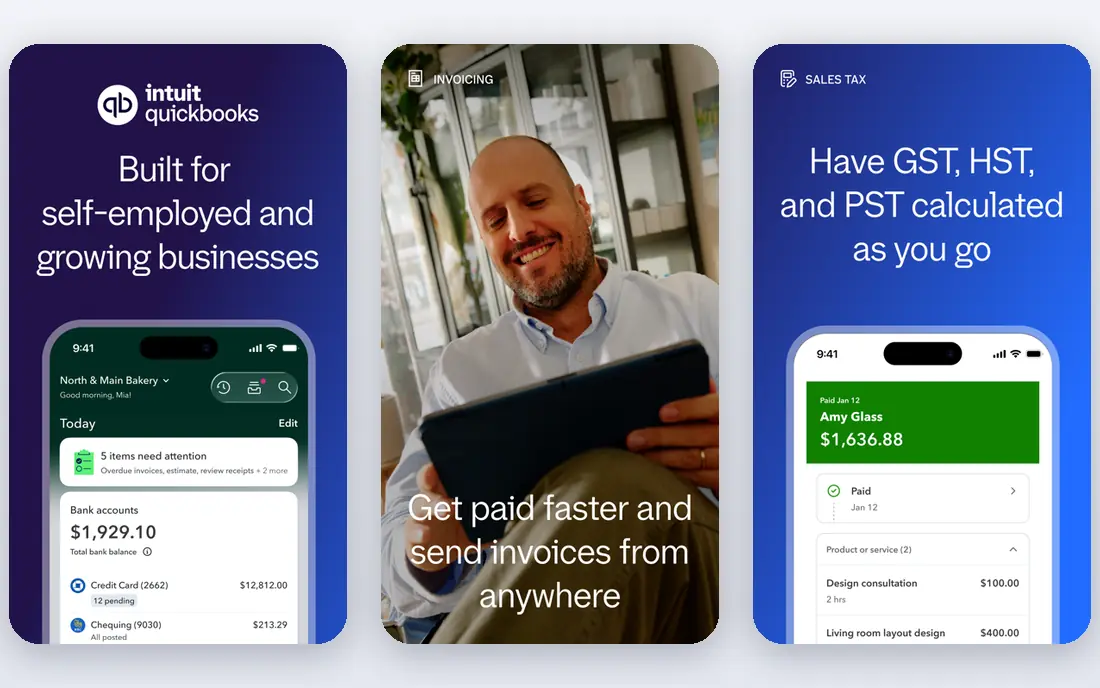
QuickBooks Online fits a shop that sells in store and online and wants its accountant to open the same file without a conversion step. Bank feeds, invoicing, expense capture and sales tax tools sit in one place, and the Plus plan adds inventory tracking, purchase orders and profitability by product or location. That combination matters for a retailer because stock value, cost of goods sold and margin by item are part of the daily picture, not a month end extra.
The catch is the seat math and the add-on stack. Simple Start covers one user, so a shop with a manager and a bookkeeper will need a higher plan, and payroll, payments and time tracking can each add cost. Promotional prices also expire, so budget on the regular monthly rate shown on the vendor pricing page. If your accountant already works in QuickBooks and you need inventory depth, this is still the simplest choice to defend.
- Wide accountant familiarity
- Inventory tracking on Plus
- Many point of sale and payment links
- One user on Simple Start
- Costs rise sharply on higher plans
- Payroll is an add-on
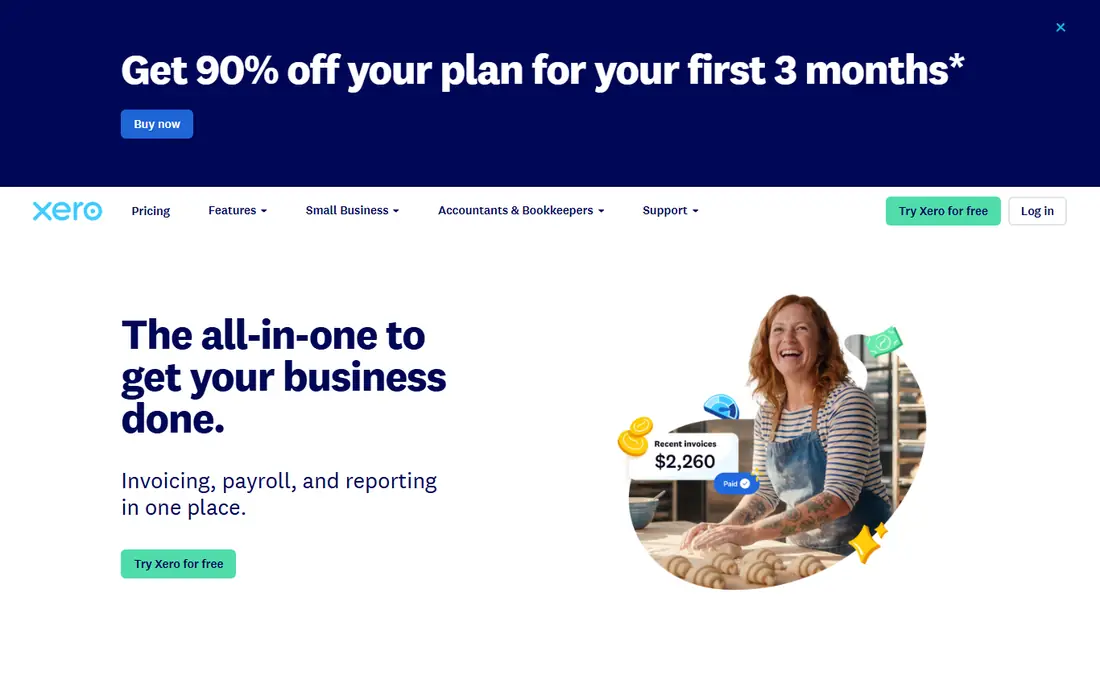
Xero appeals to a retailer that hires seasonally or gives several staff members access to the books. Unlimited users remove the per seat surprise that hits growing shops, and bank reconciliation is fast enough that daily card settlements and supplier payments stay current. The app marketplace adds point of sale, inventory and ecommerce links, so a shop can connect its selling channels rather than retyping sales.
Inventory is the limit to check first. Xero tracks stock at a basic level, so a shop with assemblies, serial numbers or complex warehouse moves may need an inventory add-on or a different system. The Early plan also caps invoices and bills each month, which can pinch a busy shop. For a team that values clean books and flexible access over deep stock control, Xero is a strong and calm alternative.
- Unlimited users on every plan
- Clean bank reconciliation
- Broad app marketplace
- Entry plan caps invoices and bills
- Inventory is basic
- US payroll runs through a partner
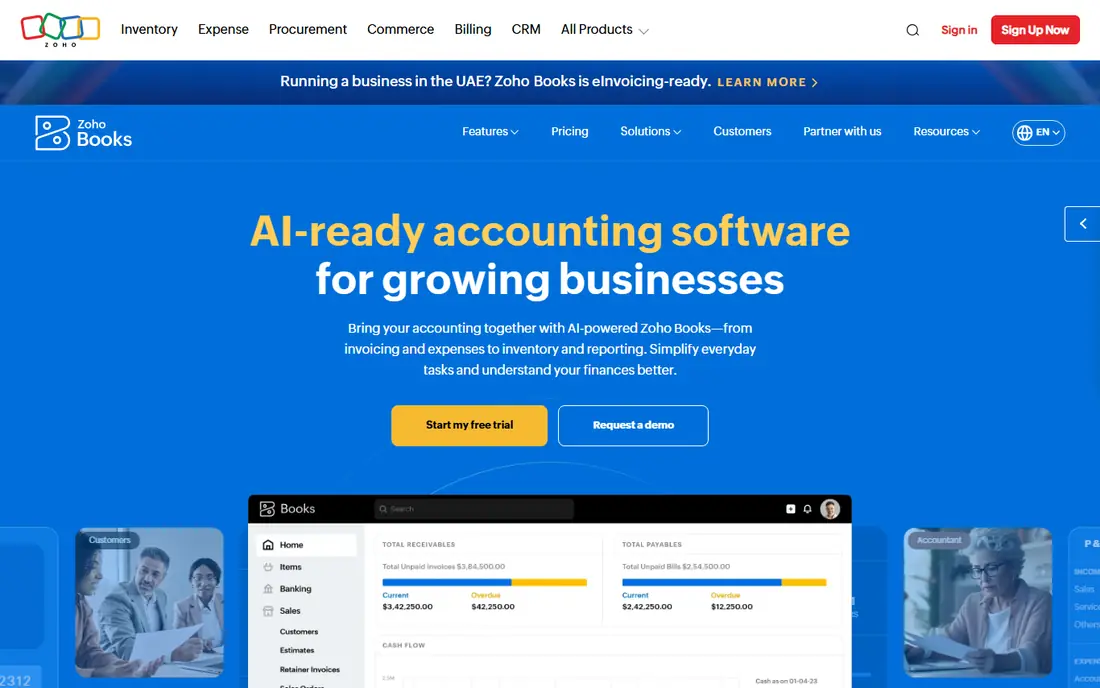
Zoho Books gives a small retailer real double entry accounting at no monthly cost when annual revenue sits under the free plan limit. Invoicing, expenses, bank reconciliation and reports are included, and paid plans add inventory, purchase orders, sales orders and workflow approvals. A shop already using other Zoho tools gets a further benefit, since customer, item and sales data can move between those apps.
The free plan is not a forever home for a growing shop. Once revenue passes the limit, or invoice volume and user needs grow, a paid plan becomes necessary, and the best inventory features sit above the entry tier. Check the current revenue and invoice limits on the vendor pricing page before you build your stock list around it. For a new shop watching every dollar, Zoho Books offers more accounting per dollar than most free options.
- Free plan for smaller businesses
- Double entry accounting
- Inventory on paid plans
- Free plan has a revenue limit
- User counts rise by plan
- Some features need higher tiers
FreshBooks works best for a retail business that also sells services, repairs or custom orders and lives on invoices. Invoices look polished, payment reminders are simple, and expenses and time can be tied to a client or project without a finance background. Setup is quick, and a small team can send its first invoice on the same day it signs up.
Stock is where FreshBooks falls short for a pure retailer. It tracks items and quantities at a basic level, but it is not built for multi-location stock, assemblies or detailed cost layers. Lower plans also limit billable clients, so a shop with many repeat customers should price the Plus or Premium tier, not Lite. Choose FreshBooks when invoicing quality matters more than warehouse depth.
- Polished invoicing
- Easy expense and time tracking
- Simple setup
- Client limits on lower plans
- No deep inventory
- Double entry limits are a known weakness
Wave suits a market stall, a single shop or a side business that needs clean books without a monthly fee. The free Starter plan covers unlimited invoices, estimates and bookkeeping records, which is enough to track sales, expenses and tax categories for a small operation. The interface stays simple, and owners without accounting training can usually find their way around it.
The trade offs show up as the shop grows. Starter lacks automatic bank import, inventory depth is limited, and support is lighter than on paid rivals. Payments processing and payroll add fees, so a shop that takes many card payments should compare total cost, not just the subscription price. Wave is a good starting point, and a good place to learn what you actually need before paying for a larger system.
- Free invoicing and bookkeeping
- Simple interface
- No revenue cap on the free plan
- No automatic bank import on Starter
- Limited inventory
- Payroll and payments cost extra
Sage 50 is the desktop leaning option for a retailer that cares more about stock control than about working from a phone. Inventory features run deeper than most cloud tools at this price level, with options for serialized items, assemblies and detailed costing that suit parts shops, building suppliers and other stock heavy businesses. Reporting is also strong, and multi-user options on higher tiers support a larger back office team.
The commitment is the honest catch. Sage 50 is sold as an annual subscription, so cancelling can leave read only access to your own data, and the desktop model suits shops with a fixed back office computer better than a team that works across many devices. Pricing also varies by tier and term, so get a written quote for the tier that covers your user count. For a stock heavy shop that wants depth over mobility, Sage 50 earns its place.
- Deep inventory and job costing
- Serialized stock options
- Strong reporting for larger shops
- Annual subscription commitment
- Desktop focus
- Pricing is hard to compare at a glance
AccountEdge fits a small shop where one person does the books on one computer and wants to keep data local. It covers invoicing, inventory, payroll through an add-on and standard reports at a lower monthly cost than most rivals. Owners who distrust a purely cloud workflow, or who work in a location with unreliable internet, often prefer this model.
Scale is the limit. The base plan is single user, and moving to hosted multi-user access raises the price. The integration range is also smaller than QuickBooks or Xero, so check that your point of sale system connects cleanly before you commit. For a one person shop with steady stock and simple sales channels, AccountEdge is a quiet and affordable fit.
- Low monthly cost
- Desktop control of data
- Payroll add-on available
- Single user on the base plan
- Smaller integration range
- Cloud access needs the hosted tier
NetSuite is not a small shop tool, and we list it for retailers that have outgrown a simple ledger. It joins accounting, inventory, order management and ecommerce in one system, so a multi-location retailer can see stock, sales and margin across stores without stitching reports together. Multi-entity and multi-currency support also help chains and brands that sell across borders.
Cost and setup are the real barriers. Pricing is quoted per business, implementation takes time and often needs a partner, and training a team on a full enterprise system is a project in itself. A single shop should not buy NetSuite for features it will not use in the next two years. A growing chain that needs one source of truth for stock and finance, however, will find the depth hard to match elsewhere.
- Unified finance, inventory and ecommerce
- Multi-location and multi-entity support
- Deep reporting
- Quote only pricing
- Long implementation
- Far more system than a small shop needs
Kashoo keeps the books simple for a shop owner who wants correct double entry accounting without a long learning curve. Invoicing, expenses, bank connections and standard reports cover the daily needs of a small retailer, and the mobile app lets an owner check sales and balances away from the counter. It is a good fit when the shop sells a modest range and does not need warehouse level stock control.
The limits mirror its simplicity. Inventory tracking is basic, the integration range is smaller than the market leaders, and pricing should be confirmed on the vendor site because plans and terms change. A shop that grows into multi-location stock or complex purchase orders will likely outgrow Kashoo. For a small shop that wants simple, correct books and a low fuss setup, it is worth a trial.
- Simple double entry books
- Easy invoicing
- Clean mobile access
- Limited inventory depth
- Smaller app marketplace
- Pricing needs a vendor check
How we picked these
We compared official feature pages, pricing pages and point of sale and inventory documentation, and we kept only tools that exist and work in October 2026 and that handle retail sales, stock or tax in a practical way. We gave weight to point of sale links, inventory depth, user limits and the total cost once payroll, payments and add-ons are included. We did not claim hands-on testing, and we did not include tools that only handle general bookkeeping with no retail angle.
What to check before you buy retail accounting software
Start with your selling channels, not with the general ledger. List every place you sell, including your counter, your website and any marketplace, and confirm that sales, refunds and fees flow into the ledger without daily retyping. A clean point of sale link saves more time than any report, and a weak link creates errors that show up at tax time.
Next, test stock on your real items. Enter a product with variants, a bundle or a kit, receive stock, sell part of it, return part of it, and check the margin report. Many tools look strong on a demo with ten items and struggle with variants, locations or cost changes. Also check sales tax handling for each state or region where you sell, and confirm who updates rates and who files returns.
Finally, price the whole stack for twelve months. Add the base plan, extra users, payroll, payments fees and any inventory add-on, then compare that total with the value of the time you save. A free plan that needs three paid add-ons can cost more than a mid tier plan that includes them. Run a short trial with real sales data, and involve your accountant before you migrate a full year of books.
Frequently asked questions
What is the best retail accounting software for most shops?
QuickBooks Online is our pick for most US retailers because accountants know it, its Plus plan adds inventory, and its point of sale links are broad. Xero is a close second for teams that need unlimited users and clean bank reconciliation. The best choice still depends on your stock depth, your sales channels and your accountant.
Does retail accounting software connect to a point of sale system?
Most tools on this list connect to at least one major point of sale system, either directly or through an app marketplace. QuickBooks, Xero and Zoho Books each list point of sale and ecommerce links on their integration pages. Confirm your exact point of sale product before you buy, because a link for one system does not guarantee a link for another.
Do I need inventory tracking in my accounting software?
You need it if stock value, cost of goods sold or margin by product matters to your pricing and tax returns. A simple shop with a small range can track stock in a separate tool, but a shop with variants, bundles or multiple locations should keep stock in the ledger or in a tightly linked inventory app. Without that link, margin reports will lag behind reality.
Can free accounting software handle a retail shop?
Free plans from Wave and Zoho Books can handle a very small shop with simple stock and few users. They cover invoicing, expenses and basic reports well. A growing shop with multiple locations, complex stock or payroll usually needs a paid plan, and the cost of add-ons can erase the free saving.
How much should a small retailer budget for accounting software?
Budget on the regular monthly rate, not a short promotion, and add users, payroll and payment fees. A small shop often lands between free and about 140 dollars per month for the software alone, while a multi-location retailer can pay far more. Get a twelve month total in writing before you commit.
Sources
See where you really rank - block by block
ProMapRanker scans Google Maps across a grid of your service area. Simple monthly plans from $19, white-label on every plan.
Start freeKeep reading
 wpforms alternatives
Best WPForms Alternatives in 2026
We compare 9 wpforms alternatives for WordPress forms, with free and paid options, current pricing notes, and honest limits for small business sites in 2026.
Read → windows task scheduler alternatives
Best Windows Task Scheduler Alternatives in 2026
Looking for Windows Task Scheduler alternatives? We compare 9 schedulers for Windows and cross-platform work, from free tools to enterprise automation.
Read → which ai video service is best
Which AI Video Service Is Best in 2026
which ai video service is best? We compare 10 legitimate AI video services on price, avatars, editing and output quality to help you pick the right tool.
Read →