 ProMapRanker
Best 401k Investment Companies in 2026


Most employers and solo savers · Pricing starts at: See website
Key takeaways
- Fidelity, Vanguard, and Charles Schwab lead for most savers because they combine broad fund choice with low published account costs, though the exact plan terms depend on the employer plan.
- Small businesses often do better with Guideline or Human Interest, which handle payroll links and compliance work that a large brokerage leaves to the employer.
- Solo savers should check Roth support, loan rules, and fund minimums before opening, since those details matter more than a brand name.
- This is not financial advice. Fees, fund lineups, and plan rules vary by plan, and you should read the plan documents before you enroll or roll money over.
Quick comparison
| Pick | Great for | Pricing starts at | Free tier | |
|---|---|---|---|---|
| Fidelity Investments | Most employers and solo savers | See website | No | Visit |
 Vanguard | Low-cost index investors | See website | No | Visit |
 Charles Schwab | Flexible investing and banking links | See website | No | Visit |
 Empower | Large employers and planning tools | See website | No | Visit |
 Guideline | Small businesses that want automation | See website | No | Visit |
 Human Interest | Small businesses that want full service | $80 per month | No | Visit |
 Principal Financial Group | Midsize and large employers | See website | No | Visit |
 T. Rowe Price | Active fund choice inside a plan | See website | No | Visit |
 Betterment for Business | Hands-off managed portfolios | See website | No | Visit |
The best 401k investment companies
We compared official plan pages, pricing pages, fund lineups, and support options for employer plans and solo plans. The best retirement companies below serve different sizes, so match the provider to your headcount and how much admin help you want.
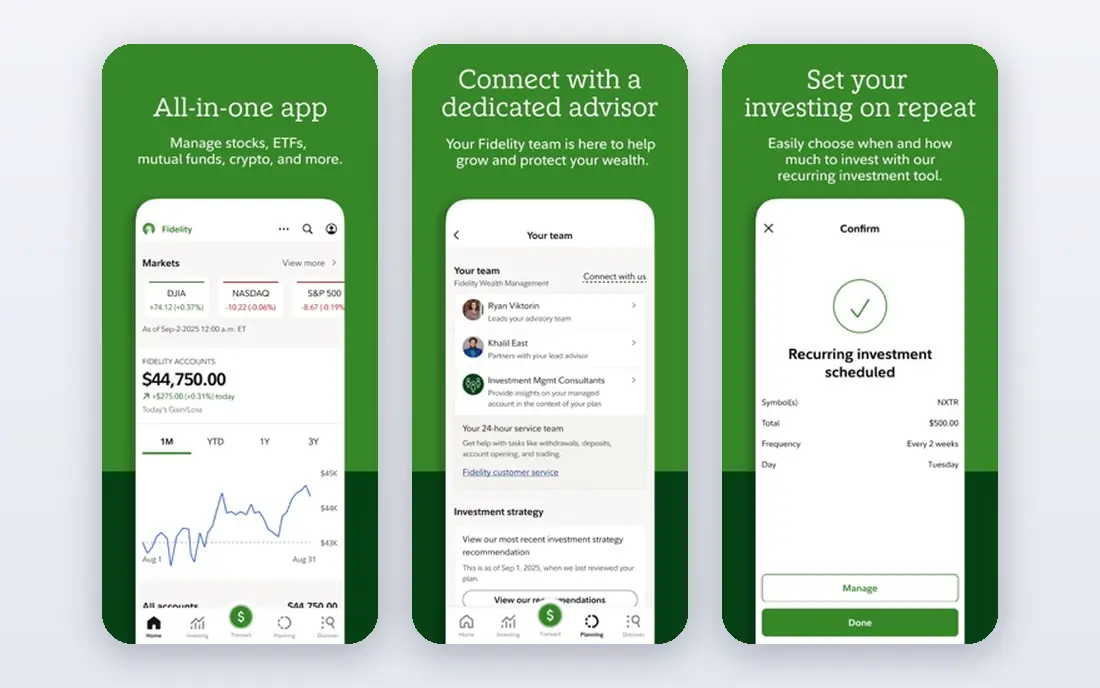
Fidelity works well as a first place to look because it covers employer plans, solo 401k plans, and rollovers under one roof. Savers get a wide set of index funds, target date funds, and individual stocks and ETFs where the plan allows them, plus planning calculators that show how a contribution change affects a retirement goal. The mobile app and website make it easy to check a balance, change a contribution rate, and review fund costs without calling in for routine tasks.
The catch is that an employer plan is not the same as a retail account. Your fund menu, matching formula, and any account fees are set by the plan, not by Fidelity alone. Ask for the fee disclosure and the fund lineup before you judge the provider. For a solo plan, Fidelity is a strong low-friction choice, but you still need to handle tax filings and plan documents yourself.
- Broad fund and ETF choice
- Strong planning tools
- Long record as a large retirement recordkeeper
- Plan fees vary by employer plan
- Some advice services cost extra
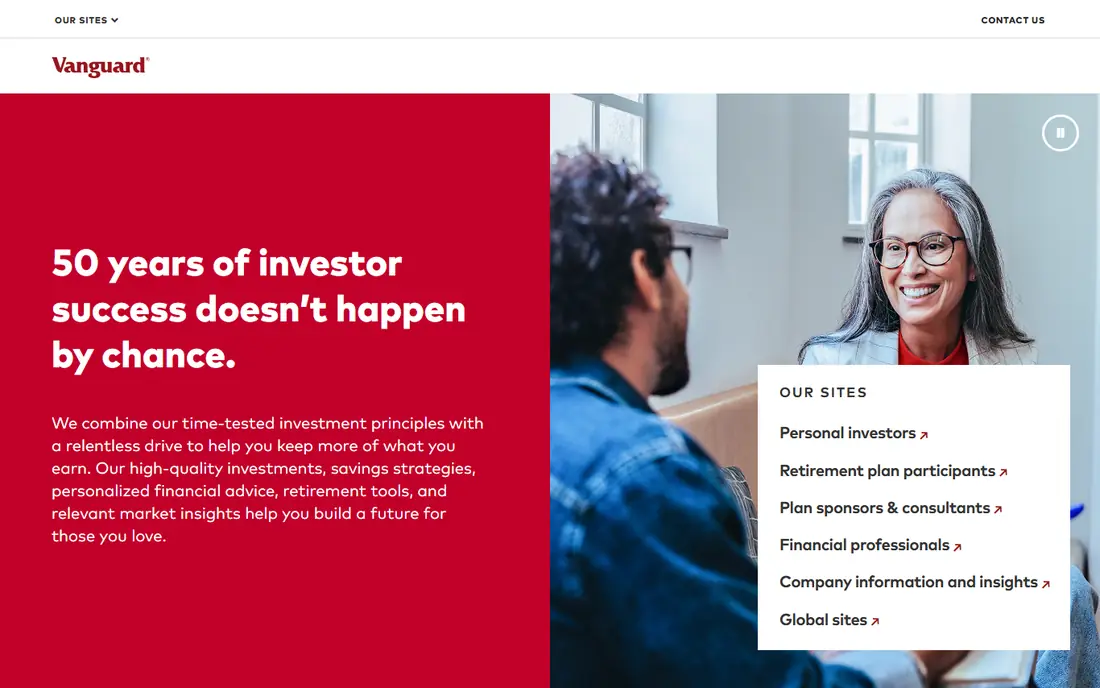
Vanguard remains the best retirement company for savers who want to keep costs low and keep the portfolio simple. Its index funds and target date funds are easy to explain to employees, and the company has a long history of pushing fund costs down across the industry. If your main goal is a diversified portfolio that you rarely touch, Vanguard gives you few reasons to overthink the choice.
The trade-off is flexibility. Vanguard solo 401k plans have historically offered fewer features than Fidelity or Schwab, so check Roth support and loan options if those matter to you. Employer plans also vary in service style, and some employers pair Vanguard funds with a separate recordkeeper. Read the plan summary carefully rather than assuming every Vanguard plan works the same way.
- Investor-owned structure
- Well-known low-cost index funds
- Simple target date options
- Solo plan features are more limited than some rivals
- Website feels plain next to Fidelity
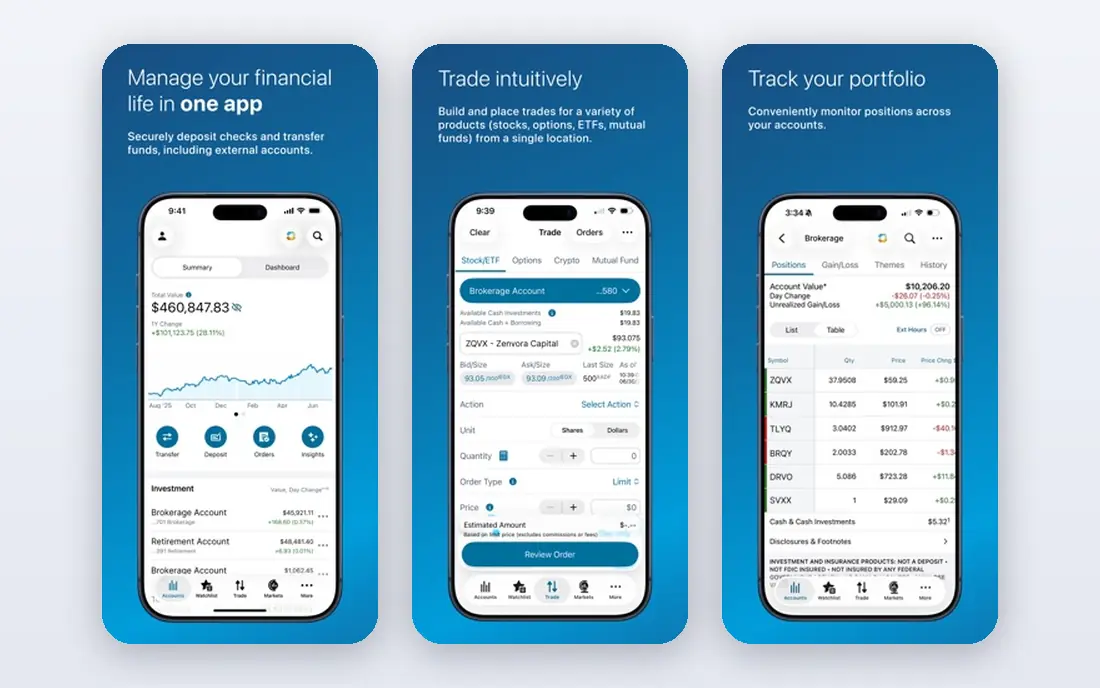
Charles Schwab suits savers who want brokerage flexibility inside a retirement account. Individual 401k plans at Schwab support traditional and Roth contributions, and employer plans can offer a broad menu that includes Schwab funds and outside funds. The banking side also helps people who like one login for checking, brokerage, and retirement accounts, though banking features are separate from the retirement plan itself.
Schwab is not the cheapest name on every single fund, and its strength shows more in service and platform range than in one headline fee. If you want a hands-off target date fund, Schwab can do that too, but you may not use much of what makes Schwab distinct. Compare the specific fund expenses in your plan, since those matter more than the provider logo.
- Broad investment choice
- Useful banking links
- Strong customer service reputation
- Some managed advice options cost extra
- Fund menu depends on the plan
Empower is one of the largest retirement plan providers in the United States, and it is built for employers rather than for a single saver opening an account online. Its planning tools project retirement income, show savings gaps, and let employees model different contribution levels in plain terms. That focus on engagement helps employers who worry that staff enroll but never raise contributions.
The downside for a small reader is access. You cannot choose Empower the way you choose a brokerage; your employer chooses it. Fees and fund menus are plan specific, so two Empower plans can look quite different. If your employer uses Empower, use its planning tools and check whether advice or managed account help is included or billed separately.
- Large retirement recordkeeper
- Engaging planning and projection tools
- Broad employer plan support
- Pricing is quote based
- Retail investors cannot simply open an employer plan
Guideline is a strong pick for a small business that wants a 401k without hiring a benefits team. It automates recordkeeping, compliance testing, and payroll deductions, and it links to common payroll systems so contributions flow without manual files each pay period. The plan design is simpler than a fully custom large-company plan, which is a feature for owners who want to launch quickly.
The limit is choice. Guideline curates its investment lineup rather than opening the full brokerage universe, so an owner who wants a very specific fund family may feel boxed in. Pricing also depends on headcount and plan tier, so get a quote for your exact employee count. For most small firms, the time saved on admin work is worth that trade.
- Automated administration and compliance support
- Payroll integrations
- Clear monthly pricing model
- Fund choice is more curated than a full brokerage
- Larger complex plans may need more custom help
Human Interest publishes a starting price of $80 per month plus $5 per eligible employee for its Essentials plan, with a possible one-time setup fee, which makes early budgeting easier than with quote-only providers. It handles recordkeeping, compliance work, and payroll links, and it offers education for first-time savers. That combination suits owners who want a real service team behind the plan rather than a self-serve portal alone.
Read the full fee picture before signing. Asset-based recordkeeping and advisory fees apply in addition to the monthly base fee, and higher tiers cost more for added admin help. Those fees are disclosed on its pricing page, but they are easy to miss if you only look at the headline monthly number. For a firm with steady payroll, the service level can still be good value.
- Published starting price
- Automated administration
- Payroll integrations and bilingual support materials
- Setup fee may apply
- Asset-based fees apply on top of the base fee
Principal is a familiar name for midsize and large employers that want a traditional retirement provider with benefits expertise. It supports a range of plan designs, offers employee education, and can sit alongside other workplace benefits from the same group. Employers that already use Principal for other benefits may find one vendor simpler to manage.
For a very small business, Principal can feel more formal than Guideline or Human Interest, and pricing requires a quote. Fund menus and fees are plan specific, so ask for the full disclosure and compare fund expenses with the leaders above. Principal earns its place here for employers that value an established provider and a broad service team.
- Long employer plan experience
- Broad retirement and benefits range
- Planning resources for employees
- Pricing is quote based
- Smaller firms may find onboarding heavier
T. Rowe Price appeals to savers who want active management rather than index-only portfolios. Its target date funds and actively managed funds are widely used inside employer plans, and its research materials explain market and retirement topics in a steady, non-hype tone. If your plan offers T. Rowe Price funds, you can build a diversified portfolio without leaving the provider family.
The honest catch is cost. Active funds usually carry higher expenses than index funds, and higher expenses compound over decades. That does not make active funds wrong, but it does mean you should compare the expense ratio and the long-term record before choosing them over an index option in the same plan. Also note that you cannot open an employer plan directly; your employer must offer it.
- Strong active fund lineup
- Well-regarded target date series
- Research and education materials
- Active funds can cost more than index funds
- Plan availability depends on the employer
Betterment for Business is the managed option on this list. Employees answer questions about goals and risk, and the portfolio is built and rebalanced for them, which suits staff who will not manage investments on their own. Employers get payroll integration and admin support, and the employee interface is cleaner than many traditional recordkeeper portals.
The trade-off is control. If you enjoy picking funds or want a specific sector fund, a managed portfolio will feel restrictive. Managed fees also add to fund costs, so compare the total cost with a self-directed index portfolio. For employers whose staff want simplicity above all else, that managed approach can raise participation and reduce confusion.
- Automated managed portfolios
- Simple employee experience
- Payroll links for employers
- Less control for investors who want to pick individual funds
- Pricing is plan specific
How we picked these
We compared official provider pages, pricing disclosures, fund lineups, and plan types for employer, solo, and managed plans. We favored providers that are active in 2026, publish clear plan information, and serve a distinct size or style of saver. We left out providers that could not be verified as current retirement plan providers, and we used See website where a price depends on plan size or is only given by quote.
What to check before you choose a 401k provider
For employers
Start with headcount, payroll system, and how much admin work you want to hand over. A small firm often gains more from automation and compliance help than from the widest fund menu. Ask each provider for total first-year cost, including base fees, per-employee fees, asset-based fees, and setup fees, and ask who signs compliance filings.
For solo savers and employees
Check whether your plan allows Roth contributions, loans, and after-tax contributions if those matter to you. Compare fund expense ratios inside your actual plan, not on a marketing page, and check the vesting schedule for any employer match. If you are rolling over an old plan, confirm the rollover process and any tax forms before moving money.
Fees that hide in plain sight
Fund expenses, managed account fees, and recordkeeping charges can all appear in different documents. Ask for the fee disclosure, the fund prospectus summary, and the total cost for a typical balance. A provider that explains all three clearly is usually easier to live with for years.
Frequently asked questions
What is the best 401k company for a small business?
For most small businesses, Guideline or Human Interest are strong starting points because they automate compliance and payroll links. Fidelity and Schwab also work well for owners who want more investment control and are comfortable handling more admin work themselves.
Which is the best retirement company for low fees?
Vanguard and Fidelity are often cited for low-cost index funds, but the fund expenses inside your specific employer plan matter more than the brand. Compare the expense ratios on your plan menu and ask for the full fee disclosure before deciding.
What are the best retirement plan companies for large employers?
Empower, Fidelity, Principal, and T. Rowe Price all serve large employers with broad plan design, recordkeeping, and employee education. Large employers should run a formal comparison on service levels, fund menus, and total cost for their headcount.
Is a solo 401k better at Fidelity, Schwab, or Vanguard?
All three offer solo plans, but features differ on Roth support, loans, and fund choice, and those details change over time. Check the current solo plan page for each provider and pick the one that matches the features you actually need.
Can I choose my own 401k provider if my employer already has one?
No, for an employer plan you use the provider your employer selected. You can choose how to invest inside that plan, and you can open a separate IRA or solo plan only if you qualify through self-employment or other eligible income.
Is this list financial advice?
No. This is general information only, and terms and prices vary by plan. Retirement investing involves risk, including possible loss, and you should consider speaking with a qualified adviser about your own situation.
Sources
See where you really rank - block by block
ProMapRanker scans Google Maps across a grid of your service area. Simple monthly plans from $19, white-label on every plan.
Start freeKeep reading
 which software is best for pdf page removal
Which Software Is Best for PDF Page Removal in 2026
Find which software is best for pdf page removal, from free online tools to desktop editors, with page controls, privacy, safety, and pricing compared.
Read → when i work alternatives
Best When I Work Alternatives in 2026
Looking for when i work alternatives? We compare 8 scheduling apps for hourly teams, covering pricing, free plans, time clocks and the best fit for business.
Read → the best tool for keyword analysis
The Best Tool for Keyword Analysis in 2026
Find the best tool for keyword analysis with our 2026 comparison of 10 keyword analysis software tools on data depth, difficulty scores and price today.
Read →