 ProMapRanker
2026 Guide to the Best 3PL Companies for Small Brands

Small brands wanting straightforward per-order pricing · Pricing starts at: Quote only
Direct answer
Fulfillrite comes first here, mainly for small brands wanting simple per-order pricing. eFulfillment Service fits startups with no order minimums; Flowspace fits on-demand warehousing with no long lease. Listed starting prices: Flexport from $4.80 per order, $5,000 monthly minimum, ShipBob from $5.00 per order for the first item and ShipMonk from $2.50 per order for the first item. All 6 tools are compared below on price, free plan and limits.
ProMapRanker put together this guide to 3PL companies for small brands for readers who want a clear shortlist without reading every vendor page. It compares 6 tools on starting price, free plans, who each one suits and where each one falls short.
Key takeaways
- Fulfillrite takes the first slot, best suited to small brands wanting straightforward per-order pricing.
- The main caution on Flexport: 5,000 dollar minimum monthly fulfillment spend.
- Flexport has the lowest monthly starting price in this list: $4.80 per order, $5,000 monthly minimum.
- A permanent free plan is missing from all 6 tools, Fulfillrite and ShipMonk included; plan for a trial or a premium start.
Quick comparison
| Pick | Great for | Pricing starts at | Free tier | |
|---|---|---|---|---|
| Fulfillrite | Small brands wanting straightforward per-order pricing | Quote only | No | Visit |
 eFulfillment Service | Startups with no order minimums | Quote only | No | Visit |
 Flowspace | On-demand warehousing with no long lease | Quote only | No | Visit |
 Flexport | Marketplace sellers needing quick delivery | From $4.80 per order, $5,000 monthly minimum | No | Visit |
 ShipBob | DTC brands needing global reach | From $5.00 per order for the first item | No | Visit |
 ShipMonk | Subscription boxes and scaling DTC | From $2.50 per order for the first item | No | Visit |
3PL Companies for Small Brands profiles
Pick Fulfillrite if this describes you: small brands wanting straightforward per-order pricing. Fulfillrite is a small-business 3PL that keeps pricing straightforward. The network is smaller than ShipBob or ShipMonk, so delivery speed relies on where customers live relative to the facilities.
In daily use, pricing is quote-based, so the per-order rate relies on product size, weight, and order count. Beyond that, Fulfillrite fits brands shipping under a handful of hundred orders per month that want a straightforward per-order price and no minimum commitment. Pricing for Fulfillrite is quote based, so budget talks start with the vendor. Fulfillrite does not include a free plan.
Where it is weaker: Pricing is only available on request.
- Suits small brands and crowdfunding campaigns
- Straightforward per-order pricing with no monthly minimums
- Smaller network than the national providers
eFulfillment Service is built with startups with no order minimums in mind. A brand shipping 30 orders per month pays only for those 30 orders, with no minimum spend to include. The network is smaller than ShipBob or ShipMonk, and per-order costs run higher at low volume than a negotiated rate at a bigger provider.
Where it falls short: Per-order costs run higher at low volume.
Worth adding: the value here is the low barrier to entry, not the lowest rate. Also, pricing is quote-based, since cost relies on product size, weight, and shipping speed. eFulfillment Service does not publish a starting price; ask for a quote. eFulfillment Service has no free plan.
- 30-day Test Drive refunds fees up to 250 dollars
- Zero order minimums and no contract
- Smaller network than the national providers
Flowspace makes the most sense for on-demand warehousing with no long lease. Flowspace runs an on-demand warehousing network that lets brands place inventory in shared facilities near their customers without signing a long warehouse lease. Pick Flowspace if you want distributed warehousing on demand, you ship enough to benefit from nodes near your customers.
Where it falls short: Pricing is only available on request.
You can accept shared facilities in exchange for no long lease. From a buyer's view, pricing is quote-based, since cost relies on storage volume, order count, and the nodes used. Flowspace does not show a fixed starting price, so you request a quote. There is no free plan with Flowspace.
- Network model lets brands place stock near customers
- On-demand warehouse space without a long lease
- Less control than a dedicated warehouse
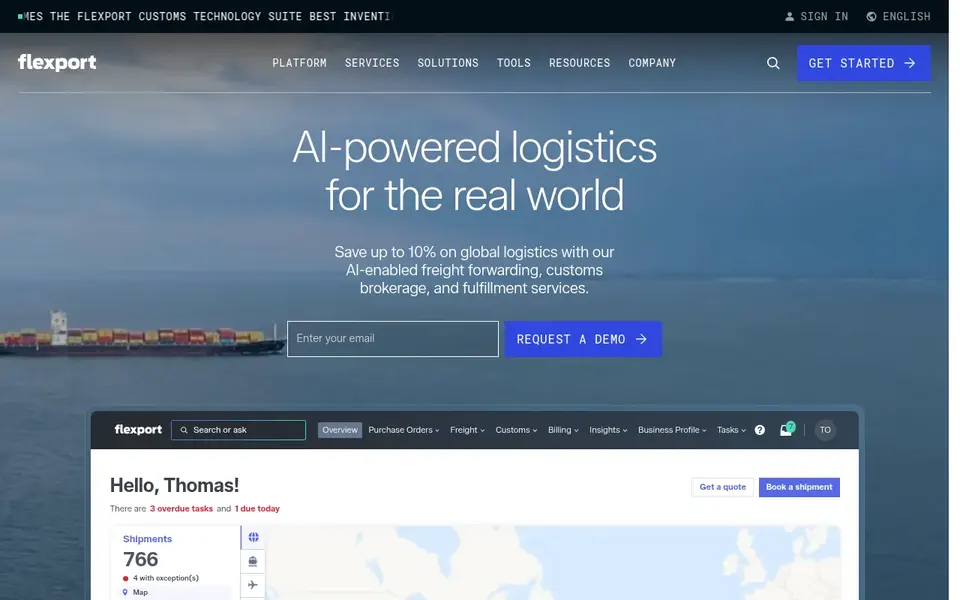
Flexport targets marketplace sellers needing quick delivery. Fees run a blended 4.80 to 6.20 dollars per order, which is simpler to forecast than separated line items even when the total lands similarly. As for the details, Deliverr was acquired by Shopify in 2022 as the core of Shopify Fulfillment Network, then Flexport acquired Shopify logistics business including Deliverr in June 2023.
Watch-outs: 5,000 dollar minimum monthly fulfillment spend.
As for the details, a small, light item might cost 4 to 5 dollars per unit including shipping, whereas a medium-sized product runs 6 to 9 dollars. Flexport now applies a 5,000 dollar minimum monthly fulfillment spend as of January 2026, which excludes most small brands outright. From a buyer's view, Flexport acquired Deliverr in 2022 and combined its freight forwarding with Deliverr ecommerce fulfillment network. What you pay to start with Flexport: From $4.80 per order, $5,000 monthly minimum. There is no free plan with Flexport.
- Two-day delivery badges on marketplaces
- Fulfillment under one contract
- Blended pricing hides per-line costs
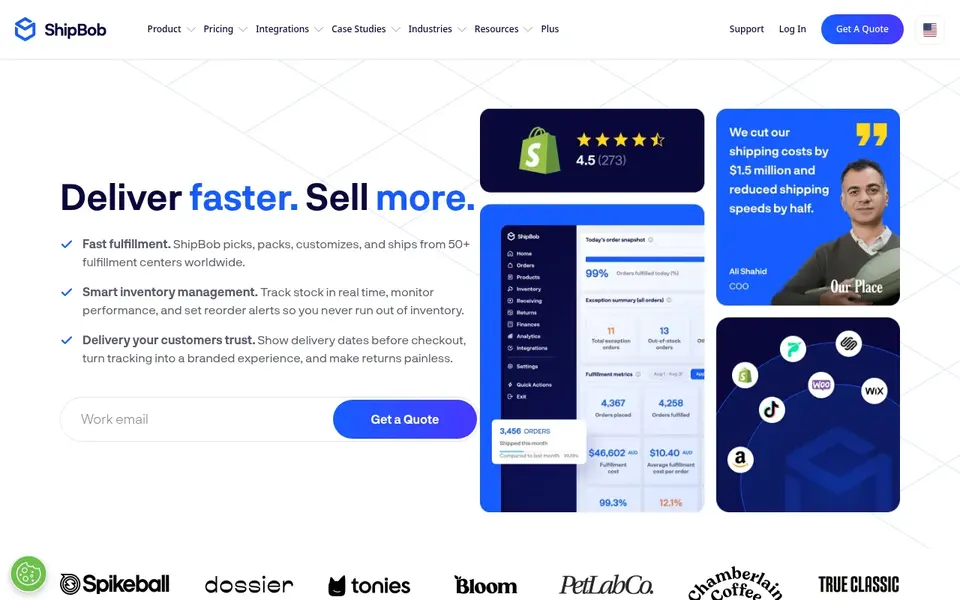
ShipBob is a good fit for DTC brands needing global reach. Reviews cite quotes that drift upward, plus Q4 storage surcharges, both worth catching before you sign. Pricing runs premium.
Storage costs 5 to 40 dollars per pallet monthly, and receiving runs roughly 25 dollars per hour. For everyday use, pick ShipBob if you need global reach, two-day delivery across the US. A large network, and you can accept quote-based pricing with a monthly minimum. Price to start with ShipBob: From $5.00 per order for the first item. ShipBob does not include a free plan.
Honest limits: Custom quote-based pricing that can drift upward.
- Largest network with 50 plus centers worldwide
- Capable Shopify and WooCommerce integrations
- 275 dollar monthly minimum plus implementation fees
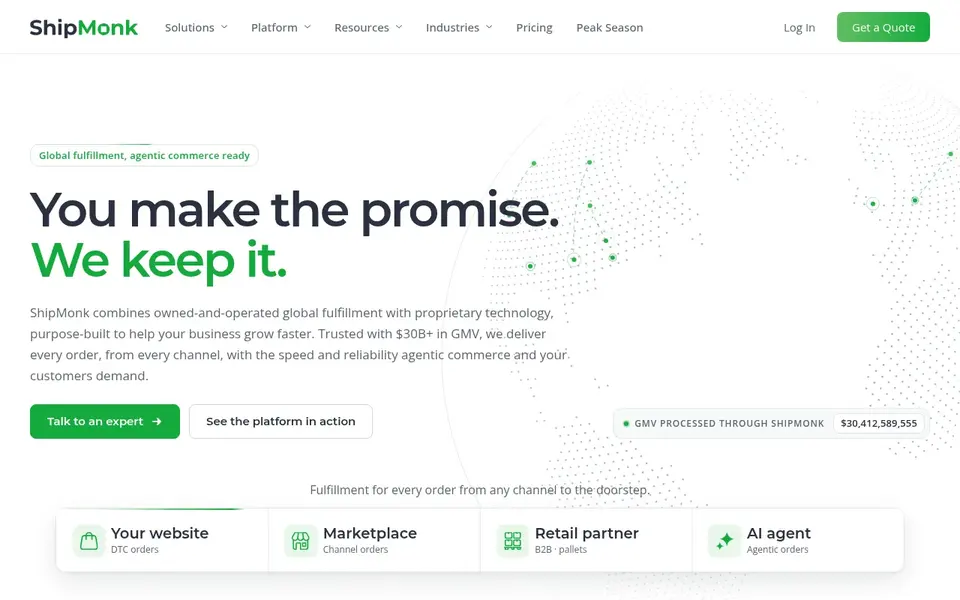
Choose ShipMonk for subscription boxes and scaling DTC. Pick ShipMonk if you run a subscription box or a scaling DTC brand and want the lowest barriers to entry between 50 and 200 orders per month with real kitting support. The technology spans order management, inventory tracking, and integrations with Shopify, WooCommerce, and Amazon.
The monthly minimum is a pick-and-pack minimum of around 250 dollars, not a rigid per-order floor, which fits brands shipping 50 to 200 orders per month. There is no setup fee, inbound receiving is free, and storage runs roughly 1.4 times lower than ShipBob. Its kitting and assembly capabilities let a brand build boxes on a recurring schedule, which is the core need for a subscription model. Starting cost for ShipMonk: From $2.50 per order for the first item. ShipMonk has no free tier.
Downsides: Billing complexity and exit terms need review.
- No setup fee and free inbound receiving
- Capable kitting for subscription boxes
- Monthly pick-and-pack minimum around 250 dollars
3PL Companies for Small Brands: more detail
Confirm the storage rate in Q4, since surcharges apply at peak, and ask how storage is measured, per pallet, per bin, or per cubic foot. Run a trial month with real orders before you move all inventory.
Questions to settle before buying
- Ask Fulfillrite, eFulfillment Service and Flowspace for a written quote, since no starting price is shown.
- Before choosing Fulfillrite, weigh its main limit: smaller network than the national providers.
- Confirm minimum seats and billing terms with Flowspace before you commit to an annual plan.
- Find out what support Fulfillrite includes on your plan, and whether onboarding help costs extra.
- Confirm you can export your data from Flexport, so leaving later does not mean losing records.
Frequently asked questions
How are the tools for 3PL companies for small brands ordered?
The order follows typical fit for 3PL companies for small brands, with Fulfillrite first and ShipMonk last, then price clarity and free access. It is editorial judgement, not a score, so another team could rank the tools differently.
Can I try these tools before paying?
Not by default. None of the tools, from Fulfillrite to ShipMonk, lists a free plan or a free trial here, so ask each vendor for a demo before committing.
Does any tool for 3PL companies for small brands here have a free plan?
No tool in this list, Fulfillrite and ShipMonk included, has a permanent free plan. Trials and quotes are the usual route, so plan a short evaluation period.
What are Q4 storage surcharges?
The surcharge varies by provider and by storage type, so ask for the Q4 rate in writing before you sign. More specifically, a brand that stocks up for holiday sales can see storage costs jump sharply in October through December.
Do these tools publish their prices?
Not all of them. Fulfillrite, eFulfillment Service and Flowspace publish no starting price, so expect a quote request for those. The rest, Flexport included, show a starting price, though seats and billing terms still change the final cost.
When should a small brand move to a 3PL?
Move when fulfillment takes time from selling. A 3PL charging 4 to 6 dollars per order for 300 orders costs 1,200 to 1,800 dollars per month. It frees the 80 plus hours that packing would take.
Sources
See where you really rank - block by block
ProMapRanker scans Google Maps across a grid of your service area. Simple monthly plans from $19, white-label on every plan.
Start freeBrowse all guides
← 7 Best Warehouse Kitting Software for Ecommerce Brands for 2026AI Driven Sdr Services for Marketing in 2026: Top 6 Compared →
 best shopify bundle apps for food brands
2026 Guide to the Best Shopify Bundle Apps for Food Brands
Compare 6 best shopify bundle apps for food brands, with prices, free plans and who each fits. Each tool is judged on the same checks. Updated for 2026.
Read → best service for mobile marketing
Best Service for Mobile Marketing: 2026 Prices and Picks
Best service for mobile marketing: 6 contenders ranked by fit, with entry costs and free tiers. Price notes and drawbacks come with each one. Details below.
Read → best marketing workflow automation software
6 Best Marketing Workflow Automation Software for 2026
Need the best marketing workflow automation software? We compare 6 tools on cost, free access and who each suits. Honest caveats for every entry. No hype.
Read → best pr analytics software
7 PR Analytics Software, Compared by Cost and Features
Shortlisting the best PR analytics software? 7 products compared on cost, free access and ideal buyer. Each listing flags where it falls short. No hype.
Read → best marketing reporting software
Best Marketing Reporting Software in 2026
We compared the best marketing reporting software for agencies and in-house teams, from free dashboards to white-label client reports in 2026 right now.
Read → best marketing attribution software
Best Marketing Attribution Software in 2026
Compare the best marketing attribution software for B2B revenue, ecommerce, and lead tracking, with pricing, models, and picks for each team size in 2026.
Read →More in Marketing Software · All guides A to Z by date · Latest guides