 ProMapRanker
Best Service for Mobile Marketing in 2026


Large consumer brands running cross-channel journeys · Pricing starts at: See website
Key takeaways
- OneSignal is the easiest low-cost start for push, while Braze and Iterable suit large brands running complex cross-channel journeys.
- Attentive leads when SMS drives ecommerce revenue, and Klaviyo suits stores that want email and SMS in one account.
- CleverTap and MoEngage pair analytics with engagement, which helps teams that lack a separate analytics tool.
- Consent, opt-out, and do-not-call compliance are not optional extras. Check them before you send a single campaign.
Quick comparison
| Pick | Great for | Pricing starts at | Free tier | |
|---|---|---|---|---|
| Braze | Large consumer brands running cross-channel journeys | See website | Free trial | Visit |
 OneSignal | Small and mid-size teams starting with push | $19 per month | Yes | Visit |
 Attentive | Ecommerce brands where SMS is the main channel | See website | No | Visit |
 Klaviyo | Shopify stores wanting email plus SMS | $20 per month | Yes | Visit |
 Iterable | Growth teams running complex lifecycle programs | See website | No | Visit |
 CleverTap | Mobile-first teams wanting analytics plus engagement | See website | No | Visit |
 MoEngage | Consumer brands running lifecycle programs | See website | No | Visit |
 Airship | Enterprises needing dependable push and wallet | See website | No | Visit |
 Pushwoosh | Mid-size teams wanting smooth usage-based push | See website | Free trial | Visit |
The best mobile marketing services
Mobile marketing covers push notifications, SMS, in-app messages, and wallet passes that reach people on their phones. The services below differ in channel depth, pricing, and the size of team they suit. We compared official pricing and product pages, and we note where pricing is quote-based.
A plain note on consent first: only message people who have opted in, make opt-out easy in every message, respect do-not-call lists and quiet hours where they apply, and keep records of consent. A tool cannot fix a list that was bought or scraped, and carriers and app stores can penalise senders that ignore these rules.
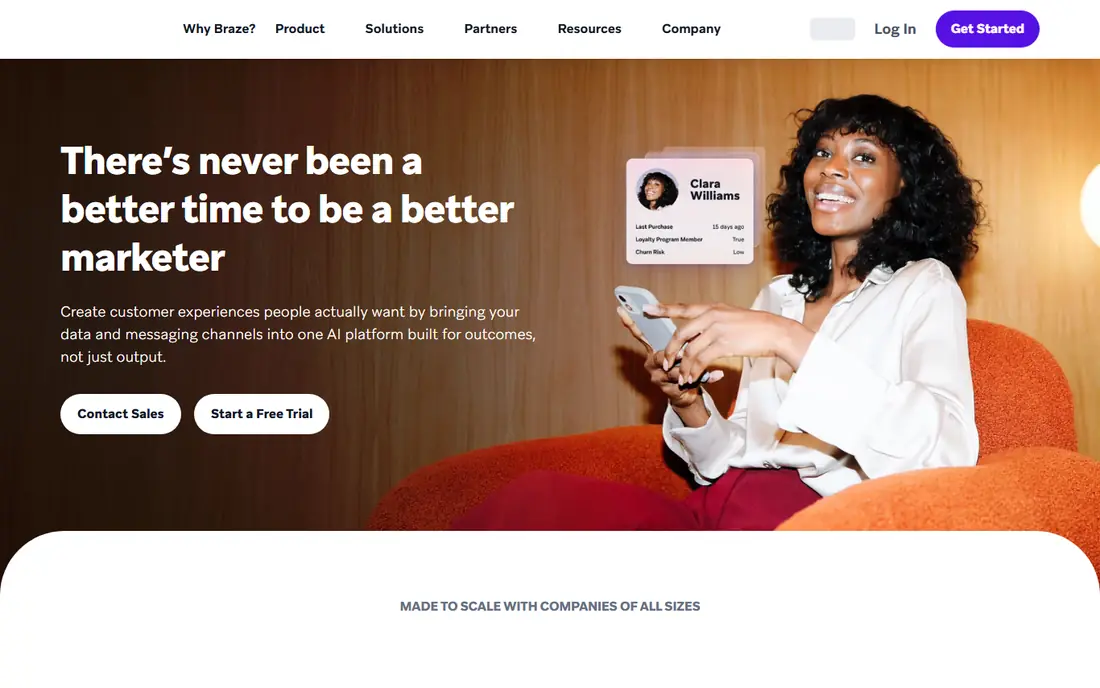
Braze suits brands with a real app, a large audience, and a team that can build multi-step journeys. Its Canvas flow builder lets you branch messages by behaviour, purchase history, and channel preference, rather than sending one blast to everyone. Predictive tools can help prioritise audiences, though results still depend on clean data.
The main barrier is cost and setup effort. Pricing is custom, and smaller teams may find the platform more than they need. If your audience is small, start with a simpler tool and move to Braze when journey complexity justifies it.
- Strong journey builder across push, email, SMS, and in-app
- Useful predictive tools
- Broad integration options
- Quote-based pricing
- Heavyweight for small teams
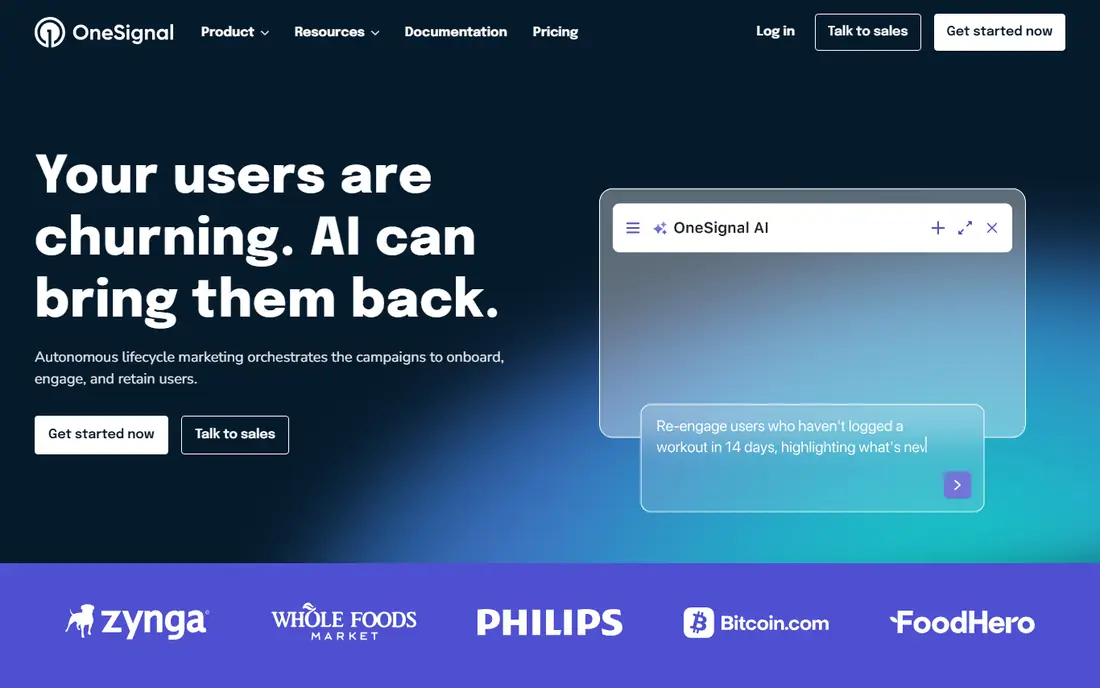
OneSignal is the fastest way to get push live. The free plan covers a small audience, and paid plans scale with monthly active users while keeping push sends unlimited. That combination suits startups, publishers, and small apps that want reliable delivery without an enterprise contract.
It is less deep than Braze or Iterable for complex journeys. If your plan centres on rich in-app experiences and cross-channel orchestration, you may outgrow it. For push-first teams, though, its simplicity is a real advantage.
- Free plan for small audiences
- Unlimited mobile push sends on paid tiers
- Quick setup
- Advanced features sit on higher tiers
- In-app messaging is more basic than specialists
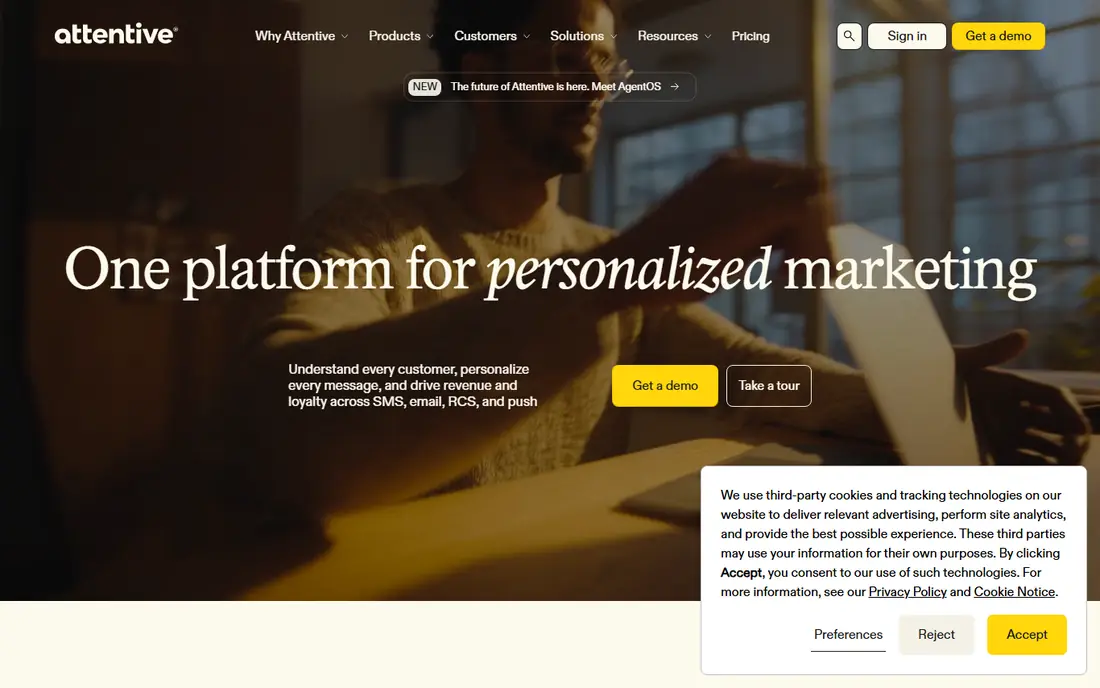
Attentive built its name on SMS for ecommerce and retail brands. Signup units, two-tap opt-in, and compliance controls are central to the product, which matters because SMS mistakes carry carrier and legal risk. Integrations with major ecommerce platforms let teams tie messages to carts, orders, and browse behaviour.
Pricing is custom, so budget planning needs a sales conversation. Brands that mainly need push or email may find a broader platform a better fit, but for SMS-led growth, Attentive is a strong specialist.
- Strong SMS signup and compliance tooling
- Ecommerce integrations
- Revenue reporting for SMS
- Quote-based pricing
- SMS focus means other channels are secondary
Klaviyo suits online stores that want email and SMS driven by the same customer data. Its Shopify integration pulls orders, browsing, and cart events into segments and flows, so abandoned cart, welcome, and post-purchase messages can run without manual lists. Reporting ties each flow to revenue, which helps justify the spend.
The bill follows active profiles, so a growing list raises costs even before sales follow. SMS adds a separate cost on top of email. Stores with thin margins should model list growth before committing to a large plan.
- Deep Shopify data
- Prebuilt ecommerce flows
- Revenue attribution per flow
- Price climbs with profile count
- SMS is a separate subscription
Iterable appeals to growth teams that run sophisticated lifecycle programs across email, push, SMS, and in-app messages. Its flexible data model handles varied customer attributes and events, and its workflow tools support branching journeys and tests. That depth helps when one generic welcome series no longer fits your audience.
Like Braze, it is an enterprise-grade purchase. Teams without clean event data or a dedicated owner may struggle to use its full range. It rewards preparation, so sort your data model before you sign.
- Flexible data model for lifecycle programs
- Strong cross-channel orchestration
- Useful experimentation tools
- Quote-based pricing
- Needs data and staff maturity to shine
CleverTap pairs mobile analytics with push, in-app, email, and SMS, so teams can analyse behaviour and act on it in one place. That pairing suits mobile-first companies that do not want a separate analytics purchase just to build segments. Push delivery tools and segmentation options are central, not bolted on.
Pricing is custom, and the analytics depth takes time to learn. Smaller teams may use only a slice of the platform at first. For app teams that live by retention and funnel data, that slice still covers a lot.
- Built-in analytics alongside engagement
- Strong push delivery features
- Useful segmentation
- Quote-based pricing
- Learning curve for full analytics depth
MoEngage serves consumer brands that run lifecycle programs across mobile and web. Its journey builder covers push, in-app, email, SMS, and web messages, and its AI-assisted features can suggest segments and send times. That breadth helps brands with both an app and a website to keep messages consistent.
As with other enterprise platforms, pricing requires a quote, and complex programs need planning. Teams that only need push should look at OneSignal or Pushwoosh first, but lifecycle teams will find MoEngage a serious contender.
- Cross-channel lifecycle journeys
- AI-assisted segmentation and timing
- Web and app coverage
- Quote-based pricing
- Setup effort for complex programs
Airship is a veteran of mobile push, with added strength in in-app messages and mobile wallet passes for loyalty cards, tickets, and coupons. Large brands with big audiences value its delivery reliability and experience tools, especially for time-sensitive messages and wallet updates.
There is no public pricing, and the product is aimed at larger teams. Small apps will likely find it heavy and costly, but enterprises that need dependable push at scale should include it in a shortlist.
- Long track record in mobile push
- Strong wallet and in-app tools
- Enterprise reliability focus
- No public pricing
- Enterprise positioning suits larger teams
Pushwoosh offers a middle path between a simple push tool and a full enterprise platform. Pricing scales with audience size, which many mid-market teams prefer to flat enterprise contracts. It covers push, in-app messages, email, and SMS, so a team can add channels without changing vendors at once.
Journey depth is not as rich as the enterprise leaders, and larger volumes still need a quote. For teams that want dependable push with room to grow into other channels, that trade-off is often acceptable.
- Usage-based scaling by audience size
- Push, in-app, email, and SMS coverage
- Clear audience segmentation
- Less journey depth than Braze or Iterable
- Pricing needs a quote for larger volumes
How we picked these
We compared official product and pricing pages, channel coverage, and fit for different team sizes, and we checked that each service is still offered in October 2026. We favoured services with clear push or SMS delivery, consent and opt-out controls, and a real record in mobile marketing, rather than general email tools with a token mobile feature. We did not claim hands-on testing, and where vendors do not publish prices we wrote that plainly instead of guessing.
How to choose a mobile marketing service
Start with your main channel. Push-first teams need delivery, segmentation, and in-app tools. SMS-first teams need signup compliance, carrier rules, and cost per message. Lifecycle teams need journey builders and clean event data. Picking a tool for the wrong main channel leads to paying for depth you never use.
Check consent and deliverability before features
Ask how opt-in is collected, how opt-out works on each channel, how quiet hours are handled, and how do-not-call and suppression lists are managed. Test a signup flow yourself and read the compliance documentation. A pretty journey builder cannot repair a consent problem, and carriers can block senders that ignore opt-out requests.
Model the real cost
Compare the billing unit, not just the headline plan. Some tools bill by monthly active users, some by profiles, some by messages, and some by custom quote. Estimate your audience in twelve months, not today, and ask about overage rates. A tool that is cheap at launch can become expensive as soon as a campaign succeeds.
Start narrow, then expand
Launch one channel and one journey well, such as a welcome series or an abandoned cart flow, and measure delivery, opt-out, and revenue before adding more. That approach shows whether data, segments, and reporting work for your team. Expand channels only when the first one is stable and compliant.
Frequently asked questions
What is the best service for mobile marketing for a small app?
OneSignal is a strong start for small apps, thanks to its free plan and quick push setup. Klaviyo suits small Shopify stores that also need email, while Pushwoosh fits mid-size teams that want usage-based growth.
What are the best mobile marketing services for large brands?
Braze, Iterable, Airship, and MoEngage suit large brands, because they support complex journeys, large audiences, and multiple channels in one platform. Choose based on whether your main need is journey depth, wallet passes, or lifecycle analytics.
How much do mobile marketing services cost?
Costs vary widely. OneSignal paid plans start at $19 per month plus usage, Klaviyo email starts at $20 per month, and enterprise platforms such as Braze, Attentive, and Iterable are quote-based. SMS adds per-message or subscription costs on top of platform fees in many cases.
Do I need consent to send mobile marketing messages?
Yes. Only message people who have opted in for that channel, include a clear opt-out in messages, and respect do-not-call lists and applicable quiet hours. Keep consent records, and avoid bought or scraped lists, which create legal and deliverability risk.
What is the difference between push notifications and SMS marketing?
Push notifications go through an app and require app install plus notification permission, while SMS reaches a phone number and requires explicit SMS consent. Push is usually cheaper at scale, while SMS often gets faster attention but costs more per message and carries stricter compliance rules.
Sources
See where you really rank - block by block
ProMapRanker scans Google Maps across a grid of your service area. Simple monthly plans from $19, white-label on every plan.
Start freeKeep reading
 who has best internet service
Who Has the Best Internet Service in 2026
Who has best internet service for US homes? We compare fiber, cable, fixed wireless and satellite providers on speed, price, availability and terms today.
Read → which survey tool has the best analytics
Which Survey Tool Has the Best Analytics in 2026
Find which survey tool has the best analytics in 2026, comparing Qualtrics, SurveyMonkey, Typeform, Alchemer, and more on reports, text, and stats today.
Read → which streaming service has the best movies
Which Streaming Service Has the Best Movies in 2026
Answering which streaming service has the best movies, with Netflix, Max, Criterion and more compared on libraries, prices and free options in this guide.
Read →