 ProMapRanker
Who Has the Best Internet Service in 2026

Key takeaways
- Fiber providers give the strongest balance of download and upload speed where they are available, and that matters most for video calls, cloud backups and large uploads.
- Cable remains the most widely available fast option, but upload speeds and post-promotion prices vary a lot by address, so the broadband label matters more than the headline speed.
- Fixed wireless can be a strong low-hassle choice in areas with good mobile signal, while satellite is mainly for homes that have no wired option at all.
- Always check availability at your exact address, because two homes on the same street can be offered different technologies, speeds and prices.
Quick comparison
| Pick | Great for | Pricing starts at | Free tier | |
|---|---|---|---|---|
 AT&T Fiber | Best overall fiber value | $50 per month | No | Visit |
 Verizon Fios | Best fiber for busy households | $30 per month | No | Visit |
 Google Fiber | Best simple multi-gig fiber | $70 per month | No | Visit |
 Xfinity | Best widely available cable | $45 per month | No | Visit |
 Spectrum | Best no-contract cable | $30 per month | No | Visit |
 Frontier Fiber | Best low-cost fiber entry | $29.99 per month | No | Visit |
 Cox | Best cable where it is the local choice | See website | No | Visit |
 T-Mobile Home Internet | Best simple fixed wireless | $50 per month | No | Visit |
 Starlink | Best for rural homes without wired service | See website | No | Visit |
The best internet service providers
There is no single winner for every US home, because the best service depends on what reaches your address and how your household uses the connection. We compared providers on technology, starting price, speed tiers, data terms and contract terms, using publicly reported plan information for October 2026.
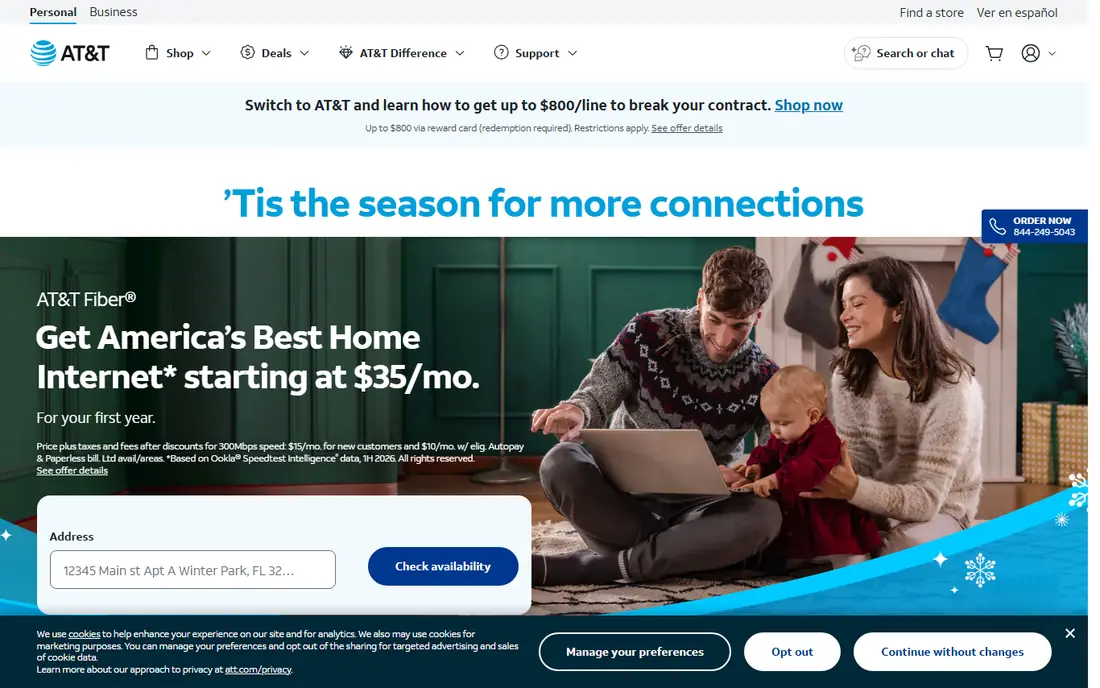
AT&T Fiber is our first pick for many households because it pairs fast symmetrical speeds with straightforward terms. The entry tier at $50 per month offers 300 Mbps in both directions, which covers streaming, video calls and schoolwork for a typical family without forcing a gigabit upgrade. Higher tiers reach 1 Gig and 5 Gig in selected areas, so a home with heavy uploads or many connected devices can step up without changing provider.
The main catch is availability, since AT&T still serves many addresses with slower legacy service rather than fiber. Check the address first and confirm whether the quoted price requires AutoPay.
- Symmetrical upload and download speeds
- No data cap on fiber plans
- Equipment included in the listed plans
- Fiber is not available at every AT&T address
- Prices vary with AutoPay and paperless billing
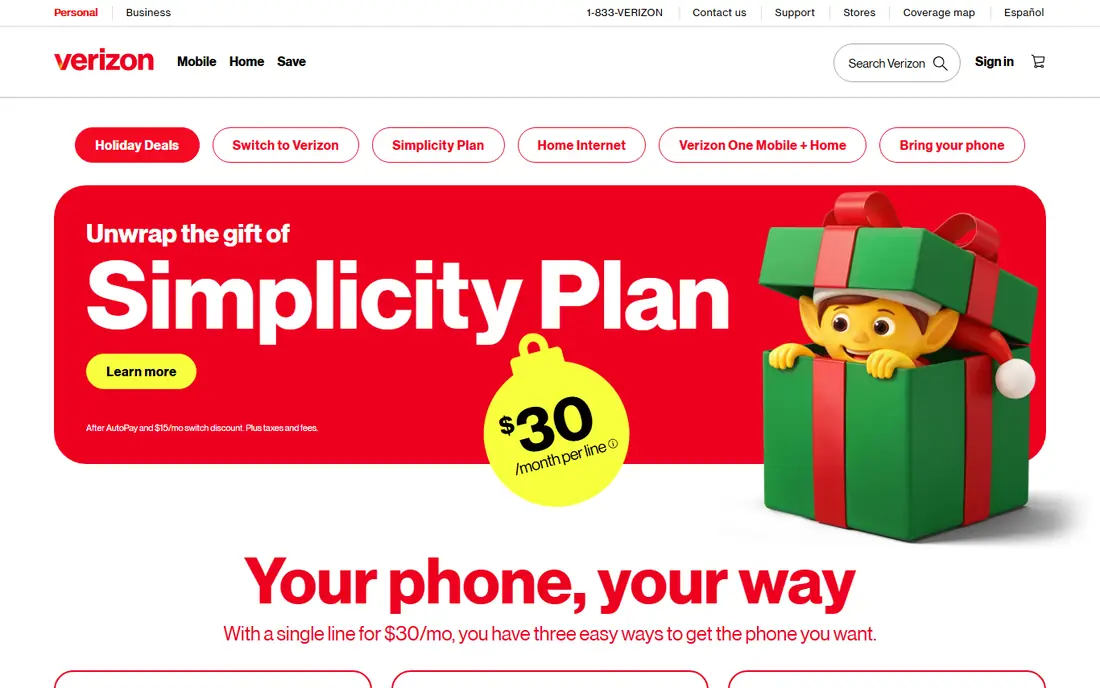
Verizon Fios stands out for homes that need reliable performance at peak times, when several people are streaming, gaming and working at once. Its fiber plans offer matching download and upload speeds, and the published entry price of $30 per month for 300 Mbps is competitive where it is offered. That combination makes it easy to recommend for remote workers and creators who upload large files on a regular basis.
The limitation is geography, because Fios does not cover most of the country. Prices also depend on AutoPay, paper-free billing and current offers at the address, so the price you see in one city may differ in another. Within its footprint, however, Fios is one of the cleanest fiber choices, with no annual contract and no data cap to manage.
- Symmetrical fiber speeds
- No annual contract on the listed plans
- No data cap
- Coverage is concentrated in the Northeast and Mid-Atlantic
- Higher tiers are not available everywhere
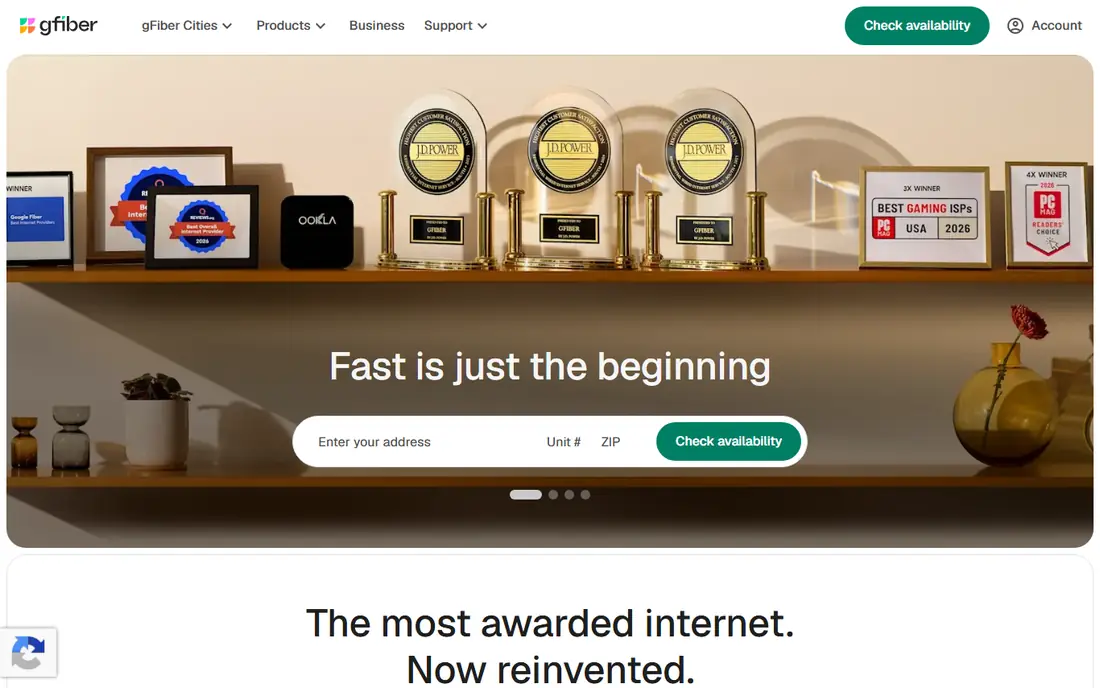
Google Fiber, also called GFiber, keeps its offer deliberately simple, with 1 Gig starting at $70 per month and higher tiers at $100 and $150 per month in areas where they are sold. That clarity helps buyers, because there is no long ladder of near-identical tiers and no promotional rate that quietly expires after a year. Equipment and installation are included in the published offer in many areas, which also makes the monthly total easier to compare.
The trade-off is reach, since Google Fiber serves only a limited set of cities and neighbourhoods. Light users may also find $70 per month more than they need, because there is no basic 100 or 300 Mbps tier in the standard menu. If you live in a Google Fiber city and want fast, symmetrical service without pricing games, it is hard to beat.
- Simple plan menu
- Symmetrical speeds up to 8 Gig in some cities
- No data cap
- Available in a limited number of cities
- No cheaper low-speed tier for light users
Xfinity is the practical answer for many homes that cannot get fiber, because its cable network reaches a large share of US households. The published 300 Mbps tier starts at $45 per month with AutoPay and paperless billing, and eligible plans carry a five-year price guarantee, which is longer than most cable offers. For everyday streaming, browsing and video calls, that tier is enough for most families.
The honest weakness is upload speed, which is far lower than download speed on cable, and that shows up when you back up photos, join video calls or send large files. Xfinity also sells its service by address, so the exact tiers, fees and guarantees at your home may differ from the national examples. Read the broadband label before ordering, and do not assume the fastest tier is the best value for a household that mostly streams.
- Wide cable footprint
- 300 Mbps entry tier with a multi-year price guarantee on eligible plans
- Unlimited data on current plans
- Upload speeds lag fiber
- Prices and tiers vary by address
Spectrum appeals to buyers who dislike contracts and data caps, because its residential plans are sold month to month with no cap on the listed tiers. The published first-year price for the 100 Mbps tier is $30 per month, with 500 Mbps at $40 and 1 Gig at $60 in the examples we reviewed, though standard rates apply after the promotional period. That structure makes Spectrum easy to try, and easy to leave if a better option arrives.
The catch is the year-two price, which is the number to budget for rather than the first-year rate. Upload speeds on most cable tiers also remain modest, so creators and heavy video call users should check the upload figure on the broadband label, not just the download figure. For a household that mainly streams and browses, and that values no contract, Spectrum is a solid cable choice.
- No annual contract
- No data cap
- Free modem on the listed plans
- Promotional prices rise after the first year
- Upload speeds are modest on most cable tiers
Frontier Fiber is worth checking first if price is the main constraint and fiber reaches your street. Its published fiber tiers start at $29.99 per month, with higher tiers including 500 Mbps, 1 Gig, 2 Gig and above in selected areas. Symmetrical speeds mean uploads keep pace with downloads, which is a real advantage over cable at a similar price.
Availability is the main risk, because Frontier's network mixes fiber areas with older service areas, and the experience differs sharply between them. Installation terms and equipment charges can also vary, so confirm the total monthly cost in writing. Where Frontier fiber is live, it offers some of the best value in this list, especially for households that want fiber without paying for a gigabit tier they do not need.
- Low published entry price for fiber
- Symmetrical speeds on fiber tiers
- Unlimited data on fiber plans
- Fiber footprint is uneven
- Some addresses still get slower service
Cox is often the incumbent cable provider in its markets, and for many homes it is the fastest wired option available. Its cable tiers cover everyday use through to multi-gig speeds in selected areas, and bundling with mobile or TV can lower the total bill for households that already use those services. The service is best judged address by address, because the tiers and prices on offer differ across its footprint.
Buyers should pay close attention to data terms and to the post-promotion price, since some Cox plans include a data allowance rather than unlimited data. That matters for households that stream in 4K on several televisions or back up large libraries to the cloud. If Cox is your only fast wired choice, pick the tier that fits actual use, check the allowance, and set a reminder for the end of any promotion.
- Wide cable availability in its service areas
- Tiers up to multi-gig in selected areas
- Bundled options with mobile and TV
- Some plans carry a data allowance
- Promotional prices change after the introductory period
T-Mobile Home Internet suits renters and households that want a quick setup without a technician visit or a long contract. The published price is $50 per month with AutoPay, with taxes included, and the gateway is included, so the bill is easier to predict than many cable bills. For homes with good 5G signal, typical speeds cover streaming, browsing and video calls for a small to medium household.
Performance depends heavily on location, signal strength and how busy the local network is at peak times, so two homes a few miles apart can have different experiences. It is also less predictable for competitive gaming, where wired fiber or cable usually gives lower and steadier latency. Test it during the return window, place the gateway near a window as directed, and keep a wired option in mind if your work depends on steady uploads.
- Flat price with taxes included on the listed plan
- No contract and no equipment fee
- Simple self-install gateway
- Speed varies with signal and congestion
- Not ideal as a sole connection for latency-sensitive gaming
Starlink fills a gap that no other provider on this list can fill, because it serves homes that wired networks have not reached. A satellite dish and a clear view of the sky replace a cable or fiber line, which makes it a realistic option for rural homes, farms and cabins where the alternative is slow DSL or no broadband at all. That alone makes it worth listing, even though it is not the best choice where fiber or cable exists.
The costs and limits are real, with hardware to buy up front and a monthly price that is higher than many wired plans, so check the current price and equipment terms on the official site before ordering. Performance can also vary with weather, tree cover and network load. For a home with a good wired option, choose wired service first.
- Reaches homes far from wired networks
- No long wired build required
- Portable options exist in some plans
- Equipment cost is separate
- Weather and obstructions can affect performance
- Monthly price is higher than many wired plans
How we picked these
We compared official plan pages, broadband labels and publicly reported pricing for October 2026, and we favoured providers that are live across a meaningful US footprint and that publish clear speed, price and data terms. We included fiber, cable, fixed wireless and satellite options because the right technology depends on the address, not on a national ranking alone. We did not claim hands-on testing, and we treated promotional prices as temporary unless the provider described a longer guarantee. Where a price varies by address, we say so rather than presenting one city price as a national promise.
What to check before you sign up
Start with the broadband label for your exact address, because it lists the monthly price, introductory rate, fees, data allowance and typical speeds in one place. Compare the price after any promotion ends, not just the first-year price, and ask whether equipment, installation and taxes are included. Check upload speed separately from download speed if you work from home, teach online or back up large files, since cable upload speeds are often far lower than the headline download figure.
Think about how many people use the connection at once, and what they do at the busiest hour. A 300 Mbps plan often covers a family that streams and browses, while a home with several 4K streams, gaming and video calls at the same time may need 500 Mbps or more. Test the service during any trial or return window, run a wired speed test as well as a Wi-Fi test, and keep the router placement and cabling in mind before blaming the plan. Coverage varies by location, and publicly reported speeds are guides, not guarantees for your home.
Frequently asked questions
Who has the best internet service overall?
There is no one winner for every address, but fiber providers such as AT&T Fiber, Verizon Fios and Google Fiber lead on symmetrical speed and stable terms where they are available. If fiber does not reach your home, Xfinity or Spectrum are strong cable options, and T-Mobile Home Internet is a simple fixed wireless choice where signal is good. Check availability at your exact address before deciding.
Who has the best internet service for working from home?
Fiber is usually the best fit for remote work, because upload speed matches download speed and video calls stay steady when others are online. AT&T Fiber and Verizon Fios are strong picks in their footprints, while Google Fiber is a simple choice in its cities. If only cable is available, choose a higher tier and check the upload figure on the broadband label.
Who has the best internet service for rural areas?
Starlink is often the best option for rural homes with no wired broadband, because it does not need a cable or fiber line to the house. T-Mobile Home Internet can also work well in rural areas with good mobile signal, and it costs less than satellite in many cases. Compare both at your address, and check for obstructions, signal strength and total equipment cost.
Is fiber better than cable?
Fiber is usually better for uploads, latency and long-term consistency, because it delivers matching speeds in both directions. Cable can still be fast for downloads and is more widely available, so it remains a good choice for households that mainly stream and browse. The best choice is the fastest reliable service at your address at a price you can sustain after any promotion ends.
How much internet speed do I actually need?
Most households do well with 300 Mbps for streaming, browsing and video calls on several devices. Homes with many simultaneous 4K streams, gaming and large uploads may benefit from 500 Mbps or 1 Gig. Speed needs also depend on Wi-Fi coverage, device limits and how many people are online at peak times, so treat the plan speed as a ceiling, not a promise for every device.
Should I buy my own router or modem?
Using the provider gateway is simplest, and several providers include it in the monthly price, which removes a separate purchase. Buying your own router can improve Wi-Fi coverage in a large home and may save a rental fee where one applies, but check compatibility first. For fiber, the provider terminal usually stays, while the router behind it can often be your own choice.
Sources
- https://www.att.com
- https://www.verizon.com
- https://fiber.google.com
- https://www.xfinity.com
- https://www.spectrum.com
- https://frontier.com
- https://www.cox.com
- https://www.t-mobile.com
- https://www.starlink.com
- https://www.allconnect.com/internet/fiber-internet
- https://www.cabletv.com/ranking/best-internet-providers
See where you really rank - block by block
ProMapRanker scans Google Maps across a grid of your service area. Simple monthly plans from $19, white-label on every plan.
Start freeKeep reading
 which survey tool has the best analytics
Which Survey Tool Has the Best Analytics in 2026
Find which survey tool has the best analytics in 2026, comparing Qualtrics, SurveyMonkey, Typeform, Alchemer, and more on reports, text, and stats today.
Read → which streaming service has the best movies
Which Streaming Service Has the Best Movies in 2026
Answering which streaming service has the best movies, with Netflix, Max, Criterion and more compared on libraries, prices and free options in this guide.
Read → which hris app is the best for mobile
Which HRIS App Is the Best for Mobile in 2026
Which HRIS app is the best for mobile in 2026? We compare 9 HRIS apps for mobile self-service, approvals, time off, and payroll access on phones and tablets.
Read →