 ProMapRanker
Which Streaming Service Has the Best Movies in 2026

Key takeaways
- Max is our pick for the single best movie library, thanks to Warner Bros. films, HBO titles and a deep classic catalog.
- Netflix is the safest all-around choice for volume and original films, while Criterion Channel is best for classic and arthouse cinema.
- Kanopy and Tubi were considered for free viewing, but this paid-focused shortlist keeps the comparison on full subscription libraries.
- Only legal licensed streaming services appear here, never piracy sites, mirrors or clones, and libraries rotate monthly, so check a title before subscribing for it.
Quick comparison
| Pick | Great for | Pricing starts at | Free tier | |
|---|---|---|---|---|
 Max | Best overall movie library | $10.99 per month | No | Visit |
 Netflix | Volume and original films | $7.99 per month | No | Visit |
 Prime Video | Value with Prime plus rentals | $8.99 per month | Free trial | Visit |
 Disney+ | Family and franchise films | See website | No | Visit |
 Hulu | Films plus next-day TV | See website | No | Visit |
 Apple TV+ | High-quality original films | $14.99 per month | Free trial | Visit |
 Peacock | Library value and Universal films | $10.99 per month | No | Visit |
 Paramount+ | Paramount films and franchises | $7.99 per month | Free trial | Visit |
 Criterion Channel | Classic and arthouse cinema | $10.99 per month | Free trial | Visit |
 MUBI | Curated world and arthouse films | See website | Free trial | Visit |
The best streaming service for movies
We compared official pricing pages and current library guides, and we kept only legal licensed services live in the US in October 2026. Prices are starting monthly prices for the lowest plan, and most services offer ad-free tiers at higher prices.
Max, formerly HBO Max, earns the top spot for movie lovers because its library covers so many kinds of film at once. Warner Bros. theatrical releases, HBO original films, A24 titles and a large classic catalog sit together, with the Studio Ghibli collection adding animated depth. That range means a household can watch a new release, a prestige drama and an old classic without switching apps.
The starting plan costs $10.99 per month with ads, based on current listings, while ad-free and 4K plans cost more. Some titles leave each month, so a film you want may rotate out. If you can pick only one paid service for movies, Max gives the deepest single library here.
- Warner Bros. and HBO films
- Deep classic catalog
- Studio Ghibli collection in the US
- Premium 4K tier costs more
- Library rotates monthly
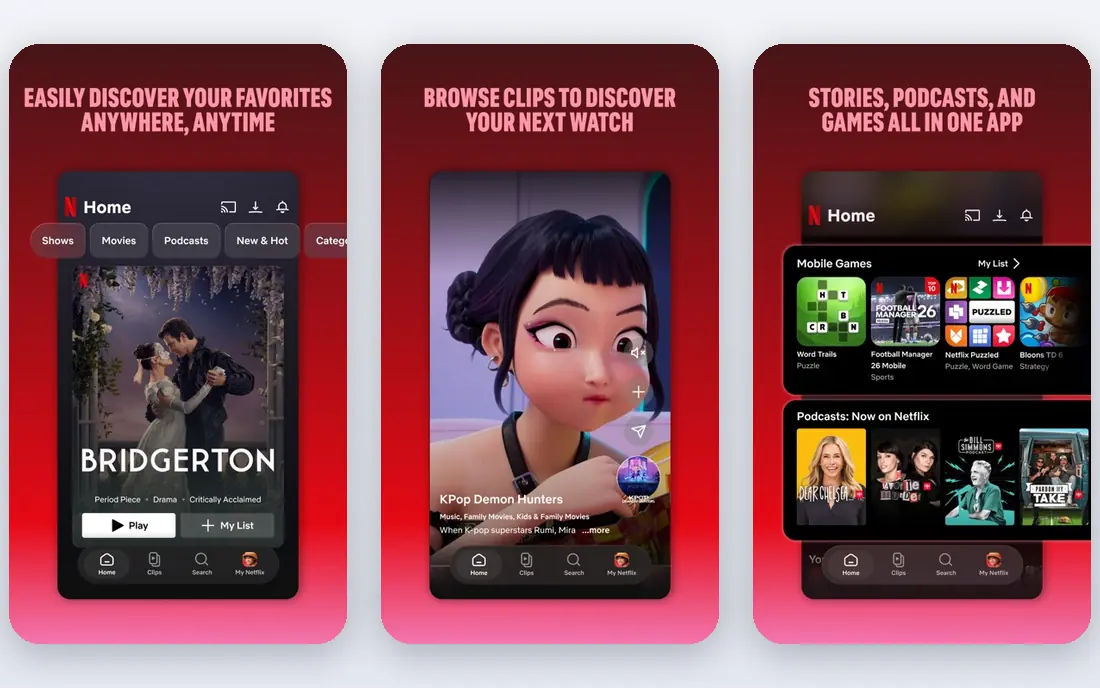
Netflix remains the safest single subscription for most viewers, because its library is the largest and its original films keep improving. Titles like Roma, Marriage Story and All Quiet on the Western Front show the range of its originals, while licensed films fill every genre. The ad-supported plan starts at $7.99 per month, with higher tiers removing ads and adding higher resolution.
The weakness is rotation. Licensed films leave Netflix regularly, so a favorite can vanish at month end, while Netflix originals usually stay. If you watch a lot and want something new every night, Netflix is hard to beat. If you care most about classic depth, pair it with Criterion rather than expecting Netflix to cover that ground alone.
- Largest overall library
- Strong original films
- Good recommendations
- Licensed films rotate often
- 4K needs the Premium plan
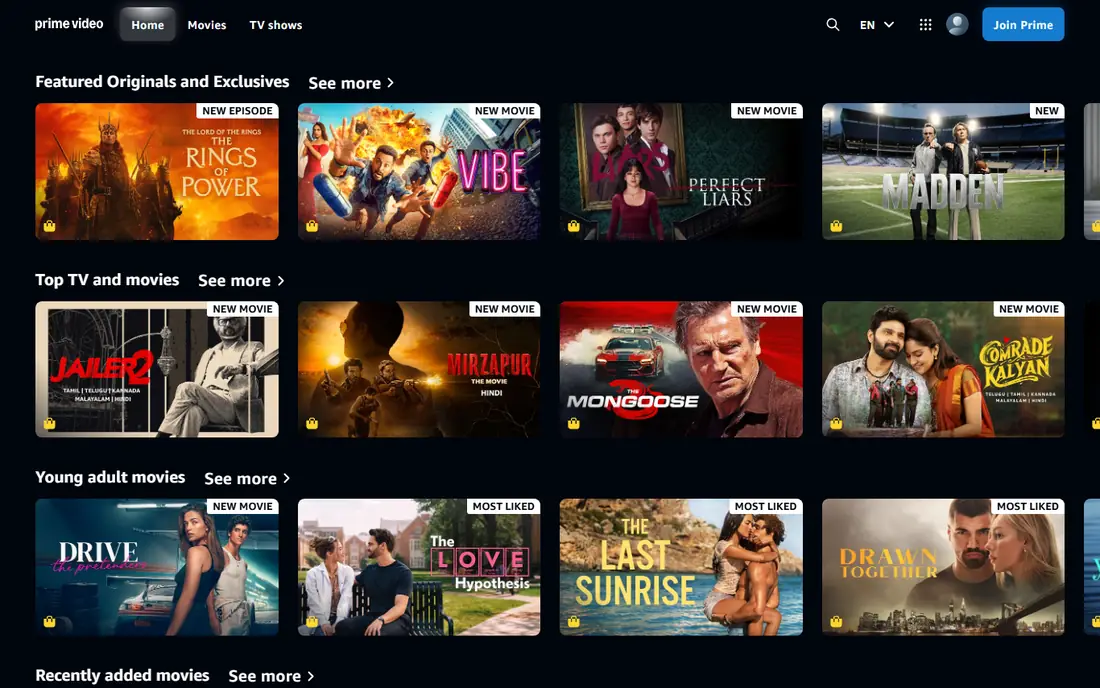
Prime Video is the best value pick for people who already pay for Amazon Prime, since the included library costs nothing extra. A standalone Prime Video plan costs $8.99 per month based on current listings. Beyond the included library, the rental and purchase store covers almost any film for a few dollars, which fills gaps no subscription library covers.
The interface is the main drawback, since included titles, rentals and channel add-ons sit together and can confuse browsing. Search carefully to avoid paying for a film that is already included. If you already have Prime, use Prime Video first and add a second service only for a specific gap.
- Included with Prime membership
- Huge rental store
- Standalone plan available
- Interface is cluttered
- Included library mixes with paid titles
Disney+ is essential if Disney, Pixar, Marvel or Star Wars films matter to your household, since no other service competes on those libraries. The family catalog is deep, with animated classics, live-action remakes and franchise films in one place. Bundles with Hulu and Max can lower the combined cost for households that want both.
For adult viewers who mainly want arthouse, classic or international films, Disney+ is thinner than Max or Criterion. Pricing also varies by ad tier and bundle, so we list See website for the current total. Add Disney+ as a second service for families and franchise fans, rather than as your only movie service.
- Disney, Pixar, Marvel and Star Wars libraries
- Strong family catalog
- Bundles available
- Weaker for adult arthouse films
- Prices vary by plan and bundle
Hulu is often judged on TV, but its film library deserves attention too. It carries a rotating mix of studio films, independent titles and Hulu original films, alongside next-day network shows. That mix suits households that want one service for both movies and TV, rather than a movie-only subscription.
The film catalog is smaller and less classic-focused than Max, and the cheapest plans include ads. Bundles with Disney+ help the value case. If your household watches as much TV as film, Hulu is a strong combined pick. If movies are the only priority, Max or Netflix ranks higher.
- Good film library alongside TV
- Bundles with Disney+
- Frequent film additions
- Movie depth lags Max and Netflix
- Ad-free tier costs more
Apple TV+ wins on quality per title rather than volume. Original films such as CODA and Killers of the Flower Moon show its ambition, and every title streams in high quality with a clean, ad-free interface. The price is $14.99 per month for a single plan, with a trial for new users.
The library is the smallest in this list, with few licensed classics to browse on a quiet night. That makes Apple TV+ better as a rotating second service: subscribe for a month, watch the originals you want, then pause. For viewers who value a few excellent films over endless choice, it still earns a place.
- Excellent original films
- 4K included
- Clean interface
- Smallest library here
- Fewer licensed classics
Peacock, from NBCUniversal, offers Universal films, library titles and a solid back catalog at $10.99 per month for its entry plan based on current listings. It is a good value second service, especially for viewers who also want NBC shows and live sports extras. The film library covers comedies, dramas and franchises without the higher price of a premium tier.
Prestige and classic depth lag Max and Criterion, so Peacock works best as a complement rather than a sole movie service. If you want a cheaper service with a respectable film library and TV extras, Peacock is a sensible pick.
- Universal films and library titles
- Good value at the entry tier
- Live sports extras
- Smaller prestige film catalog than Max
- Ads on lower tiers
Paramount+ carries Paramount films, including major franchises, plus CBS and library titles, starting at $7.99 per month. That entry price makes it one of the cheaper paid options here, and it suits viewers who follow Paramount franchises or want a low-cost second service.
The film catalog is narrower than Max or Netflix, with fewer classic and arthouse titles. Think of Paramount+ as a franchise and library service rather than a complete movie library. At its entry price, it is easy to rotate in for a few months when a franchise run interests you.
- Paramount library and franchises
- Low entry price
- Star Trek and Yellowstone-related titles
- Film depth is narrower than Max
- Interface varies by device
The Criterion Channel is the best service in this list for classic, arthouse and world cinema. It offers curated collections, restored classics, director spotlights and extras that other services do not provide, at $10.99 per month or $99.99 per year. Films that are hard to find elsewhere, from silent cinema to modern arthouse, sit together in one place.
The limits are resolution and new releases. Streaming tops out at 1080p, and recent blockbusters are not its job. If you love film history, Criterion is essential, and it pairs well with Max for newer titles. If you only watch recent releases, it will feel narrow.
- Deep classic and arthouse catalog
- Curated collections
- Filmmaker extras
- No 4K streaming
- Smaller new-release catalog
MUBI takes curation seriously. Instead of an endless catalog, it offers a rotating hand-picked selection of world, arthouse and independent films, with a new film added daily in its classic model and a wider library on current plans. That focus helps viewers discover films they would never find by browsing a large catalog.
The smaller catalog is the point, but also the limit. If you want to search for a specific popular title, MUBI may not have it. Pricing varies by plan and promotion, so check the vendor site. For viewers who want a guide through world cinema, MUBI is the most distinctive service here.
- Hand-picked daily selections
- Strong world cinema
- Curated notebooks and extras
- Smaller catalog by design
- Pricing varies by plan
How we picked these
We compared official pricing pages and current library guides, and we kept only legal licensed services available in the US in October 2026. We ranked by movie library depth, variety across genres and eras, original films, price and ease of use, not by TV catalogs or live sports. Free services and library-card services can complement this list, but this comparison focuses on paid subscription libraries that answer the question directly.
How to choose a streaming service for movies
Start with what you actually watch. If you watch new releases and prestige films, pick Max. If you watch a lot of everything, pick Netflix. If you love classics, pick Criterion. If you love world cinema, pick MUBI. A service that matches your taste will feel larger than a bigger service full of films you skip.
Next, check the total cost. Ad tiers lower the price but add breaks, while ad-free and 4K tiers raise it. Bundles can help: Disney+ with Hulu, or a bundle that adds Max, often costs less than separate plans. Also check device support, downloads for travel, and how many streams your household needs at once.
Finally, rotate. Libraries change monthly, and no service holds every film forever. Keep one or two services year-round, rotate a third every few months, and cancel when you finish what you wanted. That habit saves more money than any single plan choice.
Frequently asked questions
Which streaming service has the best movies?
Max has the best single movie library for most viewers, thanks to Warner Bros., HBO and classic titles together. Netflix is best for volume and originals, Criterion Channel is best for classics, and MUBI is best for curated world cinema. The best choice depends on your taste, not on catalog size alone.
Which app has the best movies for free?
Free legal options include Tubi and library-card services such as Kanopy, which carries Criterion and A24 titles in many areas. Free catalogs are smaller and ad-supported, and availability depends on your library. They work well as a complement to a paid service, not as a full replacement for one.
Is Netflix or Max better for movies?
Max is better for prestige films and classic depth, while Netflix is better for volume, variety and original films. Many movie lovers keep both, or rotate between them. If you must pick one, choose Max for film depth and Netflix for endless choice.
Do streaming libraries change?
Yes, often monthly. Licensed films arrive and leave as deals expire, while original films usually stay on their home service. Check whether a specific film is still available before subscribing for it, and watch titles flagged as leaving soon first.
Can I watch movies in 4K on these services?
Yes, on most services, but usually only on higher tiers. Netflix needs Premium for 4K, Max needs Premium for 4K, and Apple TV+ includes 4K in its single plan. Criterion Channel tops out at 1080p. Check the plan details if picture quality matters to you.
Are these services legal?
Yes. Every service here is a licensed streaming service with rights to the films it shows. Avoid piracy sites, mirrors and clones, which break the law, carry security risks and often show poor-quality copies. Stick to licensed services and library programs for legal viewing.
Sources
See where you really rank - block by block
ProMapRanker scans Google Maps across a grid of your service area. Simple monthly plans from $19, white-label on every plan.
Start freeKeep reading
 who has best internet service
Who Has the Best Internet Service in 2026
Who has best internet service for US homes? We compare fiber, cable, fixed wireless and satellite providers on speed, price, availability and terms today.
Read → which survey tool has the best analytics
Which Survey Tool Has the Best Analytics in 2026
Find which survey tool has the best analytics in 2026, comparing Qualtrics, SurveyMonkey, Typeform, Alchemer, and more on reports, text, and stats today.
Read → which hris app is the best for mobile
Which HRIS App Is the Best for Mobile in 2026
Which HRIS app is the best for mobile in 2026? We compare 9 HRIS apps for mobile self-service, approvals, time off, and payroll access on phones and tablets.
Read →