 ProMapRanker
Best 360 Review Software in 2026


Reviews tied to goals and growth · Pricing starts at: $13 per user per month
Key takeaways
- Lattice is our pick for mid-market teams that want reviews tied to goals and compensation.
- Culture Amp suits larger organisations that want people science and benchmarking behind feedback.
- PerformYard and Small Improvements suit lean HR teams that want flexible cycles without suite complexity.
- 15Five and Leapsome suit teams that want continuous feedback alongside formal 360 cycles.
Quick comparison
| Pick | Great for | Pricing starts at | Free tier | |
|---|---|---|---|---|
| Lattice | Reviews tied to goals and growth | $13 per user per month | Free trial | Visit |
 Culture Amp | Science-backed feedback and surveys | See website | Free trial | Visit |
 Leapsome | Reviews linked to learning | See website | Free trial | Visit |
 15Five | Continuous feedback with formal reviews | $11 per user per month | Free trial | Visit |
 PerformYard | Flexible review cycles for lean HR teams | $5 per user per month | Free trial | Visit |
 Qualtrics | Enterprise feedback with deep analytics | See website | Free trial | Visit |
 Small Improvements | Simple 360 reviews for scaling teams | See website | Free trial | Visit |
 BambooHR | 360 reviews inside an HRIS | $17 per employee per month | Free trial | Visit |
 Engagedly | Talent feedback with AI support | $5 per user per month | Free trial | Visit |
The best 360 review software
A 360 review gathers feedback from a manager, peers, direct reports, and sometimes customers, so one view does not decide a person's review. Good software protects anonymity where promised, keeps questions consistent, and turns feedback into clear development actions. We compared official pricing and feature pages, and we focused on tools that support multi-rater cycles, not just manager-only reviews.
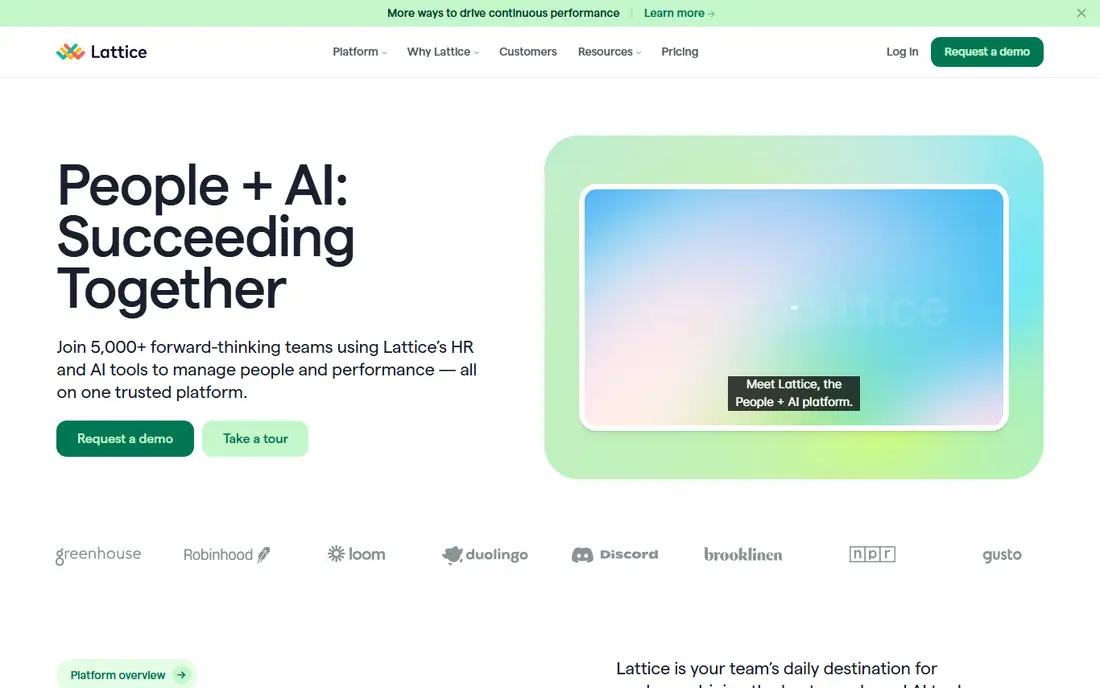
Mid-market teams tying reviews to growth. Its joined-up performance view, which links feedback to goals stands out in our comparison, and it is the reason this tool earns a place here. In practice, that strength matters most when you use the tool every week, not just during a trial, because habits and limits only become clear with regular use. A short trial on a real project tells you more than a feature list, so run one task end to end before you commit.
The honest catch is the annual minimum for small teams. That trade-off does not rule the tool out, but it should shape your trial: test the exact workflow you will rely on, check the limits on your likely plan, and confirm that support and reporting match how your team actually works. If that check passes, this is a solid choice for its stated audience.
- Reviews, goals, engagement, and compensation sit in one platform
- 360 cycles support manager, peer, and report feedback
- Analytics help HR spot patterns
- Annual minimum applies, so small teams face a higher floor
- Setup takes time for larger programmes
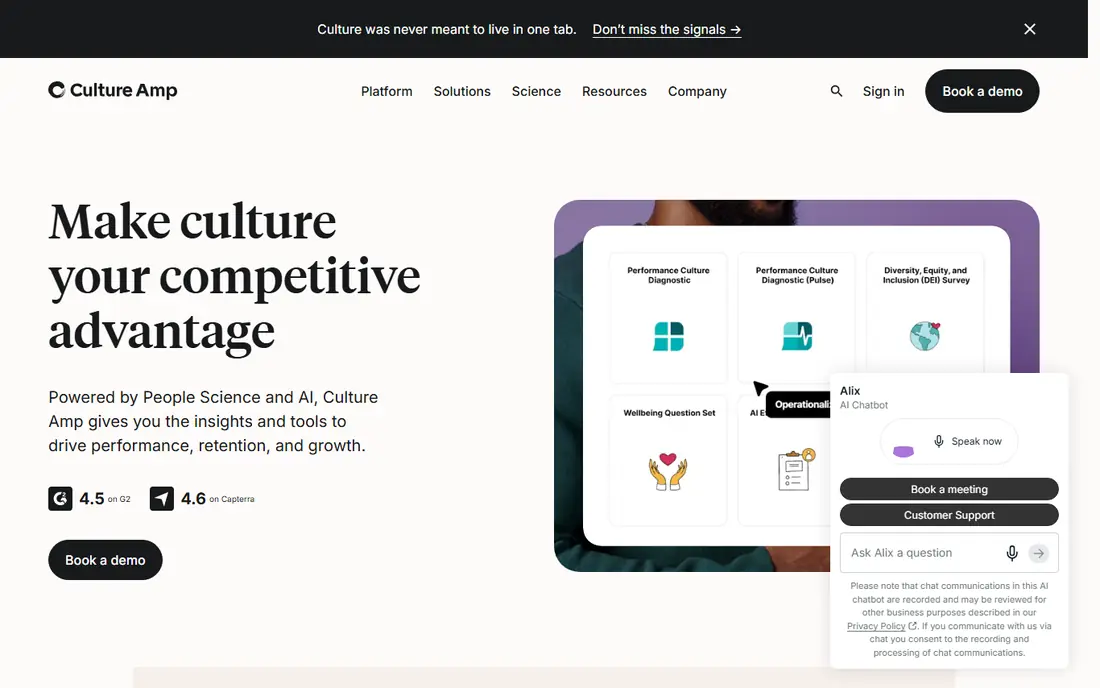
Larger organisations that value research-backed design. Its research-backed surveys, which add context to feedback stands out in our comparison, and it is the reason this tool earns a place here. In practice, that strength matters most when you use the tool every week, not just during a trial, because habits and limits only become clear with regular use. Compare it side by side with one rival on the same task, and the differences in fit usually become clear quickly.
The honest catch is the quote-based pricing for budgeting. That trade-off does not rule the tool out, but it should shape your trial: test the exact workflow you will rely on, check the limits on your likely plan, and confirm that support and reporting match how your team actually works. If that check passes, this is a solid choice for its stated audience.
- People science research informs surveys and review design
- Benchmarking adds context to results
- Engagement and performance tools sit together
- Pricing is quote-based
- Performance features are an add-on in some setups, so check what is included
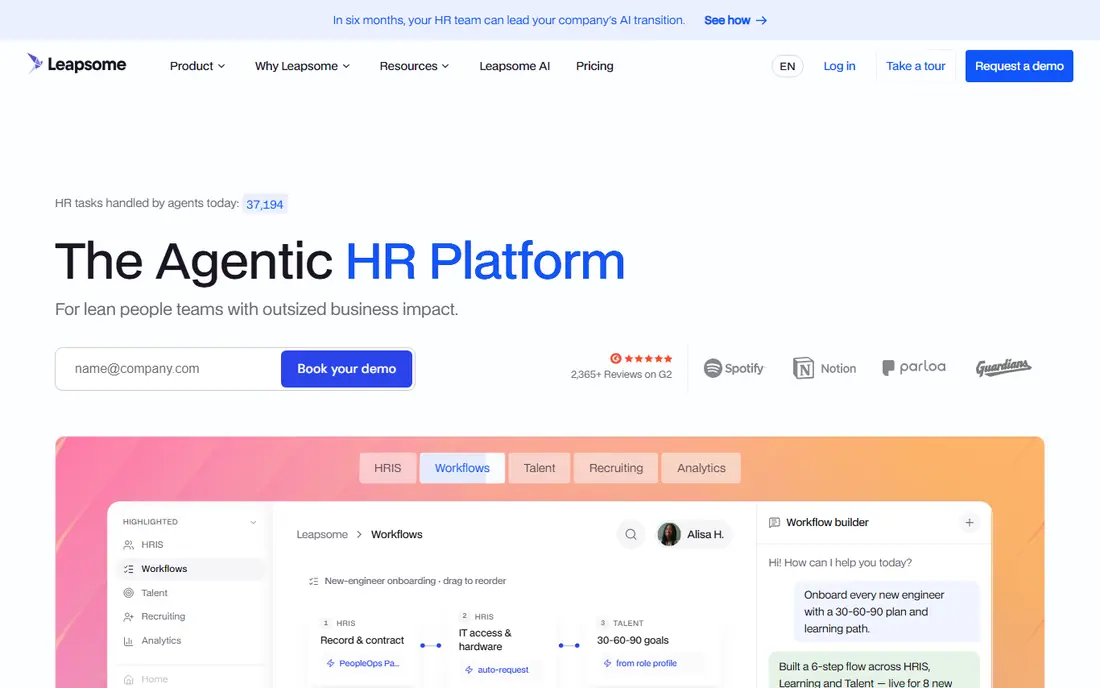
Global mid-market teams. Its learning link, which turns feedback into development stands out in our comparison, and it is the reason this tool earns a place here. In practice, that strength matters most when you use the tool every week, not just during a trial, because habits and limits only become clear with regular use. Start with the free tier or trial where one exists, and judge the tool on a real task from your own work.
The honest catch is the modular quote-based pricing. That trade-off does not rule the tool out, but it should shape your trial: test the exact workflow you will rely on, check the limits on your likely plan, and confirm that support and reporting match how your team actually works. If that check passes, this is a solid choice for its stated audience.
- Reviews, engagement, goals, and learning sit in one platform
- Multilingual support suits global teams
- Development plans follow from feedback
- Pricing is modular and quote-based
- Smaller teams may find the platform larger than they need
Remote and hybrid teams. Its check-in rhythm, which keeps feedback regular stands out in our comparison, and it is the reason this tool earns a place here. In practice, that strength matters most when you use the tool every week, not just during a trial, because habits and limits only become clear with regular use. A short trial on a real project tells you more than a feature list, so run one task end to end before you commit.
The honest catch is the lower flexibility for complex review designs. That trade-off does not rule the tool out, but it should shape your trial: test the exact workflow you will rely on, check the limits on your likely plan, and confirm that support and reporting match how your team actually works. If that check passes, this is a solid choice for its stated audience.
- Weekly check-ins and manager coaching sit alongside formal reviews
- 360 feedback supports development conversations
- It suits remote and hybrid teams
- Complex review design is less flexible than dedicated review platforms
- Pricing varies by plan and billing
Lean HR teams that need flexible cycles. Its flexible review design, which fits varied cycle types stands out in our comparison, and it is the reason this tool earns a place here. In practice, that strength matters most when you use the tool every week, not just during a trial, because habits and limits only become clear with regular use. Compare it side by side with one rival on the same task, and the differences in fit usually become clear quickly.
The honest catch is the lack of full HRIS coverage. That trade-off does not rule the tool out, but it should shape your trial: test the exact workflow you will rely on, check the limits on your likely plan, and confirm that support and reporting match how your team actually works. If that check passes, this is a solid choice for its stated audience.
- Flexible cycles support annual, quarterly, project, and 360 reviews
- Dedicated support is included
- No setup fees are stated
- It is not an HRIS, so payroll and core HR need another system
- Engagement surveys are newer than core review features
Large enterprises with complex feedback programmes. Its analytics depth, which suits large programmes stands out in our comparison, and it is the reason this tool earns a place here. In practice, that strength matters most when you use the tool every week, not just during a trial, because habits and limits only become clear with regular use. Start with the free tier or trial where one exists, and judge the tool on a real task from your own work.
The honest catch is the enterprise pricing and setup effort. That trade-off does not rule the tool out, but it should shape your trial: test the exact workflow you will rely on, check the limits on your likely plan, and confirm that support and reporting match how your team actually works. If that check passes, this is a solid choice for its stated audience.
- Deep survey and analytics tools support complex 360 programmes
- Reporting and text analysis help HR find themes
- It suits large enterprises
- Pricing is quote-based and enterprise-oriented
- Setup and design need more effort than simpler tools
Scaling teams that want simple structure. Its simplicity, which helps adoption stands out in our comparison, and it is the reason this tool earns a place here. In practice, that strength matters most when you use the tool every week, not just during a trial, because habits and limits only become clear with regular use. A short trial on a real project tells you more than a feature list, so run one task end to end before you commit.
The honest catch is the narrower suite coverage. That trade-off does not rule the tool out, but it should shape your trial: test the exact workflow you will rely on, check the limits on your likely plan, and confirm that support and reporting match how your team actually works. If that check passes, this is a solid choice for its stated audience.
- Reviews, 1:1s, and pulse surveys sit in a simpler system
- It suits scaling teams that want structure without suite complexity
- Feedback cycles are easy to run
- Pricing is quote-based on current pages
- It lacks the broader HR suite features of Lattice or Culture Amp
Small businesses already on BambooHR. Its single-system people data, which simplifies reviews stands out in our comparison, and it is the reason this tool earns a place here. In practice, that strength matters most when you use the tool every week, not just during a trial, because habits and limits only become clear with regular use. Compare it side by side with one rival on the same task, and the differences in fit usually become clear quickly.
The honest catch is the Pro tier requirement for performance features. That trade-off does not rule the tool out, but it should shape your trial: test the exact workflow you will rely on, check the limits on your likely plan, and confirm that support and reporting match how your team actually works. If that check passes, this is a solid choice for its stated audience.
- Performance module sits inside core HR, payroll-adjacent data, and reporting
- It suits small businesses already using BambooHR
- Reviews benefit from single people data
- Performance needs the Pro tier
- Review flexibility is less than dedicated platforms
Mid-market teams wanting joined-up talent tools. Its talent-wide view, which links feedback to mobility stands out in our comparison, and it is the reason this tool earns a place here. In practice, that strength matters most when you use the tool every week, not just during a trial, because habits and limits only become clear with regular use. Start with the free tier or trial where one exists, and judge the tool on a real task from your own work.
The honest catch is the annual minimum and bundle differences. That trade-off does not rule the tool out, but it should shape your trial: test the exact workflow you will rely on, check the limits on your likely plan, and confirm that support and reporting match how your team actually works. If that check passes, this is a solid choice for its stated audience.
- Reviews, feedback, learning, and talent mobility sit together
- AI support helps draft and summarise feedback
- It suits mid-market teams
- Annual minimum applies
- Some features depend on the chosen suite bundle
How we picked these
We compared official feature pages, pricing pages, and app store listings for each product, and we checked that each product is live and fits the topic. We gave weight to current pricing, free tiers, and the fit for a stated audience, rather than to marketing claims alone. Where a price was not published on the vendor's own page, we wrote See website instead of guessing a figure.
We also looked for honest trade-offs, including plan limits, missing features, and cases where a tool covers only part of a job. A tool that does one thing well can still be the right pick, as long as you know what it does not do. That is why each write-up names a catch alongside its strength, and why the buying guide below asks you to test your own workflow before paying.
How to choose 360 review software
Start by naming the job in one sentence. If you cannot state what the tool must do in a normal week, you will compare features instead of outcomes, and the cheapest or best-known option will win by default. Write down the task, the people who will use it, and the result you need, then judge every shortlisted tool against that list.
Next, run a trial on a real task, not a demo task. Import or create the kind of work you handle every day, invite the people who will actually use it, and check reporting, exports, and support. Pay attention to plan limits, because a tool that works in a trial can still fail when volume rises or when a second team joins.
Finally, check total cost and exit options before you commit. Look at per-user or per-asset pricing, annual minimums, and add-ons, and confirm how you export your data if you leave. A tool with a clear price, a usable free tier or trial, and honest limits is usually a safer buy than a cheaper tool with hidden constraints.
Frequently asked questions
What is the best 360 review software?
Lattice is the best all-round pick for mid-market teams, while Culture Amp suits larger organisations. PerformYard suits lean HR teams that want flexible cycles.
How does 360 review software protect anonymity?
Good tools aggregate peer feedback and hide individual raters where anonymity is promised. Check minimum rater counts and reporting rules before a cycle, and tell staff how anonymity works.
How often should we run 360 reviews?
Annual or twice-yearly cycles suit most teams, with lighter check-ins in between. Too-frequent full 360 cycles can cause survey fatigue and lower response quality.
Do small teams need 360 review software?
Small teams can run 360 reviews in PerformYard, Small Improvements, or BambooHR, but very small teams should watch anonymity: with few raters, feedback may be easy to identify.
What makes a 360 review useful?
Clear questions, consistent raters, a development conversation after results, and follow-up actions. Feedback without a conversation rarely changes behaviour.
Sources
See where you really rank - block by block
ProMapRanker scans Google Maps across a grid of your service area. Simple monthly plans from $19, white-label on every plan.
Start freeKeep reading
 wpforms alternatives
Best WPForms Alternatives in 2026
We compare 9 wpforms alternatives for WordPress forms, with free and paid options, current pricing notes, and honest limits for small business sites in 2026.
Read → windows task scheduler alternatives
Best Windows Task Scheduler Alternatives in 2026
Looking for Windows Task Scheduler alternatives? We compare 9 schedulers for Windows and cross-platform work, from free tools to enterprise automation.
Read → which ai video service is best
Which AI Video Service Is Best in 2026
which ai video service is best? We compare 10 legitimate AI video services on price, avatars, editing and output quality to help you pick the right tool.
Read →