 ProMapRanker
Alternatives to Next.js in 2026

Key takeaways
- Remix (now React Router) is the closest full-stack React alternative for teams that want to stay in React.
- Astro is the strongest pick for content, docs and marketing sites where small JavaScript bundles matter most.
- SvelteKit and Nuxt suit teams that prefer Svelte or Vue over React, with file routing and server rendering built in.
- Gatsby still fits data-rich static sites with a GraphQL layer, though its momentum is slower than newer frameworks.
- Qwik, SolidStart and TanStack Start suit performance-focused or type-first teams willing to accept a smaller ecosystem.
Quick comparison
| Pick | Great for | Pricing starts at | Free tier | |
|---|---|---|---|---|
 Astro | Content and marketing sites | Free | Yes | Visit |
 Remix | Full-stack React apps | Free | Yes | Visit |
 SvelteKit | Lean Svelte apps | Free | Yes | Visit |
 Nuxt | Vue full-stack apps | Free | Yes | Visit |
 Gatsby | Data-rich static sites | Free | Yes | Visit |
 Qwik | Instant-load performance | Free | Yes | Visit |
 SolidStart | Fine-grained reactive apps | Free | Yes | Visit |
 TanStack Start | Type-safe React apps | Free | Yes | Visit |
The best alternatives to next.js
We compared official docs, rendering models, routing, data loading and ecosystem notes for frameworks active in October 2026. All eight frameworks here are open source and free to use, so the choice comes down to your UI library, your content model and how much server work your app needs. This list includes alternatives only, and it does not list Next.js itself as a product.
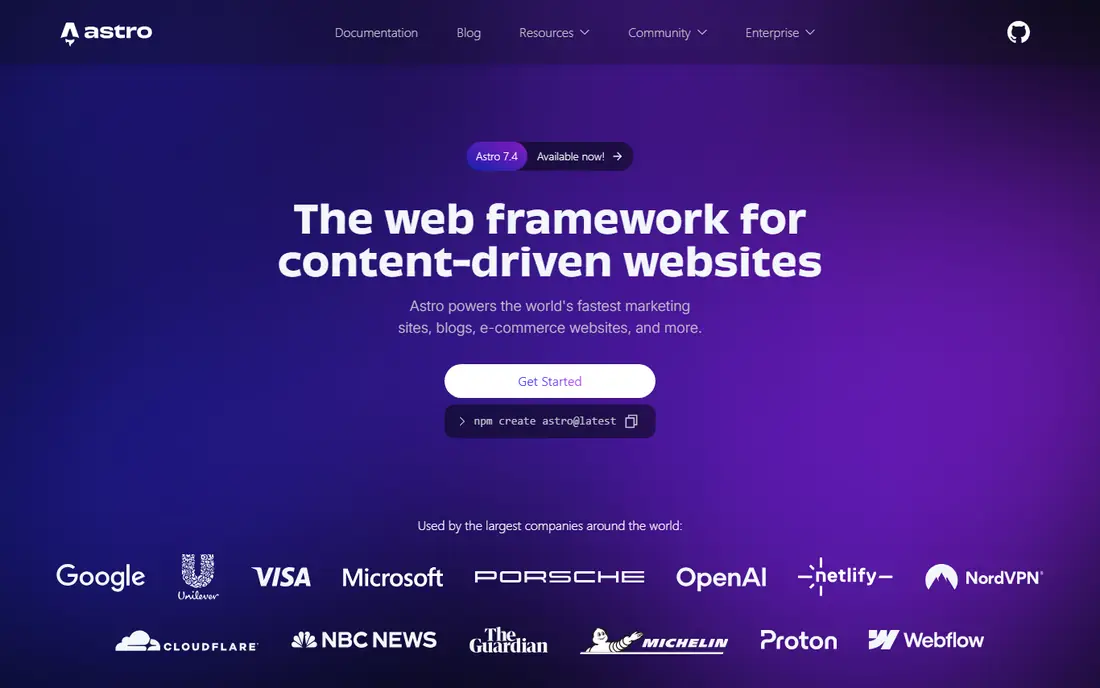
Astro is the framework to try first if your site is mostly content. It renders pages to static HTML by default and only loads JavaScript for the interactive islands you mark, which keeps bundles small and pages fast. That model suits blogs, docs, marketing sites and portfolios, where most visitors read rather than interact with every component.
Astro also lets you mix UI frameworks, so a React component can sit beside a Svelte component on the same page. Server rendering is available when you need it, but Astro shines when most pages can be static. The weakness is app complexity. If your product needs rich client state across many screens, a full-stack framework such as Remix or SvelteKit may fit better.
- Ships almost no JavaScript by default
- Island architecture for interactive parts
- Works with React, Vue, Svelte and more
- Needs integrations for heavy app features
- Less suited to complex single-page apps
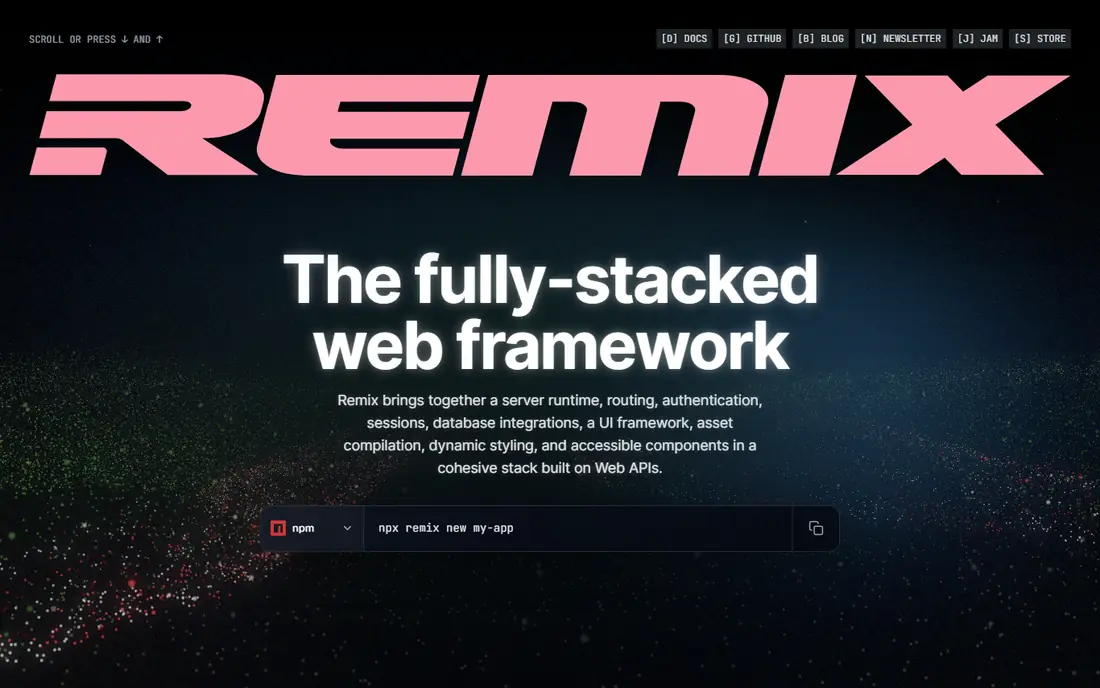
Remix is the closest React alternative for teams moving away from Next.js. It offers server rendering, nested routing, data loaders and form actions, and it leans on web standards such as fetch and forms rather than framework-specific magic. That approach makes data flow easy to reason about, and it works well for form-heavy and transactional apps.
Note that Remix merged into React Router in recent versions, so new projects often start from React Router with framework mode. That change can confuse teams reading older guides, but the core ideas remain the same. Remix suits React teams who want full-stack features without leaving React, and who are willing to learn its loader and action model.
- Strong server rendering and streaming
- Nested routes with loaders and actions
- Built on web standards
- Different mental model from App Router
- Smaller community than Next.js
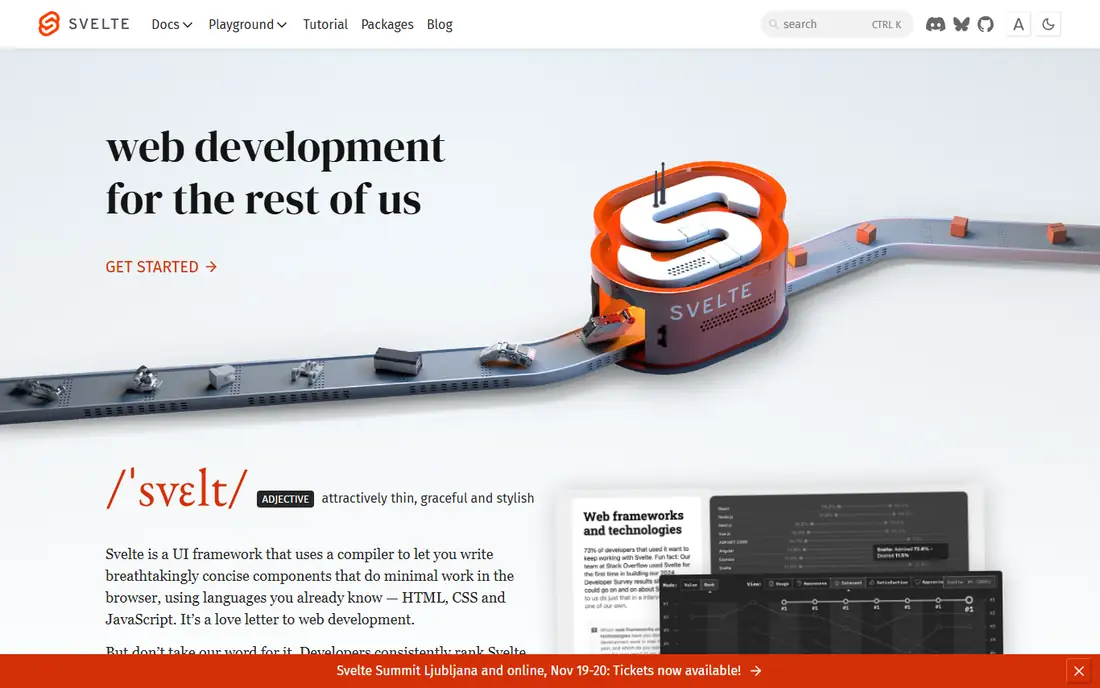
SvelteKit is the official application framework for Svelte, and it pairs a compiler-based UI with file routing, server rendering and static generation. Because Svelte compiles components to efficient JavaScript, SvelteKit apps often feel fast with less code. Developers who like Svelte syntax tend to find SvelteKit simple to learn and pleasant to maintain.
The ecosystem is the trade-off. React has more libraries, examples and hiring depth, so a niche integration may need more manual work in SvelteKit. For teams that value speed, simplicity and a small bundle, that trade is often worth it. SvelteKit fits startups, dashboards and content apps where developer speed matters.
- Small bundles and fast interactions
- File-based routing
- Server rendering and static output
- Smaller ecosystem than React
- Fewer ready-made libraries for niche needs
Nuxt is to Vue what Next.js is to React, and it is the natural pick for Vue teams. It provides server rendering, static generation, file-based routing, auto-imports and a module system, plus Nitro as its server engine. Layers let teams share configuration and components across sites, which helps agencies and multi-site setups.
Nuxt works best when your team is already committed to Vue. If your team is React-based, switching to Nuxt means learning Vue as well as a new framework, which is a larger change than moving to Remix or Astro. For Vue teams, though, Nuxt offers a complete, well-documented path to production apps and content sites.
- Full Vue framework with server rendering
- File routing and auto-imports
- Layers and modules for reuse
- Vue ecosystem is smaller than React
- Major version changes need migration planning
Gatsby is a React framework built around static generation and a GraphQL data layer. It pulls content from CMSs, APIs, files and databases into one queryable layer, which makes it strong for sites with structured content from many sources. Plugins cover images, SEO, analytics and common CMS integrations, so much of the setup is already done.
The weakness is scale and momentum. Large sites can face long build times, and newer frameworks such as Astro have taken much of the static-site attention. Gatsby still fits content sites that already use its data layer, or teams that value its plugin library. New projects should weigh Astro first for simple content, and keep Gatsby for data-rich static sites where GraphQL helps.
- Mature plugin ecosystem
- GraphQL data layer for many sources
- Strong image and content tooling
- Build times can grow on large sites
- Momentum is slower than newer frameworks
Qwik takes a different approach to performance. Instead of hydrating a whole page on load, it resumes work on demand, so the initial JavaScript cost stays small even on large pages. That design suits performance-critical sites, such as e-commerce and content sites with heavy traffic, where load time directly affects results.
The cost is maturity. Qwik has fewer libraries, examples and production stories than Astro or Nuxt, and hiring experience is rarer. Teams that adopt Qwik should be comfortable reading docs and building some integrations themselves. For performance-led projects with a capable team, Qwik is a genuinely different and interesting alternative.
- Resumable design avoids large hydration cost
- Fast initial loads at scale
- JSX-style components
- Newer ecosystem
- Fewer examples and libraries than React or Vue frameworks
SolidStart is the application framework for Solid, a library known for fine-grained reactivity. Instead of re-rendering whole components, Solid updates only the parts that changed, which keeps interactions fast. SolidStart adds file routing, server rendering and server functions on top of that model, giving Solid teams a full-stack path.
SolidStart suits developers who like Solid or who want maximum rendering efficiency without a virtual DOM. The community is smaller than Svelte or Vue communities, so you may write more code yourself. For performance-sensitive interactive apps built by a team that knows Solid, it is a strong and modern choice.
- Fine-grained reactivity with small updates
- Fast rendering
- File routing and server functions
- Smaller community than SvelteKit or Nuxt
- Fewer third-party resources
TanStack Start is a full-stack React framework from the TanStack team, built on Vite with type-safe routing and loaders. Teams that already use TanStack Query and TanStack Router will find the model familiar, and the type safety helps catch routing and data errors before runtime. Streaming server rendering and file routing round out the core feature set.
TanStack Start is newer than Remix and Astro, so its ecosystem is still growing and some guides are thinner. That matters less for teams already invested in TanStack tools, who gain consistency across their stack. For type-first React teams, TanStack Start is a credible alternative that is worth a prototype before you commit.
- Type-safe routing and data loading
- Vite-native tooling
- Strong TanStack Query integration
- Still maturing compared with Remix
- Ecosystem and docs are growing
How we picked these
We compared official documentation, rendering options, routing, data loading and community activity for frameworks maintained in October 2026. We included React, Vue, Svelte and framework-agnostic options, and we left out deprecated frameworks and pure client-side libraries with no server rendering path. We did not claim hands-on testing, and we based our notes on official docs and public framework comparisons.
How to choose between them
Start with your UI library, because that choice narrows the list fast. React teams should prototype Remix and TanStack Start, Vue teams should start with Nuxt, and Svelte teams should start with SvelteKit. Content teams should prototype Astro first, regardless of UI library, because its static-first model often wins on speed and simplicity for docs, blogs and marketing pages.
Test rendering and data needs early
Build a small prototype with your real content model, not a demo page. Test how each framework handles your routing, your CMS or API data, your forms and your deployment target. Check build times, bundle size and server costs on that prototype, because those numbers matter more than marketing claims. Also check hiring and support, since a framework your team cannot staff is a risk even if it performs well in a test.
Frequently asked questions
What is the best Next.js alternative for React teams?
Remix, now delivered through React Router framework mode, is the closest full-stack React alternative, with server rendering, nested routes and form actions. TanStack Start is a strong second choice for type-first React teams already using TanStack tools.
What are the best Next.js alternatives for content sites?
Astro is the strongest pick for blogs, docs and marketing sites, thanks to its static-first output and island architecture. Gatsby also fits data-rich static sites, especially when a GraphQL data layer helps pull content from many sources.
Is SvelteKit or Nuxt better than Next.js?
Neither is universally better, because the answer depends on your UI library. SvelteKit suits Svelte teams who want small bundles, while Nuxt suits Vue teams who want a complete Vue framework. Both are strong in their own ecosystems.
Can I migrate from Next.js to Astro or Remix?
Yes, but the effort differs. Moving to Remix keeps you in React, so components often carry over with routing and data changes. Moving to Astro may be easier for content pages, but interactive app screens need more rework around islands and integrations.
Are these alternatives free to use?
Yes, all eight frameworks here are open source and free to use, with no license fee. Costs come from hosting, team time and any paid services you add, such as a CMS, database or deployment platform.
Sources
See where you really rank - block by block
ProMapRanker scans Google Maps across a grid of your service area. Simple monthly plans from $19, white-label on every plan.
Start freeKeep reading
 free alternatives to grok imagine
Free Alternatives to Grok Imagine in 2026
We compared the best free alternatives to grok imagine for image generation, from fast daily credits to design tools, so you can create without paying.
Read → best tools for instagram content creation
Best Tools for Instagram Content Creation in 2026
Compare the best tools for Instagram content creation, from Canva and CapCut to Later and Buffer, on design, video, planning, scheduling, and price in 2026.
Read → best tool to split pdf files
Best Tool to Split PDF Files in 2026
We compared the best tool to split pdf files on split modes, file limits, privacy and price, so you can split a PDF cleanly and keep every page in one go.
Read →