 ProMapRanker
Best Alternatives to Contact Solution in 2026

Key takeaways
- Genesys Cloud CX, Talkdesk, and NiCE CXone suit large contact centers that need omnichannel routing and AI at scale.
- Aircall, CloudTalk, and Nextiva suit smaller teams that want cloud phone service with contact center features without enterprise complexity.
- Five9 and RingCentral suit teams that want a balance of voice, digital channels, and CRM integration.
- Check per-agent pricing, minutes, and AI add-ons separately, because the headline plan price rarely covers the full monthly total.
Quick comparison
| Pick | Great for | Pricing starts at | Free tier | |
|---|---|---|---|---|
 Five9 | AI-powered cloud contact center | See website | Free trial | Visit |
 Genesys Cloud CX | Large omnichannel contact centers | See website | Free trial | Visit |
 Talkdesk | AI automation for support teams | See website | Free trial | Visit |
 NiCE CXone | Enterprise omnichannel and analytics | See website | Free trial | Visit |
 Aircall | Small-team cloud phone service | See website | Free trial | Visit |
 CloudTalk | Affordable calling for support teams | $25 per user per month | Free trial | Visit |
 Nextiva | Unified phone and contact center | $18.95 per user per month | Free trial | Visit |
 RingCentral Contact Center | Teams already using RingCentral | See website | Free trial | Visit |
 Zendesk | Support teams centred on tickets | See website | Free trial | Visit |
The best alternatives to Contact Solution
Contact Solution is a broad term for contact center software, and buyers usually mean a platform that handles calls, chat, email, and sometimes social messages in one queue. The platforms below cover voice, digital channels, intelligent routing, and reporting for support and sales teams of different sizes. We compared official product pages and public comparisons, and we kept only platforms that are live and working in October 2026.
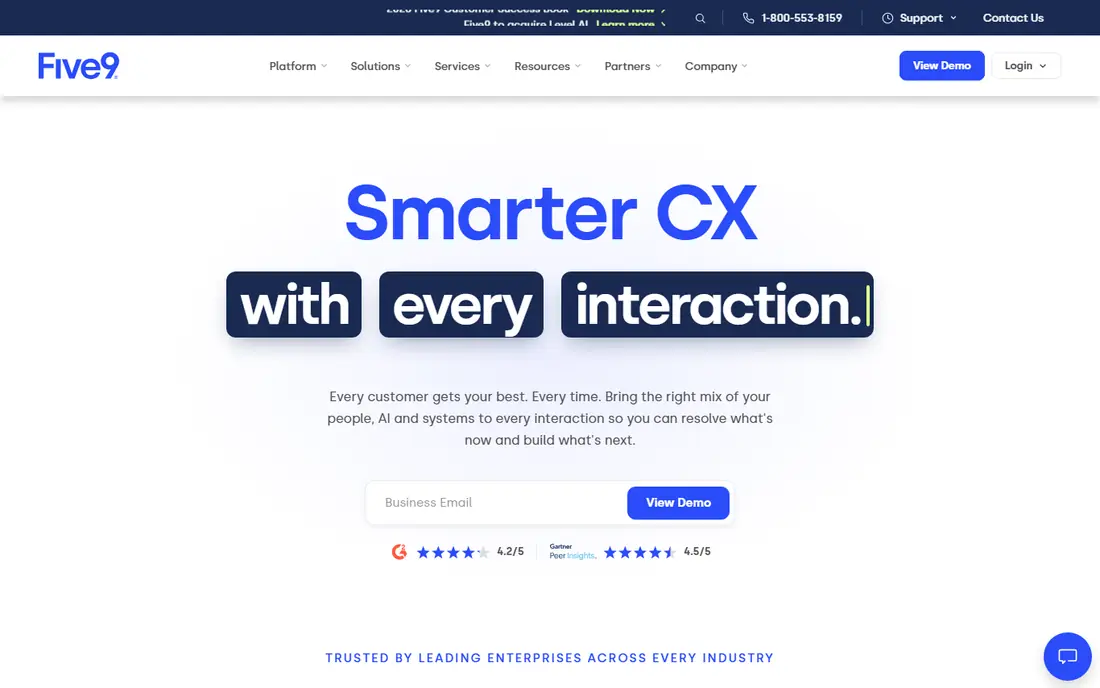
Five9 suits a contact center that wants intelligent voice routing with AI help for agents. Calls, chats, and emails can sit in one queue, agents get suggested responses and summaries, and managers get real-time views of queues and staffing. Its CRM integrations help agents see customer history without switching screens.
The main drawback is pricing transparency. Five9 quotes by scope, so a small team cannot easily compare its total with a published per-user price. AI features also sit on different tiers and add-ons, so confirm exactly which AI tools are included in the quote you receive.
- Strong voice routing and AI agent assist
- Omnichannel queues for voice and digital
- Solid CRM integrations
- Pricing is quoted, not published
- Enterprise setup takes planning
- AI features vary by plan and add-on
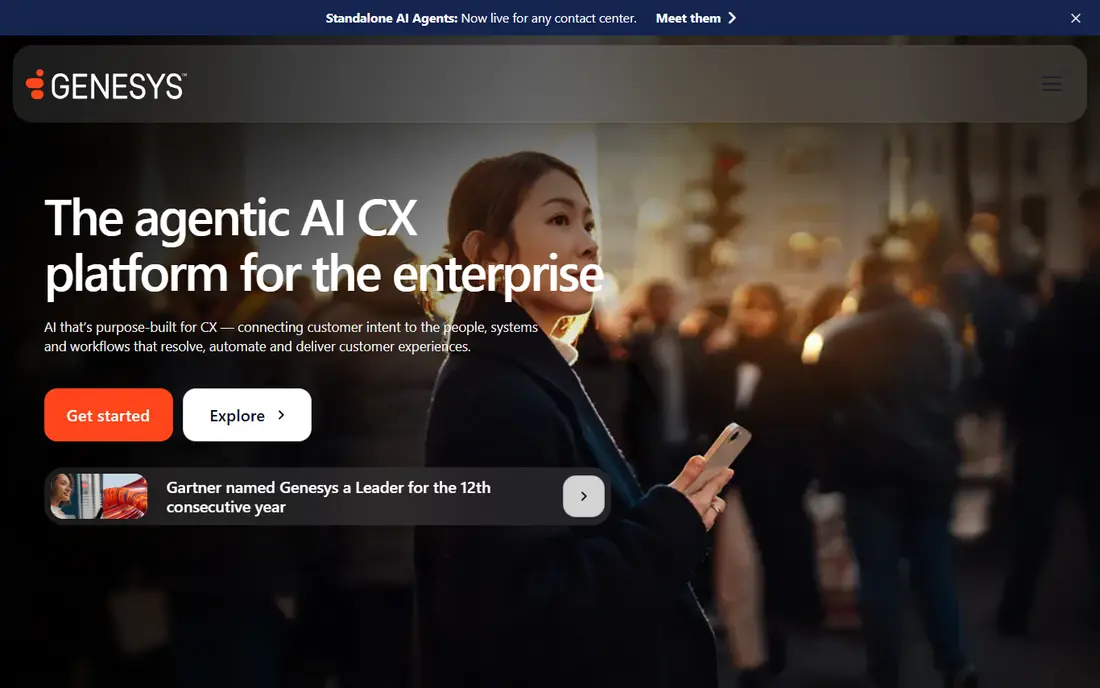
Genesys Cloud CX is a full contact center platform for large teams that handle voice, chat, email, social, and messaging at scale. Its routing can factor in skills, language, and customer intent, and its workforce tools help managers forecast staffing and schedule agents. For a large operation, that breadth is hard to match in a simpler tool.
Small teams may find Genesys heavy. Setup, administration, and training take more time than a small-team phone tool, and pricing is custom. Choose Genesys when your volume, channels, and compliance needs justify an enterprise platform, not when a simple cloud phone system would do.
- Broad omnichannel routing and AI
- Strong workforce management
- Large enterprise customer base
- Complex setup for small teams
- Pricing is quoted
- Learning curve for administrators
Talkdesk appeals to teams that want AI to handle routine work. Its automation can route contacts, summarise interactions, and suggest next steps, while its agent workspace keeps voice and digital channels in one view. That combination helps a growing support team handle more volume without adding agents at the same rate.
As with other enterprise platforms, pricing is custom and AI depth varies by tier. A team that only needs basic calling and queuing may find a simpler tool cheaper. Test Talkdesk's AI features on your real contact types during a trial, since generic demos can overstate how much automation fits your workflows.
- AI-driven automation and agent assist
- Clean agent workspace
- Strong integrations with CRM and helpdesk tools
- Pricing is quoted
- Advanced AI features sit on higher tiers
- Smaller teams may pay for scale they do not need
NiCE CXone suits large contact centers that need deep analytics alongside routing. It covers voice and digital channels, adds quality management and workforce tools, and gives managers detailed views of performance, sentiment, and compliance. For regulated or quality-focused operations, that analytics depth is a real advantage.
The platform is built for enterprise scale, so small teams should expect a heavier implementation and a custom quote. If your team is under twenty agents and your main need is reliable calling, Aircall or CloudTalk will be faster to deploy and easier to budget.
- Comprehensive omnichannel routing
- Strong analytics and quality management
- AI and automation across channels
- Enterprise pricing and setup
- Complexity for small teams
- Some features need specialist configuration
Aircall is a practical choice for a small support or sales team that needs a cloud phone system fast. Agents can call from a browser or app, managers can set up queues and business hours, and integrations with CRM and helpdesk tools keep call history visible. Setup is far simpler than an enterprise contact center platform.
Larger contact centers that need complex omnichannel routing, workforce management, or AI at scale will outgrow Aircall. Its strength is reliable voice for small teams, with digital channels and advanced routing available on higher plans. Check minutes, international rates, and plan limits before you commit.
- Easy cloud phone setup for small teams
- Good CRM and helpdesk integrations
- Call queuing and analytics included
- Pricing varies by plan and billing term
- Advanced contact center features sit on higher tiers
- International minutes need checking
CloudTalk suits a support team that wants a clear, affordable starting price. Its entry plan has been listed at $25 per user per month in recent comparisons, with call queuing, interactive voice response, and analytics for daily operations. Integrations with common CRM and helpdesk tools help agents see caller context quickly.
It is primarily a voice platform, so teams that need deep chat, email, and social queues in one place may need a larger platform. For a voice-first team, CloudTalk offers a good balance of price and features, and its trial lets you test call quality on your own network before you buy.
- Clear entry price for small teams
- Call queuing, IVR, and analytics
- Good integrations with CRM tools
- Digital channels are lighter than enterprise platforms
- Advanced AI sits on higher tiers
- Support quality can vary by region
Nextiva suits a business that wants phone service and contact center features from one provider. Its entry plan has been listed from $18.95 per user per month in recent comparisons, covering core calling and messaging, while higher plans add contact center routing, analytics, and AI features. That path lets a small business start simple and grow into contact center tools.
A large, omnichannel contact center may still prefer Genesys, Talkdesk, or NiCE CXone for routing depth and workforce tools. Nextiva is strongest for small to mid-size teams that value unified communications and a predictable entry price over enterprise routing complexity.
- Low entry price for unified communications
- Phone, video, and messaging in one system
- Contact center features on suitable plans
- Advanced contact center routing sits on higher tiers
- Interface can feel broad for a voice-only team
- Add-ons add cost
RingCentral Contact Center makes most sense for a team already using RingCentral for phone or video. Agents stay in a familiar system, managers get omnichannel queues and analytics, and the platform adds AI routing and agent assist on suitable plans. That fit reduces training and integration work for existing RingCentral customers.
For a buyer starting fresh, a dedicated contact center platform may offer deeper routing or analytics for a similar total. Compare RingCentral Contact Center against Five9 and Talkdesk on your actual channels and volumes, and confirm which AI and workforce features are included in the quoted plan.
- Fits RingCentral phone and video users
- Omnichannel routing and AI on suitable plans
- Strong reliability and integrations
- Contact center pricing is quoted
- Full features need higher tiers
- Standalone buyers may prefer a dedicated contact center platform
Zendesk suits a support team that already centres its work on tickets. Its ticketing, knowledge base, and customer messaging are mature, and its voice add-on lets agents handle calls inside the same workspace as tickets. For a team where email and chat tickets dominate and calls are secondary, that ticket-first model works well.
A voice-heavy contact center will find dedicated platforms stronger on routing, dialling, and workforce management. Zendesk's total also rises as you add voice, AI, and workforce tools, so model the full add-on cost rather than the base ticket price alone.
- Strong ticketing and help center
- Voice and messaging add-ons
- Wide app marketplace and reporting
- Voice is an add-on rather than the core
- Contact center depth is lighter than dedicated platforms
- Costs rise with add-ons
How we picked these
We compared official product pages and public comparisons for contact center platforms that cover voice, digital channels, routing, and reporting, and we kept only platforms that are live and working in October 2026. We favoured platforms with a trial and a published or clearly quoted starting price, and we used See website where pricing is custom. We did not claim hands-on testing.
What to check before you switch
Start with channels and volume. List every channel you handle, daily contact volume per channel, peak hours, and the number of agents per shift. A voice-only team needs a different platform from a team handling voice, chat, email, and social messages at once, and volume decides whether per-agent or usage pricing is cheaper.
Next, test routing and CRM integration with real contacts. Set up a skill-based queue, route a test call and chat, and check that the agent sees the right customer history. A platform that looks good in a demo but needs custom work for your CRM will cost time and money after purchase.
Finally, check minutes, AI add-ons, and contract terms. Confirm what is included in the per-agent price, what counts as billable minutes, and which AI features are included versus add-ons. Check contract length, exit terms, and data export, so you are not locked in if volumes change.
If you run a large contact center
Genesys Cloud CX, Talkdesk, NiCE CXone, and Five9 offer the routing, AI, and analytics depth large operations need. Run a pilot on one queue first, and measure handle time, first-contact resolution, and agent satisfaction before a full rollout.
If you run a small support team
Aircall, CloudTalk, and Nextiva offer faster setup and clearer entry pricing, with Zendesk as a strong ticket-first option. Start with the channels you actually use, and add omnichannel features only when volume justifies them.
Frequently asked questions
What is the best alternative to Contact Solution for small businesses?
Aircall, CloudTalk, and Nextiva are strong small-business picks, with clear entry pricing and faster setup than enterprise platforms. CloudTalk starts at $25 per user per month and Nextiva from $18.95 per user per month in recent comparisons. The best choice depends on whether you need voice only or a fuller contact center queue.
Which contact center platform is best for large teams?
Genesys Cloud CX, Talkdesk, and NiCE CXone suit large teams that need omnichannel routing, AI, workforce management, and deep analytics. Five9 is also strong for AI-powered voice operations. Large teams should pilot one queue first and compare routing, reporting, and agent experience on real contacts.
Can I use Zendesk as a contact center?
Yes, Zendesk can serve as a contact center when tickets are your main workflow and voice is added through its voice product. It suits email and chat-first teams that need a strong knowledge base and ticket system. Voice-heavy teams that need advanced dialling and workforce tools may prefer a dedicated contact center platform.
How much does contact center software cost?
Costs vary widely, from about $19 to $25 per user per month for entry cloud phone plans to custom enterprise quotes for large omnichannel platforms. Minutes, AI add-ons, and workforce tools often sit outside the base price, so ask for a total quote on your volume and channels. A trial on real volume gives a clearer cost picture than a headline price.
Do these platforms support AI chatbots and agent assist?
Yes, most platforms in this guide offer AI chatbots, agent assist, summaries, and routing on suitable plans, with depth varying by tier. Five9, Talkdesk, Genesys, and NiCE CXone offer the deepest AI features, while smaller tools offer AI on higher plans or as add-ons. Confirm which AI features are included in your quoted plan before you buy.
How do I migrate from Contact Solution without losing data?
Export tickets, call records, customer notes, and reporting history before you cancel, and keep them as structured files for reference. Set up queues, routing, and CRM integrations in the new platform, then run a pilot with one team or queue. Move remaining teams in stages, and keep the old system read-only for a short overlap so no history is lost.
Sources
See where you really rank - block by block
ProMapRanker scans Google Maps across a grid of your service area. Simple monthly plans from $19, white-label on every plan.
Start freeKeep reading
 wpforms alternatives
Best WPForms Alternatives in 2026
We compare 9 wpforms alternatives for WordPress forms, with free and paid options, current pricing notes, and honest limits for small business sites in 2026.
Read → windows task scheduler alternatives
Best Windows Task Scheduler Alternatives in 2026
Looking for Windows Task Scheduler alternatives? We compare 9 schedulers for Windows and cross-platform work, from free tools to enterprise automation.
Read → which ai video service is best
Which AI Video Service Is Best in 2026
which ai video service is best? We compare 10 legitimate AI video services on price, avatars, editing and output quality to help you pick the right tool.
Read →