 ProMapRanker
Best Algolia Alternatives in 2026

Key takeaways
- Meilisearch and Typesense are the most direct open source swaps for Algolia, with fast setup, typo tolerance, and self-hosting options that avoid per-search fees.
- Elasticsearch suits teams that need search plus analytics at scale, but it demands more setup and maintenance than a hosted search service.
- Coveo, Searchspring, and Constructor suit commerce teams that need merchandising, personalization, and recommendations, not just a search box.
- AddSearch suits smaller sites and non-technical teams that want a managed search bar without running a search engine.
- The cheapest engine on paper can become expensive in engineering time, so weigh hosting, maintenance, and relevance tuning alongside the monthly price.
Quick comparison
| Pick | Great for | Pricing starts at | Free tier | |
|---|---|---|---|---|
 Meilisearch | Easy open source Algolia swap | Free | Yes | Visit |
 Typesense | High volume search without per-search fees | Free | Yes | Visit |
 Elasticsearch | Search plus analytics at scale | See website | Free trial | Visit |
 Coveo | Enterprise search and AI answers | See website | No | Visit |
 Searchspring | Commerce merchandising and personalization | See website | No | Visit |
 Constructor | Commerce search and recommendations | See website | No | Visit |
 AddSearch | Managed site search for smaller teams | See website | Free trial | Visit |
The best Algolia alternatives
These tools replace Algolia in different ways. Some are search engines you host yourself, some are hosted services with a similar API, and some are commerce platforms where search is one part of a larger merchandising system. Pick by asking whether you need raw search speed, commerce revenue features, or a managed setup with little engineering time.

Meilisearch is our pick for most teams that want to leave Algolia without rebuilding their whole frontend. It is open source, it starts quickly, and it offers typo tolerance, filtering, and relevance controls that feel familiar to Algolia users. Managed cloud plans have been listed from $20 per month in recent comparisons, while self-hosting removes the per-search fee model that makes Algolia bills hard to forecast. Migration guides and InstantSearch compatible adapters help teams swap engines without redesigning every search page.
The limit is commerce depth. Meilisearch gives you a strong search engine, not a merchandising suite with built-in product ranking rules, A/B testing for commerce, and recommendation widgets of the kind Searchspring or Constructor sell. A developer team can build those layers, but a merchandising team that wants them out of the box should look at the commerce tools below. For docs sites, apps, and content sites, Meilisearch is a strong first trial.
- Open source core with a free self-hosted option
- Fast indexing and typo tolerant search
- Hosted cloud plans from $20 per month in recent listings
- Advanced commerce merchandising needs extra work compared with a commerce platform
- Self-hosting shifts maintenance to your team
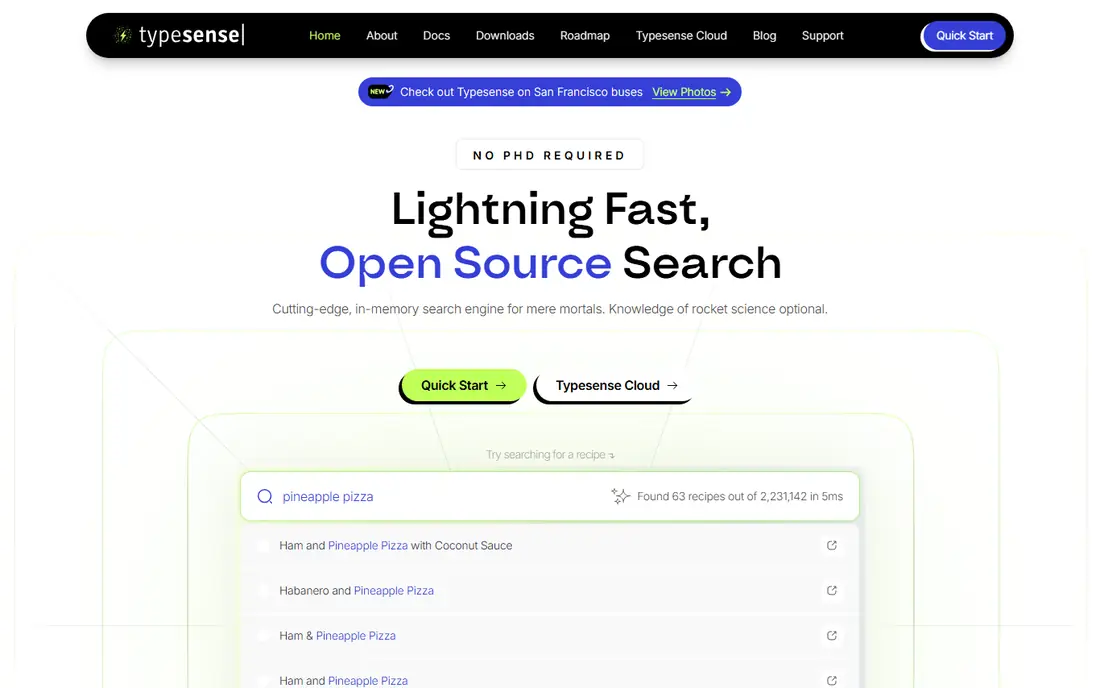
Typesense is the other open source engine most Algolia switchers test, and it wins on cost predictability at high query volume. Because cloud pricing is resource based rather than per search, a site with a million searches a month does not face the same bill shock that per-search pricing can cause. It is fast, typo tolerant, and its API is small enough that a developer can get a working search page in a day. For internal tools, docs, and high traffic content sites, that simplicity is a real strength.
The catch is memory planning. Typesense keeps much of its index in memory, so an index that outgrows its instance will need a larger machine, and teams should plan for headroom above the raw index size. It also does not ship the full commerce merchandising toolkit that a large store may need. If your priority is fast, affordable search at volume, Typesense deserves a head-to-head test against Meilisearch on your own data.
- Open source with typo tolerant instant search
- Resource based cloud pricing rather than per-search fees
- Simple API that developers learn quickly
- Self-hosted clusters need enough memory for the index size
- Commerce merchandising features are lighter than dedicated commerce platforms
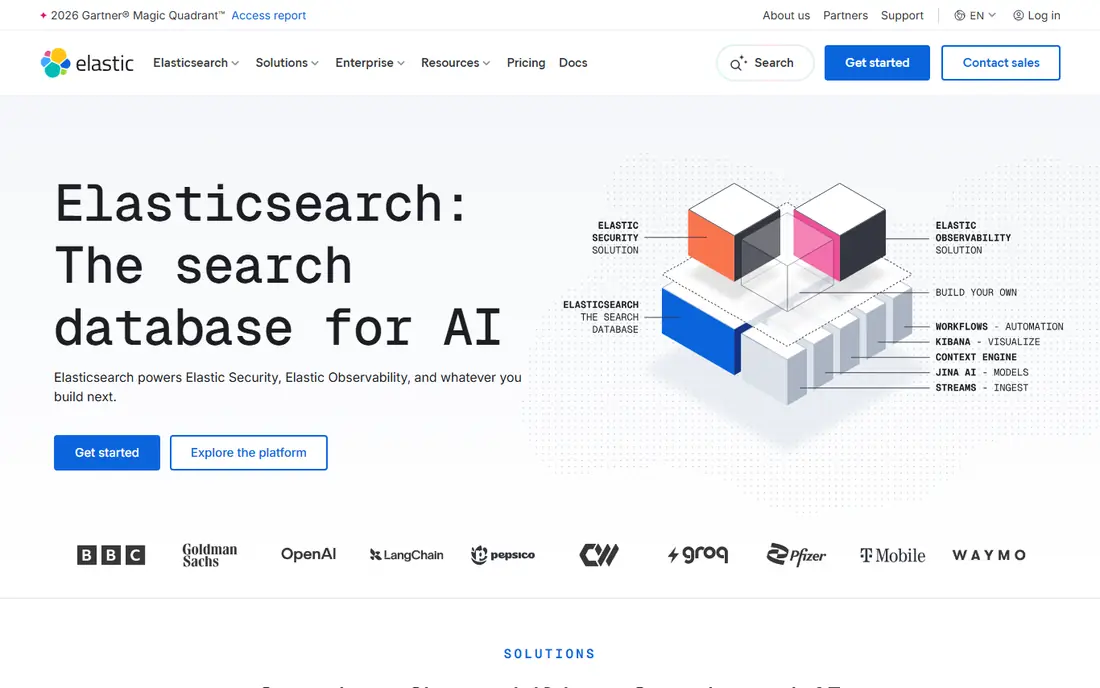
Elasticsearch is the engine behind many large search and analytics systems, and it remains a strong Algolia alternative for teams that need more than a site search box. It handles large distributed indexes, complex queries, aggregations, and log analytics in the same stack, which suits enterprises that already run observability or data platforms on it. Managed cloud hosting removes some of the operations burden, and the ecosystem of connectors and dashboards is wider than for younger engines.
The weakness is effort. Elasticsearch is not a drop-in Algolia replacement for a small team that wants search working this week. Relevance tuning, cluster sizing, and upgrades all need engineering attention, and costs can grow with data volume and retention. Choose Elasticsearch when search is part of a larger data platform, or when your team already knows the stack. Choose Meilisearch or Typesense when you want a simpler engine for a website or app alone.
- Mature distributed search with rich querying and analytics
- Large ecosystem of tools and integrations
- Managed cloud option available
- Setup and tuning take real engineering time
- Managed cloud pricing has been listed from $99 per month in some comparisons, so small sites may overpay
Coveo is built for enterprises that need search across websites, commerce catalogs, support content, and internal knowledge, not just one storefront. Its pitch centers on relevance, AI powered answers grounded in your content, and recommendations that connect search to service and sales. Large teams with complex catalogs, multiple content sources, and strict governance needs will find more here than in a simple engine. Analytics and tuning tools help relevance teams measure what search actually returns, not just how fast it returns it.
The cost and effort are the honest limits. Coveo pricing is quote based and enterprise oriented, with some comparisons citing very high starting figures for certain editions, so small sites should not shortlist it on price. Implementation also takes longer than dropping a search bar onto a site. Choose Coveo when search spans the whole business and the budget matches an enterprise platform. For a single website, a lighter tool will ship faster.
- Enterprise search across content, commerce, and service
- AI answering and recommendations in its pitch
- Strong relevance and analytics tooling
- Enterprise pricing with no simple public starting price
- Implementation is heavier than a simple search bar
Searchspring is a commerce search platform first and a generic search engine second. It gives merchandisers control over ranking, product boosts, filters, and recommendations, and it ties search behavior to store results so teams can see which queries convert and which return poor results. That focus makes it a strong Algolia alternative for stores that left Algolia because merchandising, not raw search speed, was the gap. Integrations with major commerce platforms shorten setup for stores already on those systems.
The price narrows its audience. Searchspring pricing is quote based, and some comparisons have listed starting figures around $699 per month, which puts it out of reach for small stores. It also makes less sense for a docs site or a content site that does not sell products. If your search page is a revenue page, Searchspring is worth a demo. If your search page is a help page, a simpler engine will serve you better for less.
- Commerce search with merchandising rules, personalization, and recommendations
- Analytics tied to store performance
- Integrations with major commerce platforms
- Quote based pricing, with some listings from $699 per month, so small stores may find it expensive
- Best value only for commerce teams
Constructor focuses on product discovery: search, category browsing, and recommendations that learn from shopper behavior. For a store with a large catalog, that combination matters because many shoppers never type a perfect query, they browse, filter, and follow recommendations. Constructor pitches relevance that adapts to each shopper and tools for merchandisers to shape results without engineering help for every change. That is the part of Algolia commerce work that some teams find hardest to replicate with a raw engine.
The limit, again, is audience and price. Constructor is an enterprise commerce platform with quote based pricing, so it fits larger stores with dedicated commerce teams. A small store with a few hundred products will not need its full discovery suite, and may find a simpler search bar cheaper and faster to run. Shortlist Constructor when catalog size, personalization, and revenue per search justify an enterprise platform.
- Commerce search, browse, and recommendations built for product discovery
- Personalization based on shopper behavior
- Strong fit for larger catalogs
- Quote based enterprise pricing
- Implementation and data work suit larger commerce teams better than small stores
AddSearch is the managed option for teams that do not want to run a search engine at all. You point it at your site, it indexes your content, and you get a search bar with results, filters, and analytics that a marketing or content team can manage. Recent listings put its keyword search starting price at $119 per month, with AI answers on a much higher tier, so teams should check which tier matches their needs before budgeting. For content heavy sites, docs, and smaller commerce sites, that managed model saves engineering time.
The trade-off is control. You do not get the same low level engine tuning as a self-hosted engine, and heavy commerce merchandising may still need a commerce platform. AddSearch suits teams where time matters more than engine control, and where search is important but not the core product. If your team has developers who enjoy tuning relevance, an open source engine may give you more for less money.
- Managed search that non-developers can run
- AI answers and content search in its pitch
- Clear published starting price for keyword search in some listings
- Less raw engine control than self-hosted Meilisearch or Typesense
- AI answer features sit on a higher priced tier in some listings
How we picked these
We compared official product pages, pricing pages, and recent independent comparisons of search tools that are live in October 2026. We kept tools that provide site search, app search, or commerce search as a real product, and we left out generic databases, vector-only libraries, and tools with no clear search product page. We favored a mix of open source engines, hosted services, and commerce platforms so readers with different budgets and team sizes can find a fit.
How to choose the right search engine
Start with your content and your team, not with a speed claim. List what you search: products, help articles, docs, or internal knowledge. Then list who will tune relevance: developers, merchandisers, or a content team with no engineering time. A raw engine suits a developer team, a commerce platform suits a merchandising team, and a managed service suits a content team. That single decision narrows this list to two or three tools before you look at price.
Next, test relevance on your own data, not on a demo catalog. Index a sample of your real products or articles, run your top twenty real queries, and check the first five results for each. Speed matters, but a fast engine that returns the wrong product is worse than a slightly slower engine that returns the right one. Pay attention to typo handling, synonyms, and filters, since those are the features users notice first when search feels broken.
Finally, model total cost for a year. Include hosting or cloud fees for self-hosted engines, engineering time for setup and upgrades, and any per-search or tier costs for hosted services. An open source engine with no license fee can still cost more than a managed service if it needs a developer day every month to maintain. Get a written quote for hosted and commerce tools at your traffic level, and keep Algolia running until the new search passes your real query test.
Frequently asked questions
What are the best Algolia alternatives?
Meilisearch and Typesense are the best direct open source alternatives for most sites, while Elasticsearch suits larger analytics workloads. For commerce, Searchspring and Constructor are stronger, and for managed setup, AddSearch is easier to run.
Is there a free Algolia alternative?
Yes. Meilisearch and Typesense offer free open source cores you can self-host. You still pay for hosting and maintenance time, but there is no license fee or per-search charge in the self-hosted model.
Which Algolia alternative is easiest for non-developers?
AddSearch is the easiest here, since it is a managed service with a dashboard for content and store teams. Open source engines need developer setup, even when the search itself is fast to use.
Can I migrate from Algolia without rebuilding my frontend?
In many cases, yes, with work. Meilisearch and Typesense offer migration guides and adapters compatible with InstantSearch style frontends, which reduces rebuild effort. Commerce platforms may need more frontend work for merchandising widgets and recommendations.
Is Elasticsearch a good Algolia alternative for a small site?
It can work, but it is often more engine than a small site needs. Setup, tuning, and cluster care take engineering time, and managed pricing can exceed a simpler engine. Small sites usually get faster results from Meilisearch, Typesense, or a managed service.
What is the cheapest Algolia alternative at high search volume?
Self-hosted Meilisearch or Typesense are usually cheapest at high volume, since you pay for server resources rather than per search. Compare that server cost plus maintenance time against a hosted plan at your actual query volume before deciding.
Sources
See where you really rank - block by block
ProMapRanker scans Google Maps across a grid of your service area. Simple monthly plans from $19, white-label on every plan.
Start freeKeep reading
 wpforms alternatives
Best WPForms Alternatives in 2026
We compare 9 wpforms alternatives for WordPress forms, with free and paid options, current pricing notes, and honest limits for small business sites in 2026.
Read → windows task scheduler alternatives
Best Windows Task Scheduler Alternatives in 2026
Looking for Windows Task Scheduler alternatives? We compare 9 schedulers for Windows and cross-platform work, from free tools to enterprise automation.
Read → which ai video service is best
Which AI Video Service Is Best in 2026
which ai video service is best? We compare 10 legitimate AI video services on price, avatars, editing and output quality to help you pick the right tool.
Read →