 ProMapRanker
Which ETL Tools Are Best for Big Data Workloads in 2026


Managed pipelines with little upkeep · Pricing starts at: See website
Key takeaways
- For teams that want low upkeep, Fivetran and Airbyte Cloud cover the most common sources with managed pipelines, while open source Airbyte gives engineers more control.
- For very large batch and streaming jobs inside a cloud, AWS Glue and Azure Data Factory often fit better because they sit close to storage and compute in that cloud.
- Change data capture matters more than raw connector counts for big data work, since it keeps a warehouse current without repeated full loads.
- Enterprise governance, data quality, and lineage tend to push larger teams toward Informatica, Talend, or Matillion, even when the starting price is higher.
- Always test with a real source, a realistic row volume, and a failure case before committing, because pricing and speed change sharply with volume.
Quick comparison
| Pick | Great for | Pricing starts at | Free tier | |
|---|---|---|---|---|
| Fivetran | Managed pipelines with little upkeep | See website | No | Visit |
 Airbyte | Flexible open source and cloud ingestion | Free | Yes | Visit |
 AWS Glue | Large jobs inside AWS | See website | No | Visit |
 Azure Data Factory | Large jobs inside Microsoft Azure | See website | No | Visit |
 Informatica Intelligent Data Management Cloud | Enterprise governance and quality | See website | Free trial | Visit |
 Talend | Governed enterprise integration | See website | No | Visit |
 Matillion | Warehouse-native transformation | See website | Free trial | Visit |
 Hevo Data | Small and mid-size teams needing fast setup | See website | Free trial | Visit |
The best ETL tools for big data workloads
Big data work is less about moving a few spreadsheets and more about moving millions or billions of rows on a schedule, and doing it again after a source changes. We compared official feature pages, pricing pages, and documentation for tools that handle that kind of volume, and we focused on connector depth, change data capture, transformation style, and operating cost.
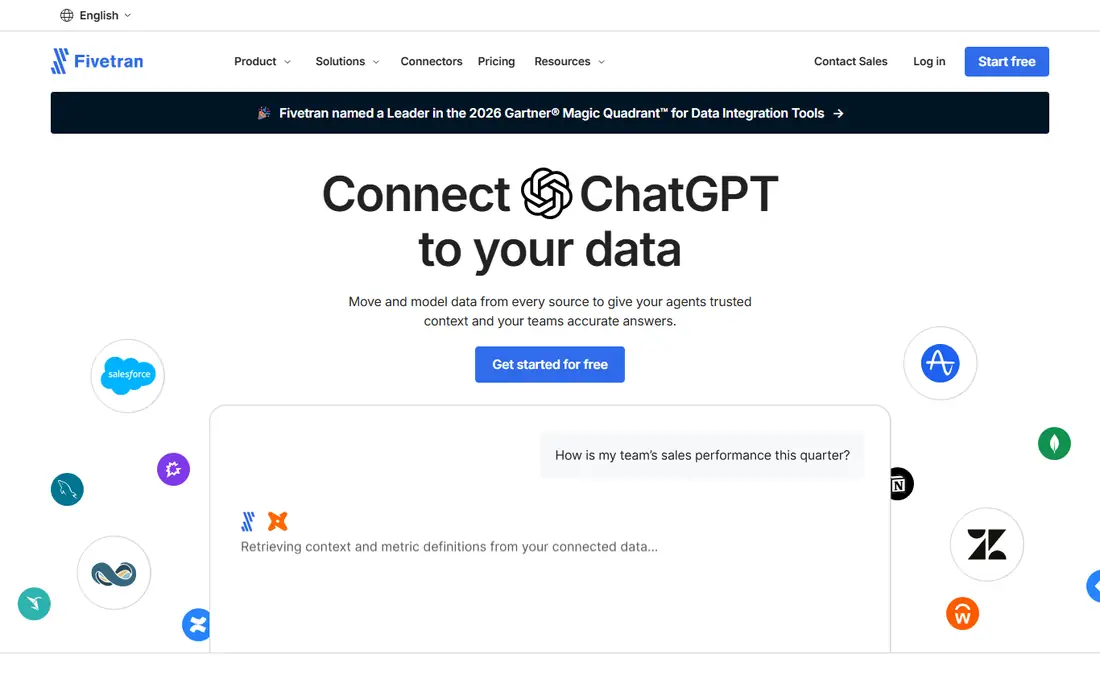
Fivetran suits teams that would rather spend time on analysis than on pipeline maintenance. Its connectors are managed by the vendor, so schema changes in a source do not always force a rebuild on your side. That matters at scale, because a broken pipeline for a high-volume source can stall dashboards and downstream models for hours.
The trade-off is cost control. Usage-based pricing means a sudden jump in rows, or a badly chosen sync frequency, can raise the bill. We recommend starting with the sources that matter most, setting sensible sync intervals, and watching the first month closely. For many mid-size and larger teams, the time saved still outweighs that risk.
- Fully managed connectors
- Automated schema handling
- Log-based change data capture for supported sources
- Usage-based pricing can grow fast with volume
- Less control than a self-hosted pipeline
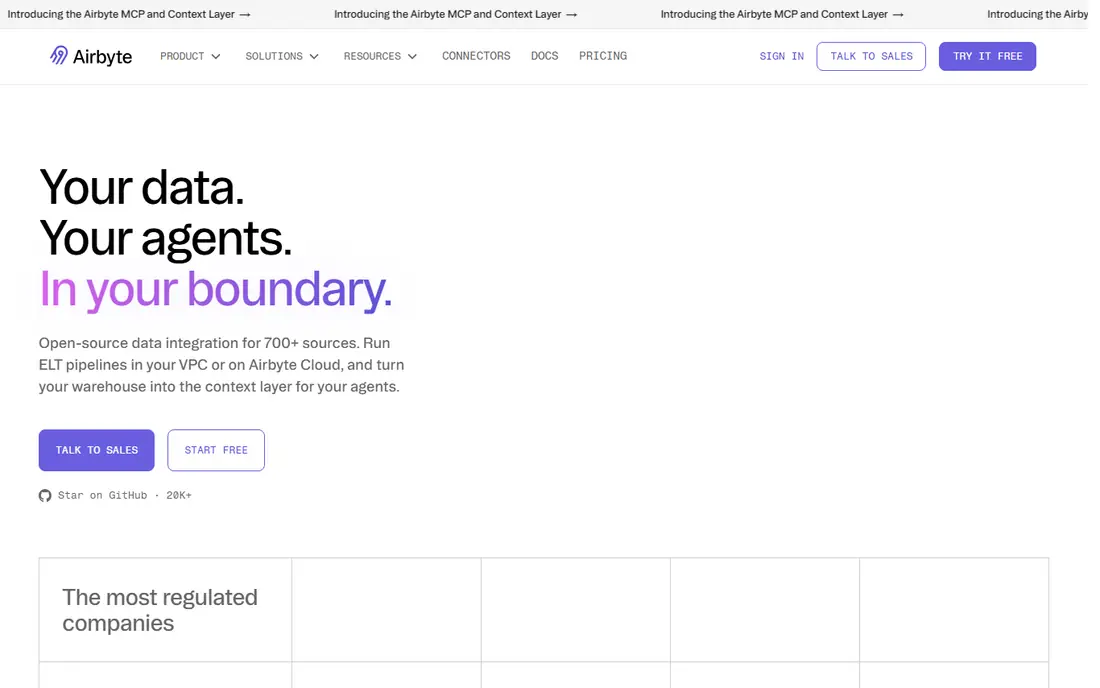
Airbyte is a strong pick when a team wants choice. The open source version can be run on your own infrastructure, which helps with data residency and cost control for steady, high-volume loads. The cloud version removes much of that operating burden, at the cost of usage-based pricing.
The catch is that Airbyte is mainly an ingestion tool, not a full transformation suite. Most teams pair it with a transformation layer inside the warehouse. If your team is comfortable with that two-part setup, Airbyte offers a good balance of freedom and managed convenience.
- Large open source connector library
- Self-hosted option
- Cloud option for teams that want less upkeep
- Self-hosting adds operating work
- Transformation usually needs a separate tool such as dbt
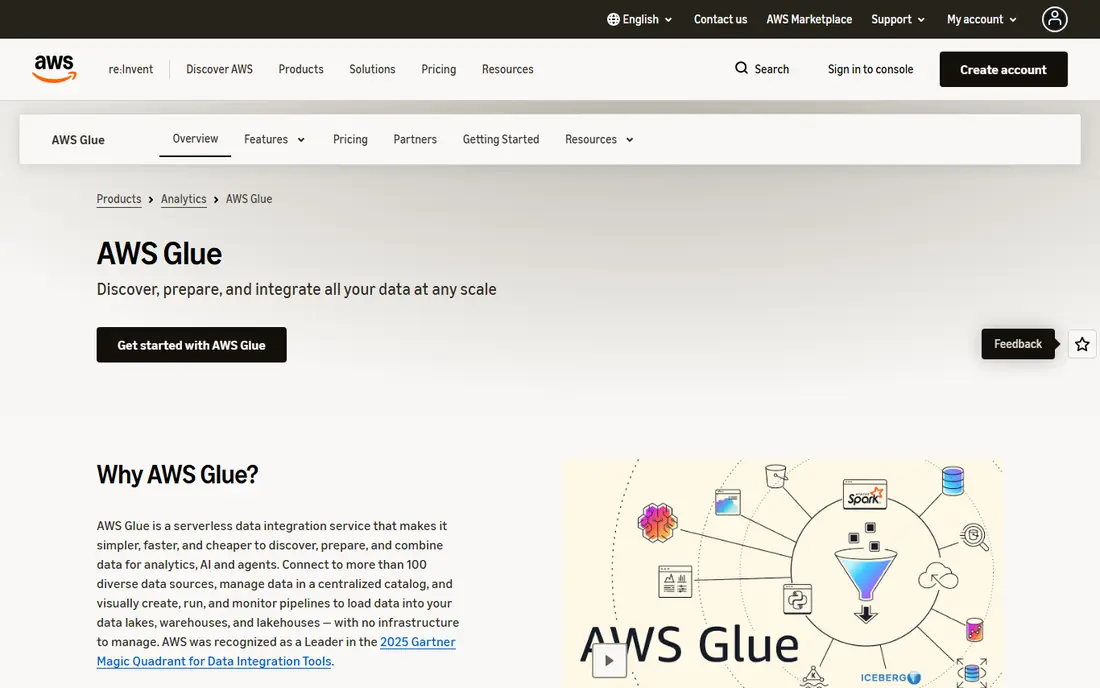
AWS Glue fits teams whose data already lives in AWS. It can run Spark jobs without managing servers, crawl data to build a catalog, and feed warehouses and lakes in the same account. That closeness to storage keeps transfer costs and latency lower than moving data across clouds for every job.
The weakness is portability. A team that later moves part of its stack elsewhere may need to rebuild parts of the pipeline. Pricing is also usage-based and depends on job type, worker size, and run time, so a small test job will not tell you the full monthly cost.
- Serverless Spark-based processing
- Close integration with Amazon S3, Redshift, and Athena
- Built-in data catalog
- Best inside AWS
- Learning curve for teams new to Spark and AWS services
Azure Data Factory is the natural choice for teams already using Azure Synapse, Microsoft Fabric, SQL Server, or other Microsoft services. Its visual designer helps data engineers build pipelines without writing every step by hand, and its self-hosted runtime can reach on-premises sources.
For big data work, the important detail is how you use data flows and integration runtimes, because those choices drive cost and speed. A simple copy job and a heavy transformation job can look similar on a diagram and behave very differently in practice. Plan a pilot with a large sample before rolling it out widely.
- Visual pipeline design
- Strong Microsoft and hybrid source support
- Data flows for code-free transformation
- Most natural inside Azure
- Pricing has several meter types that need careful review
Informatica Intelligent Data Management Cloud
Great for: Enterprise governance and quality
Informatica is built for organisations where data governance is not optional. It combines ingestion, quality checks, lineage, and catalog features in one cloud platform, which helps when several teams share the same warehouse and need to know where each field came from. That breadth is the reason many large enterprises stay with it.
The downside is scope. Implementation takes planning, and pricing is quote-based, so budgeting requires a direct conversation with the vendor. For a small team with ten sources, a lighter tool will usually be faster and cheaper. For a large estate with compliance needs, the extra structure can pay for itself.
- Broad connector and governance coverage
- Data quality and lineage tools
- Strong change data capture options
- Enterprise pricing and complexity
- Smaller teams may find it more than they need
Talend, now part of Qlik, appeals to teams that want both a visual designer and the option to work in code. That mix helps when business users need to see a pipeline clearly and engineers still need precise control over edge cases. Its data quality tools also help catch bad rows before they reach a warehouse at scale.
The honest catch is weight. Talend is not the quickest way to sync one SaaS app to a warehouse, and its pricing is not published as a simple monthly figure. It makes most sense when integration, quality, and governance are all part of the same project.
- Visual and code-based pipeline design
- Data quality and governance features
- Broad source support
- Quote-based pricing
- Setup can be heavy for simple ingestion jobs
Matillion takes a different approach from pure ingestion tools. It pushes transformation work into the warehouse itself, using the warehouse compute you already pay for. That design often performs well for large datasets, because data does not need to move through a separate engine for every step.
The trade-off is dependence on your warehouse choice and on credit usage. Teams should map their most common jobs to credit consumption during a trial. When that mapping is clear, Matillion can be a clean fit for warehouse-centred teams that want visual pipelines without giving up SQL control.
- Runs transformation inside Snowflake, Databricks, BigQuery, or Redshift
- Visual job design
- Streaming change data capture options
- Credit-based pricing needs monitoring
- Tied to the warehouse you choose
Hevo is a practical choice for teams that need working pipelines this week, not next quarter. Setup is largely no-code, and many common SaaS and database sources can be connected in minutes. For a growing company moving from spreadsheets and ad hoc exports to a proper warehouse, that speed is a real advantage.
At very large scale, Hevo may feel less flexible than a code-first or enterprise platform, especially for unusual sources or heavy custom logic. Check its connector list and event limits against your largest sources first. If those fit, it is one of the easiest ways to get reliable big data pipelines running.
- Fast no-code setup
- Real-time and near real-time sync for supported sources
- Built-in transformation options
- Less suited to very complex enterprise estates
- Pricing scales with events and sources
How we picked these
We compared official vendor feature pages, pricing pages, and documentation, and we favoured tools with a clear big data story: high-volume ingestion, change data capture or streaming support, and a path to transformation inside or beside a warehouse. We left out tools that only handle small app-to-app syncs, and we left out products that are no longer maintained as live offerings. Where a vendor does not publish a price, we wrote See website rather than guessing.
What to check before you choose
Start with your warehouse and your cloud, because the cheapest tool on paper can become expensive if it moves data across clouds on every run. List your five largest sources by row count and change rate, then check each candidate for a native connector and for change data capture on those sources. A tool that only does full refreshes will cost more and run slower as data grows.
Next, decide who will own the pipelines. A managed tool suits a small data team, while an open source or code-first tool suits a team with data engineers who can run infrastructure. Finally, test failure handling. Pause a source, change a column type, and send a bad row, then see how clearly the tool reports the problem. At big data scale, clear errors and easy re-runs matter as much as raw speed.
Frequently asked questions
Which ETL tools are best for big data workloads?
The best ETL tools for big data workloads depend on your stack. Fivetran and Airbyte suit managed or flexible ingestion, AWS Glue and Azure Data Factory suit teams centred on one cloud, and Informatica, Talend, and Matillion suit governed or warehouse-native work.
What is the best ETL tool for big data workloads with a small team?
A managed tool such as Fivetran or Hevo Data usually fits a small team best, because the vendor maintains connectors and handles much of the upkeep. Airbyte Cloud is another option if you want a lower starting point and can accept a separate transformation step.
Do I need change data capture for big data?
In most cases, yes. Change data capture copies only new and changed rows instead of reloading a whole table, which saves time, compute, and money as tables grow. It is especially important for large transactional tables that change often.
Is open source ETL good enough for big data?
Open source tools such as self-hosted Airbyte can handle large volumes well, but you take on hosting, monitoring, and upgrades. That trade is worth it for teams with engineering capacity, and less attractive for teams that want a vendor to carry that work.
How much does ETL for big data cost?
Cost depends on row volume, sync frequency, number of sources, and whether you use managed or self-hosted infrastructure. Usage-based tools can look cheap in a trial and grow quickly in production, so test with realistic volumes and review the first full month before scaling up.
Sources
See where you really rank - block by block
ProMapRanker scans Google Maps across a grid of your service area. Simple monthly plans from $19, white-label on every plan.
Start freeKeep reading
 who has best internet service
Who Has the Best Internet Service in 2026
Who has best internet service for US homes? We compare fiber, cable, fixed wireless and satellite providers on speed, price, availability and terms today.
Read → which survey tool has the best analytics
Which Survey Tool Has the Best Analytics in 2026
Find which survey tool has the best analytics in 2026, comparing Qualtrics, SurveyMonkey, Typeform, Alchemer, and more on reports, text, and stats today.
Read → which streaming service has the best movies
Which Streaming Service Has the Best Movies in 2026
Answering which streaming service has the best movies, with Netflix, Max, Criterion and more compared on libraries, prices and free options in this guide.
Read →