 ProMapRanker
Top Picks for Outbound GTM Software in 2026

Key takeaways
- Apollo is the best all-in-one start for small teams, since it pairs contact data with sequencing in one subscription.
- Clay is the strongest enrichment layer for teams that need custom lists, waterfall enrichment and personalisation at scale.
- Outreach and Salesloft lead for larger teams that need governed, multichannel sequences and coaching views.
- Instantly and Smartlead suit high-volume cold email, where inbox rotation and deliverability controls matter most.
- No tool fixes a weak target list, so budget for data quality and domain setup before you scale sending volume.
Quick comparison
| Pick | Great for | Pricing starts at | Free tier | |
|---|---|---|---|---|
 Apollo | All-in-one prospecting and sequencing | $49 per month | Yes | Visit |
 Clay | Enrichment and list building | See website | Yes | Visit |
 Outreach | Enterprise sequence execution | See website | No | Visit |
 Salesloft | Multichannel engagement | See website | No | Visit |
 Instantly | High-volume cold email | $37 per month | Free trial | Visit |
 Smartlead | Scaled sending and deliverability | $39 per month | Free trial | Visit |
 Reply.io | Multichannel outreach for mid-size teams | $49 per month | Free trial | Visit |
 ZoomInfo | Enterprise contact data | See website | No | Visit |
The best outbound gtm software
We compared outbound go-to-market software across three layers: data, enrichment and sending. A good stack usually needs more than one layer, so the list below shows where each tool fits rather than pretending one tool does everything well.
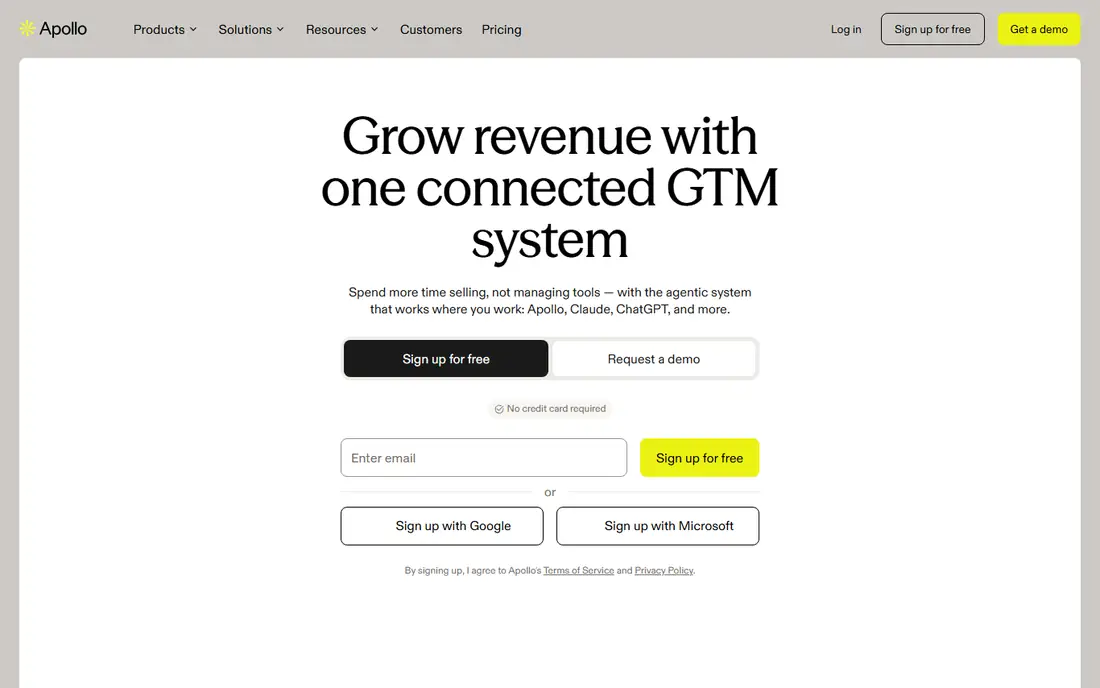
Apollo is the easiest all-in-one start for a small outbound team. You can build a list from its database, verify contacts, run email sequences and track replies without stitching together four tools. That simplicity matters for a founder or a small sales team that needs pipeline this month.
Data quality is the honest limit. Apollo covers many segments well, but some niches need a second source or extra verification, and credit limits mean a busy team should price the plan that matches its monthly list size. For a lean team, Apollo still gives the most complete stack per dollar.
- Contact database plus sequences in one tool
- Filters for building lists
- CRM sync options
- Data quality varies by segment
- Credit limits shape real cost
- Advanced features need higher plans

Clay is not a sender. It is the layer that turns a rough list into a rich, personalised one, by enriching contacts through many sources in a waterfall until a field is filled. Teams use it to add job changes, tech data, funding signals and personalised lines, then push the finished list to a sequencer. For a go-to-market team that lives on list quality, that workflow is powerful.
The cost model needs care. Clay bills by credits and by plan, and a large enrichment job can use credits faster than expected. It also takes time to learn. We would pick Clay when list quality and personalisation are the bottleneck, and pair it with Instantly, Reply.io or Outreach for sending.
- Waterfall enrichment from many sources
- Custom list workflows
- AI research and personalisation tools
- Pricing is credit-based and can rise fast
- Learning curve for new users
- Needs a separate sending tool
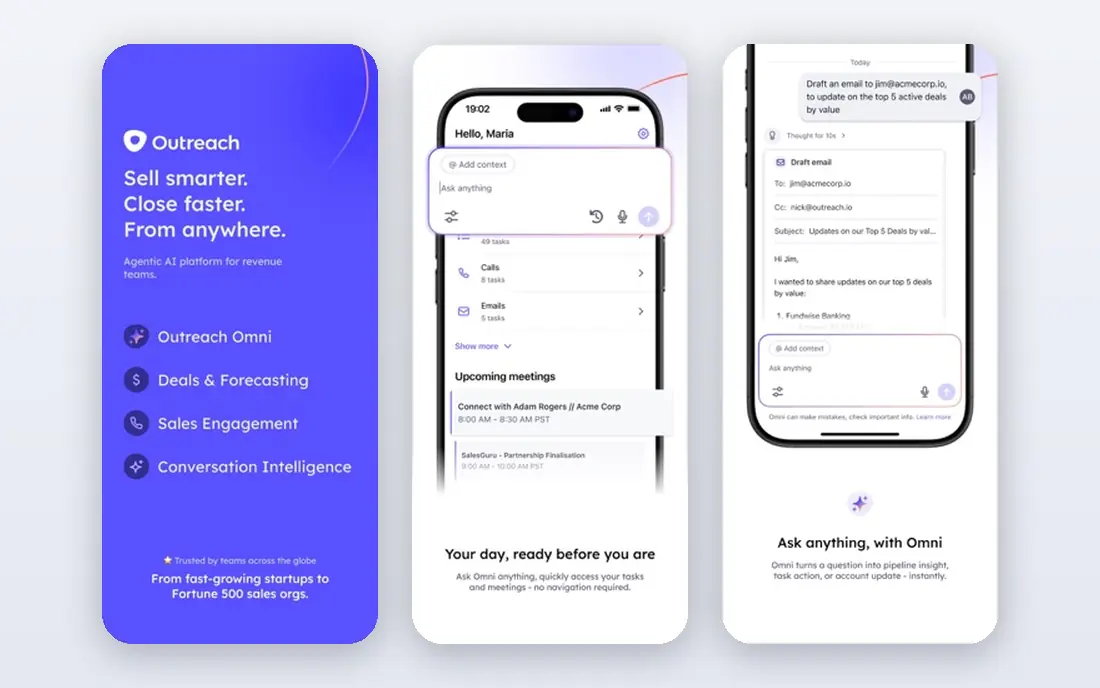
Outreach is built for larger sales teams that need control over sequences, reporting and coaching. It supports email, phone and social steps in one cadence, tracks engagement, and gives managers views into rep activity and pipeline. For a team of ten or more reps, that governance helps keep outreach consistent and measurable.
Small teams may find Outreach heavy and costly, with quoted pricing and a longer setup. We would choose it when scale, governance and forecasting matter, and choose Apollo or Reply.io when a smaller team needs speed over control.
- Governed multichannel sequences
- Coaching and analytics views
- Strong enterprise integrations
- Quoted pricing
- Implementation and admin overhead
- More than a small team needs
Salesloft, now part of Clari, is the other enterprise standard for multichannel engagement. Its cadence tools, dialer and coaching views suit teams that mix email, calls and social touches, and its integrations keep activity in the CRM. Many mid-market and enterprise teams pick Salesloft for its rep experience and reporting.
Like Outreach, it is quoted and admin-heavy, and it does not include a contact database, so you still need Apollo, ZoomInfo or Clay for data. Choose between Outreach and Salesloft on rep workflow and CRM fit, since both cover the core enterprise job well.
- Strong cadence management
- Dialer and coaching tools
- Broad CRM integrations
- Quoted pricing
- Admin setup takes time
- Data must come from another source
Instantly suits teams that send cold email at volume and need deliverability controls built in. Inbox rotation, warm-up and campaign management help protect sender reputation, while the interface stays simple enough for a small team to launch fast. For a founder-led outbound motion, that focus is an advantage.
Instantly does not replace a data tool, and it does not fix a bad list. Use dedicated sending domains, verify contacts, and keep volume gradual, since no sending tool can save a domain that is used carelessly. For pure cold email scale, Instantly is a strong, affordable pick.
- Inbox rotation and warm-up tools
- Simple campaign setup
- Scalable sending for cold email
- Email only at its core
- Data must come from elsewhere
- Deliverability still needs good lists and domains
Smartlead is the main rival to Instantly for scaled cold email. It emphasises deliverability, mailbox management and warm-up, and its agency features suit teams running campaigns for multiple clients. If your outbound motion is email-heavy and you manage many inboxes, Smartlead's controls are worth testing against Instantly.
The tool is email-first, so multichannel teams will need another layer for calls and social steps. Pricing also varies by mailbox and feature tier, so count mailboxes before you budget. For high-volume email, Smartlead and Instantly are the two to compare head to head.
- Deliverability and warm-up focus
- Unlimited mailboxes on some plans
- Agency-friendly features
- Email focused
- Interface takes learning
- Data and sequencing depth vary by plan
Reply.io sits between an all-in-one and a pure sender. It supports multichannel sequences, adds AI help for writing, and offers contact data, which makes it a practical pick for a mid-size team that wants more than email without enterprise cost. Setup is faster than Outreach or Salesloft, and the pricing is clearer.
Data is the limit. Reply.io's database does not match Apollo or ZoomInfo for depth, so teams with niche targets may still need Clay or a data provider. For a team that wants multichannel sequences at a mid-market price, Reply.io is a balanced choice.
- Email, LinkedIn and phone steps in one tool
- AI writing assistance
- Contact data options
- Data depth is thinner than Apollo or ZoomInfo
- Higher plans needed for advanced AI
- Deliverability needs domain care
ZoomInfo is the enterprise data standard for US outbound teams. Its database, company signals and intent data help large teams build accurate lists at scale, and its integrations feed CRM and sales tools directly. For a team with a large territory and a dedicated data budget, that depth is hard to match.
The contract is the barrier. ZoomInfo is quoted, often annual, and sized for larger teams, so a small team will likely get better value from Apollo. We would pick ZoomInfo when data depth, intent signals and enterprise support justify the contract, and verify a sample list before signing.
- Large contact and company database
- Intent and technographic signals
- Enterprise integrations
- Quoted pricing, often annual
- Contract size suits larger teams
- Data quality still needs verification
How we picked these
We compared official pricing pages, product documentation and public feature descriptions for outbound tools that still work in October 2026. We favoured tools with a verifiable vendor site, a clear data, enrichment or sending role, and current availability. Where pricing is quoted or varies widely by contract, we wrote See website. We did not test deliverability on live campaigns, so we describe vendor features and standard setup practice rather than promising inbox results.
Choosing the right outbound stack
Build the stack in order: target list, data quality, sending domain setup, then sequences. A tool cannot fix a vague ideal customer profile, and sending to a stale list will hurt domain reputation no matter how good the sequencer is. Start with one data source, verify a sample, and only then scale volume.
Next, match the sender to your channels. Email-only teams can start with Instantly or Smartlead. Multichannel teams need Reply.io, Outreach or Salesloft. Teams whose bottleneck is list quality should add Clay before they add more sending capacity. Finally, set up dedicated sending domains with proper authentication, warm them gradually, and track replies and bounces weekly, not just opens.
Frequently asked questions
What are the top picks for outbound gtm software for a small team?
Apollo is our first pick for a small team, since it combines data and sequencing, with Instantly or Smartlead added for high-volume email. Clay is worth adding when list quality becomes the bottleneck.
What is the best outbound software for large teams?
Outreach and Salesloft lead for large teams, with ZoomInfo or Clay supplying data and enrichment. The choice between Outreach and Salesloft usually comes down to rep workflow, CRM fit and reporting needs.
Do I need Clay if I already use Apollo?
Not always. Apollo covers many lists well on its own. Clay helps when you need waterfall enrichment, custom signals or personalisation that Apollo cannot fill, or when you combine many data sources into one list.
How do I protect deliverability in cold email?
Use dedicated sending domains with SPF, DKIM and DMARC set up, warm new domains gradually, verify contacts before sending, and keep lists targeted. No tool can protect a domain that sends high volumes to stale or irrelevant contacts.
Is cold outreach still effective in 2026?
It can be, when targeting is tight and messages are relevant to a real problem. Volume alone rarely works now, so teams that win tend to spend more time on list quality and personalisation than on sending more emails.
Sources
See where you really rank - block by block
ProMapRanker scans Google Maps across a grid of your service area. Simple monthly plans from $19, white-label on every plan.
Start freeKeep reading
 who has best internet service
Who Has the Best Internet Service in 2026
Who has best internet service for US homes? We compare fiber, cable, fixed wireless and satellite providers on speed, price, availability and terms today.
Read → which survey tool has the best analytics
Which Survey Tool Has the Best Analytics in 2026
Find which survey tool has the best analytics in 2026, comparing Qualtrics, SurveyMonkey, Typeform, Alchemer, and more on reports, text, and stats today.
Read → which streaming service has the best movies
Which Streaming Service Has the Best Movies in 2026
Answering which streaming service has the best movies, with Netflix, Max, Criterion and more compared on libraries, prices and free options in this guide.
Read →