 ProMapRanker
Texting Alternatives in 2026: 8 Apps Compared

Key takeaways
- Signal is our pick for most people who want a private texting alternative, with end-to-end encryption on by default and no ads.
- WhatsApp suits people who need the widest reach, because many contacts already use it for messages and calls.
- Telegram suits large groups, channels and multi-device use, but only Secret Chats are end-to-end encrypted by default.
- Google Messages suits Android users who want richer SMS, known as RCS, with a familiar default app.
- The best alternative depends on who you talk to: a private app with no contacts on it will not replace texting for you.
Quick comparison
| Pick | Great for | Pricing starts at | Free tier | |
|---|---|---|---|---|
 Signal | Private everyday messaging | Free | Yes | Visit |
 WhatsApp | Widest global reach | Free | Yes | Visit |
 Telegram | Large groups and channels | Free | Yes | Visit |
 Google Messages | Android RCS messaging | Free | Yes | Visit |
 Messenger | Social contacts and groups | Free | Yes | Visit |
 Threema | No phone number needed | $4.99 one-time | No | Visit |
 Viber | International calls and chats | Free | Yes | Visit |
 Session | No phone number, decentralised | Free | Yes | Visit |
The best texting alternatives
We compared official feature pages, privacy pages, app listings and public reviews for the apps below, and we focused on encryption, group size, multi-device support and how easy it is to move contacts over. These are the best texting alternatives we found for replacing or improving on plain SMS.
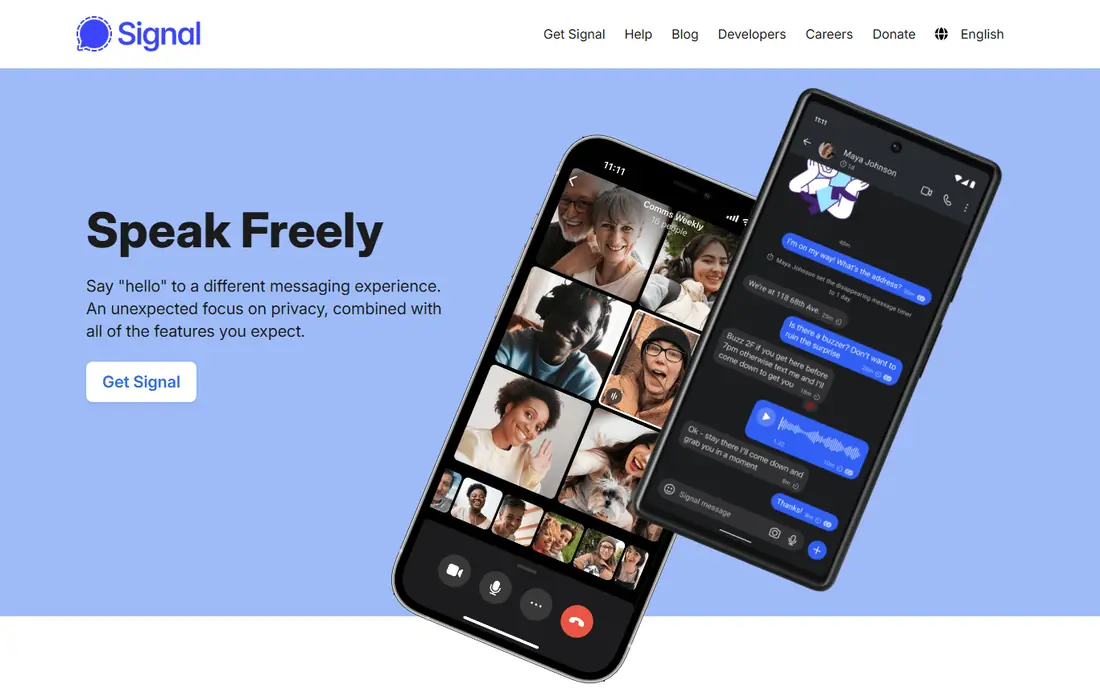
Signal is the most private mainstream texting alternative, and it is free. Messages, voice and video calls are end-to-end encrypted by default, so only you and the person you message can read them. The app is open source, run by a non-profit, and it collects very little metadata compared with social-owned rivals. Disappearing messages, usernames that hide your phone number from contacts, and a clean interface make it easy to use daily.
The limit is reach. Signal needs a phone number to register, even though usernames can hide it from contacts, and many friends may not have it installed. That friction matters, because a messaging app is only useful if the people you talk to are there. For private chats with friends and family who will install it, Signal is our top pick among texting alternatives.
- End-to-end encryption by default
- Open source and independently audited
- No ads, trackers or data selling
- Needs a phone number to register
- Smaller user base than WhatsApp
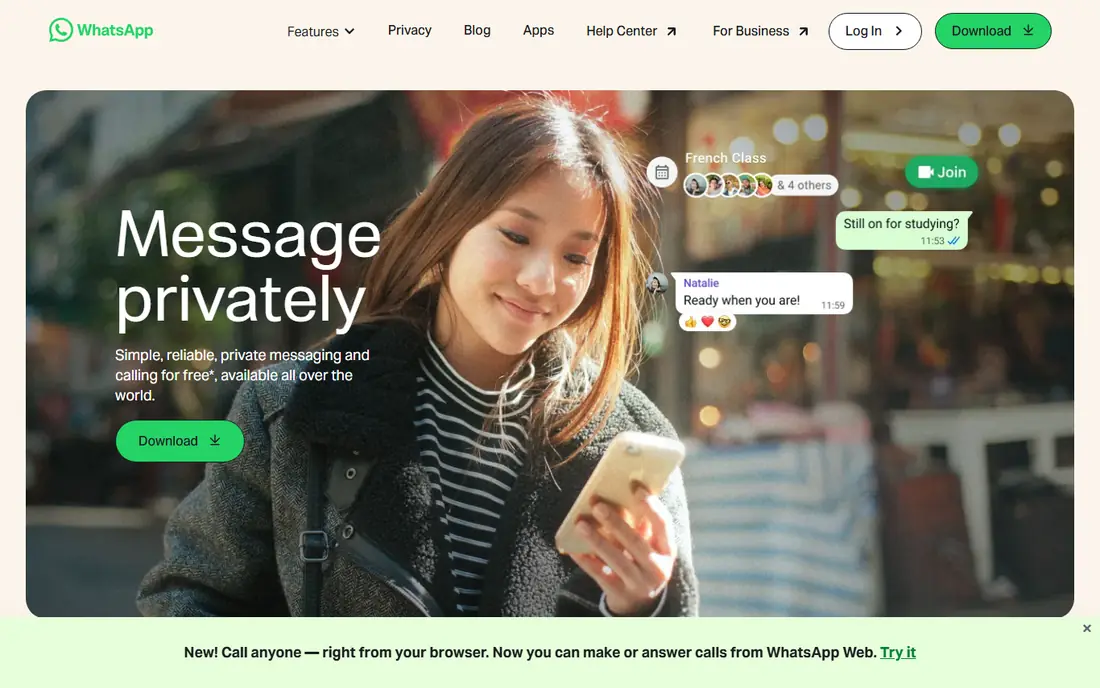
WhatsApp is the practical default for many people outside the United States, because so many contacts already use it. Messages, calls, groups, channels and communities all sit in one app, and the Signal Protocol provides end-to-end encryption for messages and calls. For international family, work groups and community chats, WhatsApp is often the only app everyone already has.
Privacy is the trade-off. WhatsApp is owned by Meta, and while message content is encrypted, metadata about who you message and when can still be visible to the company, and backups need end-to-end encrypted backup turned on to stay protected. If reach matters more than strict privacy, WhatsApp is the best texting alternative for most everyday chats.
- Huge global user base
- End-to-end encrypted messages and calls
- Groups, channels and communities
- Owned by Meta, so metadata and account links raise privacy questions
- Backup encryption needs a setting check
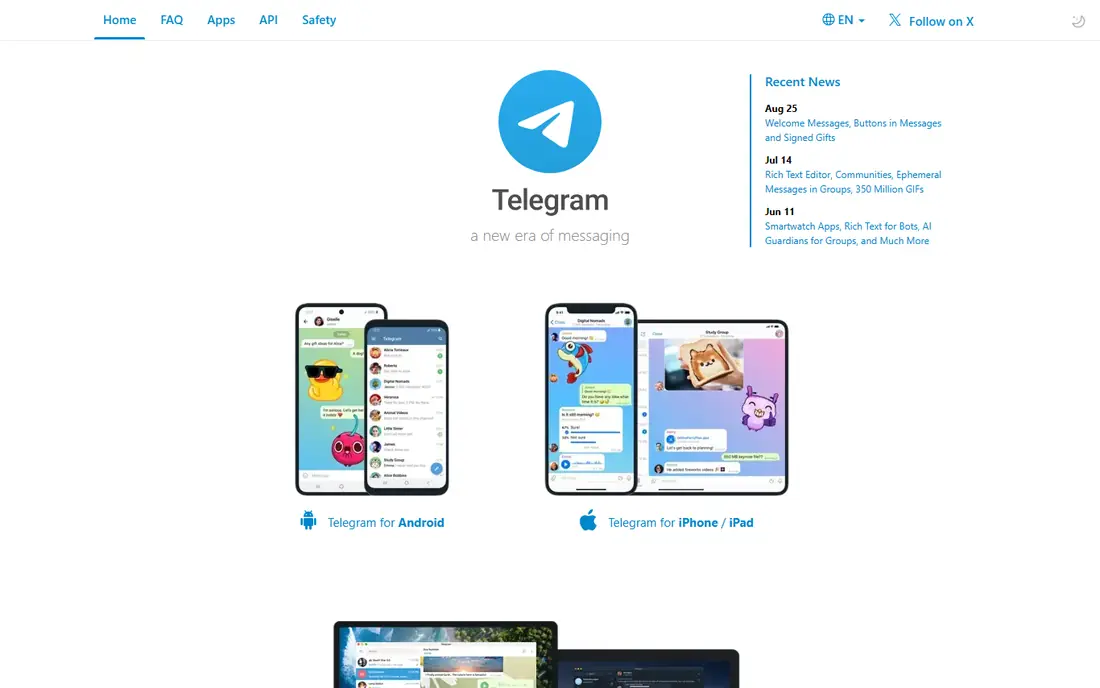
Telegram suits communities, creators and large groups better than any app here. Groups can hold very large numbers of members, channels can broadcast to many followers, and cloud chats sync across phones, tablets and computers without a phone link. Bots, stickers, large file sharing and public channels make it a flexible tool for groups and broadcasts.
Encryption needs care. Regular Telegram chats are stored in the cloud and are not end-to-end encrypted by default. Only Secret Chats, which are device-specific and opt-in, offer end-to-end encryption. If you use Telegram for private one-to-one chats, start a Secret Chat for sensitive topics. For large groups and channels, Telegram remains one of the best texting alternatives available.
- Huge groups and channels
- Cloud chats work on many devices at once
- Bots and file sharing
- Regular chats are not end-to-end encrypted by default
- Only Secret Chats offer that protection
Google Messages is the closest thing to a modern default texting app on Android. It handles SMS and MMS where needed, and RCS, or Rich Communication Services, adds typing indicators, read receipts, reactions and better photos and videos when both sides support it. Because it uses your phone number, contacts do not need a new account or username.
Encryption is the nuance. RCS chats between Google Messages users are end-to-end encrypted, but cross-platform RCS chats, including chats with iPhone users, have not always had the same protection, with wider encrypted RCS rolling out over time. Check the lock icon in each chat to confirm encryption. For Android users who want a better default app without asking contacts to install anything, Google Messages is a strong pick.
- Default messaging app on many Android phones
- RCS adds typing, reactions and high-quality media
- Works with phone number
- End-to-end encryption applies to RCS chats between supported apps, not all cross-platform chats
- IPhone RCS support varies
Messenger suits people whose contacts already live on Facebook and Instagram. Group chats, voice and video calls, reactions and shared media all work in one app, and you can message Facebook friends without exchanging phone numbers. For social groups, family chats and event planning, that convenience is hard to beat.
Privacy is weaker than Signal or Threema. End-to-end encryption is available for many chats, but settings and defaults vary, and Meta's data practices apply to the wider account. Check the encryption status of each chat, and use a more private app for sensitive topics. For social messaging where reach matters, Messenger is a useful texting alternative, even if it is not the most private one here.
- Huge social user base
- Easy group chats and calls
- Works without a phone number for Facebook contacts
- Privacy concerns linked to Meta ownership
- Encryption settings vary by chat type
Threema is the pick for people who do not want to hand over a phone number to message. You create an anonymous ID, add contacts by QR code or ID, and messages and calls are end-to-end encrypted by default. The company is based in Switzerland, charges a one-time purchase price, and does not rely on ads or data selling for revenue.
The cost, around $4.99 one-time in recent listings, is small, but it still creates friction when asking friends to join. The user base is also smaller than WhatsApp, Signal or Telegram, so Threema works best for a small circle that values privacy over reach. For a private group that wants no phone number on file, Threema is one of the best texting alternatives in this list.
- End-to-end encryption by default
- No phone number or email needed to register
- Swiss-based with a clear privacy stance
- One-time purchase, not free
- Smaller user base than WhatsApp or Signal
Viber suits international messaging and calling, especially in regions where it is widely used. Messages and calls are end-to-end encrypted, group chats and communities are available, and desktop apps let you continue a chat from a computer. Call quality to international numbers is a long-standing strength, which matters for families spread across countries.
In the United States, Viber has fewer users than WhatsApp or Signal, so it may not replace texting for local contacts. The design also feels less modern than newer rivals, though the core chat and call features work well. If your main contacts use Viber, or you call abroad often, it is a solid texting alternative to keep on your phone.
- End-to-end encrypted messages and calls
- Strong international call quality
- Desktop and mobile apps
- Smaller US user base than WhatsApp
- Interface feels dated to some users
Session is the most anonymous option here. You get a Session ID instead of a phone number, messages route through a decentralised network of community-run nodes, and chats are end-to-end encrypted. That design limits metadata, because there is no central phone directory linking an ID to a person.
The trade-off is maturity. Groups, calls and multi-device features are thinner than on Signal or WhatsApp, and few everyday contacts will already use Session. It suits a small circle that wants strong privacy and anonymity, rather than a replacement for all daily texting. For that use, Session is a credible texting alternative, even if it is not the easiest first step.
- No phone number needed
- Messages route through a decentralised network
- End-to-end encryption by default
- Smaller user base
- Group and call features are thinner than mainstream apps
How we picked these
We compared official feature pages, privacy pages, app listings and public reviews for each app, and we checked that each one is live and actively available in October 2026. We favoured apps that offer end-to-end encryption, clear privacy policies and a real user base, and we mixed mainstream reach with privacy-focused options. Prices shown are starting prices, and where a price is a one-time purchase we state that plainly rather than calling it free.
What to check before you switch from SMS
Start with your contacts, not the app. List the ten people you message most, and check which alternative they already use or will install. A private app with no contacts on it will not replace texting, no matter how good its encryption is. In many cases the best move is to use Signal for private chats, keep WhatsApp or Google Messages for wider groups, and leave SMS for people who use nothing else.
Next, check encryption chat by chat. End-to-end encryption is not always on by default, as Telegram shows, and backup settings can change the picture, as WhatsApp shows. Look for a lock or encryption note in each chat, turn on encrypted backups where offered, and use disappearing messages for sensitive topics. A quick settings check now prevents a false sense of privacy later.
Finally, think about devices and phone numbers. Some apps need a phone number, some offer usernames, and some need no identifier at all. If you change phones often, check how backups and multi-device support work, and whether you can move chats without losing them. A texting alternative should make switching phones easier, not harder, so test that path before you move your main chats.
Frequently asked questions
What is the best texting alternative to SMS?
Signal is the best all-round alternative for private messaging, while WhatsApp offers the widest reach and Google Messages offers the best default Android experience. The best choice depends on who you message, because an app only works if your contacts use it. Many people use two apps: one private, one for wider groups.
Are texting alternatives free?
Most apps here are free, including Signal, WhatsApp, Telegram, Google Messages, Messenger, Viber and Session. Threema is the exception, with a one-time purchase around $4.99 in recent listings. Free apps may still charge for calls to landlines or for extra features, so check the app's own pricing page for those cases.
Is WhatsApp safer than SMS?
Yes, in most cases. WhatsApp messages and calls are end-to-end encrypted, while SMS is not encrypted and can be read by carriers and others with network access. WhatsApp still raises metadata questions because of Meta ownership, so Signal or Threema are stronger choices for the most private chats.
Is Telegram private?
Telegram offers end-to-end encryption only in Secret Chats, which you must start separately. Regular Telegram chats are cloud-based and not end-to-end encrypted by default. If privacy is your main goal, use Secret Chats for sensitive topics, or choose Signal or Threema for one-to-one private messaging.
Can I use a texting alternative without a phone number?
Yes. Threema and Session let you message without a phone number, using an ID instead. Messenger can also work through a Facebook account without sharing a phone number with contacts. Signal still needs a phone number to register, though usernames can hide it from contacts.
What is RCS, and does it replace texting?
RCS, or Rich Communication Services, is a newer standard that adds typing indicators, reactions and better media to phone-number messaging, mainly through Google Messages on Android and Messages on iPhone. It improves on SMS, but encryption and feature support vary by phone, carrier and app. For the strongest privacy, a dedicated encrypted app such as Signal is still a better choice than RCS alone.
Sources
See where you really rank - block by block
ProMapRanker scans Google Maps across a grid of your service area. Simple monthly plans from $19, white-label on every plan.
Start freeKeep reading
 twitch alternatives
Twitch Alternatives in 2026
Explore the best Twitch alternatives in 2026 for live streaming, with free platforms, monetisation options, audiences, chat tools, and tips for new streamers.
Read → firebase alternatives
Best Firebase Alternatives in 2026
Looking for Firebase alternatives? We compare 9 backend platforms for auth, databases, realtime, storage, functions, self-hosting, and pricing for your app.
Read → companies with best work life balance
Companies With Best Work Life Balance in 2026
See companies with best work life balance in 2026, ranked by employee ratings, with flexible work options, benefits, and what to check before applying.
Read →