 ProMapRanker
Best Firebase Alternatives in 2026

Key takeaways
- Supabase is the default move for most teams leaving Firebase, because real Postgres replaces Firestore document limits with joins and relations.
- Appwrite and PocketBase suit teams that want to self-host, while Convex suits realtime and collaborative apps.
- Backendless, Back4App, and Xano help teams that want visual tools or less code, but check limits on scale and vendor lock-in.
- Compare total cost at your usage, not just the headline plan, because storage, bandwidth, and compute can change the bill fast.
Quick comparison
| Pick | Great for | Pricing starts at | Free tier | |
|---|---|---|---|---|
 Supabase | Postgres backend for most apps | $25 per month | Yes | Visit |
 Appwrite | Self-hosted Firebase-style backend | $25 per month | Yes | Visit |
 Backendless | Visual backend and codeless logic | $15 per month | Yes | Visit |
 Back4App | Managed Parse backend | See website | Yes | Visit |
 Convex | Realtime and collaborative apps | $25 per month | Yes | Visit |
 PocketBase | Small self-hosted projects | Free | Yes | Visit |
 Nhost | GraphQL and Postgres backend | $25 per month | Yes | Visit |
 AWS Amplify | AWS-native app backend | See website | Yes | Visit |
 Xano | Visual API backend for no-code teams | $85 per month | Yes | Visit |
The best Firebase alternatives
We compared backends by database model, auth, realtime, storage, functions, self-hosting, and pricing. Firebase itself is not listed, because this article covers replacements for it. All platforms below are live in October 2026.
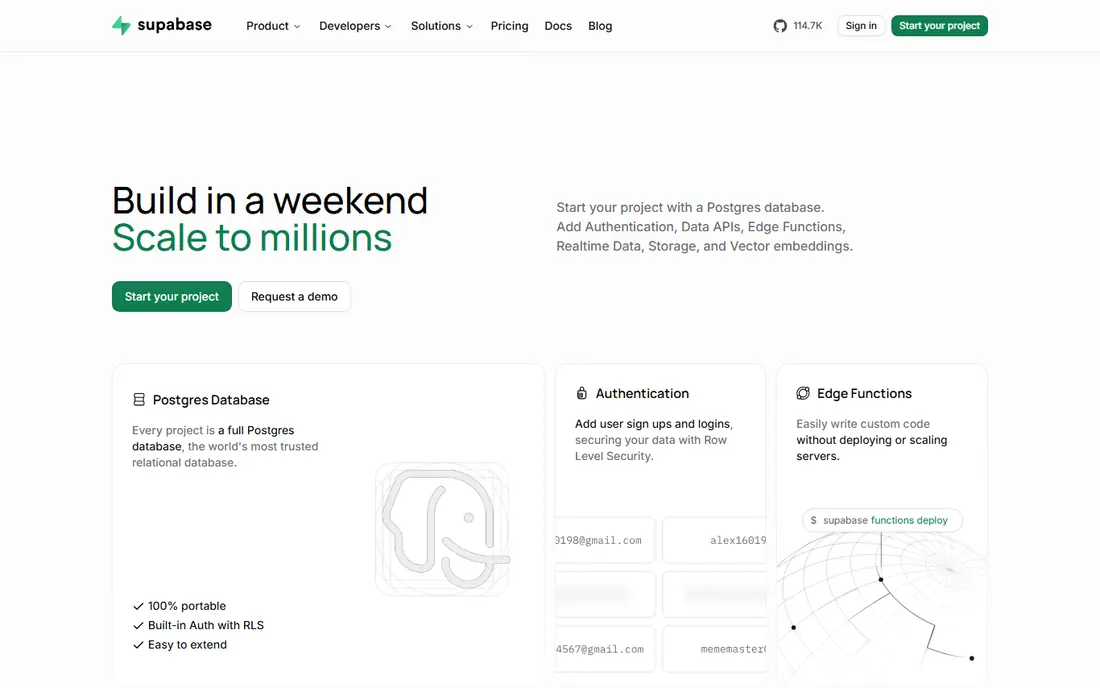
Supabase is the closest general replacement for Firebase for most web and mobile apps. You get a Postgres database, authentication, file storage, edge functions, and realtime subscriptions, with a dashboard that generates APIs from your tables. Because it is Postgres, joins, foreign keys, and full-text search work in ways Firestore does not offer directly.
The free tier is useful for prototypes, but projects pause after a period of inactivity, so a production app needs a paid plan. Usage for compute, storage, and bandwidth sits on top of the base price. If you want SQL, open source, and a managed option, Supabase is our default pick.
- Real Postgres with auth, storage, and realtime
- Open source
- Auto-generated APIs
- Free projects pause after inactivity
- Realtime is less central than in Firebase
- Usage costs add to the base plan
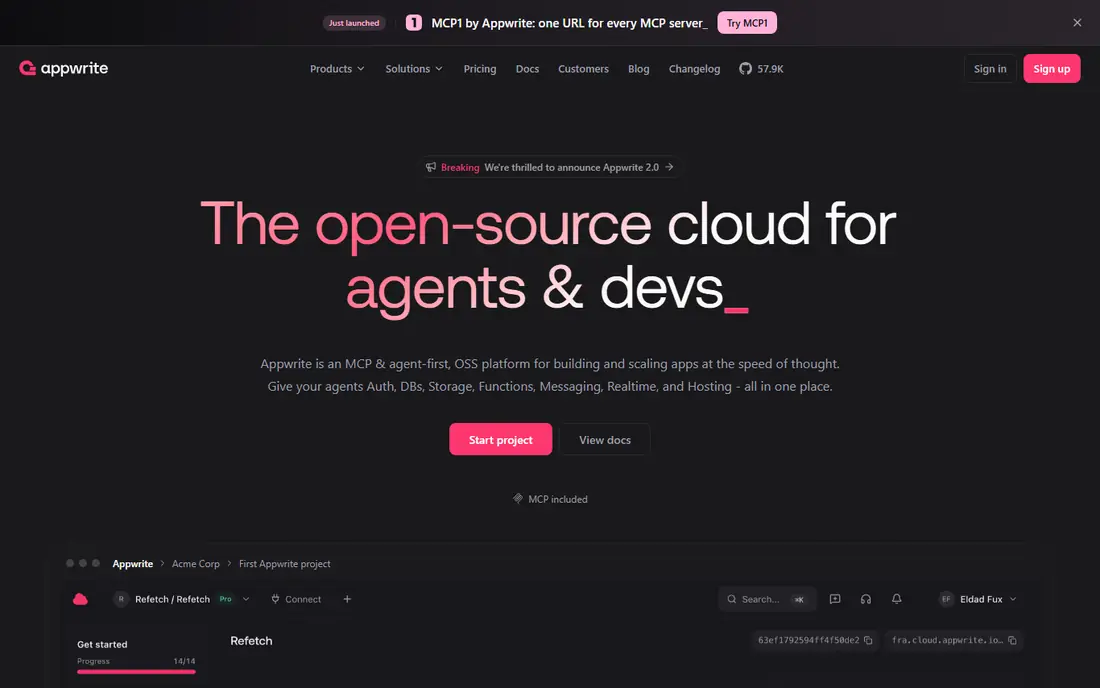
Appwrite feels familiar to Firebase users, with databases, auth, storage, functions, and messaging in a single console. The open source project can be self-hosted, which appeals to teams that want control over data and costs. Managed cloud plans suit teams that do not want to run servers.
Self-hosting is not free in practice, because you pay for hosting, backups, and your own time. Managed plan pricing has varied across sources, so confirm the current Pro price before budgeting. Appwrite is a strong pick when self-hosting and a Firebase-like console both matter.
- Open source
- Self-hosting with Docker
- Auth, databases, storage, and functions in one console
- Managed pricing has risen in recent summaries
- Self-hosting needs operations work
- Smaller ecosystem than Supabase
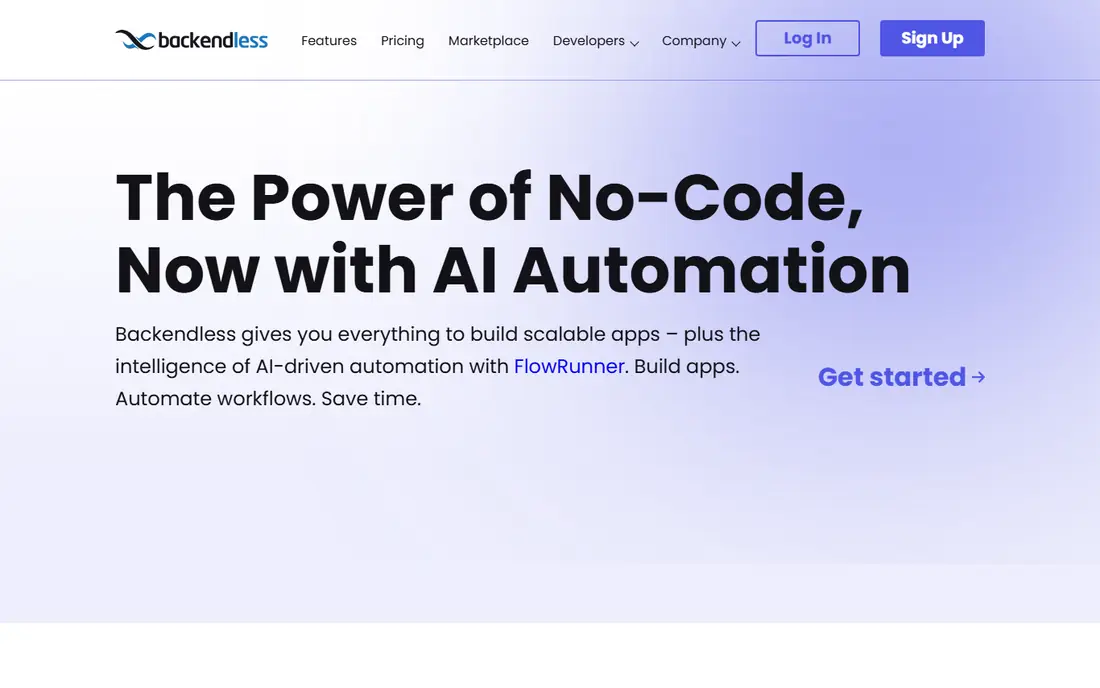
Backendless suits teams that want to build backend logic with less code. Its visual editor lets you define data, security rules, and server logic without writing a full backend, and it includes auth, storage, and messaging. That can speed up internal tools and small consumer apps.
Developer teams that prefer code-first workflows may find the visual approach limiting at scale. Free and low tiers also cap users and usage, so check limits against your expected traffic. For low-code teams leaving Firebase, Backendless is a practical alternative.
- Visual data and logic tools
- Codeless functions
- Auth and push support
- Less developer-focused than Supabase
- Pricing tiers limit users and API calls
- Migration from Firebase needs planning
Back4App hosts Parse Server as a managed backend, which gives you a document-style database, auth, cloud code, and realtime LiveQuery without running Parse yourself. Teams that already know Parse, or want a document model without Firebase billing surprises, often find it comfortable.
The trade is that Parse is a different system from Firestore, so migration is not a simple copy. Pricing has also varied across summaries, with some listing $15 and others $25 as a starting point, so we list See website. Confirm the plan that matches your requests, storage, and users before moving.
- Managed Parse Server
- Predictable subscription options
- LiveQuery for realtime updates
- Parse model differs from Firebase
- Pricing summaries vary
- Advanced scaling needs a higher plan
Convex is built for apps where live updates are the product, such as collaborative editors, dashboards, and chat. You write TypeScript queries and mutations, and the platform handles realtime delivery and caching without manual listener code. That can save a lot of work compared with wiring Firestore listeners yourself.
It is not a SQL database, so teams that need joins and relational queries should look at Supabase or Nhost instead. Pricing is also structured per developer on some plans, which changes the total for larger teams. For realtime-first products, Convex is a strong choice.
- Reactive queries and realtime by default
- TypeScript-first
- Simple auth and file handling
- Proprietary document model
- No SQL
- Pricing is per developer on some plans
PocketBase is the simplest self-hosted option in this list. One small binary gives you a SQLite database, authentication, realtime, file storage, and an admin interface. It runs well on a cheap virtual server, which makes it ideal for prototypes, internal tools, and solo projects.
Scale is the limit. A single-server SQLite design does not match a managed, multi-region backend for high-traffic apps. You also own hosting, updates, and backups. If your project is small and predictable, PocketBase offers remarkable value for no subscription cost.
- Single Go binary
- SQLite database
- Auth, realtime, and admin UI included
- No subscription
- Single-server design limits scale
- You handle hosting and backups
- Fewer managed features
Nhost combines Postgres with a GraphQL API, auth, storage, and functions, which suits teams that already build with GraphQL. It uses open source components, including Hasura-style GraphQL tooling, and offers a managed cloud plus self-hosting options. That stack gives you relational data with a modern API layer.
If your team does not use GraphQL, the extra layer adds complexity without benefit. Usage costs for compute and storage also sit on top of the base plan. For GraphQL-first teams leaving Firebase, Nhost is a natural fit.
- Postgres plus GraphQL
- Auth and storage
- Open source components
- GraphQL-first approach suits some teams only
- Usage costs add to base price
- Smaller community than Supabase
AWS Amplify suits teams already on AWS, or building an app that will need AWS services at scale. It connects auth, data, storage, functions, and hosting in one framework, with access to the wider AWS ecosystem. That depth matters for enterprise apps and for teams with AWS expertise.
Pricing is usage-based, so a simple headline price does not tell the full story. The AWS learning curve is also steeper than a focused backend platform. If you are not already on AWS, Supabase or Appwrite will be faster to start. If AWS is your standard, Amplify is the native choice.
- Deep AWS integration
- Auth, data, storage, and hosting
- Enterprise scale
- Pay-as-you-go pricing is harder to predict
- AWS learning curve
- Setup can be complex
Xano is a visual backend for teams that want a real API without writing backend code. You model data in Postgres, build API logic visually, and connect it to a no-code frontend or a custom app. That makes it a good Firebase alternative for no-code builders who hit Firestore limits.
The paid starting price is higher than most options here, so it suits funded projects and businesses rather than hobby prototypes. The visual function builder also takes time to learn well. For no-code teams that need a serious backend, Xano is worth the cost.
- Visual API builder
- Postgres database
- No-code and low-code friendly
- Scalable managed backend
- Higher starting paid price
- Function builder has a learning curve
- Less code control than a custom backend
How we picked these
We compared official pricing pages, product docs, and recent pricing summaries for backends live in October 2026. We favored platforms that cover auth, database, storage, and functions, or a clear subset of those, and that offer a free tier or self-hosting. We did not claim hands-on testing, and where pricing summaries conflicted we wrote See website.
How to choose without a painful migration
Start from your data model. If you need relations, joins, and SQL, choose Postgres options such as Supabase or Nhost. If you need document flexibility and realtime, consider Convex, Back4App, or Appwrite. If you need visual building, look at Backendless or Xano.
Test auth and realtime early
Auth migration and realtime behavior cause the most surprises. Test user import, password handling, social login, and live updates with a small prototype before moving production data. Check how each platform handles offline use and security rules.
Budget for usage, not just the plan
Add storage, bandwidth, database compute, function runs, and seat costs to the base plan. A $25 plan can grow quickly under real traffic, while a self-hosted option shifts cost to hosting and operations time.
Frequently asked questions
What is the best alternative to Firebase?
Supabase is the best general alternative for most teams, because it offers Postgres, auth, storage, realtime, and functions in a managed, open source platform. Convex suits realtime apps, and Appwrite suits self-hosting.
Is Supabase really free?
Supabase offers a free tier for prototypes, but free projects pause after inactivity and have usage limits. Production apps usually need the paid plan plus usage costs, so budget for both.
Can I self-host a Firebase alternative?
Yes. Appwrite and PocketBase are popular self-hosted options, and Supabase can also be self-hosted. Self-hosting removes subscription cost but adds hosting, backup, and maintenance work.
What is the difference between Supabase and Firebase?
Firebase uses Firestore, a NoSQL document database with usage-based billing, while Supabase uses Postgres, a relational SQL database with a base plan plus usage. Postgres gives you joins and relations, while Firestore gives you a simpler document model and deep Google integration.
Should I choose a visual backend or a code backend?
Choose a visual backend such as Backendless or Xano if your team has limited backend coding time. Choose a code backend such as Supabase, Convex, or Nhost if developers will own the backend and need full control.
Sources
See where you really rank - block by block
ProMapRanker scans Google Maps across a grid of your service area. Simple monthly plans from $19, white-label on every plan.
Start freeKeep reading
 twitch alternatives
Twitch Alternatives in 2026
Explore the best Twitch alternatives in 2026 for live streaming, with free platforms, monetisation options, audiences, chat tools, and tips for new streamers.
Read → companies with best work life balance
Companies With Best Work Life Balance in 2026
See companies with best work life balance in 2026, ranked by employee ratings, with flexible work options, benefits, and what to check before applying.
Read → com alternatives
Com Alternatives in 2026
Com alternatives explained, with .co, .net, .org, .io, .app, .dev, .shop, .xyz and .tech compared on price, trust and best use in 2026 before you register.
Read →