 ProMapRanker
Scite.ai Alternatives in 2026: Prices and Free Plans

Citation maps and research trend tracking · Pricing starts at: $10 per month
Direct answer
ResearchRabbit comes first here, mainly for citation maps and research trend tracking. Listed starting prices: ResearchRabbit from $10 per month, Elicit from $11 per user per month and Litmaps from $10 a month. Look at Elicit for evidence synthesis and research planning, and at Connected Papers for visual exploration of related papers. The other 2 tools in the list cover narrower or pricier cases.
ProMapRanker put together this guide to Scite.ai for readers who want a clear shortlist without reading every vendor page. It compares 5 tools on starting price, free plans, who each one suits and where each one falls short.
Key takeaways
- ResearchRabbit takes the first slot, best suited to citation maps and research trend tracking.
- The cheapest monthly starting price in the list is $10 per month, offered by ResearchRabbit.
- ResearchRabbit is the only tool of the 5 with a free plan.
- Semantic Scholar fits wide AI-powered literature discovery.
- One limit worth knowing about ResearchRabbit: discovery-focused instead of synthesis-focused.
Quick comparison
| Pick | Great for | Pricing starts at | Free tier | |
|---|---|---|---|---|
| ResearchRabbit | Citation maps and research trend tracking | $10 per month | Yes | Visit |
 Elicit | Evidence synthesis and research planning | $11 per user per month | Free trial | Visit |
 Connected Papers | Visual exploration of related papers | See website | Not stated | Visit |
 Litmaps | Dynamic literature review visualizations | $10 a month | Not stated | Visit |
 Semantic Scholar | Wide AI-powered literature discovery | See website | Not stated | Visit |
Tool-by-tool breakdown
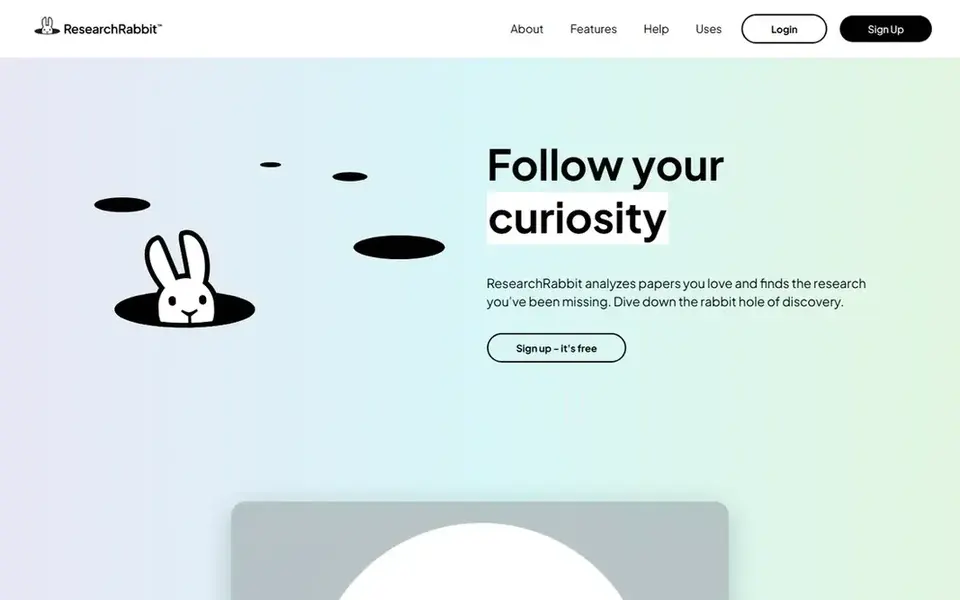
Where ResearchRabbit fits: citation maps and research trend tracking. ResearchRabbit is an AI tool for literature reviews that helps users find related papers, build citation maps, and track research trends.
What you pay to start with ResearchRabbit: $10 per month. ResearchRabbit has a free plan.
Points against: Discovery-focused instead of synthesis-focused.
- Finds related papers from your seeds
- Tracks research trends over time
- Depends on your starting papers
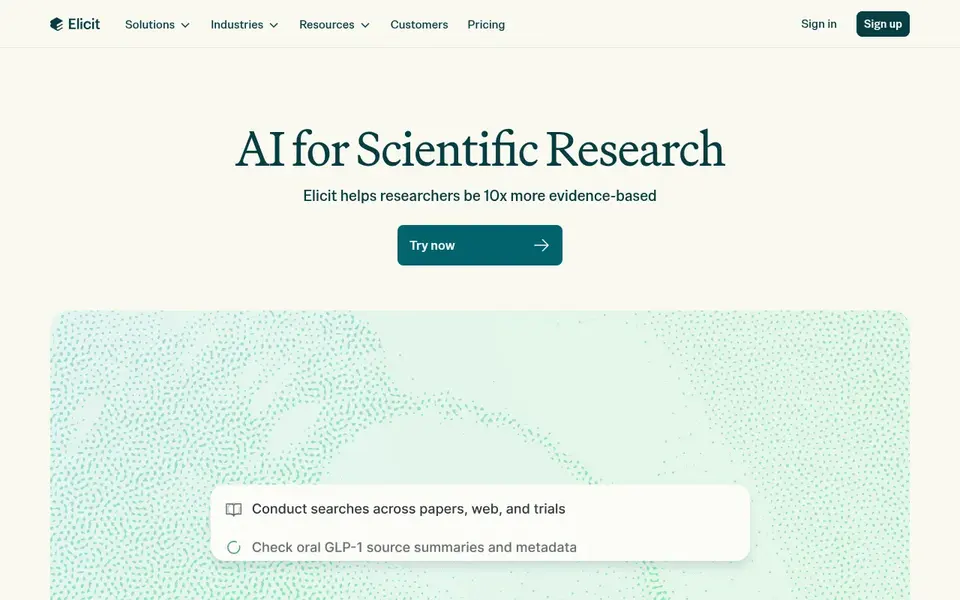
Elicit targets evidence synthesis and research planning. Its broader workflow focus can feel heavier than necessary if you only want to find a handful of papers rapidly.
Drawbacks to consider: May be heavier than needed for fast lookups.
Also, choose Elicit when synthesis and planning are the core of your task instead of casual searching. On cost, Elicit starts like this: $11 per user per month. Free access: Free trial.
- Helps draft proposals and weigh tradeoffs
- Supports evidence synthesis and landscape analysis
- More workflow-oriented than straightforward search
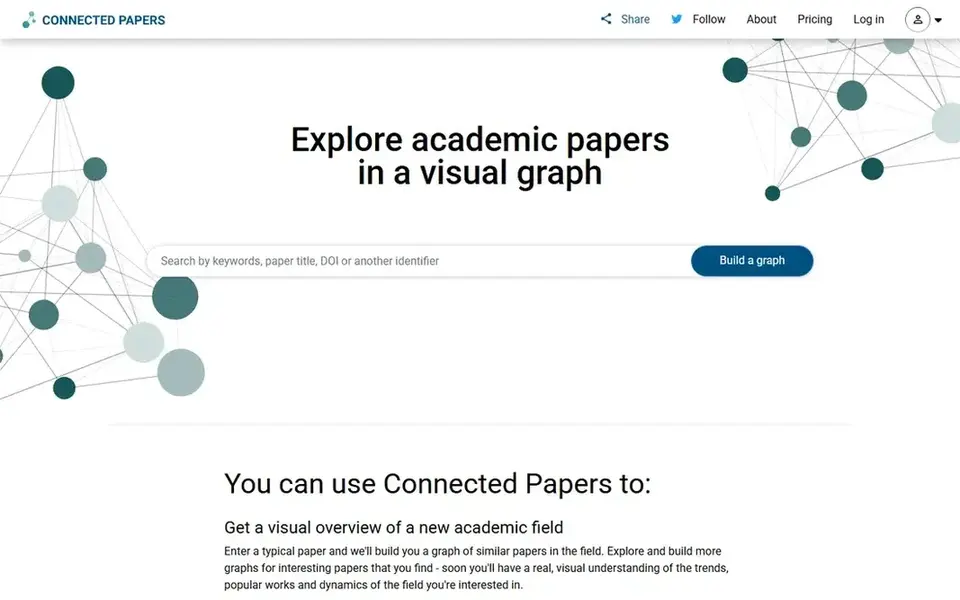
For visual exploration of related papers, Connected Papers is a natural candidate. Connected Papers is a visual tool that helps researchers and applied scientists find academic papers relevant to their field of work.
Trade-offs to know: Graph view can be dense for large fields.
It is well suited to exploring a new topic by seeing how papers relate to one another at a glance. Dense graphs in large fields can also take time to interpret. Pricing for Connected Papers is not stated here, so ask the vendor for current figures. Trial and free access: Not stated.
- Straightforward entry point for exploration
- Helps spot relevant work in a field
- Restricted synthesis and writing support
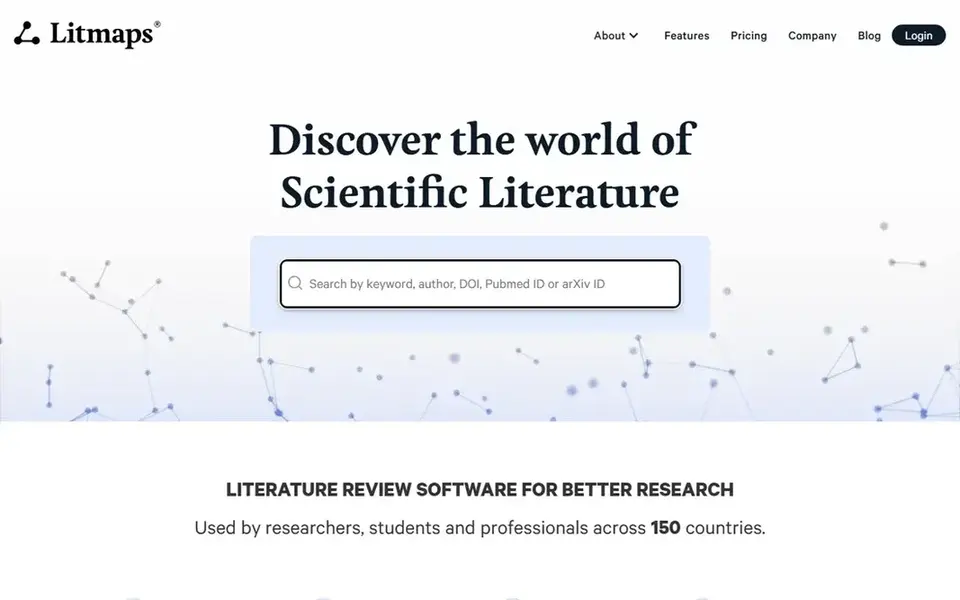
Think of Litmaps for dynamic literature review visualizations. It fits researchers who want an evolving visual picture of a field as new papers appear.
It works well alongside other discovery tools. Price to start with Litmaps: $10 per month. Free access: Not stated.
Where it falls short: Less emphasis on synthesis output.
- Aims to accelerate paper discovery
- Dynamic visualizations of literature
- Visual approach may not suit all readers
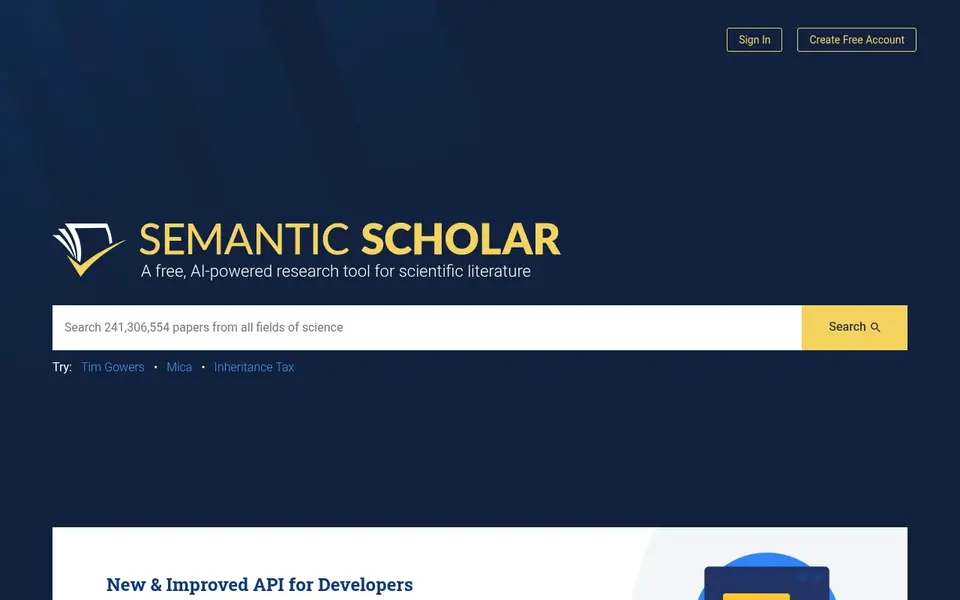
Semantic Scholar works best for wide AI-powered literature discovery. The system centers on discovery, so it supplies less support for structured evidence synthesis or proposal drafting.
If your primary task is comparing claims across papers or mapping citation networks visually, a more specialized tool may serve you better. This comparison lists no price for Semantic Scholar; ask the vendor. Trial and free access: Not stated.
Honest limits: Restricted synthesis and drafting features.
- AI-driven relevance across scientific literature
- Handy starting point for new topics
- Less concentrated on citation-context analysis
Our selection method
The comparison looks at four things: starting price, free access, how well the feature set matches Scite.ai, and the main limit of each tool. Plan names, prices and limits change often. Treat the figures here as a starting point and verify them with the vendor. Position on the page reflects fit for a typical buyer first, with price clarity and free access breaking ties. Treat it as a guide, not a ruling.
What to confirm before you sign up
- Confirm the entry price on the vendor page. For Connected Papers and Semantic Scholar that means a quote rather than a fixed price.
- Test the free plan from ResearchRabbit against your real workload before relying on it.
- Run a trial of Elicit with real work before paying for a year; your own workflow is the best test.
- Before choosing ResearchRabbit, weigh its main limit: discovery-focused instead of synthesis-focused.
- Confirm that Elicit connects to the apps your team already uses, on the plan you would actually buy.
- Find out whether the entry plan of Connected Papers covers your must-haves or only a trimmed-down version.
Frequently asked questions
What is the cheapest option for Scite.ai in this list?
On published monthly entry prices, ResearchRabbit is the lowest here at $10 per month. Entry price is only part of the cost, because seats, add-ons and billing terms can change the total.
What should I look for in a Scite.ai alternative?
Check that the tool handles your field and links results back to full papers. Confirming export and organization choices helps avoid rework later.
Do these tools publish their prices?
Not all of them. Connected Papers and Semantic Scholar publish no starting price, so expect a quote request for those. The rest, ResearchRabbit included, show a starting price, though seats and billing terms still change the final cost.
Is ResearchRabbit the right pick for everyone comparing Scite.ai?
No single tool suits every team. ResearchRabbit comes first because it fits citation maps and research trend tracking, while Elicit suits evidence synthesis and research planning and Connected Papers suits visual exploration of related papers. Match the tool to your own size, budget and workflow before deciding.
Which options for Scite.ai have a free plan?
ResearchRabbit is the only tool in this list with a free plan. Free plans usually cap users, projects or features, so check the limits on the vendor page. One other tool offers a trial instead. Prices, free plan details and limits for all 5 tools in this Scite.ai alternatives roundup sit on the individual cards above.
Sources
See where you really rank - block by block
ProMapRanker scans Google Maps across a grid of your service area. Simple monthly plans from $19, white-label on every plan.
Start freeBrowse all guides
← Best Pro Tools Alternatives in 2026Storyboarder.ai Alternatives: 5 Tools Compared in 2026 →
 naturalreader alternatives
Top NaturalReader Alternatives for 2026, With Prices
5 options for NaturalReader alternatives, with entry costs, free tiers and the buyer each one serves. Verdicts stay brief and factual. Skim the table first.
Read → meshy alternatives
Meshy Alternatives in 2026: Prices and Free Plans
Meshy alternatives: 5 contenders ranked by fit, with entry costs and free tiers. We put Sloyd first for unlimited generative 3D with control. Quick to scan.
Read → helioscope alternatives
HelioScope Alternatives in 2026: Prices and Free Plans
HelioScope alternatives in 2026: 5 tools with starting prices, free plans and limits. Every pick gets a straight assessment. Built for quick decisions.
Read → fireflies ai alternatives
Top 7 Fireflies AI Alternatives to Shortlist in 2026
7 tools for fireflies AI alternatives, compared on pricing, free plans and best-fit use. The weak spots sit next to the strengths. Reviewed in November 2026.
Read → best ai tools for small business
Best AI Tools for Small Business in 2026
Compare the best ai tools for small business for writing, design, bookkeeping, marketing, and automation, with current prices and free tiers for owners.
Read → best free ai chat app no filter
Best Free AI Chat App No Filter in 2026
We review the best free ai chat app no filter options among legitimate general-purpose AI tools, with honest safety notes and free tier details for writing.
Read →More in AI Tools · All guides A to Z by date · Latest guides