 ProMapRanker
Best Sales Intelligence Software in 2026


All-in-one prospecting and outreach · Pricing starts at: $49 per user per month
Key takeaways
- Apollo.io is our pick for most small and mid-sized teams because it combines contact data with outreach in one subscription.
- ZoomInfo and Cognism remain the enterprise picks, but both hide pricing behind a sales conversation, so budget for a quoted contract.
- Credit systems decide the real cost, since phone numbers usually cost far more credits than email addresses.
- Clay is not a database on its own, so budget it on top of a data source rather than instead of one.
- Start with a free plan or a small paid tier and test bounce rates on your own prospects before committing to an annual deal.
Quick comparison
| Pick | Great for | Pricing starts at | Free tier | |
|---|---|---|---|---|
| Apollo.io | All-in-one prospecting and outreach | $49 per user per month | Yes | Visit |
 ZoomInfo | Enterprise data depth and intent signals | See website | Yes | Visit |
 Lusha | Quick LinkedIn contact reveals | $37 per month | Yes | Visit |
 Cognism | European data and compliance | See website | No | Visit |
 Clay | Waterfall enrichment and list building | $149 per month | Yes | Visit |
 RocketReach | Lookup-first prospecting at a low entry price | $27 per month | Yes | Visit |
 UpLead | Verified emails with published pricing | $74 per month | Free trial | Visit |
 Seamless.AI | Real-time contact search | See website | Yes | Visit |
The best sales intelligence software
Sales intelligence software helps a team find the right buyers, reach them with accurate contact details, and spot buying signals before a competitor does. We compared official pricing pages, feature pages and public reviews, and we favored tools with published prices, a usable free tier and clear data practices.
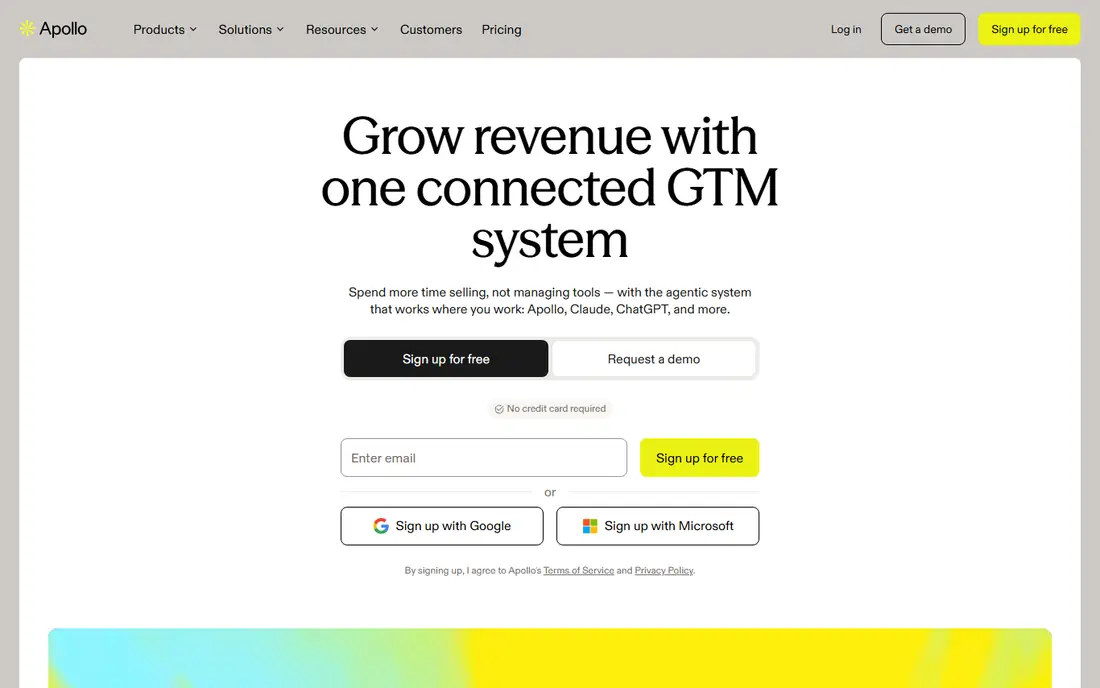
Apollo.io is the default choice for a small or mid-sized sales team that wants one login for finding contacts and running outreach. The database covers companies and people, and the built-in sequences, dialer and CRM integrations mean a rep can move from a search to a sent email without exporting a spreadsheet. That combination is why it tops this list for most buyers, even though larger enterprises may still want a deeper database alongside it.
The honest catch is credit math. Emails are cheap, phone numbers are not, and a team that leans on mobile numbers will burn through its allowance faster than the headline price suggests. Check how many phone credits your plan includes, test a sample list for bounce rates, and only then decide whether the paid tier fits your volume.
- Contact database plus sequences and a dialer in one tool
- Generous free plan for testing
- Published pricing
- Credit limits can bite on phone-heavy prospecting
- Data quality varies by region and niche
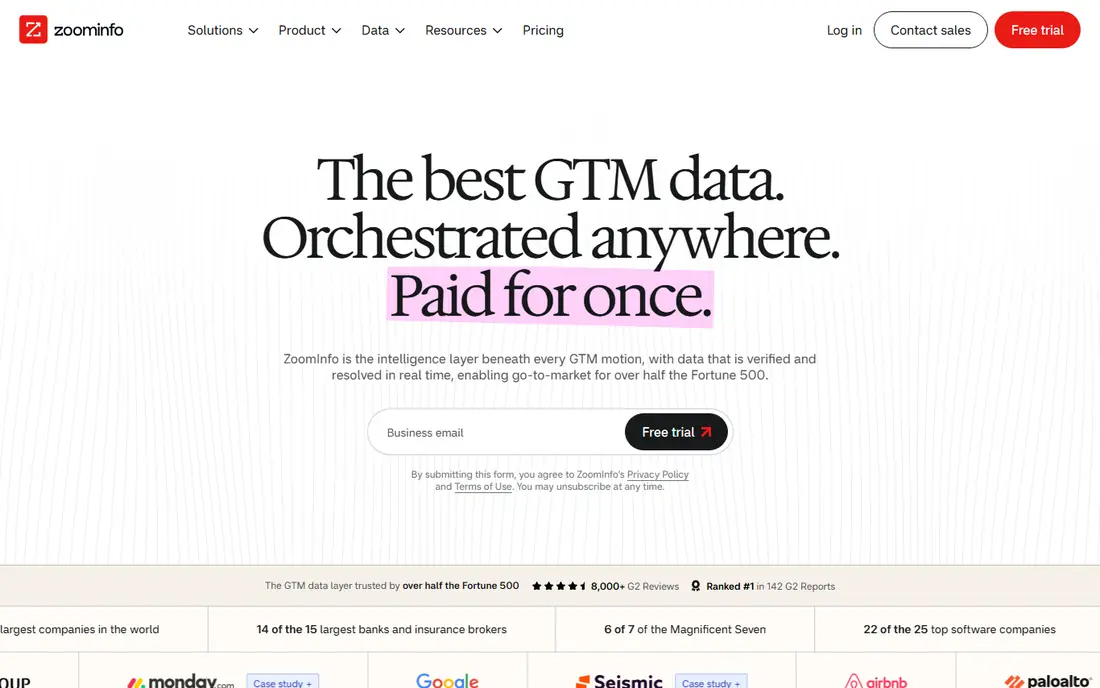
ZoomInfo is the tool most enterprise sales teams compare everything else against. Its database is deep, its company and contact records carry firmographic detail, and its intent signals and scoops about funding, hiring and leadership changes help reps time an approach. If your team sells into large US companies and needs coverage across many industries, this is the strongest single source on this list.
The trade-off is cost and commitment. Pricing sits behind a sales conversation, annual contracts are the norm, and a small team can easily pay enterprise money for data it never fully uses. ZoomInfo Lite offers a free starting point with limited monthly credits, so use that to judge coverage in your market before any sales call.
- Very large B2B database
- Intent signals and company news
- Strong CRM integrations
- Quote-only pricing with annual contracts
- Overkill and overpriced for very small teams
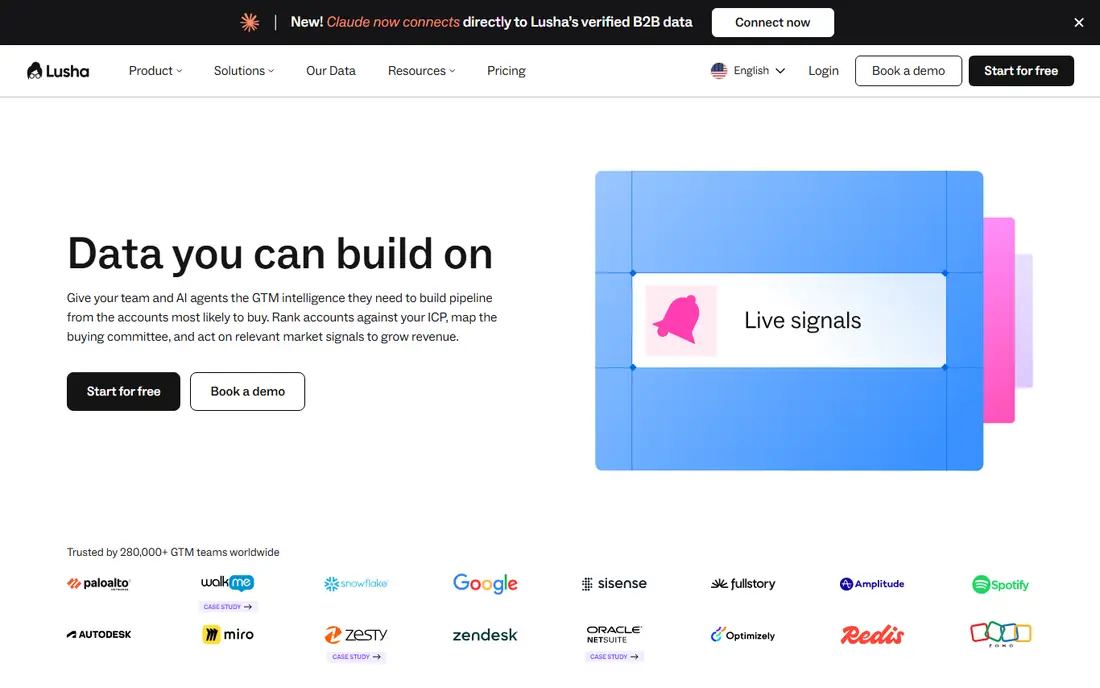
Lusha suits reps who live on LinkedIn and want verified emails and phone numbers in one click. The extension reveals contact details on a profile page, and the platform adds company search, lists and CRM sync for teams that want more than one-off lookups. For a solo seller or a small team, the low entry price and the free plan make it an easy tool to try without a long contract.
The weakness shows up when phone data matters. A single mobile number can cost ten credits, so a phone-first team will run through its allowance quickly and face a higher bill than expected. If your outreach is email-first, Lusha is strong value. If it is phone-first, compare the per-number cost against Cognism and SalesIntel-style alternatives before you buy.
- Fast browser extension for LinkedIn prospecting
- Simple pricing
- Free credits each month
- Phone numbers cost many credits
- Smaller database than the enterprise leaders
Cognism is the pick for teams selling into Europe, where data rules are strict and a wrong number can create real legal risk. Its mobile numbers are phone-verified, its coverage in the UK and continental Europe is stronger than most US-first databases, and its compliance tooling, including do-not-call checks, is built for regulated outreach. For a team that calls European buyers daily, that combination matters more than a lower sticker price elsewhere.
The downside is access. There is no published price and no free plan, so you cannot test it casually. Expect a sales-led process and an annual agreement, and ask for a sample of records in your exact target market before signing, since coverage still varies by country and industry.
- Phone-verified mobile numbers
- Strong European coverage
- Compliance-focused data practices
- Quote-only pricing
- No self-serve free plan to test with
Clay works differently from the other tools here. Instead of owning one database, it runs enrichment across many providers in sequence, a waterfall, so a record that one source misses can be filled by the next. It also adds AI agents that research companies, score leads and write short personalization notes, which makes it popular with revenue operations teams that build large, clean prospect lists.
That power comes with two catches. First, Clay is glue, not a database, so you still pay for the underlying data sources and for Clay itself. Second, building good workflows takes time and practice, and a team that just wants quick lookups will find it heavier than Apollo or Lusha. Buy Clay when list quality and automation are the bottleneck, not when you only need a few contacts a week.
- Pulls data from many providers in one workflow
- AI-assisted enrichment and scoring
- Flexible list building
- Not a standalone database
- Costs stack on top of data providers
- Learning curve for new users
RocketReach is a straightforward lookup tool for sales and recruiting teams that want to search by name, company or title and get an email address fast. The entry plan is cheaper than most tools on this list, the interface is simple, and the free lookups let you check whether it covers your market before paying. For a team that prospecting in short bursts rather than running always-on sequences, that simplicity is a real advantage.
The limits are worth reading before you subscribe. Email-only entry plans exclude phone numbers, and annual export caps mean a high-volume team can hit a ceiling mid-year. If you need phones and unlimited exports, price the higher tiers, not the entry tier, and compare the total against Apollo.
- Low entry price
- Simple person and company search
- Free lookups to test coverage
- Phone data sits on higher tiers
- Export caps apply on entry plans
UpLead appeals to teams that want to know the price before talking to sales. Its database is searchable by more than 50 filters, including company size, industry, location and technology used, and emails are verified in real time before a credit is spent. That verification step matters, because it cuts down on bounces that damage sender reputation and waste rep time.
The database is smaller than the market leaders, so niche industries and smaller markets may show thinner coverage. The free trial is also brief, with only a handful of credits, so use it on your hardest-to-find prospects rather than easy wins. If coverage checks out in your market, UpLead is one of the most transparent buys in this category.
- Emails verified in real time before they count against credits
- Published prices
- Technographic filters
- Smaller database than ZoomInfo
- Trial is short with only a few credits
Seamless.AI takes a different approach from a stored database: it searches the web in real time to build contact records when you ask for them. That can surface people and companies that a static database has not yet indexed, and the free starting credits make it easy to test. Solo reps and founders who prospect opportunistically often like the search-first model, since there is no large list to manage.
The catch is that paid pricing is not published, so the free tier tells you little about the long-term cost. Accuracy also varies, and real-time results still need verification before a campaign goes out. Treat Seamless.AI as a useful second source alongside a main database, and confirm paid pricing in writing before building a workflow around it.
- Real-time search rather than a static database
- Free credits to start
- Browser extension
- Paid pricing is quote-based
- Accuracy varies by industry and role
How we picked these
We compared official pricing pages, product documentation and public reviews for tools that sell into the US and Europe, and we kept only tools that are actively sold and maintained in October 2026. We favored published pricing, a free plan or trial, CRM integrations and a clear distinction between email and phone data costs. Tools that could not show real, current availability or that only served one narrow niche were left out, even when they were well known.
What to check before you pay
Start with your own data, not a vendor demo. Upload or search for 200 contacts from your real target market and measure bounce rates, phone connect rates and match rates. A tool that covers US software companies well may be thin in manufacturing, healthcare or a specific European country, and that gap only shows up in your own sample.
Next, work out the full credit cost. Ask how many credits an email costs, how many a phone number costs, whether unused credits roll over, and what happens when you exceed your allowance. Then check contract terms: length, seat minimums, renewal price changes and whether you can downgrade. A cheap entry price with a three-year lock-in is not cheap.
Finally, check compliance and integration. If you sell into Europe, ask about GDPR handling and do-not-call screening. Confirm the CRM sync is two-way and handles duplicates, since manual exports quietly eat rep time every week. The best tool is the one your team actually uses daily, with data you trust, at a price you can explain to finance.
Frequently asked questions
What is the best sales intelligence platform for a small business?
Apollo.io is our pick for most small businesses, since it combines contact data with sequences and a dialer for $49 per user per month, with a free plan for testing. Lusha is a strong second choice if your team mainly prospect on LinkedIn and wants a lower entry price. Test both on your own prospects before committing to an annual plan.
Which sales intelligence tool is best for enterprise teams?
ZoomInfo is the usual enterprise pick for data depth and intent signals, while Cognism is stronger for European coverage and compliance. Both use quote-based pricing and annual contracts, so budget for a sales process and ask for a sample of records in your exact market. Larger teams often pair one of these with Clay for enrichment workflows.
What is the best free sales intelligence tool?
Apollo.io, Lusha, RocketReach and Seamless.AI all offer free plans or free credits, and ZoomInfo Lite offers limited monthly credits at no cost. Free plans are best for testing coverage and for low-volume prospecting, but phone data and higher volumes almost always need a paid plan. Treat a free tier as a trial of data quality, not a permanent solution for a busy team.
How much does sales intelligence software cost?
Entry prices on this list run from $27 per month for RocketReach to $149 per month for Clay, with Apollo.io at $49 per user per month and UpLead at $74 per month billed annually. Enterprise tools such as ZoomInfo and Cognism do not publish prices and are typically quoted annually. Always add the cost of phone credits, extra seats and CRM integrations to the headline price.
Is sales intelligence data compliant with privacy rules?
Reputable vendors publish data processing terms, honor opt-outs and screen against do-not-call lists, and Cognism in particular is built around European compliance. Rules still vary by country and by how you use the data, so check your own legal obligations for cold outreach in each market you target. Never buy scraped lists from unknown sellers, since their consent and accuracy claims are rarely verifiable.
What is the difference between sales intelligence software and a CRM?
A CRM stores and manages the deals and contacts you already have, while sales intelligence software finds new contacts, enriches records and flags buying signals. Most teams use both, with the intelligence tool feeding clean data into the CRM. Apollo.io blurs the line by adding outreach, but it still works best when synced to a dedicated CRM for pipeline management.
Sources
See where you really rank - block by block
ProMapRanker scans Google Maps across a grid of your service area. Simple monthly plans from $19, white-label on every plan.
Start freeKeep reading
 best tour operator software
Best Tour Operator Software in 2026
Compare the best tour operator software for bookings, channel management, waivers and payments, with pricing models for day tours and multi-day trips.
Read → best time clock app for small business
Best Time Clock App for Small Business in 2026
We compare the best time clock app for small business options, with free plans, GPS clock ins, scheduling and payroll links for hourly teams and payroll help.
Read → best test automation tools
Best Test Automation Tools in 2026
Compare the best test automation tools, from Playwright and Selenium to Cypress, Katalon and BrowserStack, with prices, languages and best uses explained.
Read →